Collection Guide
Collection Guide
Ernst Ludwig Kirchner, German (active Switzerland), 1880–1938; Circus Rider (recto), 1914; oil on canvas; 79 x 59 7/16 inches; Saint Louis Art Museum, Bequest of Morton D. May 904:1983
This Collection Guide highlights objects and images in the collection that depict animals. We invited guest experts to share their knowledge and experiences with animals to broaden our understanding of animal behavior and why artists from different parts of the world would choose to represent particular animals. This guide is intended for visitors of all ages.
-
Access and Assistance
Free Public Wi-Fi
The Saint Louis Art Museum offers free Wi-Fi to visitors. From your device, access the SLAM_GUEST network.
AUDIO GUIDE TRANSCRIPT
The transcript for each audio track is available in expandable sections of individual object pages.
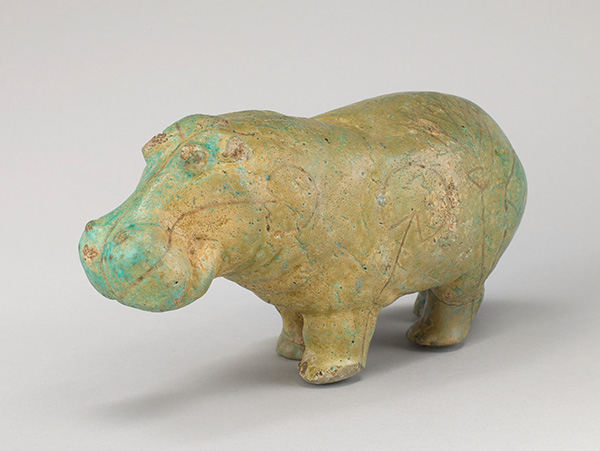
Hippopotamus, 1783–1640 BC
Egyptian, Middle Kingdom, Dynasty 13

- Transcript
Speaker
Madison Culbertson
River’s Edge Keeper
Saint Louis ZooHi, I’m Madi Culbertson, and I care for hippos at the Saint Louis Zoo.
The beautiful blue-green coloration of this sculpture reminds me of water, where hippos spend up to 16 hours daily. Their eyes, ears, and nostrils all sit on top of their heads, allowing them to completely submerge underwater to stay cool. When they do dive under the water, where they can stay for up to five minutes at a time, their nostrils and ears automatically close to keep water out.
Hippos are very large animals. Adults can weigh between 3,000 and 6,000 pounds. They maintain this size through grazing sessions, consuming up to 80 pounds of vegetation nightly.
Also notice the hippo’s short, powerful legs. A common misconception is that hippos swim. They actually propel off of river bottoms with their stocky legs. This unique movement is where the name hippopotamus originates. It translates to “river horse” in Greek. On land, they can reach bursts of speed up to 30 miles per hour.
You can also see the unique curvature of the hippopotamus skull. Their jaws feature massive canine teeth and can open almost 180 degrees, closing with one of the strongest bite forces in the animal kingdom. Their lower jawbone also conducts sound waves, allowing them to hear when fully submerged underwater. To communicate with other hippos, they have a “wheeze-honk” vocalization, which sounds like this: [hippo noise].
The lily pad indentations on the sides of the sculpture look like the markings hippos incur while sparring during territorial disputes. Hippo groups, called bloats, are led by individual male hippos, who protect the group and maintain territory. Although their wild counterparts can have a dangerous reputation, the hippos I work with are easygoing. They love a lazy day in the pool and enjoy interacting with their keepers.
This sculpture is a beautiful representation of the intelligent, social, dynamic animal that I have the pleasure to work with every day.
- Gallery Text
Egyptian,
Dynasty 13 (1783-1650 BC)Hippopotamus, 1783-1640 BC
faienceThis figure of a hippo was molded in faience, a crushed quartz glazed and fired at a relatively low temperature. Copper salts in the glaze impart the bright blue or blue-green color so characteristic of faience objects. Over the animal’s naturalistic shape, the craftsman painted lily plants that appear as a giant tattoo. Small sculptures of hippos such as this one were placed in tombs in ancient Egypt as reminders of the Egyptians’ love of hunting. Each of the sculpted hippo’s legs was ritually broken in order to render it harmless in the afterlife. In ancient Egypt herds of hippos were a constant threat to farmers’ fields. The first pharaohs hunted hippos in the marshes and eventually drove them far south into Upper Egypt. Hippos became associated with chaos, and the hunt for hippos became a metaphor for how the pharaohs of ancient Egypt could conquer evil.
Learn More
Hippopotamus from the Saint Louis Zoo
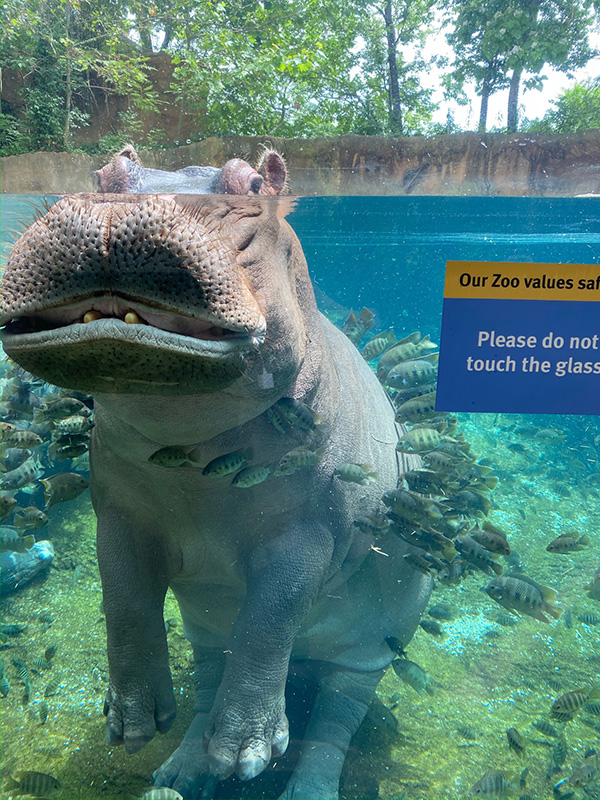
Hippopotamus from the Saint Louis Zoo
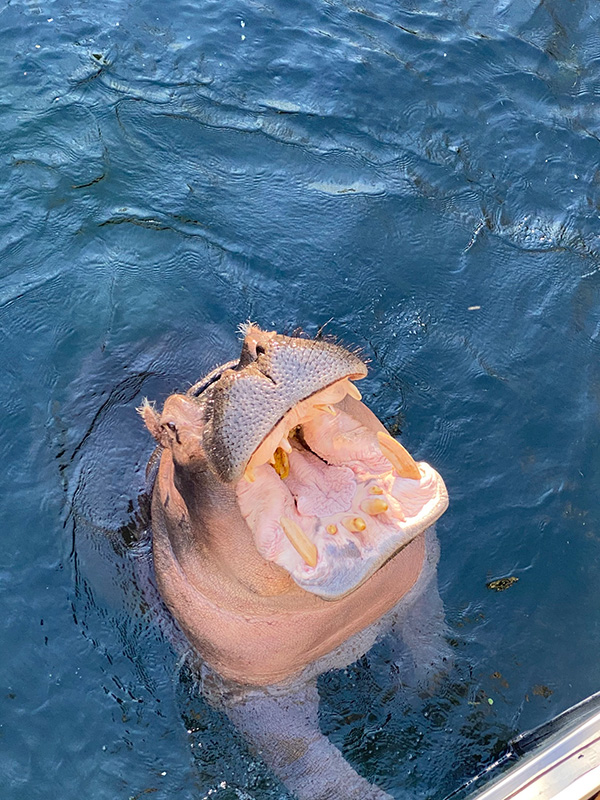
Credits
Hippopotamus, 1783–1640 BC; Egyptian, Middle Kingdom, Dynasty 13; faience; 3 3/4 x 7 1/4 x 2 7/8 inches; Saint Louis Art Museum, Funds given by Martha I. Love 242:1952
Courtesy of Madison Culbertson