Ceremonial Body Wrapper or Banner with a Large Sunburst (matahari) Design, 18th century; Indian, for the Indonesian market; cotton, painted mordants, block-printed dyes; textile: 76 3/8 x 109 7/16 inches; Royal Ontario Museum, Toronto, Canada. This acquisition was made possible with the generous support of the Louise Hawley Stone Charitable Trust Fund (2015.28.1) 2022.133; © Royal Ontario Museum, Photo: Brian Boyle
This audio guide presents a selection of textile works of painted and printed cloth known as chintz. Listen to the director's welcome, cocurators Philip Hu and Genny Cortinovis, professor Geoff Ward, and artists Renuka Reddy and Mee Jey share how this innovative and beautiful textile revolutionized fashion, industry, and global trade.
-
Access and Assistance
Free Public Wi-Fi
The Saint Louis Art Museum offers free Wi-Fi to visitors. From your device, access the SLAM_GUEST network.
Large Print Labels
Large-print labels are available on your own device and upon request at the Taylor Hall Welcome Desk.
AUDIO GUIDE TRANSCRIPT
The audio guide transcript is available to view on your own device.
-
Glossary and Videos
View a glossary of Indian Chintz.
Watch the videos to learn more about the global impact of cotton and the techniques used for creating Indian chintz textiles.

Introduction
- Transcript
Speakers
Min Jung Kim
Barbara B. Taylor Director
Saint Louis Art MuseumPhilip Hu
Curator of Asian Art
Saint Louis Art Museum[Min]
Hello, I am Min Jung Kim, Barbara B. Taylor Director of the Saint Louis Art Museum.I am delighted to welcome you to the audio guide for Global Threads: The Art and Fashion of Indian Chintz, an exhibition organized and circulated by the Royal Ontario Museum in Toronto, Canada. This exhibition traces the fascinating history, global transmission, and contemporary influence of painted and printed cotton textiles from India, popularly known as chintz.
Over many centuries, Indian artists and artisans perfected complex methods for textile decoration using plant-based substances to create an astonishing spectrum of vibrant colors that did not easily fade with exposure to light or washing. They developed dramatic and specialized designs to captivate new markets across Asia, Africa, Europe, and the Americas. These exceptional textiles played a major role in connecting cultures, influencing economic and political decisions, and revolutionizing fashion, industry, and global trade.
To tell you more, I would like to introduce Philip Hu, curator of Asian art and one of the cocurators of the exhibition.
[Philip]
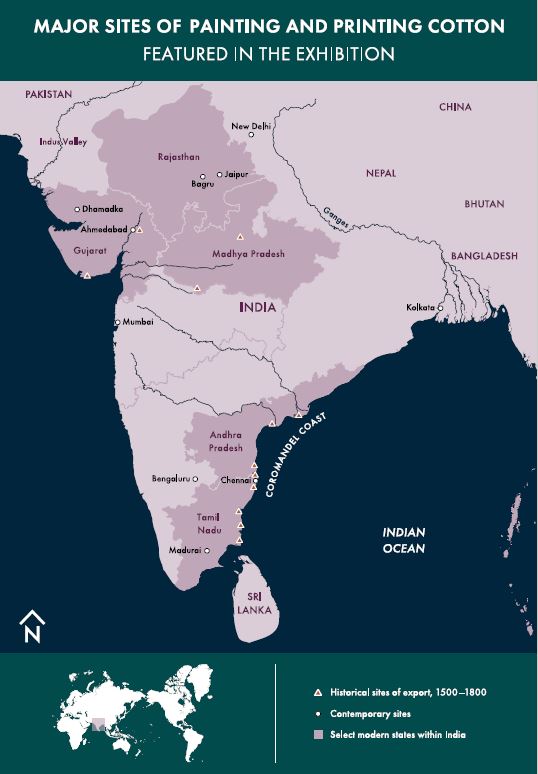
Thank you, Min. This exciting exhibition presents a wide range of chintz textiles produced in India for its own domestic consumption as well as for various international markets, among them Egypt, Sri Lanka, Iran, Indonesia, Thailand, Japan, Armenia, the Netherlands, France, and Great Britain. In a section on European and American dress and furnishing textiles inspired by Indian chintz, we address some of the historical consequences that were inextricably tied to the production and consumption of cotton textiles in the United States before and after independence.The exhibition concludes with the works of a number of contemporary Indian chintz artists who continue the innovation of this art form, with strong concern for environmental responsibility and sustainable practices.
The exhibition is a collaborative effort, and I would like to acknowledge the originating curator of the exhibition, Dr. Sarah Fee, Senior Curator of Global Fashion and Textiles at the Royal Ontario Museum, and my cocurator for the St. Louis presentation, Genny Cortinovis.
This exhibition audio guide offers commentaries from several individuals. In addition to my voice and that of Genny Cortinovis, you will be hearing from other scholars, artists, and community members.
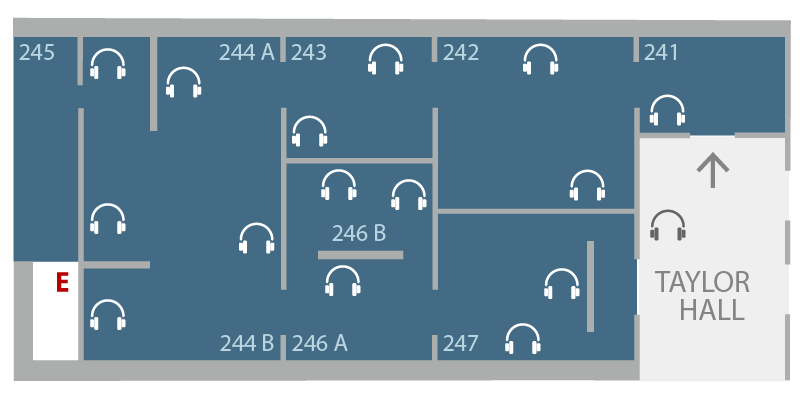
We encourage you to experience this guide in any order you like; you may follow it in numeric order or pick and choose. Each featured object can be located by following the floorplan on this webpage or by identifying the audio icon on the object’s label in the exhibition. Whether you’re listening from home or in the Museum galleries, I hope you enjoy this audio guide and your visit to Global Threads: The Art and Fashion of Indian Chintz.
- Gallery Text
Global Threads
The Art and Fashion of Indian ChintzFive thousand years ago, tree cotton (Gossypium arboreum) was domesticated by farmers in the Indus Valley in the northwest part of the Indian subcontinent. Centers for creating decorated cotton cloths therefore developed across much of India. Starting in the 17th century, these painted and printed cotton textiles became known in the West as “chintz,” a term derived from the Hindi chitte (singular) or chintes (plural), meaning “spotted,” “variegated,” or “sprayed.”
Over several centuries, Indian artisans perfected complex production methods using plant-based dyes and mordants to create a spectrum of colors resistant to fading when exposed to light or washing. Dramatic and specialized designs also captivated consumers worldwide. Indian chintz played a significant role in connecting cultures as well as revolutionizing fashion, industry, and global trade. Its success, however, led to factory-made imitations in Europe, which relied on underlying economic and political decisions often involving the exploitation of human and natural resources.
In addition to displaying a wide range of chintz textiles made in India for various international markets, this exhibition features a selection of European and American dress and furnishing textiles inspired by these fabrics. It also highlights contemporary Indian chintz artists who continue to advance this art form, but with a deep concern for environmental responsibility and sustainable practices.
Learn More