Collection Guide
Collection Guide
Explore art outside our galleries in the Grace Taylor Broughton Sculpture Garden and the wider campus. Enjoy audio commentary and transcripts from speakers with different perspectives.
-
Access and Assistance
Free Public Wi-Fi
The Saint Louis Art Museum offers free Wi-Fi to visitors. From your device, access the SLAM_GUEST network.
AUDIO GUIDE TRANSCRIPT
The transcript for each audio track is available in expandable sections of individual object pages.
Introduction
- Transcript
Speakers
Min Jung Kim
Barbara B. Taylor Director
Saint Louis Art MuseumSimon Kelly
Curator of Modern and Contemporary Art
Saint Louis Art Museum[Min Jung Kim]
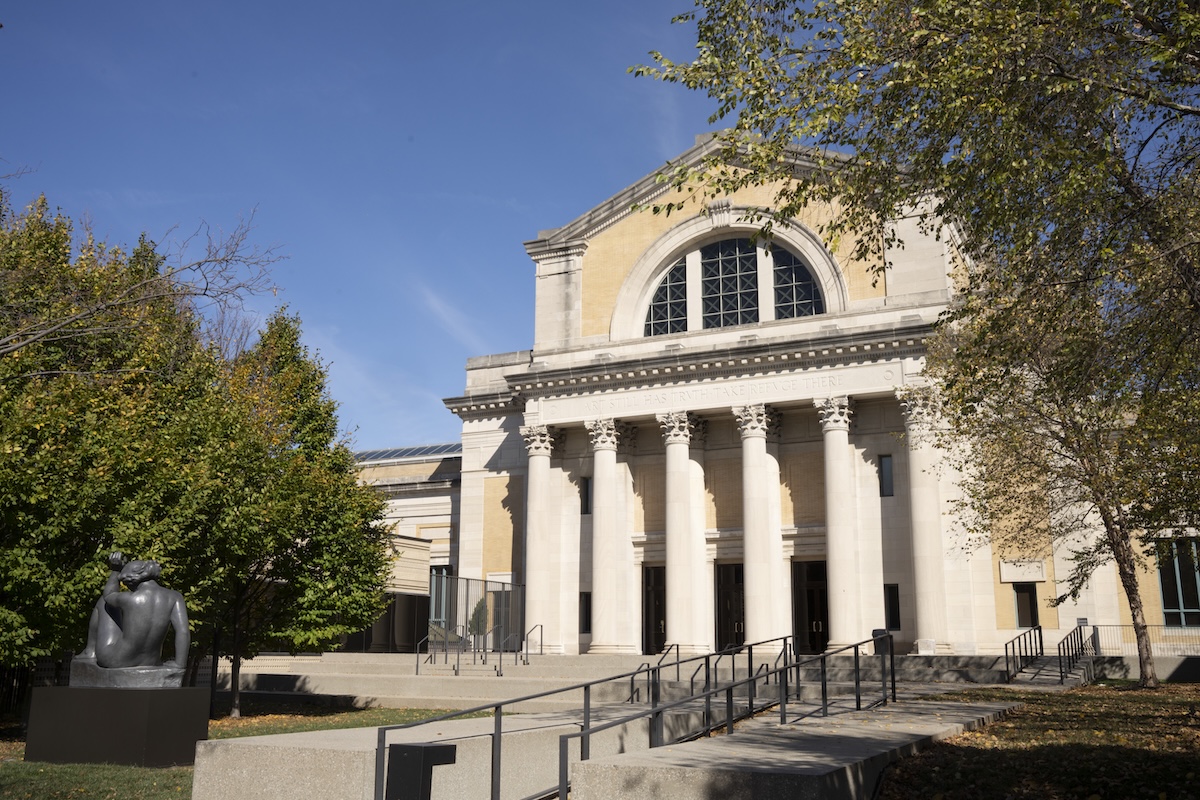
Hello, I’m Min Jung Kim, Barbara B. Taylor Director of the Saint Louis Art Museum.I’m delighted to welcome you to the audio guide for the Museum’s outdoor sculpture installation. This guide provides an introduction to the impressive range of sculptures which are on view around the whole campus of the Museum. At the center of the installation is the Grace Taylor Broughton Sculpture Garden, which opened in 2015. Here, you’ll find sculpture within a verdant setting of around four hundred trees. You’ll also be able to experience large-scale sculptures, which have been prominently sited in front of and alongside the museum. Seen as a whole, the outdoor sculpture installation highlights the Museum’s important connection to its home in Forest Park.
To tell you more, I’d like to introduce Simon Kelly, curator of modern and contemporary art, who curated the outdoor sculpture installation.
[Simon Kelly]
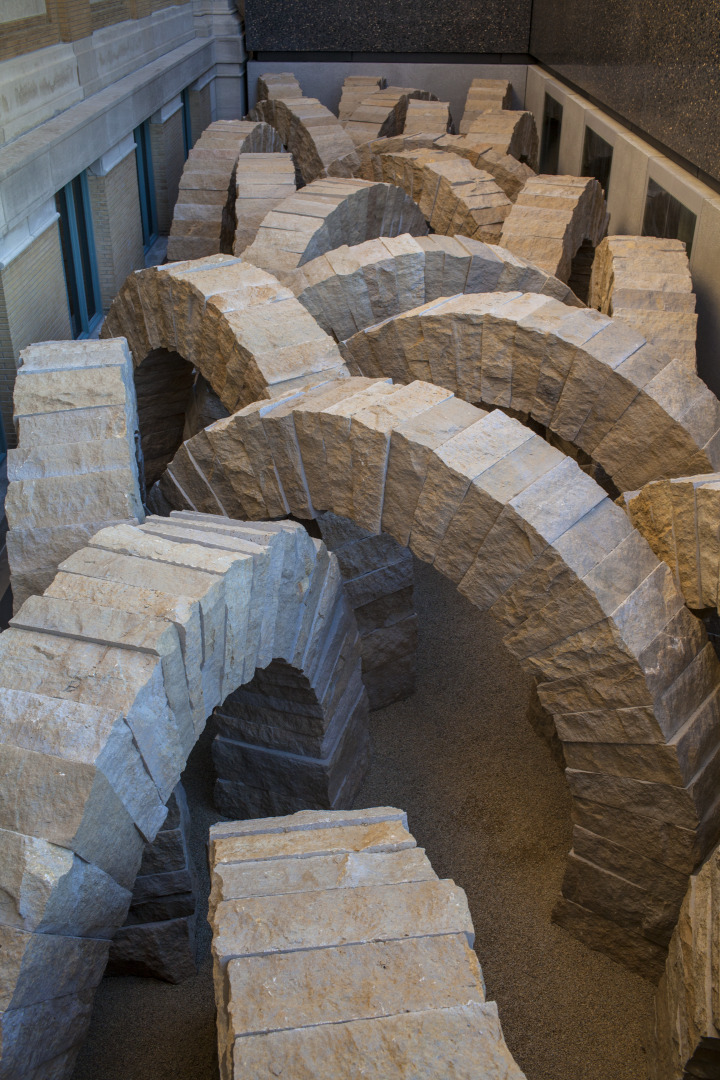
Thank you, Min. The Museum has a particularly strong group of modern sculptures of the human body, which we were able to install in the Grace Taylor Broughton Sculpture Garden. As you use this guide, you’ll see how modern sculptors engaged with the age-old theme of the body, ranging from the classical treatment by the French sculptor Aristide Maillol to the more subversive approach of the English sculptor Henry Moore. Elsewhere around the campus, you’ll see sculptures from the 1960s onwards, which highlight the ways in which sculptors explored more-abstract visual languages, ranging from Mark di Suvero’s kinetic piece, Praise for Elohim Adonai, to Andy Goldsworthy’s 300-ton Stone Sea, the largest object in the Museum’s collection. As you move around the Museum, you’ll see that outdoor sculpture has been the source of some of the most inventive and challenging modern and contemporary art.Whether you’re listening from home or walking around the sculpture installation, I hope you enjoy the guide.
0:00
0:00
Related Content
Collection Objects
![Giant Three-Way Plug, Scale A]()
![Praise for Elohim Adonai]()
![To Encircle Base Plate Hexagram, Right Angles Inverted]()
![Placebo]()
![Confluence]()
![The Mountain]()
![Two Piece Reclining Figure No. 1]()
![The Bather]()
![Herkules mit Hydra (Hercules and the Hydra)]()
![Stone Sea]()
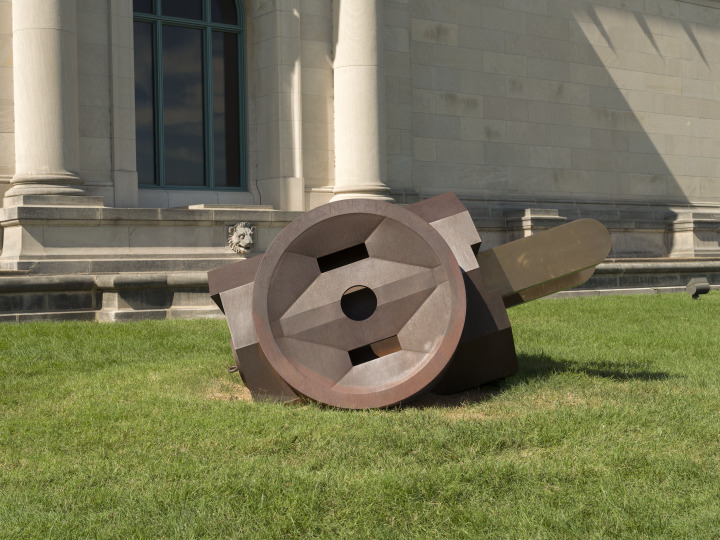
Giant Three-Way Plug, Scale A
- Material
- Cor-Ten steel and bronze
Praise for Elohim Adonai
- Material
- Painted steel and timber

To Encircle Base Plate Hexagram, Right Angles Inverted
- Material
- Hot-rolled steel

Placebo
- Material
- Stainless steel

Confluence
- Material
- Black granite

The Mountain
- Material
- Lead

Two Piece Reclining Figure No. 1
- Material
- Bronze

The Bather
- Material
- Bronze

Herkules mit Hydra (Hercules and the Hydra)
- Material
- Bronze

Stone Sea
- Material
- Missouri limestone