Romare Bearden, American, 1911–1988; Summertime (detail), 1967; collage on board; 56 x 44 inches; Saint Louis Art Museum, Museum Minority Artists Purchase Fund 22:1999; © 2024 Romare Bearden Foundation / Licensed by Artists Rights Society (ARS), New York
This exhibition audio guide explores the many ways Romare Bearden served as a friend and mentor to his contemporaries. Hear from Museum staff, a Romare Bearden Graduate Museum Fellow, and the co-director of the Romare Bearden Foundation.
-
Access and Assistance
Free Public Wi-Fi
The Saint Louis Art Museum offers free Wi-Fi to visitors. From your device, access the SLAM_GUEST network.
Large Print Labels
Large-print labels are available on your own device and upon request at the Taylor Hall Welcome Desk.
AUDIO GUIDE TRANSCRIPT
The audio guide transcript is available to view on your own device.

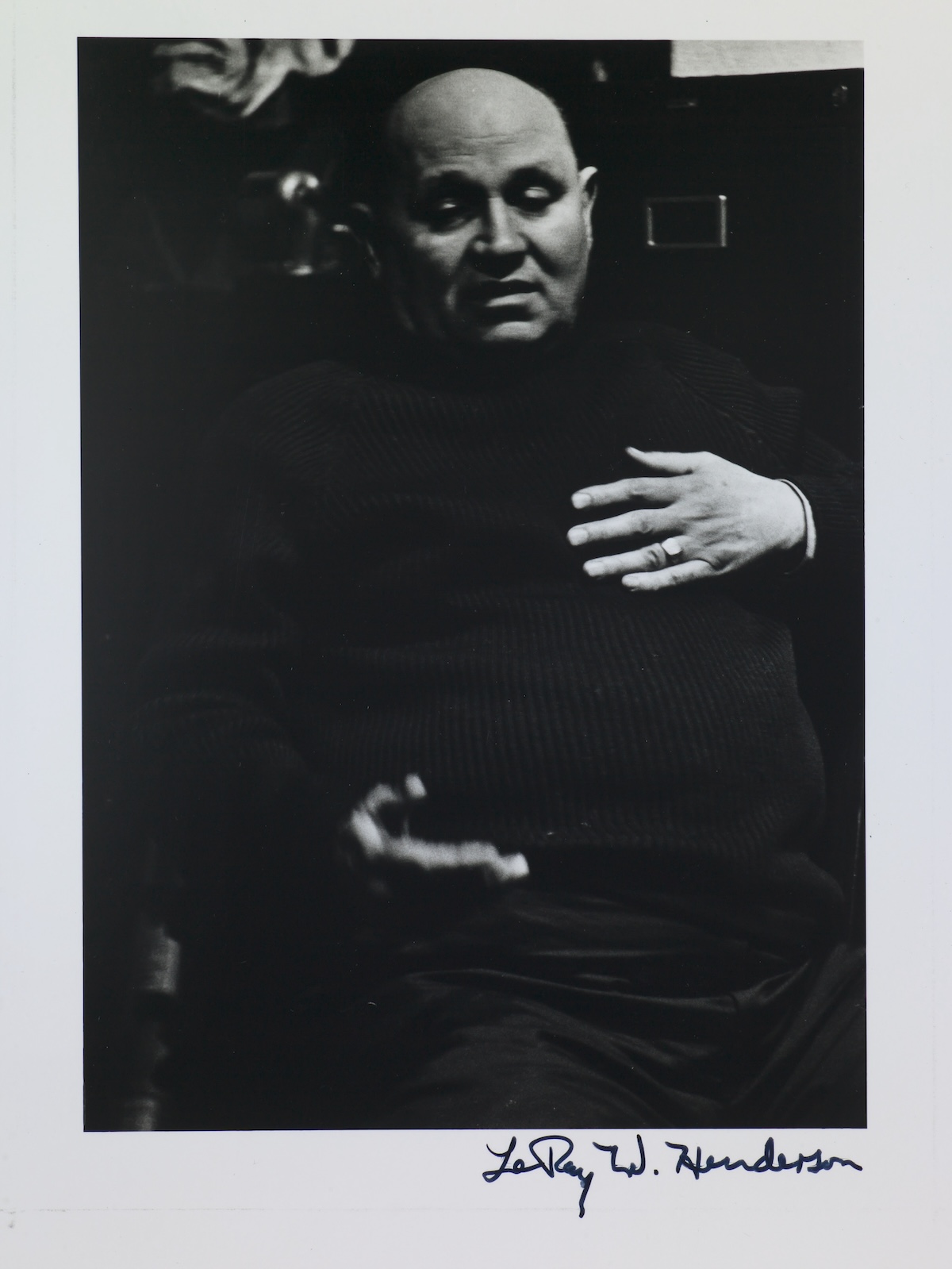
Untitled (Portrait of Romare Bearden), 1956–1988
LeRoy Henderson, American
- Transcript
Speaker
Diedra Harris-Kelley
Co-Director
Romare Bearden FoundationHello, my name is Diedra Harris-Kelley, one of the co-directors of the Romare Bearden Foundation.
Untitled (Portrait of Romare Bearden) seems to capture a side of the artist not many viewers think of when they look at his pictures—Bearden as educator, or spokesperson and activist. Though there’s a formal look to it, with Bearden centered and facing the camera, photographer LeRoy Henderson says it was a candid shot taken at a convening of artists sometime in the early 1970s.
The black-and-white photo is tightly cropped, framing Bearden seated, alone in the center. In the contrast of the picture, his dark clothing disappears into the background, highlighting the light skin of his face and hands in motion. The photographer seemed to turn the camera to Bearden just as he began to speak and captures a gesture—one hand rests flat on his chest, the other comes forward, palm out, as if offering something from his heart. Bearden’s round face is mature and serious, but warm like a revered leader.
Known for a keen sense of memory and observation that he was able to translate into unique expressions, Bearden would often hold court, telling stories and offering sage advice like a philosopher.
He involved himself with many of the movements of his day, particularly the struggles of African American artists for representation in museums and galleries. According to Henderson, when he took this, they were at a meeting of the Black Emergency Cultural Coalition, known as the BECC, an organization that first came together to protest the Metropolitan Museum of Art’s exclusion of Black artists in their Harlem on My Mind exhibition of 1969.
Jacob Lawrence, in speaking about Bearden’s attendance at the meetings of an earlier artist collective, the 306 Group, he said that Bearden was “an intellectually curious person in regard to his paintings. He was experimental and scholarly, very much involved and curious, and studied the old masters and moderns. He attended exhibitions outside of the Harlem community, and he would come back and talk about these things, as everyone did about their own experiences.” Henderson’s portrait captures Bearden in one such gesture of generous offer.
- Gallery Text
LeRoy Henderson,
American, born 1936Untitled (Portrait of Romare Bearden), c.1965
gelatin silver printThe Thelma and Bert Ollie Memorial Collection, Gift of Ronald and Monique Ollie 157:2017
Credits
LeRoy Henderson, American, born 1936; Untitled (Portrait of Romare Bearden), 1956–1988; gelatin silver print; image: 7 1/16 x 5 1/8 inches, sheet: 13 7/8 x 10 7/8 inches; Saint Louis Art Museum, The Thelma and Bert Ollie Memorial Collection, Gift of Ronald and Monique Ollie