Installation view of Storm of Progress: German Art After 1800 from the Saint Louis Art Museum
This audio guide includes a general introduction and 16 commentaries on the Saint Louis Art Museum’s collection of German art. For the first time, eight narrators from the Museum examine a full range of modern and contemporary art from 1800 to the early 2000s.
-
Access and Assistance
Free Public Wi-Fi
The Saint Louis Art Museum offers free Wi-Fi to visitors. From your device, access the SLAM_GUEST network.
Large Print Labels
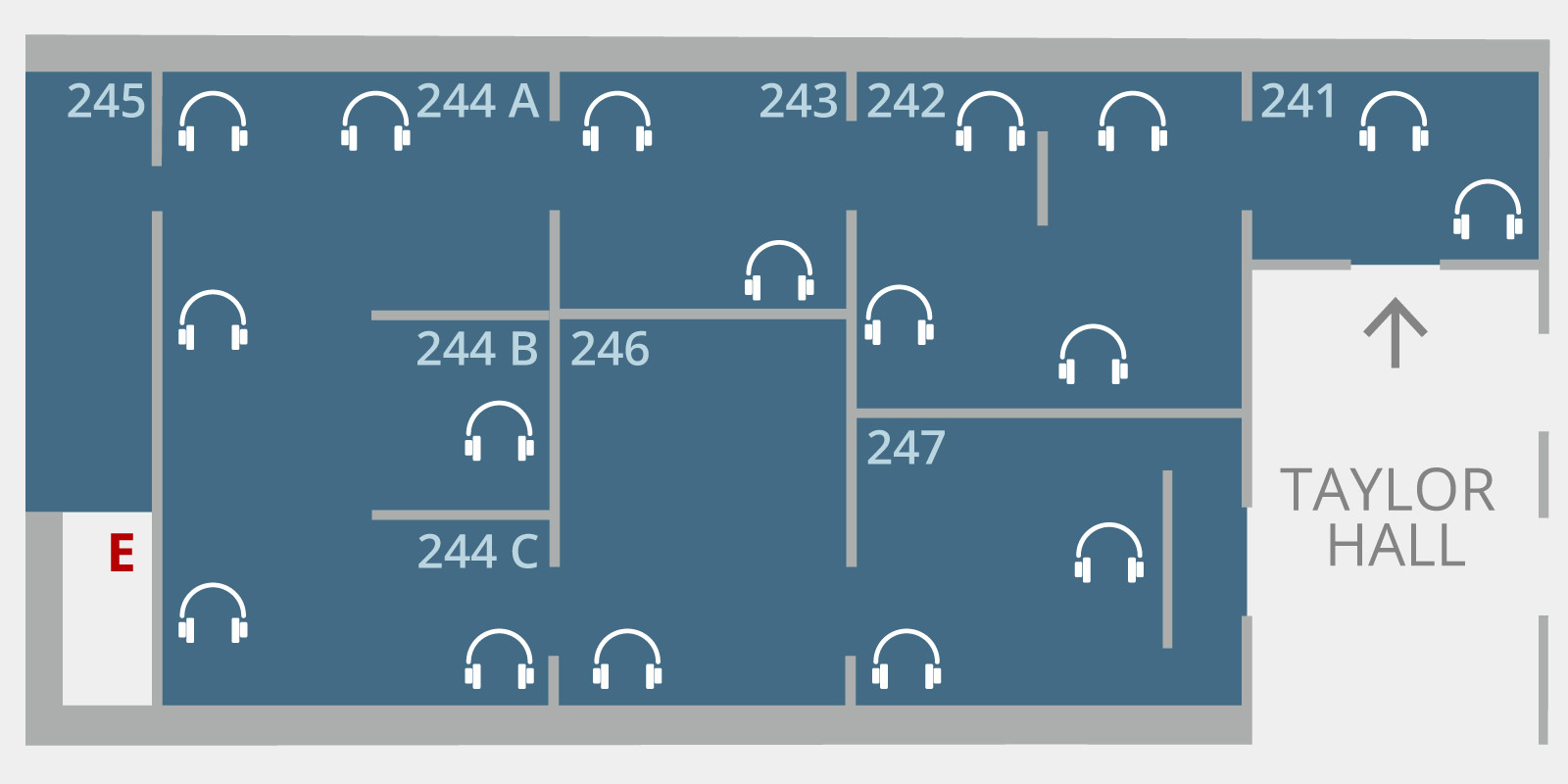
Large-print labels are available on your own device and upon request at the Taylor Hall Welcome Desk.
AUDIO GUIDE TRANSCRIPT
The audio guide transcript is available to view on your own device.

World Receiver Brüsselerstrasse, 1992
Isa Genzken
- Transcript
Speaker: Molly Moog
Research Assistant
Saint Louis Art MuseumA telescoping antenna extends out of this sculpture as though ready to receive a transmission. However, you won’t hear a sound coming from its core, a block of solid concrete. Renowned artist Isa Genzken has produced a series of these paradoxically silent radios, called World Receivers, starting in 1987, two years before the fall of the Berlin Wall. Evoking the global nature of radio transmission, many of the works in the series are titled after international cities. The title World Receiver Brüsselerstrasse encompasses the name of a street in Berlin as well as the capital of Belgium—Brüssels or Brussels.
Born in 1949 in northern Germany, Isa Genzken moved to Berlin with her family as a child. She studied at the famous Düsseldorf Art Academy in the 1970s and was exposed to works of American Minimalism on view in Düsseldorf art galleries.
In the 1980s Genzken moved to Cologne, a city still rebuilding after Allied bombing raids of the 1940s. She began casting the World Receivers in concrete, a material closely associated with postwar architecture. Germans of Genzken’s generation grew up in and around Modernist housing made from prefabricated concrete slabs that replaced the crumbling ruins left in the aftermath of World War II. The cracks and holes that mark the surface of World Receiver Brüsselerstrasse are reminiscent of wartime ruins themselves as well as the effects of time and weather on the cheaply constructed facades of postwar slab buildings. The intentionally rough surface treatment in Genzken’s sculpture highlights the vulnerability of what appears to be a solid and impenetrable material. Concrete is also the material of the Berlin Wall, constructed by East Germany in 1961 to stem the flow of defectors to the West. A symbol of Germany’s ideological division, the wall nevertheless could not prevent all communication between East and West Berlin.
Situated in a block of concrete, the antenna—a recurring symbol within Genzken’s body of work—brings to mind the radio stations that became sites of communication and propaganda transmission both within and across borders during the Cold War. However, it also suggests broader notions of connection, inspiration, and receptivity. A few years before she began her World Receiver series, Genzken made an oblong sculpture from plaster and the sweepings from her studio floor. Sticking a wire antenna in the top, she called the work Mein Gehirn (My brain)—a physical representation of artistic insight. Later she said of her World Receivers, “My antennas were also meant to be “feelers”—things you stretch out in order to feel something, like the sound of the world and its many tones.”
- Gallery Text
Blurring Boundaries: Globalism, Conceptualism, and the Fall of the Berlin Wall
As the 1980s progressed and the Cold War (1947–1991) continued unabated, some German artists became disillusioned with traditional politics and art’s role in society. Artists moved beyond monumental paintings and established conventions, working in a variety of scales and media and addressing everyday and banal subjects. On November 9, 1989, the East German government announced that the border between East and West Germany was to be opened. With this pronouncement, the Berlin Wall, the symbol of German division, was breached and subsequently destroyed. Less than a year later, on October 3, 1990, Germany was reunified, and a new chapter of global history began.The 1990s brought a renewed interest in experimental media, innovative techniques, and engagement with Germany’s new position on the international economic stage alongside its own complicated history. Employing alternative materials from concrete to papier-mâché, many artists used irony and humor to deny fixed meanings or legible narratives while blurring the boundaries of conventional art forms such as painting and sculpture.
Artists looked toward international trends, engaging with the diverse reality of a new world order. In the post-wall era, artists documented and commented on globalization, including the de-centering of global trade networks, expanding industry, and urban planning. Photography embraced digital methods to deconstruct cultural traditions, as information and technology rapidly evolved at the dawn of the new millennium.
Isa Genzken
German, born 1948World Receiver Brüsselerstrasse, 1992
cast concrete and telescoping radio antennaThe familiar sight of a raised antenna transforms this concrete block into a silent radio. Isa Genzken used concrete to reference the cold, raw material of postwar German reconstruction. World Receiver Brüsselerstrasse is subtitled with the name of a street (Brüsselerstraße in Berlin) and an international city (Brüssel, or Brussels), evoking the global nature of radio transmission. Radio waves cannot be blocked by borders or walls, so radio programs became a site of propaganda transmission during the Cold War.
Partial and promised gift of Betsy Millard, the Earl and Betsy Millard Collection 42:2003
Credits
Isa Genzken, German, born 1948; World Receiver Brüsselerstrasse, 1992; cast concrete and telescoping radio antenna; 40 9/16 x 4 1/2 x 5 1/2 inches; Saint Louis Art Museum, Partial and promised gift of Betsy Millard, the Earl and Betsy Millard Collection 42:2003; © Isa Genzken / David Zwirner Gallery, New York