Antonio Senape, Italian, 1788–1850; Malta presa dalla Città Vecchia(detail), 19th century; pen and brown ink with graphite underdrawing; 6 1/4 x 10 3/4 inches; Saint Louis Art Museum, Gift of Albert and Mona Miller 289:1979.17

Among the more than 16,000 works in the Museum’s prints, drawings, and photographs collection, there are still many exciting research discoveries to be made. Recently, I decided to delve a bit deeper into an album that caught my eye back when I started at SLAM in 2020. The 28 drawings, still in an original binding, intrigued me initially because of their subject matter. In an elegant hand, beneath each drawing, is written the name of the place depicted. In total, the drawings chart a scenic journey from Naples and the surrounding towns in southern Italy all the way to the islands of Sicily and Malta. Drawn in pen and ink with very clean and confident lines, the scenes capture both the natural and built scenery along the way, animated by all manner of figures.
-
Antonio Senape, Italian, 1788–1850; Palazzo Reale , 19th century; pen and brown ink with graphite underdrawing; 6 1/2 x 10 1/2 inches; Saint Louis Art Museum, Gift of Albert and Mona Miller 289:1979.4
-
Antonio Senape, Italian, 1788–1850; Valle di Gragnano , 19th century; pen and brown ink with graphite underdrawing; 7 1/2 x 12 inches; Saint Louis Art Museum, Gift of Albert and Mona Miller 289:1979.24
-
Antonio Senape, Italian, 1788–1850; Monastero di Montecasino , 19th century; pen and brown ink with graphite underdrawing; 6 1/2 x 10 1/2 inches; Saint Louis Art Museum, Gift of Albert and Mona Miller 289:1979.22
-
Antonio Senape, Italian, 1788–1850; Bel’ Vedere sopra Monte Coppola a Castellamare , 19th century; pen and brown ink with graphite underdrawing; 7 1/2 x 12 1/4 inches; Saint Louis Art Museum, Gift of Albert and Mona Miller 289:1979.18
-
Antonio Senape, Italian, 1788–1850; Pozzuoli da Monte novo, 19th century; pen and brown ink with graphite underdrawing; 6 1/2 x 10 3/4 inches; Saint Louis Art Museum, Gift of Albert and Mona Miller 289:1979.7
-
Antonio Senape, Italian, 1788–1850; Chiostro di Montecassino, 19th century; pen and brown ink with graphite underdrawing; 6 5/8 x 10 1/2 inches; Saint Louis Art Museum, Gift of Albert and Mona Miller 289:1979.23


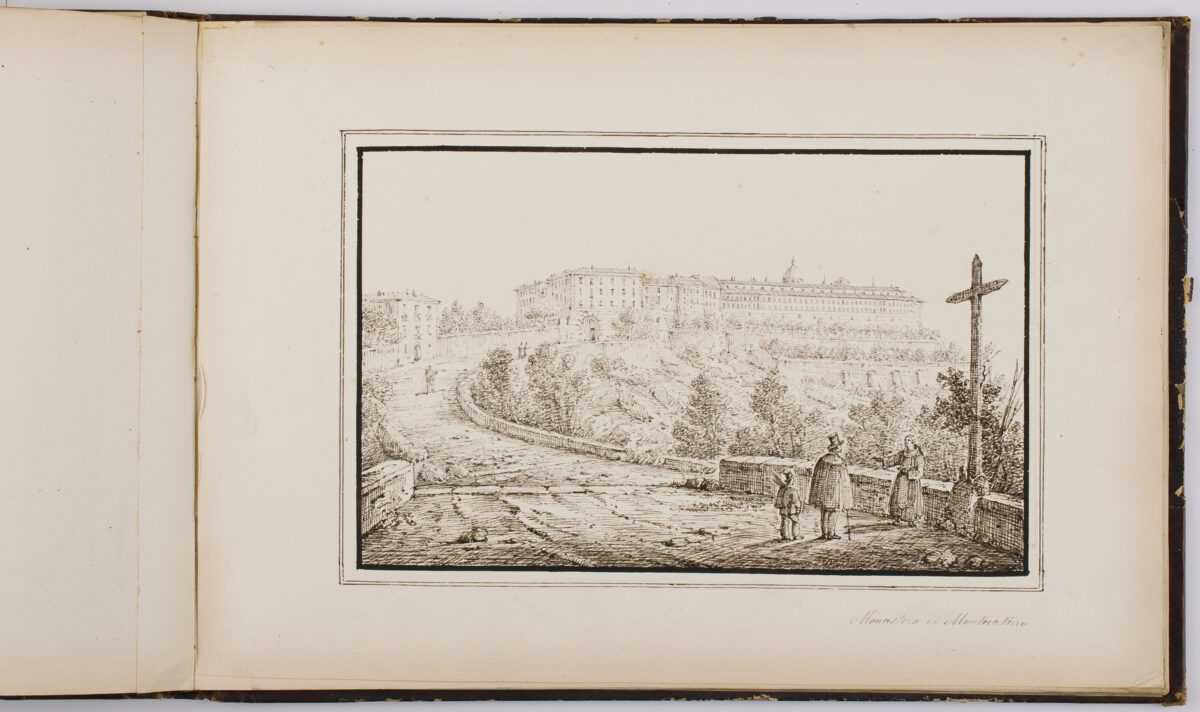
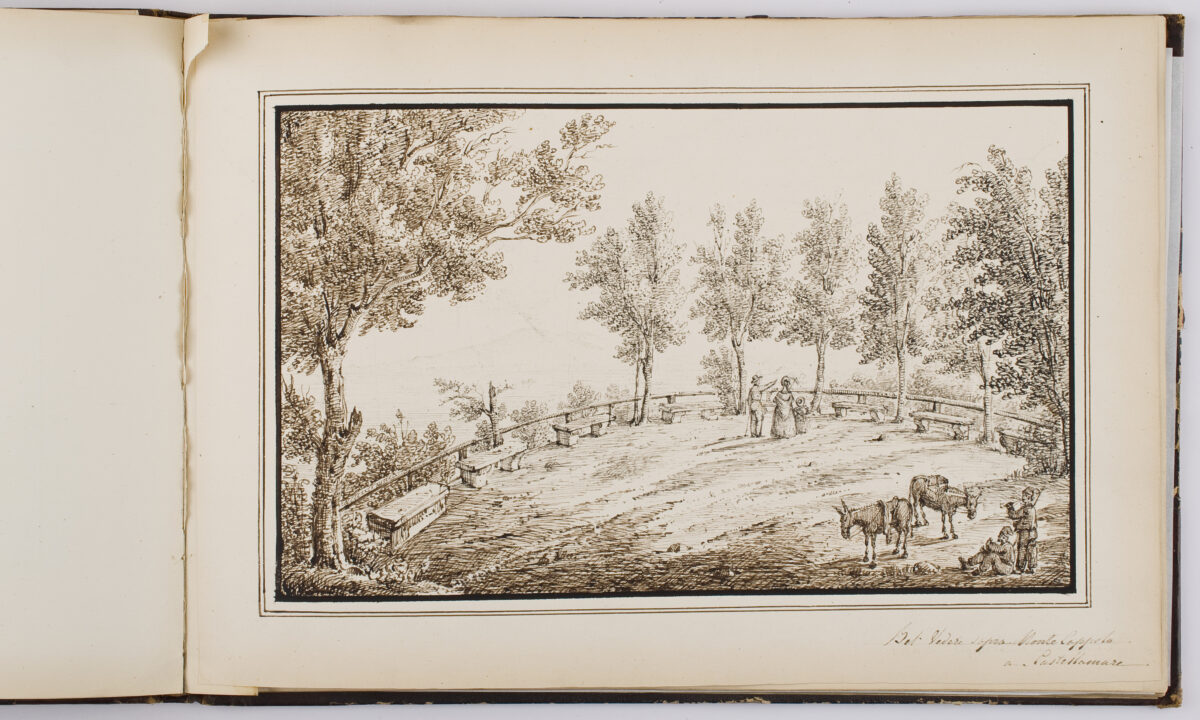
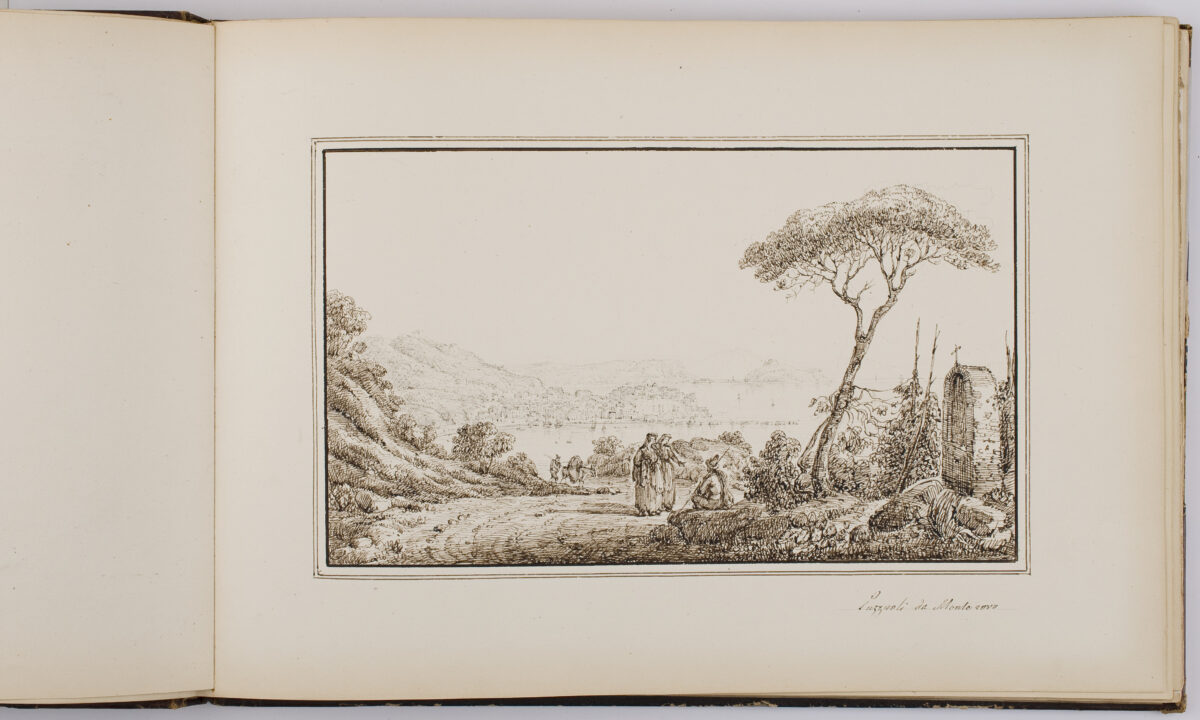
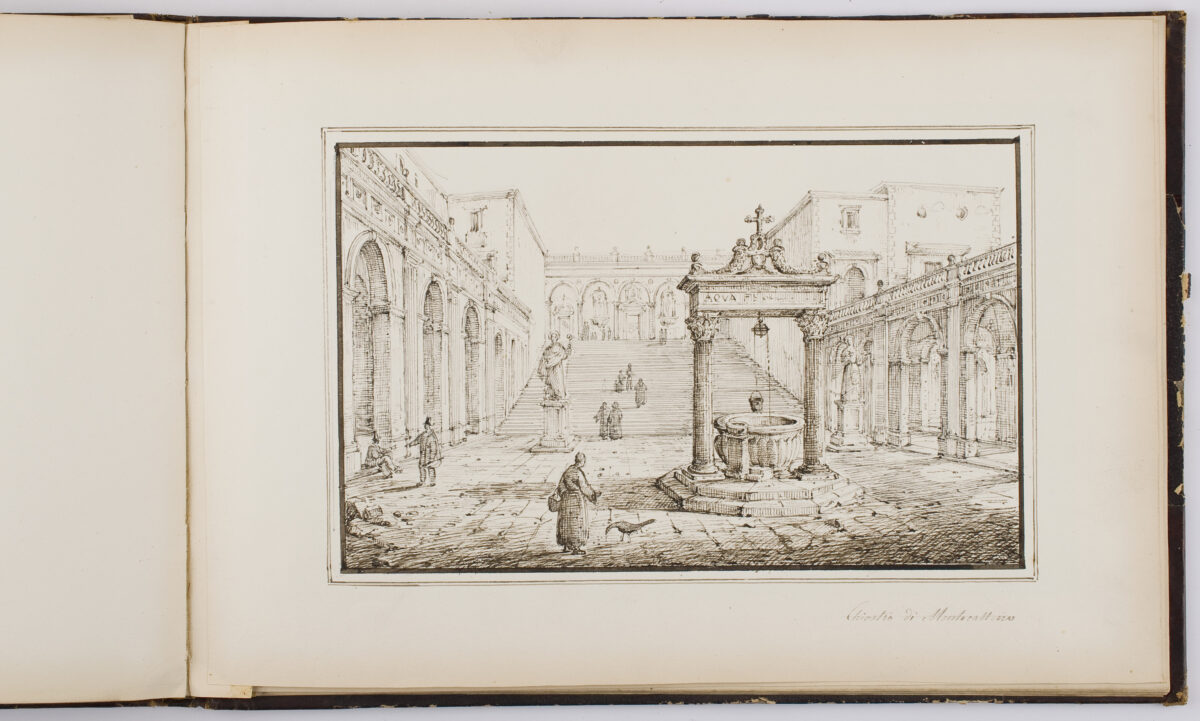
I wondered about who might have made the drawings, for what purpose, and more broadly, how they fit into the story of travel in 19th–century Italy. The album had at some point been linked to the style of the 18th–century German artist Ferdinand Kobell. Looking at work by Kobell in other collections, like the drawing from The Metropolitan Museum of Art seen below, I wondered whether our drawings were such a good match.

Ferdinand Kobell, German, 1740–1799; Landscape with a Brook and Farm Buildings, late 18th century; pen and brown ink on paper; sheet: 6 15/16 x 9 13/16 inches; The Metropolitan Museum of Art, Harry G. Sperling Fund, 2011 2011.297.
Kobell favored layering a fluid, looping line in comparison to the album’s drawings’ much more even and linear use of hatching. So, I set off in search of other candidates among artists making landscape views in Italy in the 18th and 19th centuries, and I found a rather more likely possibility. Through research, we have been able to update our database with the artist responsible for the work: Antonio Senape.
Rather little is known about Senape, but he seems to have been an incredibly prolific draftsman. There are drawings by him at the Nelson-Atkins Museum of Art and the Minneapolis Institute of Art as well as whole albums at the National Gallery of Art, the University of Virginia library, and the Biblioteca Nazionale in Naples, among others. Most of what is known about Senape comes from inscriptions he wrote on his drawings, which locate him as a Roman living in Naples.

Antonio Senape, Italian, active 1820-1849; View of Siracusa, 19th century; pen and black and blue ink on wove paper; sheet: 11 15/16 x 17 inches; Minneapolis Institute of Art, Bequest of Professor Alfred Moir 2012.58.208
The inscriptions also give clues about the audience for drawings and albums such as these; they regularly include the names of visitors, many of whom came from England. Building on patterns of travel from earlier centuries, Italy remained a popular destination, especially for the opportunities it offered to encounter art, architecture, and increasingly, the natural landscape of places like the volcano Vesuvius. The circulation of prints and drawings depicting such scenes both attracted travelers, setting expectations for what they might see, and could serve as souvenirs to help recount memories later on. The format of the album contributed to this sense of journey, one undertaken through turning the pages of the volume.

Antonio Senape, Italian, 1788–1850; Peschiera di Polione a Sorento, 19th century; pen, brush and brown ink with graphite underdrawing; 7 3/8 x 12 inches; Saint Louis Art Museum, Gift of Albert and Mona Miller 289:1979.26

Antonio Senape, Italian, 1788–1850; Chiostro dei Cappucini di Amalfi, 19th century; pen, brush and brown ink with graphite underdrawing; 7 x 11 1/4 inches; Saint Louis Art Museum, Gift of Albert and Mona Miller 289:1979.25
An inscription in another album of his drawings tells us how Senape described himself as a “draftsman of landscapes in pen, who gives lessons in the same genre,” and it is this role as a teacher that may give us a clue to the last two drawings in the Museum’s album, pictured above. As was noted when SLAM’s album was acquired, they differ in appearance from the rest. Perhaps they are instead the work of a student who adopted Senape’s approach—but a little less cleanly. Taken together, this album tells the story of drawing as a means to look closely at a place and transform it into a memory.
Because works of art on paper are light sensitive, they can only be exhibited for short periods of time. Visitors may make appointments to view works on paper in the Print Study Room.