New Ireland artist, Papua New Guinea; Memorial (malagan), late 19th to early 20th century; wood, pigment, shell; 17 1/2 x 5 1/8 x 59 13/16 inches; Saint Louis Art Museum, Museum Purchase 244:1952
Communities across Oceania embrace family members long passed as full participants in their daily lives. For example, many people turn to their ancestors for guidance or assistance.
In Melanesia, a chain of islands in the Pacific that extends from New Guinea to New Caledonia, it is a common belief that an ancestor may make themself present to the living at any moment with the power to manifest as multiple forms, including animals such as hornbills, crocodiles, pigs, catfish, and others. These embodiments are frequently represented in Melanesian art, examples of which can be found in Morton D. May and Louis D. Beaumont Galleries 106, 107, and 108.
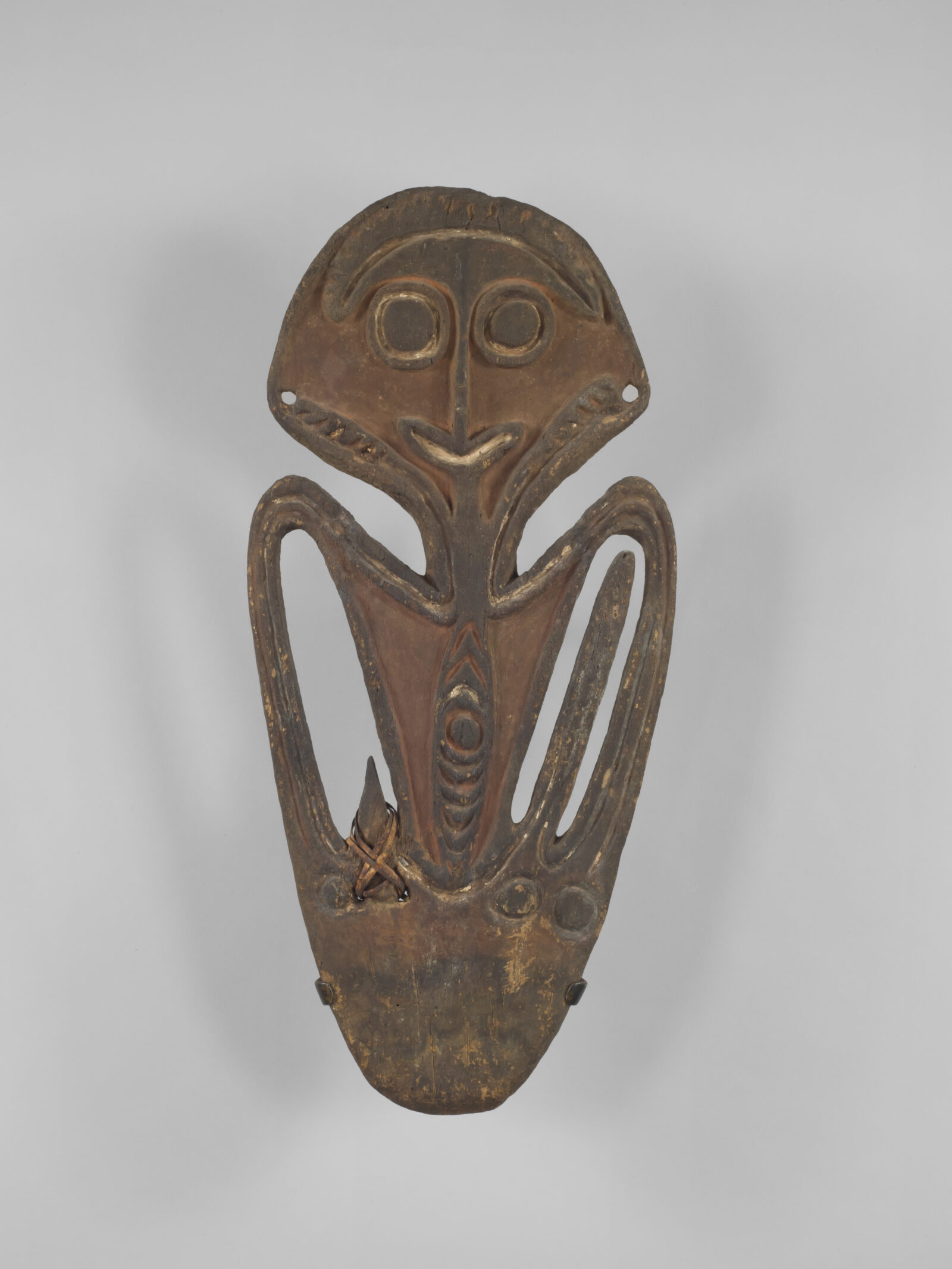
Kerewa artist, Papua New Guinea; Figure (agiba), 19th century or earlier; wood, pigment; 26 3/4 x 12 1/2 inches; Saint Louis Art Museum, Gift of Morton D. May 123:1975
The nearly two-dimensional abstraction of the human figure shown above represents an important spirit associated with hunting and warfare. Called agiba, sculptures like this were reportedly made by senior initiated men who had successfully participated in a raid. Skulls were attached to or placed near agiba. While some of these skulls were ancestral remains, others were trophies—until the late 19th century when colonial governments suppressed warfare and headhunting. Men presented offerings before the agiba when seeking the assistance of the ancestors for war expeditions or when planting crops.
The most important of these artworks are set in communal ceremonial men’s houses. In the men’s houses, social governance, grand ceremonies including boys’ initiations into adulthood, and renewal of alliances between familial groups occur under the eyes of the ancestors.

Astrolabe Bay artist, Papua New Guinea; Male Figure (telum), mid- to late 19th century; wood, pigment; 51 3/16 x 9 5/8 inches; Saint Louis Art Museum, Gift of Morton D. May 43:1977
The work shown above depicts a bird, possibly a hornbill, sitting atop a figure’s head. The bird likely indicates the clan to which the important individual represented belonged. In New Guinea, each animal or plant species is linked to a precise clan or familial group by descent. Beneath the figure’s chin, a component of body decoration conveys high social status among men from Astrolabe Bay. This sculpture would have appeared along with similar examples in the communal men’s house. There, young men would see the sculptures during their initiation to adulthood.

Telei artist, Papua New Guinea; Ceremonial Shield (koka) (front), probably early 20th century; wood, pigment, shell; 20 1/2 x 19 13/16 inches; Saint Louis Art Museum, Gift of Morton D. May 66:1977

Telei artist, Papua New Guinea; Ceremonial Shield (koka) (back), probably early 20th century; wood, pigment, shell; 20 1/2 x 19 13/16 inches; Saint Louis Art Museum, Gift of Morton D. May 66:1977
The Telei people of southern Bougainville Island also used sculptures during ceremonies for the initiation of young boys into adult life. The double-headed figure in the center of the ritual shield shown above most likely represents a young man. He wears a painted hat identifying him as a member of an initiatory society. These shields also appeared in the context of wedding ceremonies.
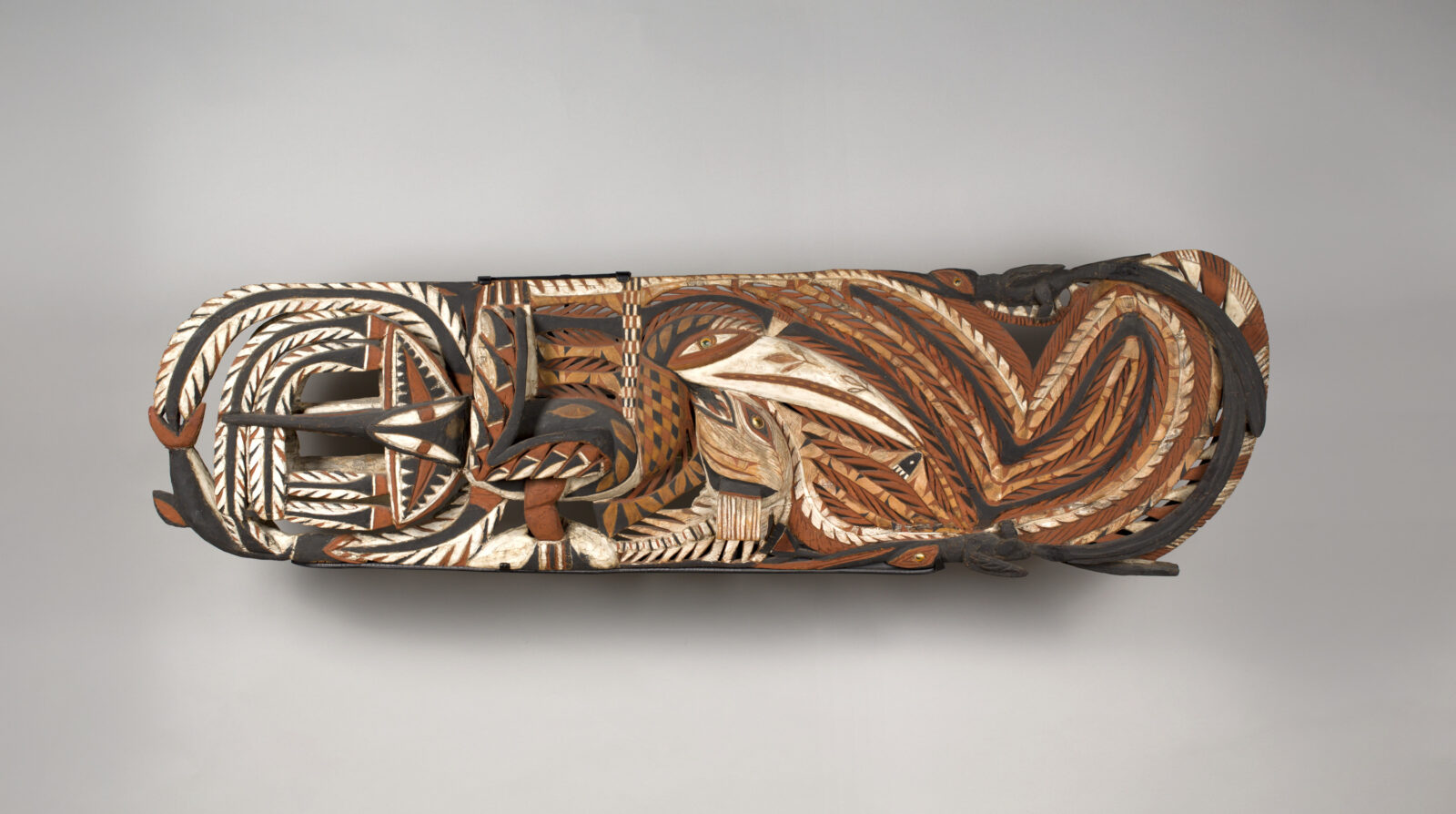
New Ireland artist, Papua New Guinea; Memorial (malagan), late 19th to early 20th century; wood, pigment, shell; 17 1/2 x 5 1/8 x 59 13/16 inches; Saint Louis Art Museum, Museum Purchase 244:1952
Memorial (malagan) and other similar sculptures were created to honor the deceased. As part of memorial ceremonies, a large group of such sculptures were displayed beneath a structure built upon the collective graves of the most-esteemed ancestors, next to the men’s ceremonial house. This sculpture represents infinite varieties of subject matter interpreted as spirits, who are the keepers of forests and waterways.
Managers of the law, the ancestors oversee humans’ compliance and may interfere in their activities. Ancestors are the focus of ceremonies and secret acts invoked by Melanesians to guarantee the success of their endeavors.
To assure the ancestors’ support and thank them for their beneficence, men and women make offerings of flowers, leaves, or food before sculptures that represent the ancestors and may be considered living themselves.
Melanesian art is the strength of SLAM’s Oceanic collection. View these works in the context of other Oceanic art by visiting Level 1 of the Museum.