Main Building north entrance
“Art in the Architecture” is a 1 Fine Arts Blog series dedicated to the ornamental details on the Saint Louis Art Museum’s Main Building, which was designed by Cass Gilbert for the Louisiana Purchase Exposition. In 1904, the building was flanked by sprawling, temporary wings that together formed the Palace of Fine Arts, which presented fairgoers with approximately 11,000 works of art from 26 countries. It is the sole surviving building from the World’s Fair.
Two sculptures, cast in bronze, sit majestically atop the Museum’s Main Building, which was originally built for the 1904 World’s Fair. While they are identical in shape and size, these mythological sculptures are not the originals. The original griffins were created to adorn the World’s Fair Palace of Fine Arts. Ninety years after the original works’ installation, the two sculptures were replaced with replicas.

after Alexander Phimister Proctor, American (born Canada), 1862–1950; Acroteria: Griffin (replica of 115:1945), 1993; sheet copper, gilded; 57 1/16 x 47 13/16 x 21 3/16 inches, base: 47 13/16 x 21 3/16 inches; Saint Louis Art Museum

after Alexander Phimister Proctor, American (born Canada), 1862–1950; Acroteria: Griffin (replica of 116:1945), 1993; sheet copper, gilded; 57 1/2 x 47 13/16 x 21 3/16 inches, base: 47 13/16 x 21 3/16 inches; Saint Louis Art Museum
In 1903, internationally known artist Alexander Phimister Proctor was contacted by Karl Bitter, the head of sculptural decoration at the World’s Fair, to create two unique finials for the north facade of the Palace of Fine Arts. According to Wildlife and Western Heroes by Peter H. Hassrick, “Proctor’s job was to enhance the museum’s primary entrance with symbolic cultural guardians.” In Greek mythology, griffins are creatures with the head of an eagle and the body of lion, and they guard buildings and hoards of treasure. Proctor’s Acroteria: Griffins were constructed from hammered copper, originally covered in gold leaf. Ready for battle, they sat taut with open beaks and raised wings. The two sculptures were accessioned into the Museum’s permanent collection in 1945.
-
Deinstallation: Anthony Schlader removing the original griffins, 1994. Archival Slide Collection. Courtesy of Saint Louis Art Museum Archives.
-
Replica of Acroteria: Griffin being photographed as workmen prepare it for installation on north front of Museum, 1994. Archival Slide Collection. Courtesy of Saint Louis Art Museum Archives.
-
Installation: Griffin replicas being added on the roof, 1994. Courtesy of Saint Louis Art Museum Archives.
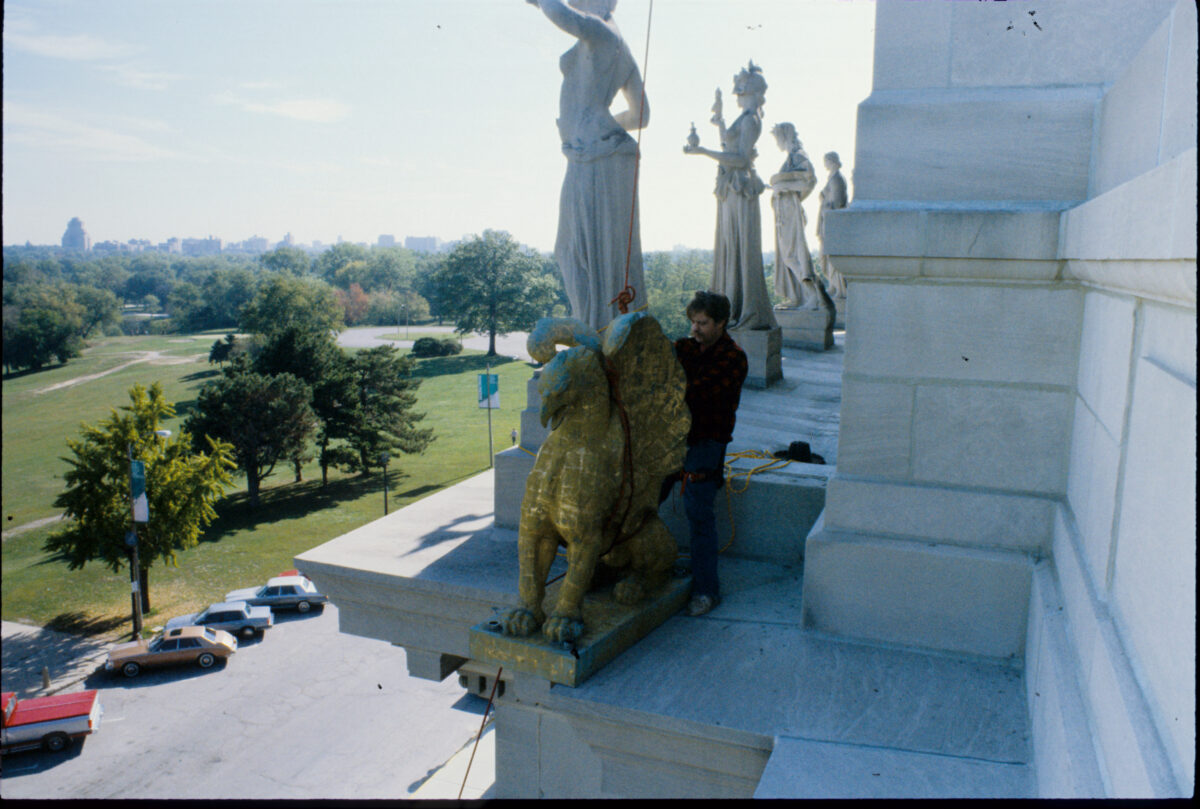
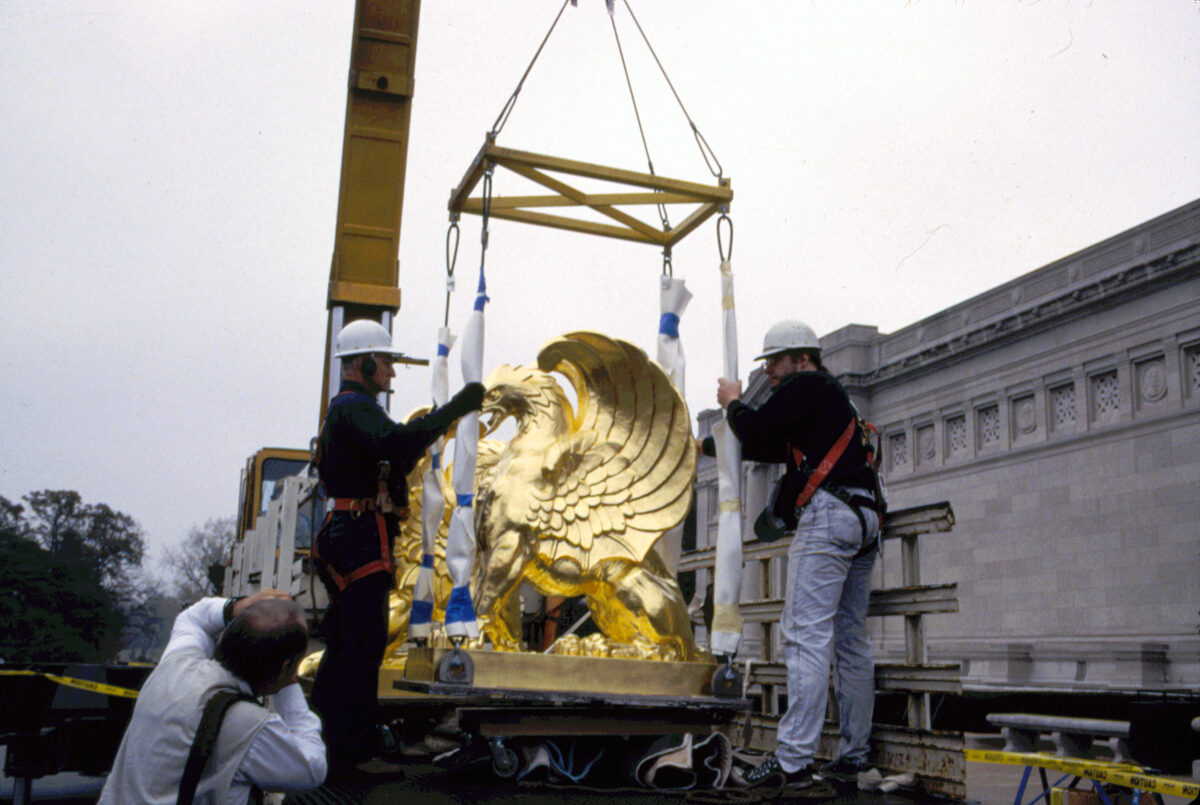
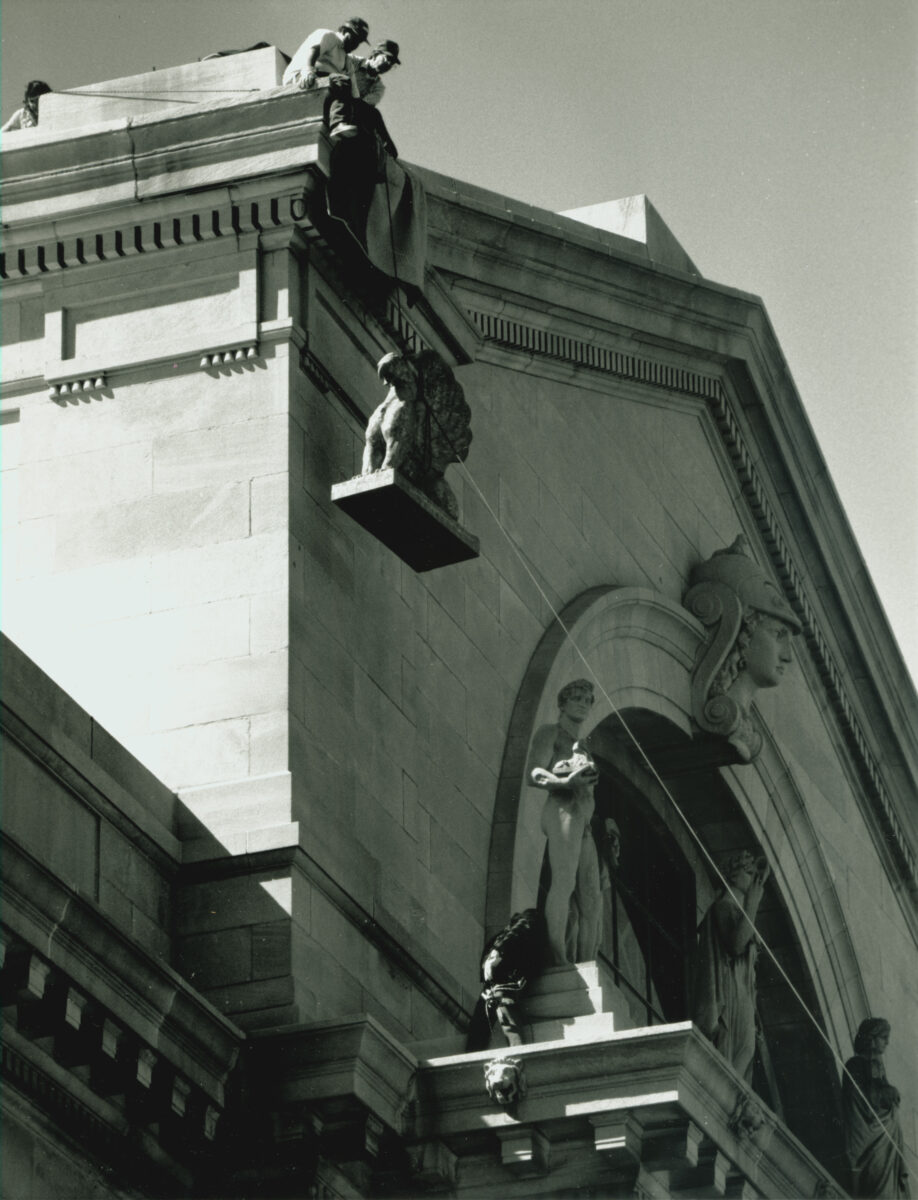
Proctor’s original sculptures were removed in 1994 to protect them from St. Louis’s erratic elements. Two bronze-cast replicas created by Modern Art Foundry in 1993 continue to guard the Museum. Proctor’s 1904 Griffins are safe from the elements in storage.
Proctor was a Canadian-born, American-raised sculptor. He was fascinated with animals from an early age, brought on by hunting excursions in Colorado, where his family moved in 1871. Proctor began his artistic career by sketching, receiving commissions by notable Coloradans. Dedicating his life to art, he attended formal institutions, including the National Academy of Design and the Art Students League in New York. Studying under and working with renowned sculptors, Proctor was “artist among America’s highest ranks” of animalier sculptors by the end of the 19th century, according to Wildlife and Western Heroes. Other works by the artist include Buffalo in Washington DC, Bronco Buster in Denver, and the General John Logan Monument in Chicago, which he worked on with Augustus Saint-Gaudens, who created the temporary sculpture of Painting, also for the Palace of Fine Arts building at the World’s Fair.