Installation view of The Invisible Made Visible: Angels from the Vatican (1998)
The “Blockbuster Exhibition” series highlights past exhibitions that had mass appeal, drawing up to 200,000 visitors or more.
A 1998 blockbuster exhibition posed the question: How do we make the invisible visible?
A total of 205,299 visitors—that’s an average of nearly 2,700 each day—came through the Saint Louis Art Museum to try and answer that question during the summer run of The Invisible Made Visible: Angels from the Vatican.
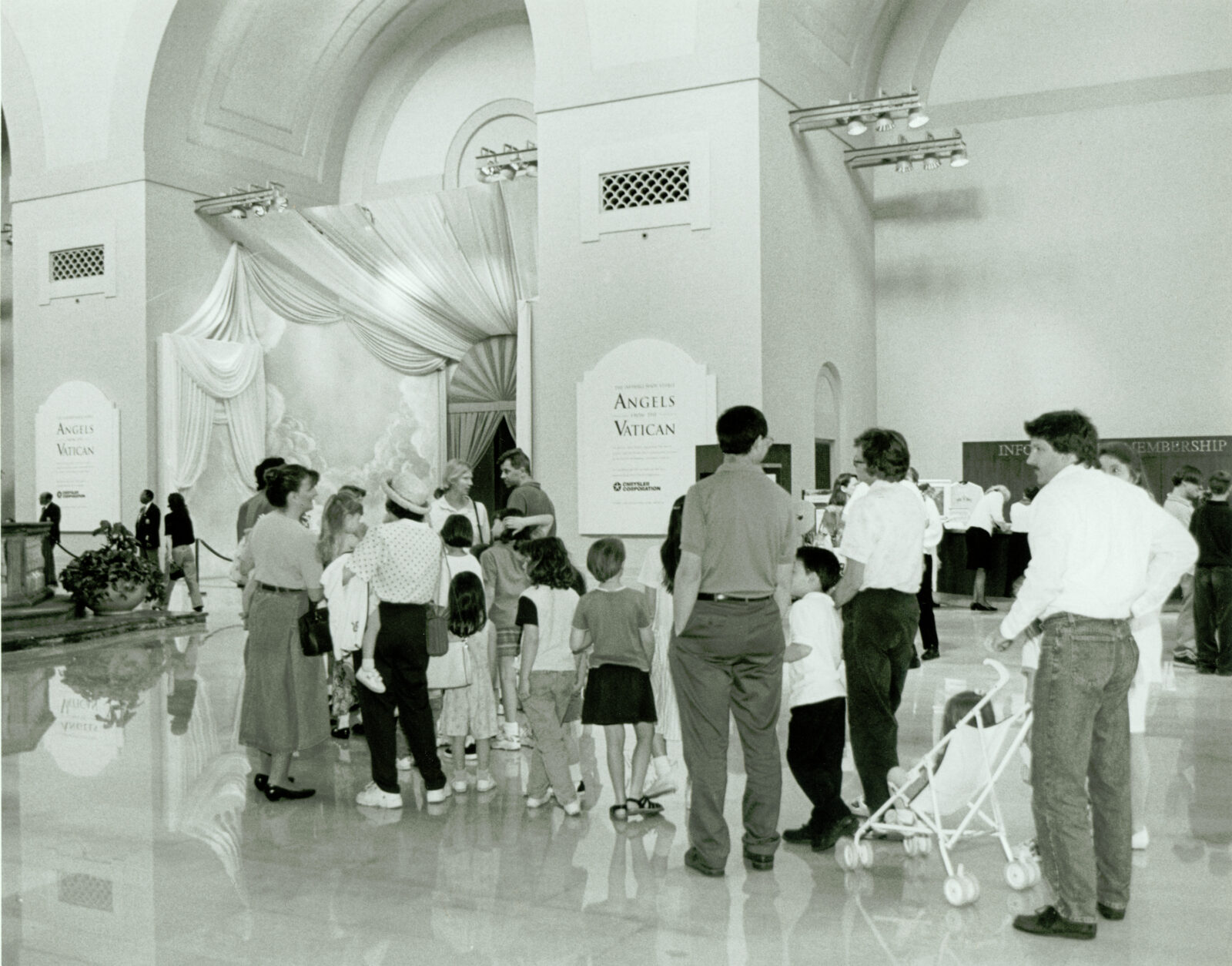
Visitors at the Saint Louis Art Museum for The Invisible Made Visible: Angels from the Vatican in 1998
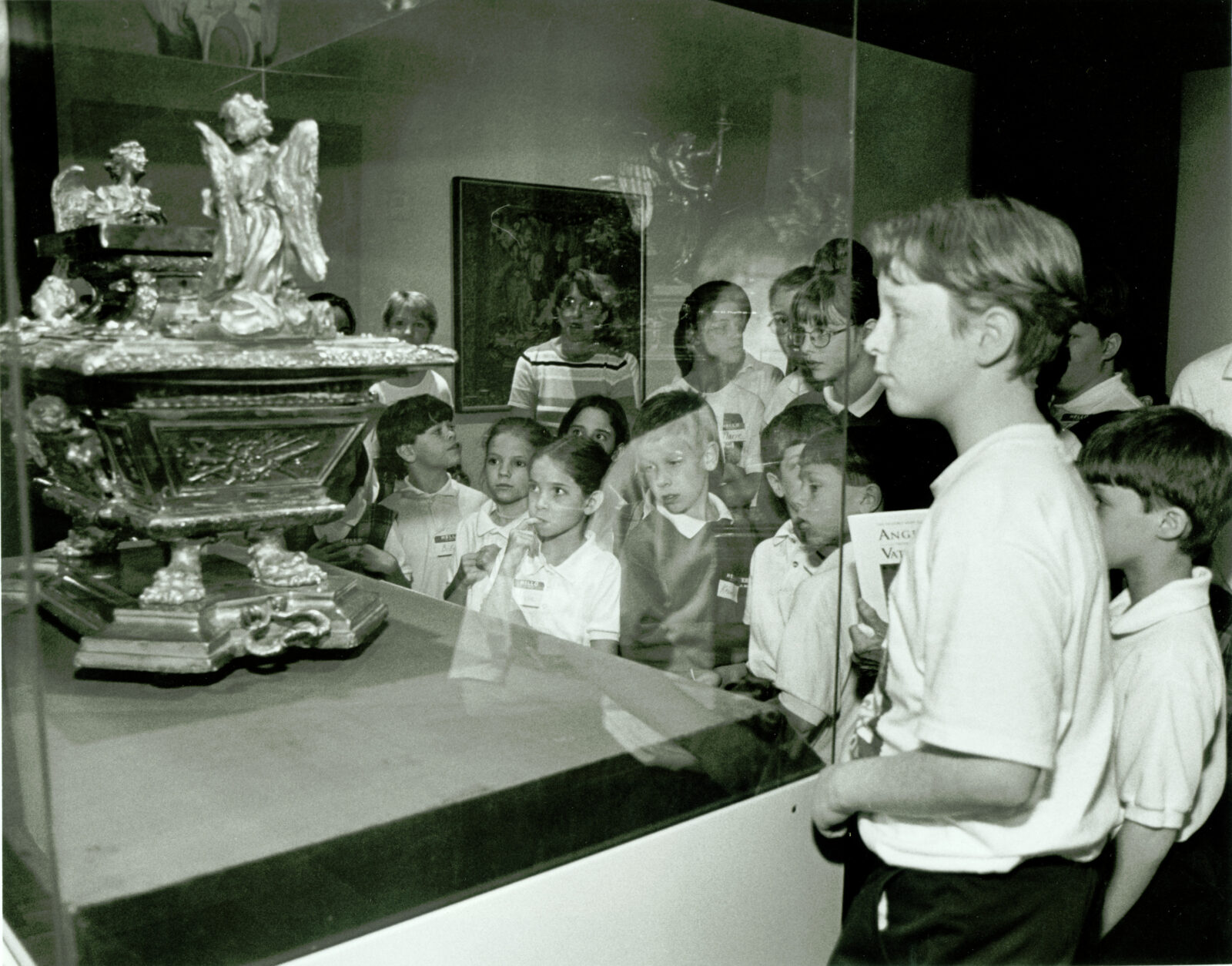
Visitors at the Saint Louis Art Museum for The Invisible Made Visible: Angels from the Vatican in 1998
The touring exhibition was initiated by the Patrons of the Arts in the Vatican Museums, an organization responsible for raising funding for the preservation of the Vatican collections. It featured works from the Vatican’s extensive collections, showcasing how different cultures and artists throughout history have depicted angels. It included artworks by masters such as Gentile da Fabriano, Raphael, and Salvador Dalí alongside ancient Assyrian, Etruscan, Greek, and Roman pieces. Highlights included winged figures on carvings from ancient Babylon, panel paintings by Renaissance masters like Fra Angelico, and a masterpiece of the Italian baroque, Federico Barocci’s Annunciation.
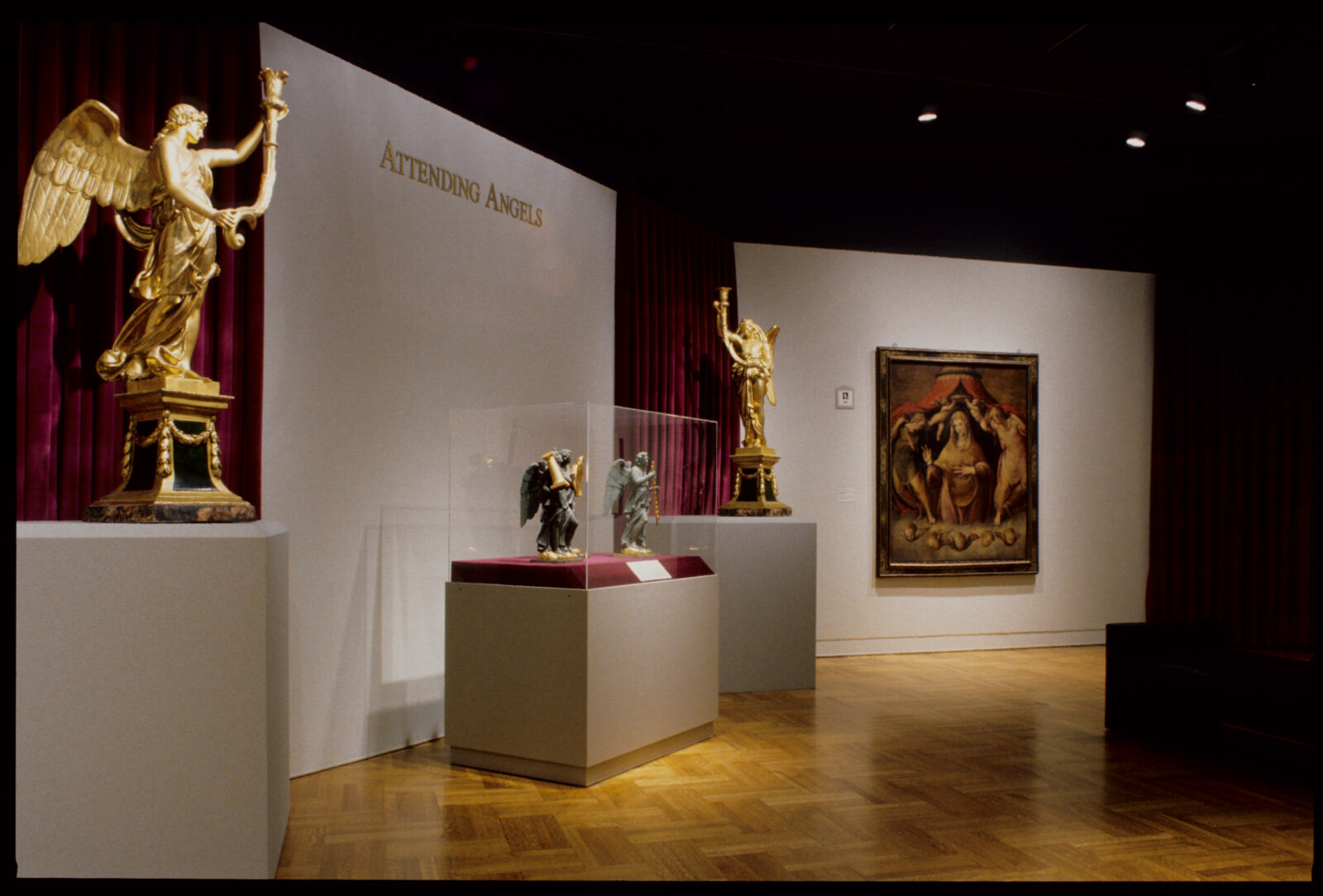
Installation view of The Invisible Made Visible: Angels from the Vatican (1998)
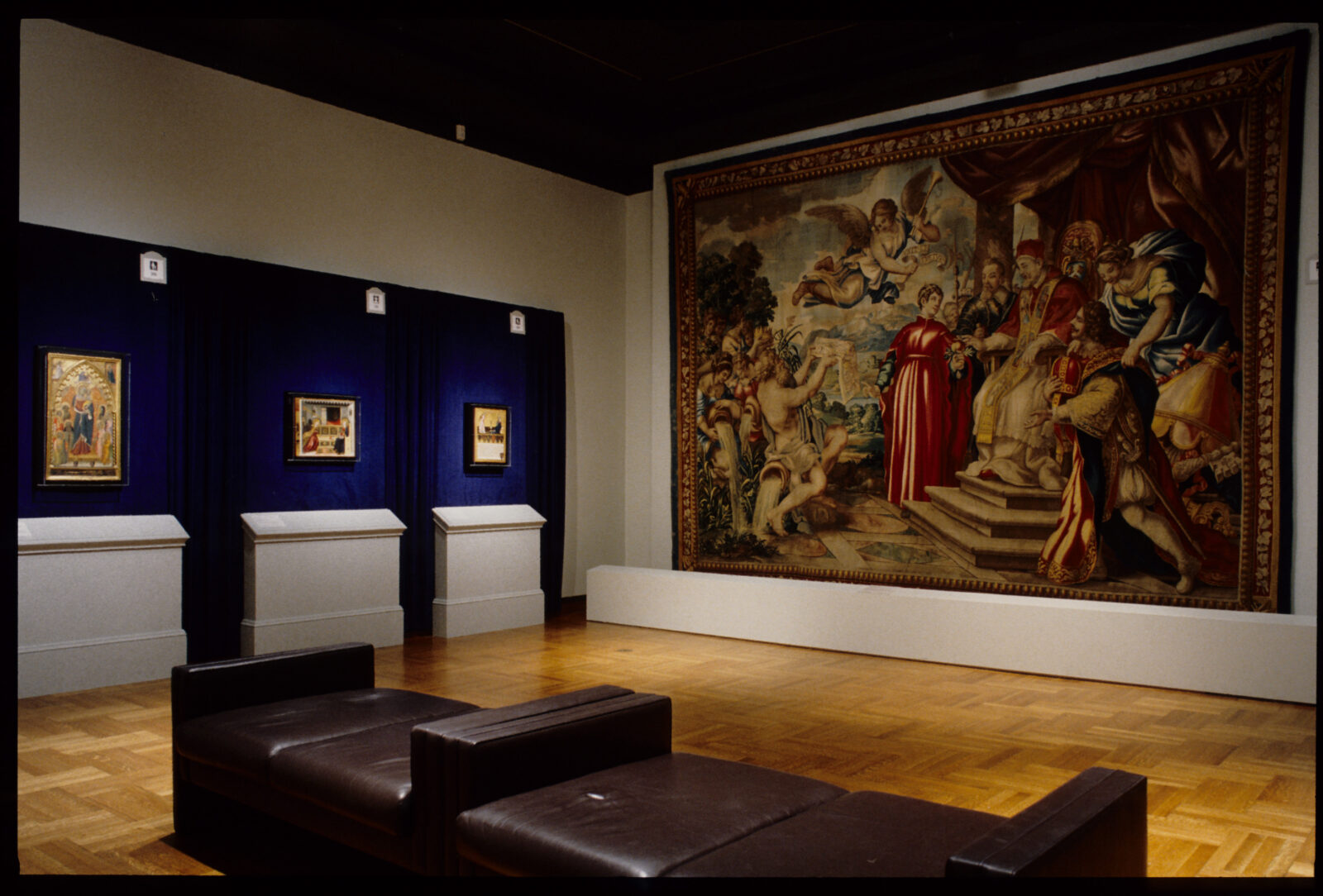
Installation view of The Invisible Made Visible: Angels from the Vatican (1998)
Five American museums were selected as venues based on the sizable Catholic populations in their cities. The St. Louis presentation, which was the most well-received, ran from May 7 through August 2, 1998, and was so popular that the last five weeks of the show were sold out despite extended hours. The sprawling exhibition inhabited the standard ticketed exhibition space at the time, which was on the main level (Level 2) of the Museum to the west of Sculpture Hall, along with the adjacent galleries that housed ancient and Asian art.

Installation view of The Invisible Made Visible: Angels from the Vatican (1998)

Installation view of The Invisible Made Visible: Angels from the Vatican (1998)
Judith Mann, SLAM’s senior curator of European art to 1800, curated the St. Louis version of Angels from the Vatican and said the exhibition design helped set this presentation apart from the other venues. The experience began with a video overview of angels in the history of art presented in a small, theater-like space.
“The installation of the art was a bit over-the-top, intended to emphasize the sacred and precious nature of much of the material,” Mann said, explaining the heavy use of velvet, with deep-blue and rich-maroon accents, that decorated the galleries. “It was one of the most theatrical exhibition designs that I have seen in the Museum over the 35 years of my tenure here.”