Present-day Museum Archives
Visitors to SLAM are aware of its many works of art spanning centuries, but few people likely know about its extensive archives. The Museum Archives hosts a rich history that has evolved alongside the building from the 1880s to its present-day identity as a well-known cultural institution. As the Museum celebrates the archives’ 50th anniversary, we’re looking back at how it started and how it has changed over the years.
The Museum started its archives department in 1976 under the umbrella of the Richardson Memorial Library. However, its records date back almost 150 years. Some of the Museum’s earliest institutional documents are from the 1880s—when SLAM was known as the St. Louis School and Museum of Fine Arts—and the years surrounding the 1904 World’s Fair.
The Museum hired its first full-time archivist in 1976. In November 1981, a grant from the National Historical Publications and Records Commission established the permanent records management program with a full-time archivist and archives technician. These new Museum staff members began work that needed immediate attention due to environmental elements in the building.
In 1975, the Museum began a large-scale construction and renovation project that required staff to clear out the east wing of the Cass Gilbert–designed Main Building. At the time, a large portion of the Museum’s historical records, including correspondence going back decades and documents from the World’s Fair, were stored in a small room on the third floor. The space was far from ideal, and records stored there had been exposed to dust, extreme temperature changes, and soot.
Why so much soot? Like most of St. Louis at the time, the Museum relied on a coal-burning furnace for heat. One 1938 salary sheet for the Museum even lists an employee named Frank Polster as a seasonal “coal passer,” a job that ran from fall through spring. Polster helped move coal through the building to keep it warm in the colder months.
-
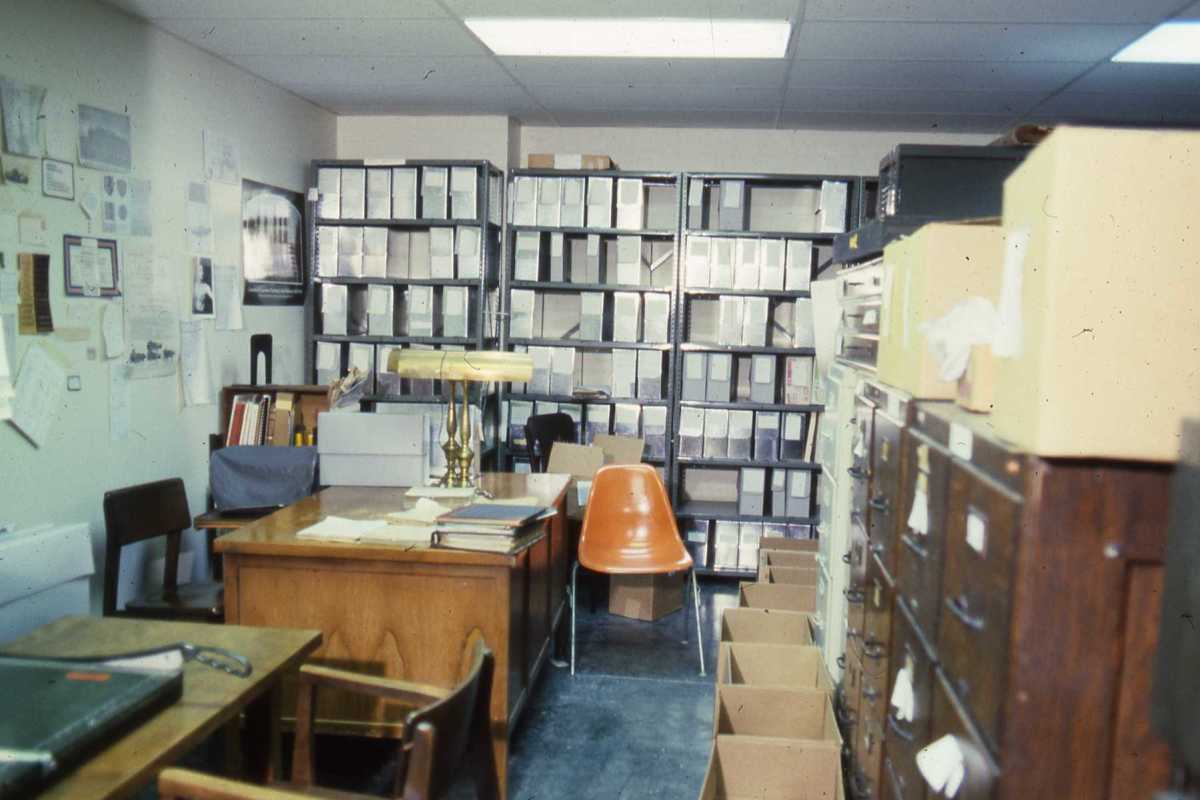
The 1979 Museum Archives office. SLAM archives
-
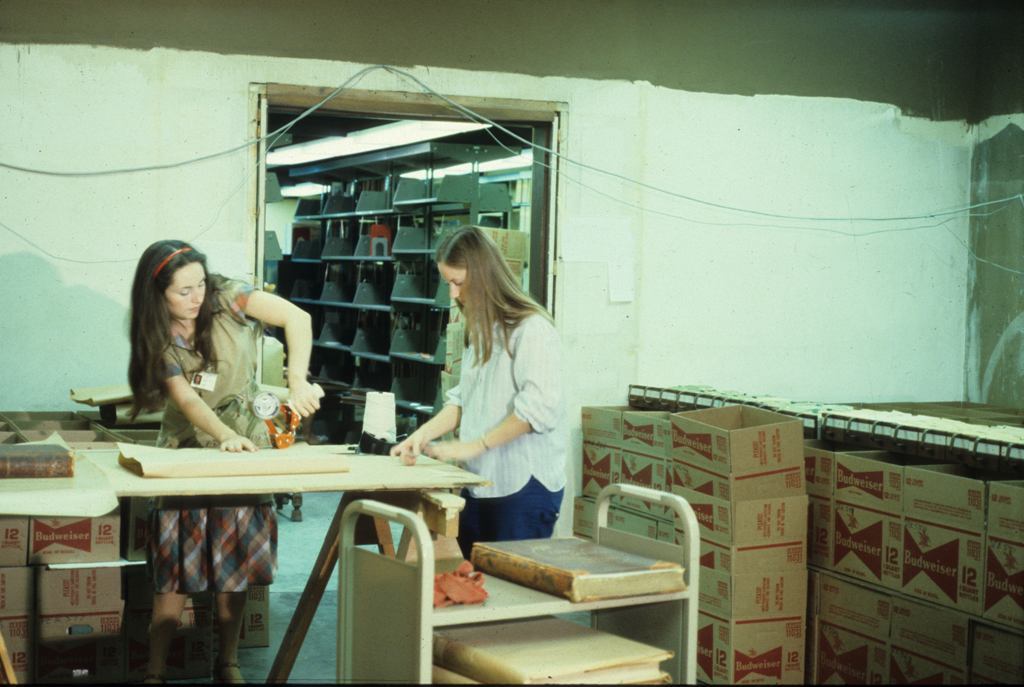
Museum Archives employees prepare to move office locations in 1979. SLAM archives
-
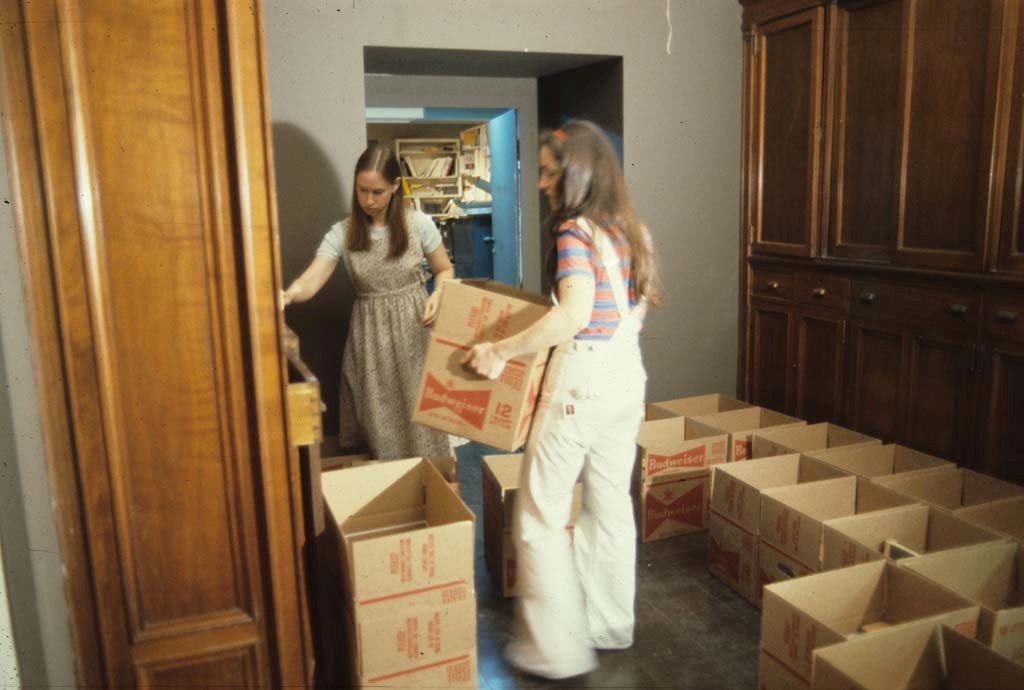
Museum Archives employees prepare to move office locations in 1979. SLAM archives
-
The 1986 slide room. SLAM archives
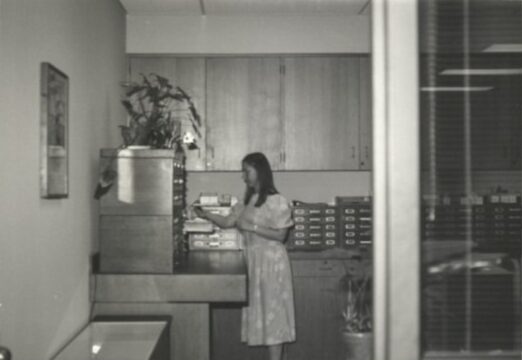
Head librarian Ann Abid recognized both the historical significance of the materials and the urgent need to preserve them. She flagged their delicate condition, prompting further action by outside archivists. A consultant from the Archives of American Art, Dennis Barrie, was brought in to assess the records from the World’s Fair. After this consultation, the Museum sent the records to Detroit to be microfilmed for preservation. The materials were later returned to the archives for safeguarding.
As illustrated through this story about the coal furnace, the history of the Museum’s archives is closely tied to Museum building projects, and particularly the library. In 1938, during major construction initiatives at the Museum, the library moved from its placement near Sculpture Hall down to a basement corridor close to the boiler room. During the move, additional storage space was created from a former painting-storage area, which eventually housed the Museum’s archival records.
In 1979, the library prepared to move again, this time into the newly constructed South Administrative Building. Staff packed contents into cardboard boxes donated by Anheuser-Busch, which were then repurposed by the Museum Archives. After the library’s relocation, the Museum used these sturdy Budweiser boxes throughout the 1980s for storing records. The archives even documented collections using the boxes as a unit of measurement (e.g., “3 Bud boxes”).
In the 1980s, the archives office relocated from the Main Building into the library stacks before eventually occupying a room next door to the library. Members of the public can make an appointment to visit the archives office, which since 2018 has been located in a room inside the library once used for the Museum’s slide-library collection. The permanent collection’s physical slide collection and historic images remain part of the archives office.

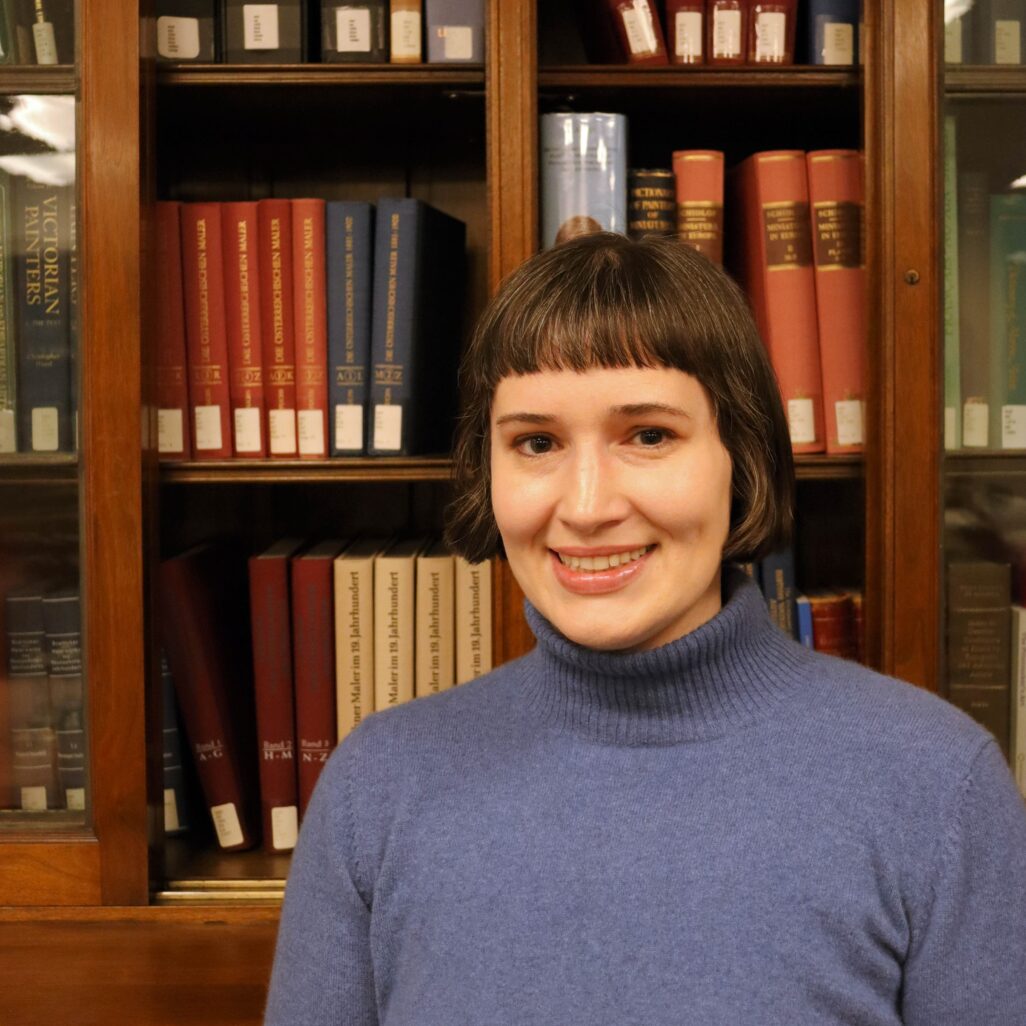
Present-day Museum archivist Jenna Stout reviews archival materials in the department's current location inside the Richardson Memorial Library
As the Museum Archives department marks its 50th anniversary, its story reflects the larger history of the institution itself, one shaped by construction projects, evolving spaces, and the dedication of staff who recognize the importance of preserving the past. The archives have grown alongside the Museum it documents, ensuring institutional history remains accessible for staff, the public, and generations to come.
Come celebrate the 50th anniversary of the Museum Archives on Friday, April 24, 11 am–3 pm.