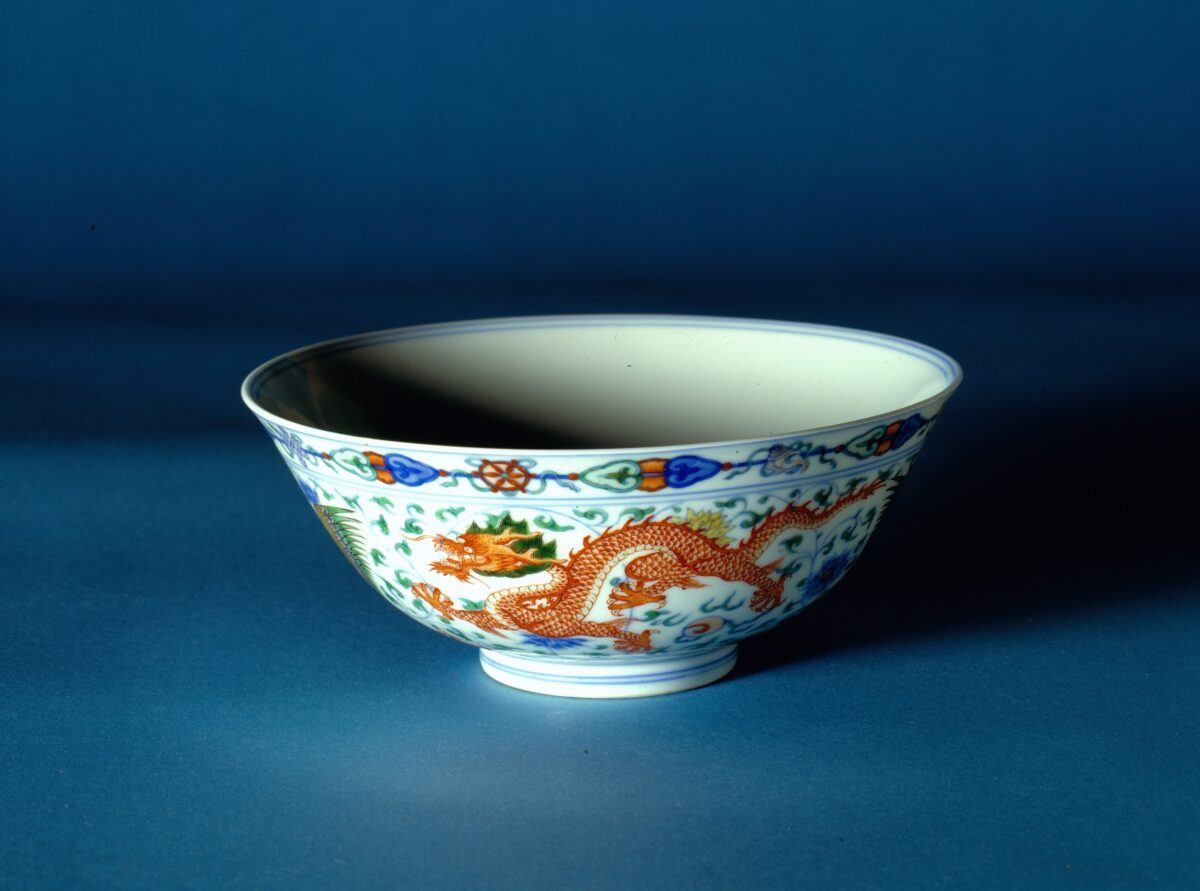
Bowl with Design of Dragons and Phoenixes, early 18th century; Chinese, Qing dynasty, Yongzheng period; Jingdezhen ware; porcelain with underglaze cobalt blue and overglaze enamel decoration; 2 3/8 x 5 7/8 inches; Saint Louis Art Museum, Bequest of Samuel C. Davis 1031:1940.2
More than 2,000 years ago, during ancient China’s Han dynasty (206 BCE–220 CE), 12 zodiac signs were established: rat, ox, tiger, rabbit, dragon, snake, horse, goat, monkey, rooster, dog, and pig. Chinese zodiac legend states that the signs received this specific order because of the results of a swimming race called by the Jade Emperor; the first 12 animals to swim across the river would be awarded the honor of being the namesake of one year in the lunar calendar.
In this legend, the dragon came in fifth place, despite being able to fly faster than the other animals could swim or hop. Before reaching the finish line, he detoured to bring rain to thirsty residents and animals of a nearby village. This act of kindness is characteristic of those born during the Year of the Dragon. Despite it being the only mythological creature of the 12 signs, the birth rate often increases during the Year of the Dragon, as it is such a coveted sign. Birth years of the dragon are 1928, 1940, 1952, 1964, 1976, 1988, 2000, 2012, and 2024. Lunar New Year, which celebrates the Year of the Dragon this year, falls on February 10, 2024.

Emperor's Semiformal Court Robe with Design of Nine Five-Clawed Dragons, Clouds, Bats, and Auspicious Motifs, early 18th century; Chinese, Qing dynasty, Yongzheng period; embroidered and brocaded silk with silk and metallic threads; 54 15/16 x 75 1/16 inches; Saint Louis Art Museum, Gift of Mrs. Ralph F. Bixby 97:1978
The Saint Louis Art Museum’s collection of Chinese artworks includes paintings, ceramics, metalwork, textiles, and decorative arts, several of which feature the dragon, as it is a common motif in Chinese art. Works in the SLAM collection from as early as the 1st century BCE showcase dragon symbolism. The creature is also seen depicted in works from the last three imperial periods of the Yuan dynasty (1279–1368), Ming dynasty (1368–1644), and Qing dynasty (1644–1911).
The dragon is deeply rooted in Chinese culture, specifically related to the emperor. Emperors and political and religious leaders of respective imperial dynasties in ancient China were believed to be sons of dragons—their human incarnation. The emperor’s throne was referred to as the dragon seat and his ceremonial robes as dragon robes. The collection object shown above presents a full-length emperor’s semiformal court robe with a design of nine, five-clawed dragons, as well as clouds, bats, and auspicious motifs.

Jar (guan) with Design of Dragons amidst Waves, late 15th century; Chinese, Ming dynasty, probably Hongzhi period; porcelain with overglaze enamels; 7 1/4 x 8 5/8 inches; Saint Louis Art Museum, Bequest of Samuel C. Davis 1108:1940
This porcelain high-shouldered jar from the Hongzhi period (1487–1505) also features the dragon, showcasing the creature’s frequent appearance in everyday life. Five dragons in various poses amid the waves and rocks decorate the jar.
Aside from the personality of the zodiac sign, which is characterized by kindness, determinedness, independence, and sincerity, dragons symbolize other traits in Chinese culture. There are nine classical forms of the dragon that are more commonly known and featured in Chinese art and literature, as well as nine influential dragon children that are depicted more prominently in architecture. The creatures vary in color and represent traits ranging from power, luck, and good health to masculinity and agricultural practices. “Male dragons possess the power to fly to the heavens and bring rain, while female dragons control earthly waters like rivers, lakes, seas, and wells,” according to the Chinese Language Institute.
See more Chinese artworks from SLAM’s collection that feature the dragon below and visit the Asian art galleries on Level 2 of the Museum.
-
Bowl with Design of Dragons and Phoenixes, early 18th century; Chinese, Qing dynasty, Yongzheng period; Jingdezhen ware; porcelain with underglaze cobalt blue and overglaze enamel decoration; 2 3/8 x 5 7/8 inches; Saint Louis Art Museum, Bequest of Samuel C. Davis 1031:1940.2
-
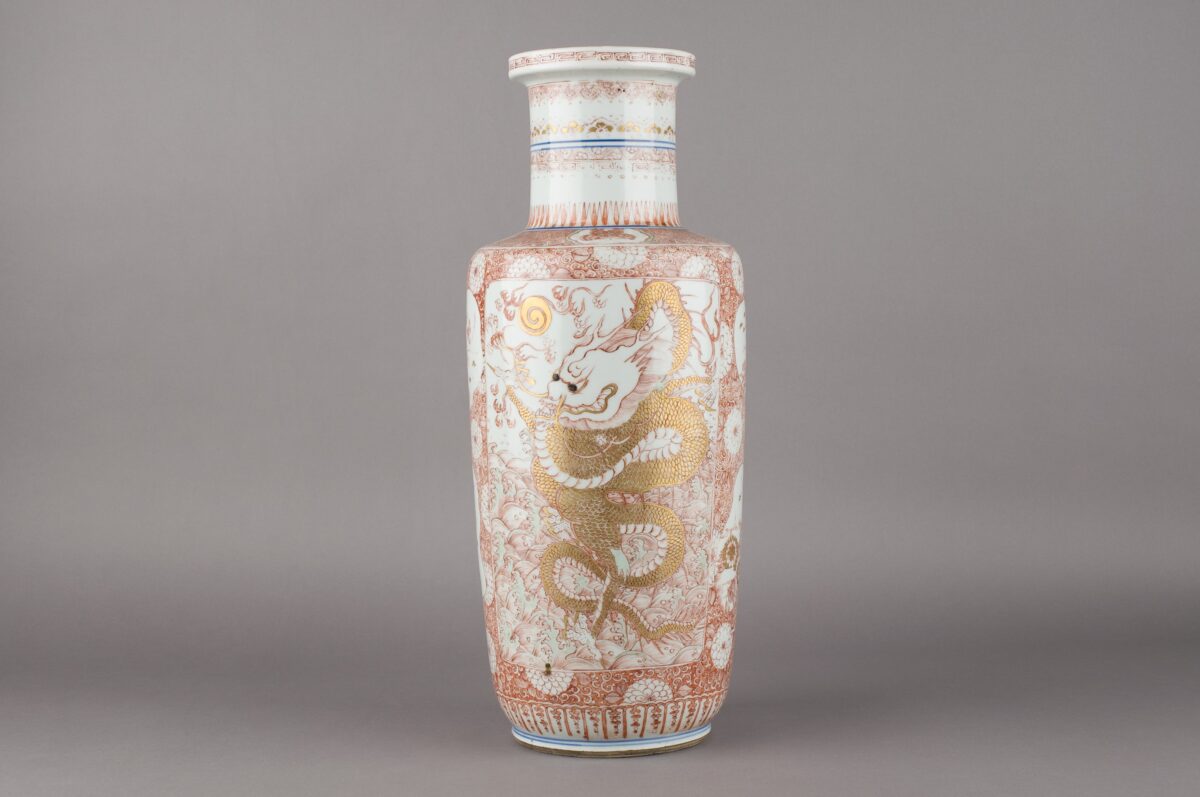
Rouleau Vase with Design of Two Dragons Chasing Flaming Pearls and Shaped Panels with Floral Motifs, late 17th–early 18th century; Chinese, Qing dynasty, Kangxi period; glazed porcelain; 18 1/16 x 7 3/8 inches; Saint Louis Art Museum, Museum Purchase 144:1915
-
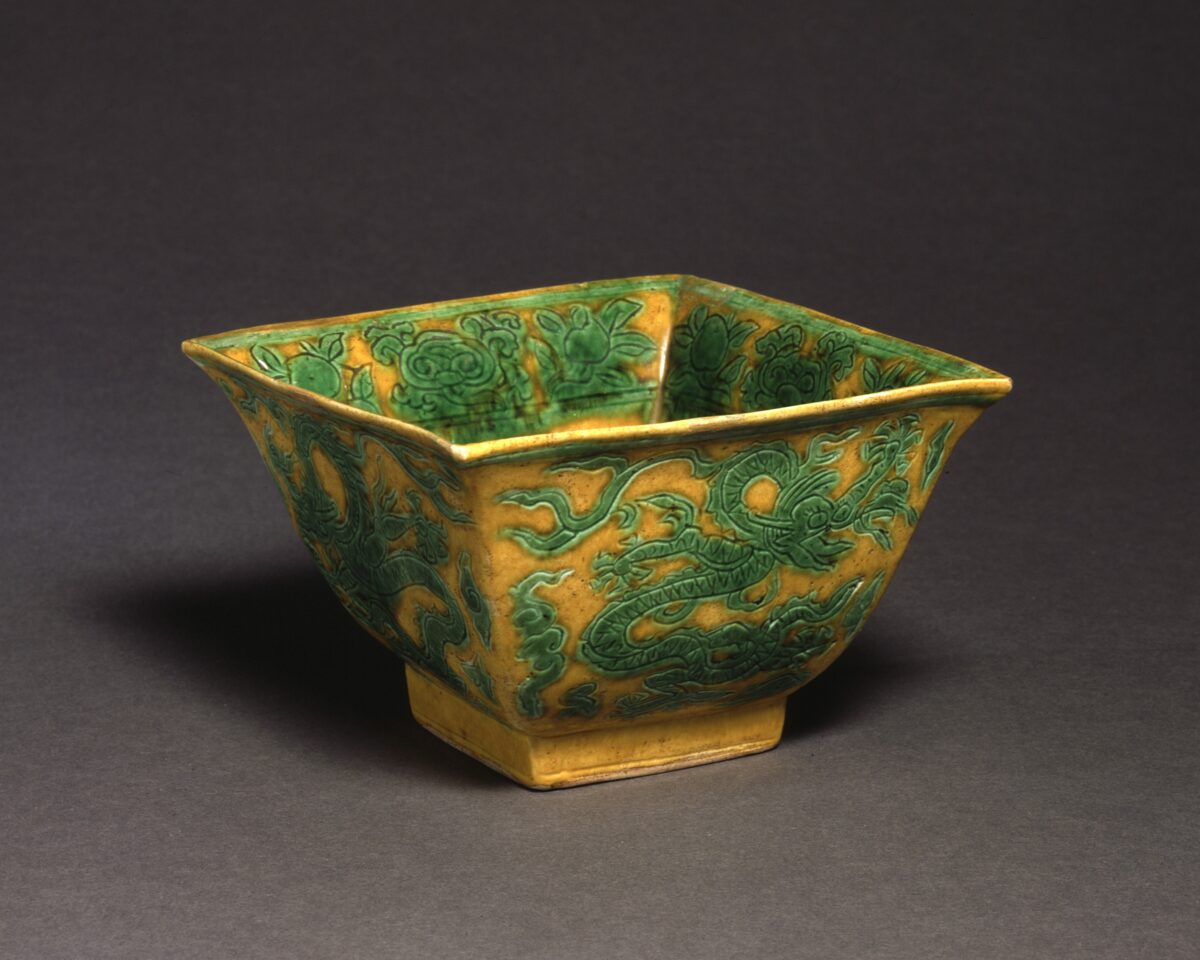
Square Bowl with Design of Dragons amidst Clouds, Symbols of Longevity, and Shou Character, mid-16th century; Chinese, Ming dynasty, Jiajing period; porcelain with incised and overglaze polychrome enamel decoration and underglaze cobalt blue reign mark; 3 x 4 7/8 x 4 7/8 inches; Saint Louis Art Museum, Gift of J. Lionberger Davis 208:1955
-
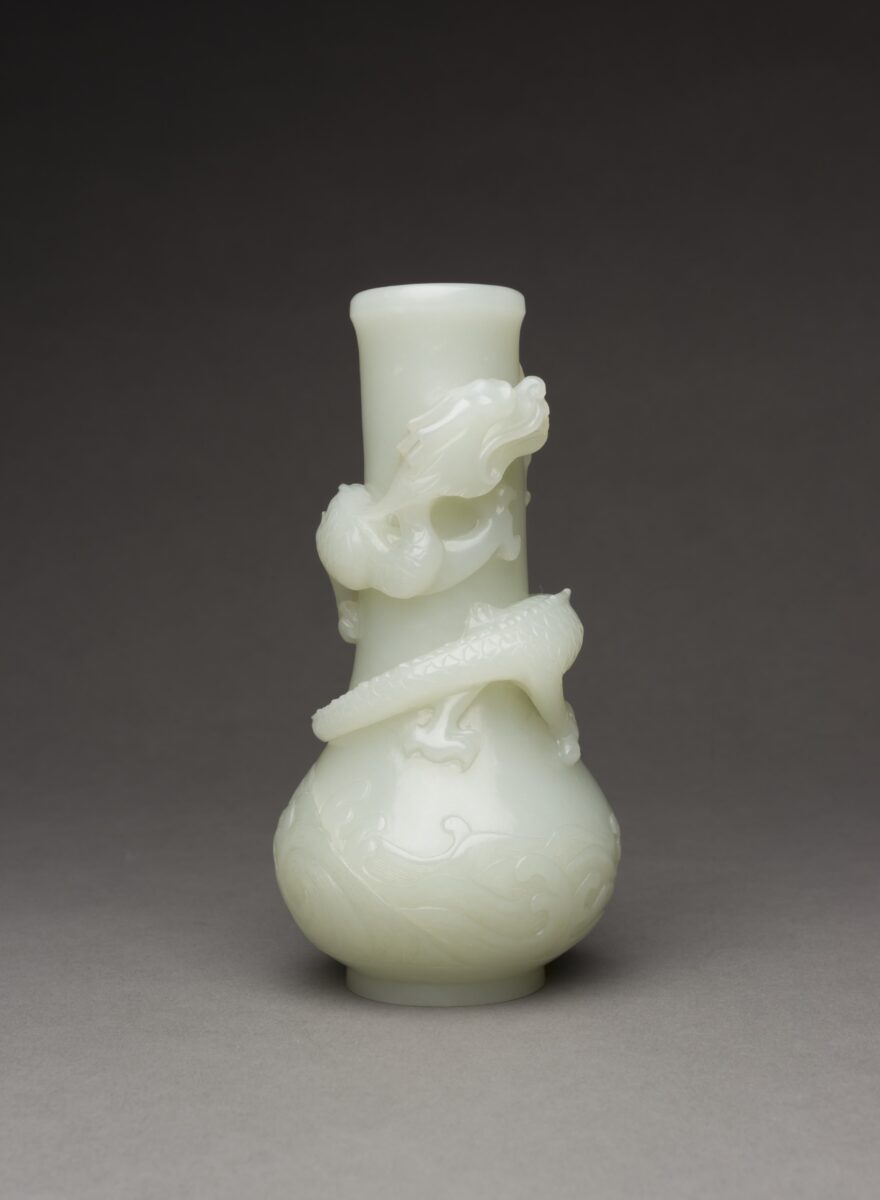
Vase with Relief Design of Dragon Chasing Flaming Pearl above Waves, 18th century; Chinese, Qing dynasty, Qianlong period; jade (nephrite); 5 3/8 x 2 1/2 x 2 3/4 inches; Saint Louis Art Museum, Gift of J. Lionberger Davis 488:1956
-
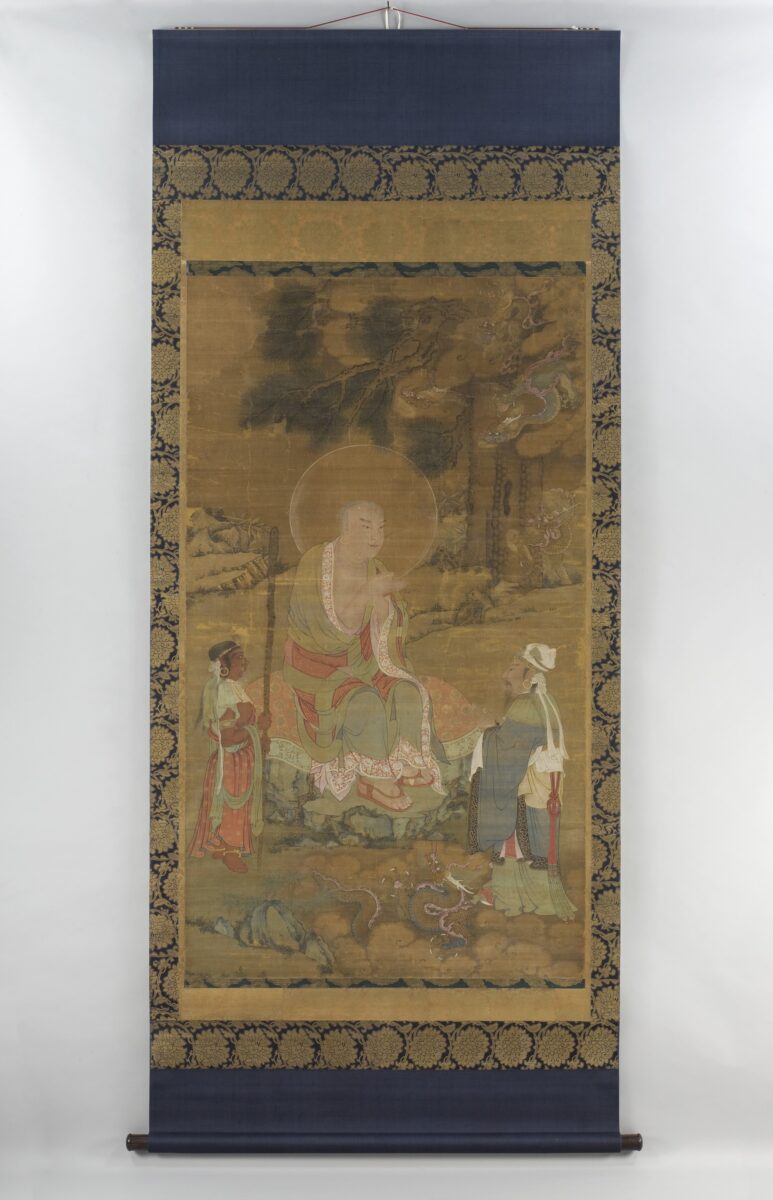
The Seventeenth Arhat (luohan), Nantimitolo (Qingyou), Taming Dragons, 15th century; Chinese, Ming dynasty; hanging scroll: ink, color, and gold pigment on silk; image: 72 1/4 x 41 1/4 inches, scroll: 116 1/4 x 48 1/4 inches; Saint Louis Art Museum, Museum Purchase 109:1919
-
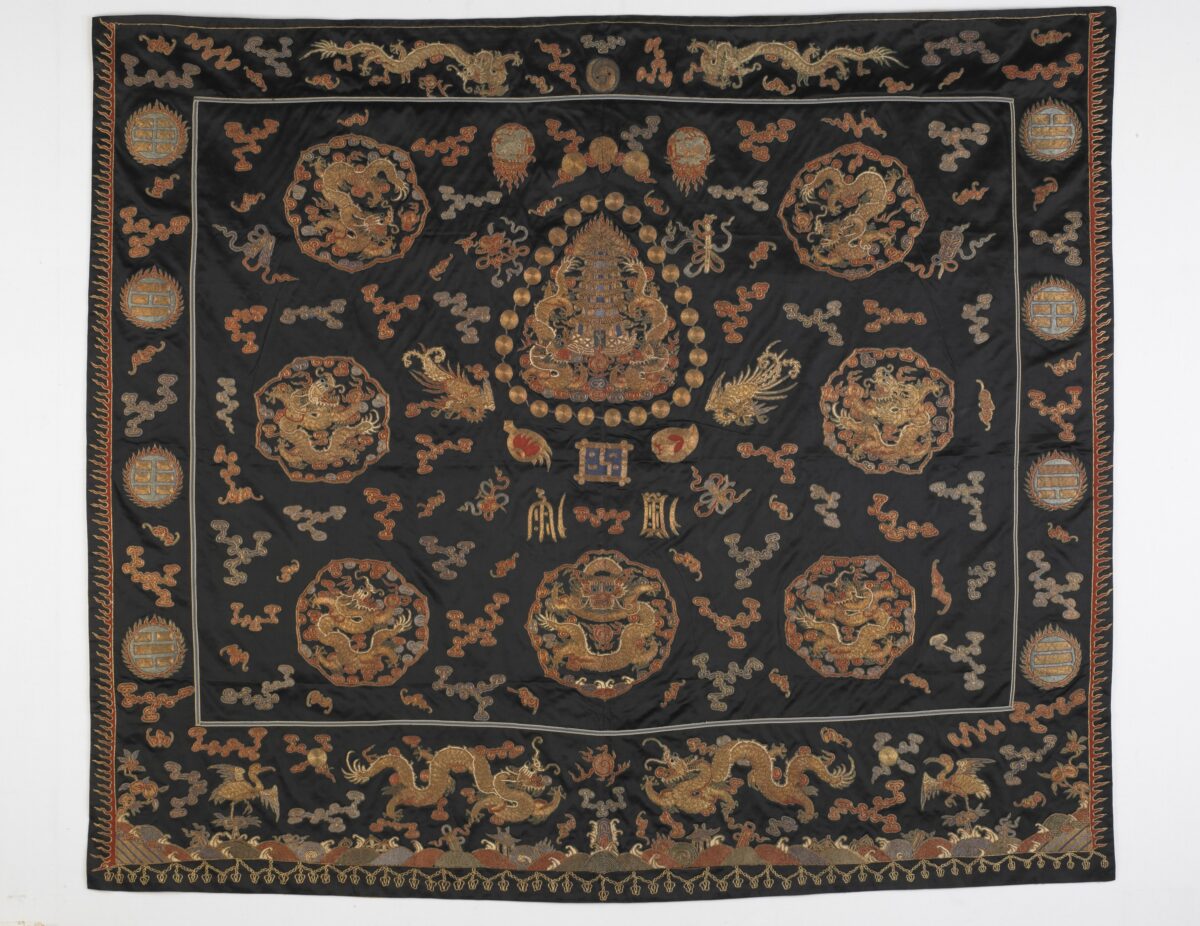
Daoist Hanging with Design of Cosmic Diagram, Seven Dragon Medallions, and the Eight Trigrams, late 19th century; Chinese, Qing dynasty, Guangxu period; silk ground with polychrome and gold embroidery; 68 1/2 x 59 7/16 inches; Saint Louis Art Museum, Gift of Mr. and Mrs. F. Russell Fette in memory of Helen Campbell Fette 267:1986
-
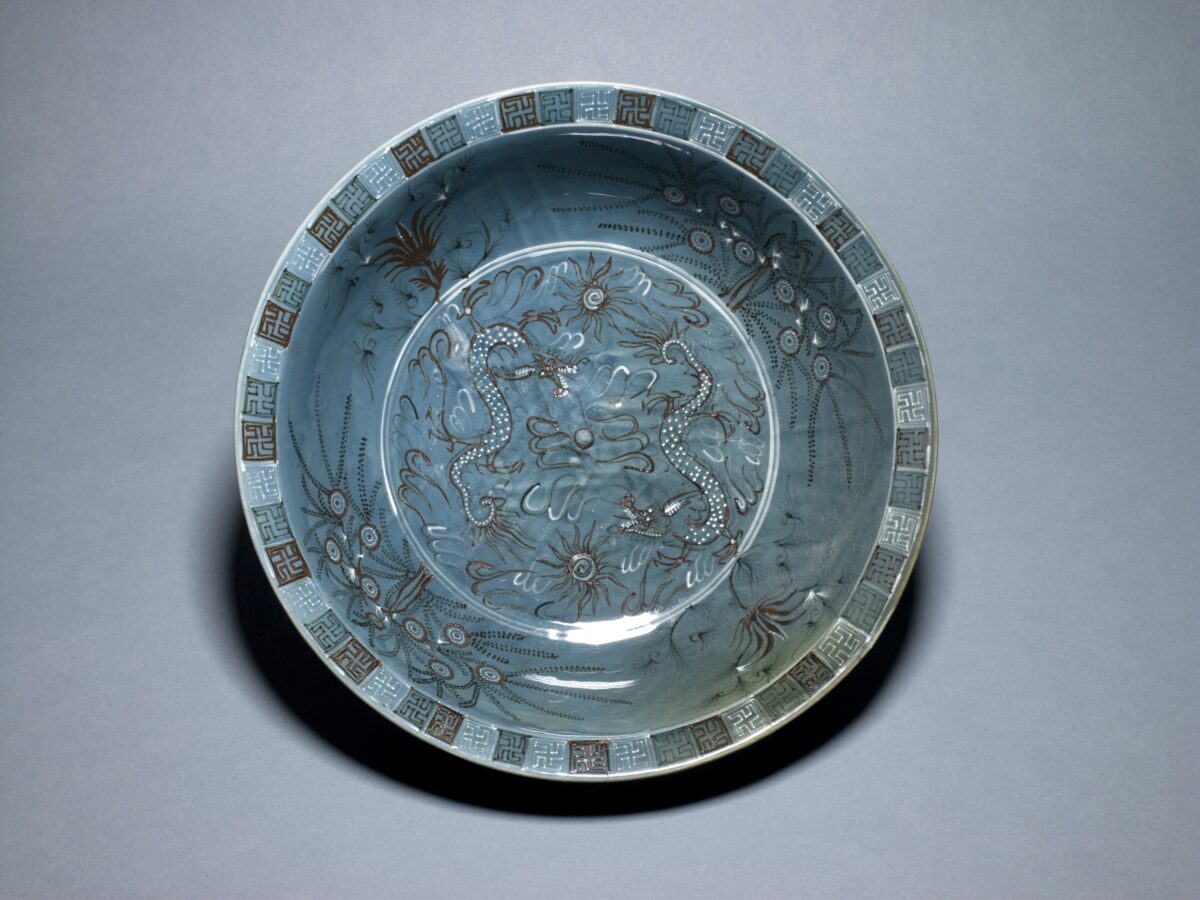
Dish with Design of Two Dragons and Floral Motifs, early 17th century; Chinese, Ming dynasty, Wanli period through Chongzhen period; Zhangzhou ware; porcelain with opaque white and cobalt-blue glazes, iron and cobalt pigments, and white slip under transparent glaze; 4 x 15 3/4 inches; Saint Louis Art Museum, Funds given in memory of Elsie B. Valier by her children Biron A. Valier Jr. and Elise V. Barr 62:2010
-
View 1 more
The Seventeenth Arhat (luohan), Nantimitolo (Qingyou), Taming Dragons, 15th century; Chinese, Ming dynasty; hanging scroll: ink, color, and gold pigment on silk; image: 72 1/4 x 41 1/4 inches, scroll: 116 1/4 x 48 1/4 inches; Saint Louis Art Museum, Museum Purchase 109:1919