Albrecht Dürer and workshop, German, 1471–1528; The Great Column (detail), 1513–17; woodcut; sheet (four sheets joined together): 62 3/4 x 10 3/4 inches; Saint Louis Art Museum, Gift of Mark Steinberg Weil and Phoebe Dent Weil 216:2021

Columns in art and architecture carry centuries of meaning, acting as a visual shorthand for Greek and Roman antiquity while symbolizing themes like authority, grandeur, and endurance. Examples of ancient columns are currently on display in two SLAM exhibitions, Visions of Antiquity and Ancient Splendor: Roman Art in the Time of Trajan.
Corinthian columns, which were developed in ancient Greece but used extensively in Rome, are often known as the most decorative of the column styles, or orders. Other orders include the Greek Doric and Ionic and the Roman Tuscan and Composite. A Corinthian capital, or topmost part of a column, would help spread the weight from above while giving the column its distinctive style.
One of the best local examples of Corinthian columns can be found on the exterior of the Saint Louis Art Museum’s 1904 Main Building. Slender, ornate columns with acanthus leaves—defining forms of traditional Greek ornamentation—line the front entryway, supporting the Museum’s panel inscribed “Dedicated to Art and Free to All.” Building architect Cass Gilbert specifically chose this style of column to give the structure a monumental and timeless feel. The choice echoes those of many artists who drew upon Greek and Roman elements to create grand, elegant works during the Beaux Arts and Classical Revival movements in the early 20th century.

North entrance of the Saint Louis Art Museum
However, columns appeared in art well before the turn of the 20th century. Over hundreds of years, artists and architects used them to convey a range of ideas, including claims to power and sophistication. As a result, the columns often reinforced the notion of a perceived splendor of ancient times.
Visions of Antiquity, a free collections-based exhibition on view at SLAM through October 18, features several pieces paying homage to columns, including The Great Column by Albrecht Dürer; Column of Marcus Aurelius from the series Speculum Romanae Magnificentiae by Antoine Lafréry; and View of the Principal Prospect of the Column of Trajan by Giovanni Battista Piranesi. These three works, which span centuries and draw on a range of materials and techniques, challenge viewers to explore art—and history—from a different perspective. They urge viewers to consider not only representations of antiquity, but how those symbols relate to the era when the works were created.
For example, Dürer made The Great Column around 1517 after a trip to Italy, where he studied Renaissance art. Dürer employed woodcut, the oldest-known printmaking technique, to create a piece imagining a column from antiquity.
Notably, Dürer included a root vegetable at the bottom of the column, which carries symbolic weight. The northern Renaissance tradition of the time saw artists embedding meaning into everyday objects. A root vegetable, which grows underground, could symbolizes humility and the physical realm. Dürer’s placement of the vegetable at the bottom of an ancient column creates a visible contrast. The earthly supports something grand, suggesting that even the highest achievements are rooted in the humble conditions of human existence.
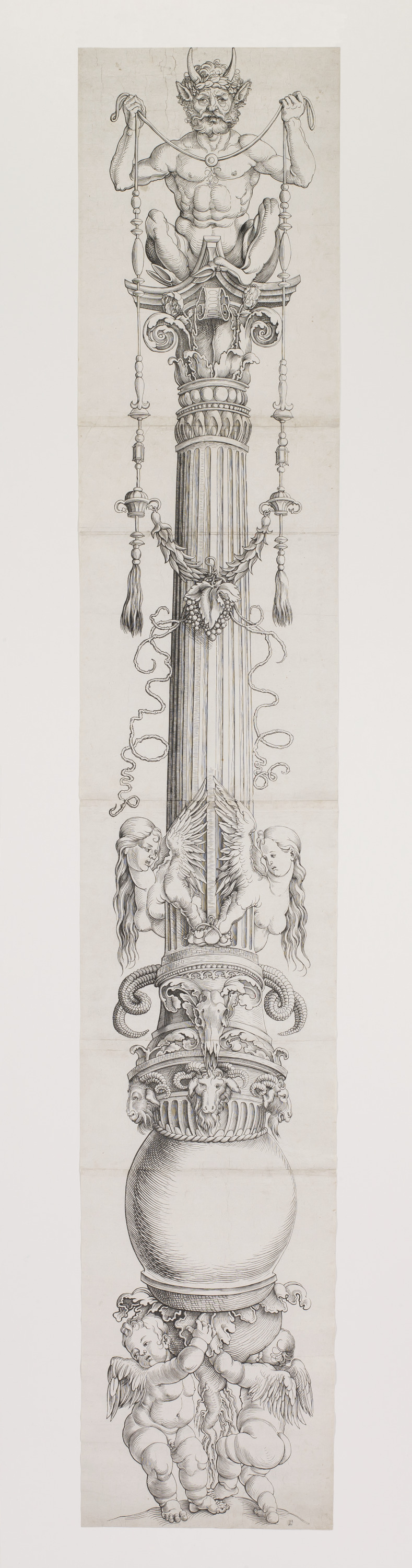
Albrecht Dürer and workshop, German, 1471–1528; The Great Column, 1513–17; woodcut; sheet (four sheets joined together): 62 3/4 x 10 3/4 inches; Saint Louis Art Museum, Gift of Mark Steinberg Weil and Phoebe Dent Weil 216:2021
The Column of Marcus Aurelius is the focus of another 16th-century piece found in Visions of Antiquity—Column of Marcus Aurelius, from the series Speculum Romanae Magnificentiae (Mirror of Roman Magnificence). The piece was created as part of Lafréry’s efforts to publish prints recording art, architecture, and city views related to ancient (and modern) Rome. His work appealed to popular demand, as people in the Renaissance era clamored for art reflecting classical antiquity. Prints could be bought individually by tourists and collectors, or they could be purchased and bound together in an album. Lafréry’s idea to produce print albums was one of the earliest attempts at offering a visual catalogue of ancient Roman grandeur, blending antiquity with Renaissance art and setting a precedent for modern-era art cataloguing.
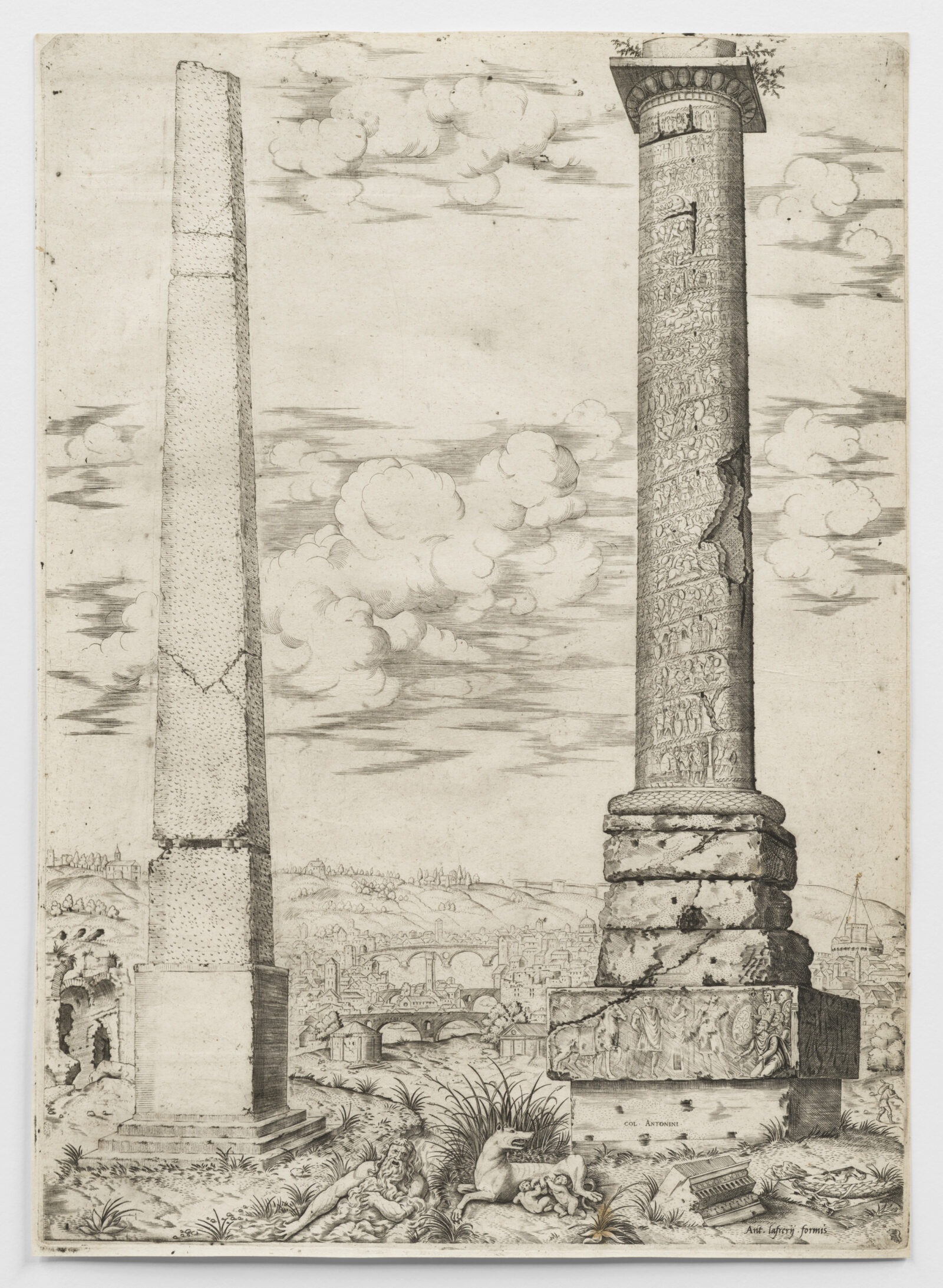
Antoine Lafréry, French (active Italy), 1512–1577; Column of Marcus Aurelius, from the series Speculum Romanae Magnificentiae, c.1543–70; engraving; sheet: 18 7/16 x 12 15/16 inches; Saint Louis Art Museum, Gift of Mark Steinberg Weil and Phoebe Dent Weil 136:2021
Moving ahead to the 18th century, Piranesi’s View of the Principal Prospect of the Column of Trajan effectively weighs in on his era’s debate over whether ancient Greece or ancient Rome had more influence on Western civilization. As seen in this piece featured in Visions of Antiquity, Piranesi votes in favor of ancient Rome. Created in 1774, Piranesi’s print features Trajan’s Column, a monumental Roman column built in 113 CE to commemorate the emperor Trajan’s victories in war. Using slightly exaggerated scale, shadowing, and sharp lighting, Piranesi pays homage to ancient Rome and its grandeur. He also highlights the tension between endurance and decay, as Trajan’s Column, which remains in situ, outlived the Roman Empire.

Giovanni Battista Piranesi, Italian, 1720–1778; View of the Principal Prospect of the Column of Trajan, 1774; etching; 117 5/16 x 30 11/16 inches; Saint Louis Art Museum, Gift of Mark Steinberg Weil and Phoebe Dent Weil 230:2021
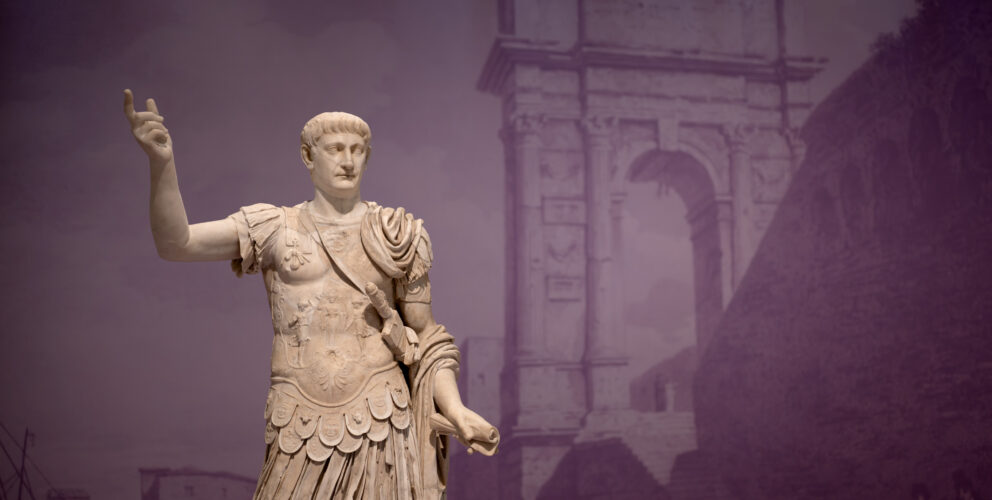
A 3D-printed scene from the approximately 120-foot-tall Trajan’s Column is featured in the Museum’s current ticketed exhibition, Ancient Splendor: Roman Art in the Time of Trajan. The exhibition is on view through August 16 and primarily features loans from the renowned antiquities collections of the Vatican Museums, Ostia Antica, the National Roman Museum, and the National Archaeological Museum of Naples.

3D-printed scene from Trajan’s Column as seen in Ancient Splendor: Roman Art in the Time of Trajan
Also on view in Ancient Splendor is a Corinthian capital from SLAM’s collection, dating from the 2nd century CE. In keeping with traditional style, the marble capital has delicate acanthus leaves, spiral volutes, and a central flower, creating a design that is functional and beautiful. Visitors can consider how this commitment to decoration and functionality has influenced artists across centuries.
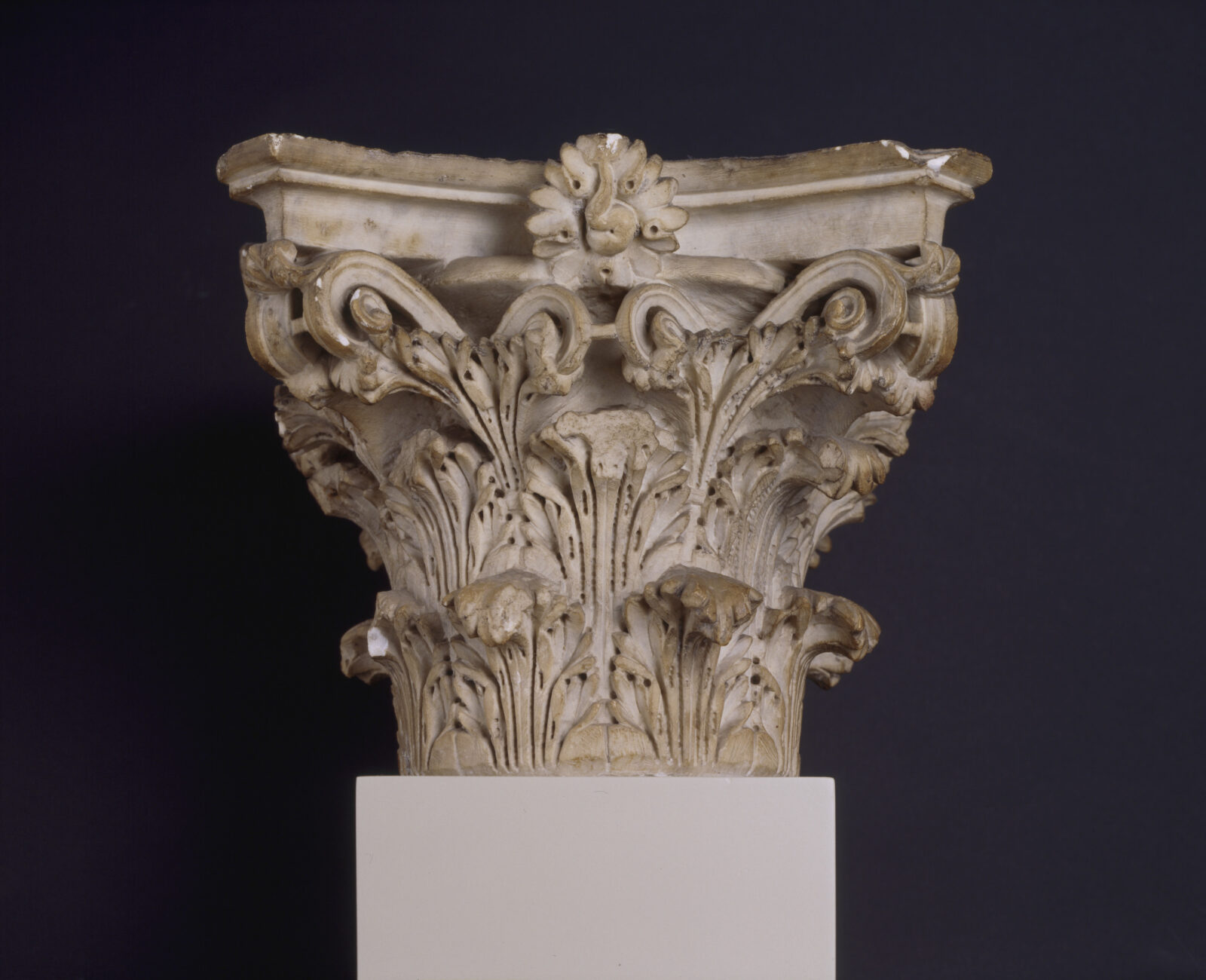
Roman; Corinthian Capital, 2nd century; marble; 10 x 7 3/16 inches; Saint Louis Art Museum, Museum Purchase 45:1921
While the works in these exhibitions differ in terms of history and techniques, they all carry a common theme: looking back while simultaneously moving forward. As seen in these works, ancient Rome is presented as worthy of imitation. However, artists use modern ideology and techniques to reflect the grandeur of antiquity and even set a precedent for future works, raising questions like: What does it mean in art to look closely at the past? And what is the true meaning of authenticity if, in capturing the past, you also incorporate elements of the present and future? Considering the legacy of pieces in the Visions of Antiquity and Ancient Splendor exhibitions can help us land closer to answers.