Believed to possess the power to seal in good fortune, Korean wrapping cloths, known as bojagi, are upcycled cloths made of various geometric shapes forming one unified quilt. Bojagi are inspired by a traditional Korean textile form with a style reminiscent of modern abstract paintings.
“Koreans believe that bojagi can not only wrap an object but also enclose ‘bok,’ good fortune or happiness,” said Korean-born artist Youngmin Lee, creator of the Community Bojagi Sewing Project, in conversation with the Gateway Korea Foundation.
Bojagi are multifaceted cloths that can be used for formal and casual clothing, quilts, wraps, household goods, and covers for foodstuffs. They vary in size but are usually square and made from silk, cotton, hemp, or ramie.
A textile expert, Lee holds a bachelor’s degree in clothing and textiles from Inha University in Incheon, Korea, and a master’s degree in fashion design from Ewha Womans University in Seoul. She moved to California’s West Coast with her husband and daughter in 1996, where she still lives and works. Amid learning a new culture, Lee became disconnected from her own, according to an interview with the Los Angeles County Museum of Art. To remedy this, the artist returned to bojagi.
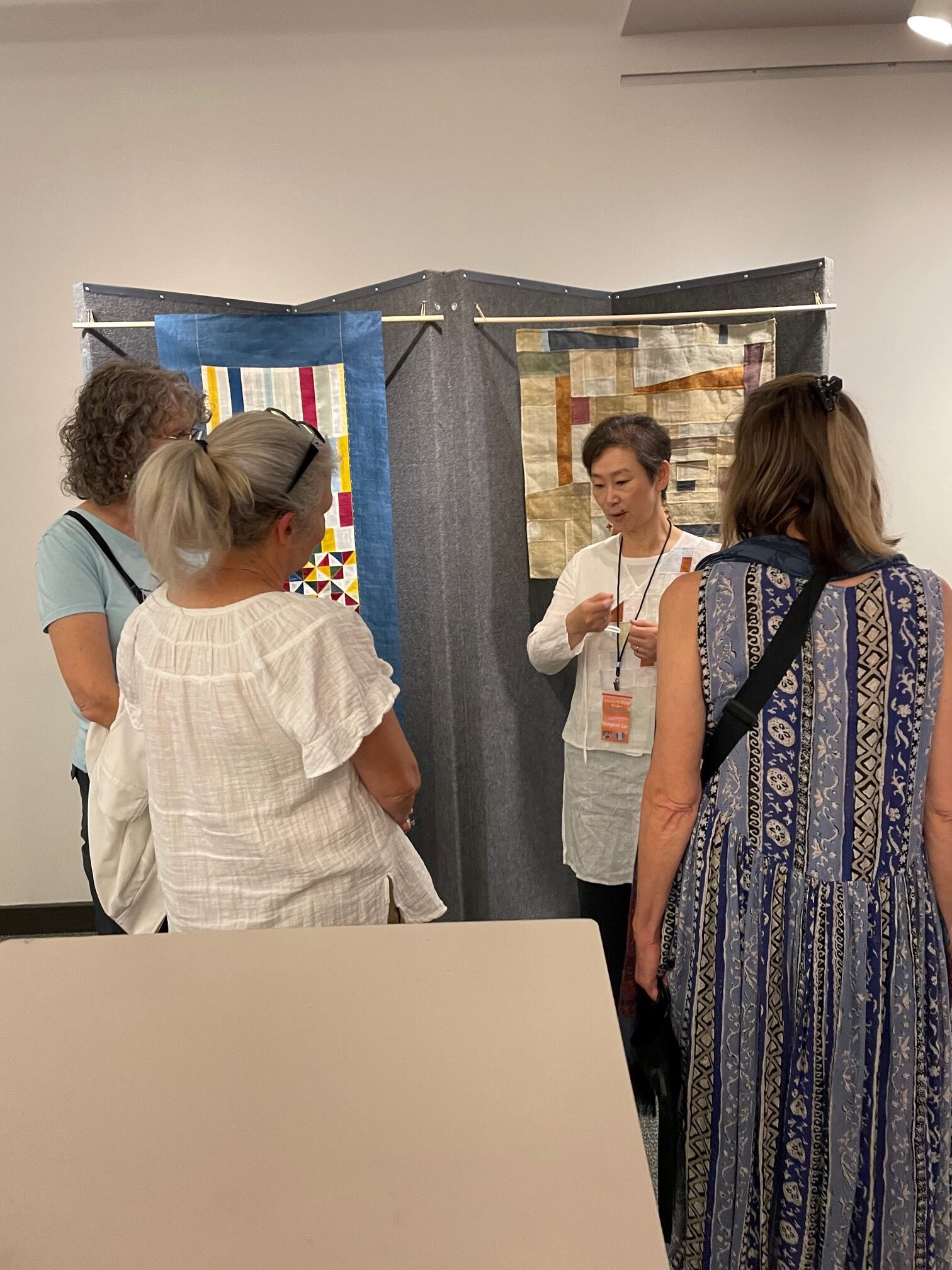
Youngmin Lee speaking with participants at a Family Sunday event.
She has spent the past decade helping to carry on the bojagi tradition, presenting workshops and classes on Korean arts and crafts in the Bay Area. Lee created the Community Bojagi Sewing Project to share the historically familial tradition of bojagi with the broader community.
“The act of making bojagi carries wishes for the well-being and happiness of its recipients. I hope to extend affection and good wishes to all who participated in making the community bojagi,” Lee said.
SLAM will host several Family Sunday events encouraging the St. Louis community to participate in the Community Bojagi Sewing Project. The project, led by Lee, will last six consecutive Sundays from August 13 to September 24.
During Family Sunday sewing workshops, you can create your own unique fabric patch and learn how they are stitched together. Your patch will then be combined with other visitors’ to fashion a collaborative tapestry. The final work will be unveiled during Family Sunday on September 24 and on display in the concourse on Level 1 of the Museum for one week.
The Community Bojagi Sewing Project is in partnership with the Gateway Korea Foundation. It is also part of the 2023 Learning in Museums series that celebrates the 100th anniversary of the Museum’s education programs.

Several small fabric patches sewn together to make a tapestry.

Lee in front of completed bojagi.