Installation view for Ellsworth Kelly; © Ellsworth Kelly Foundation
A special display of American artist Ellsworth Kelly’s works is now on view at the Saint Louis Art Museum in celebration of the centennial anniversary of the artist’s birth. The multimedia exhibition showcases Kelly’s experimental and expansive career.
To provide insight into the exhibition, Simon Kelly, SLAM’s curator of modern and contemporary art, has answered a few questions about Ellsworth Kelly and his experience curating the presentation.

Simon Kelly, curator of modern and contemporary art
What can visitors expect from this exhibition?
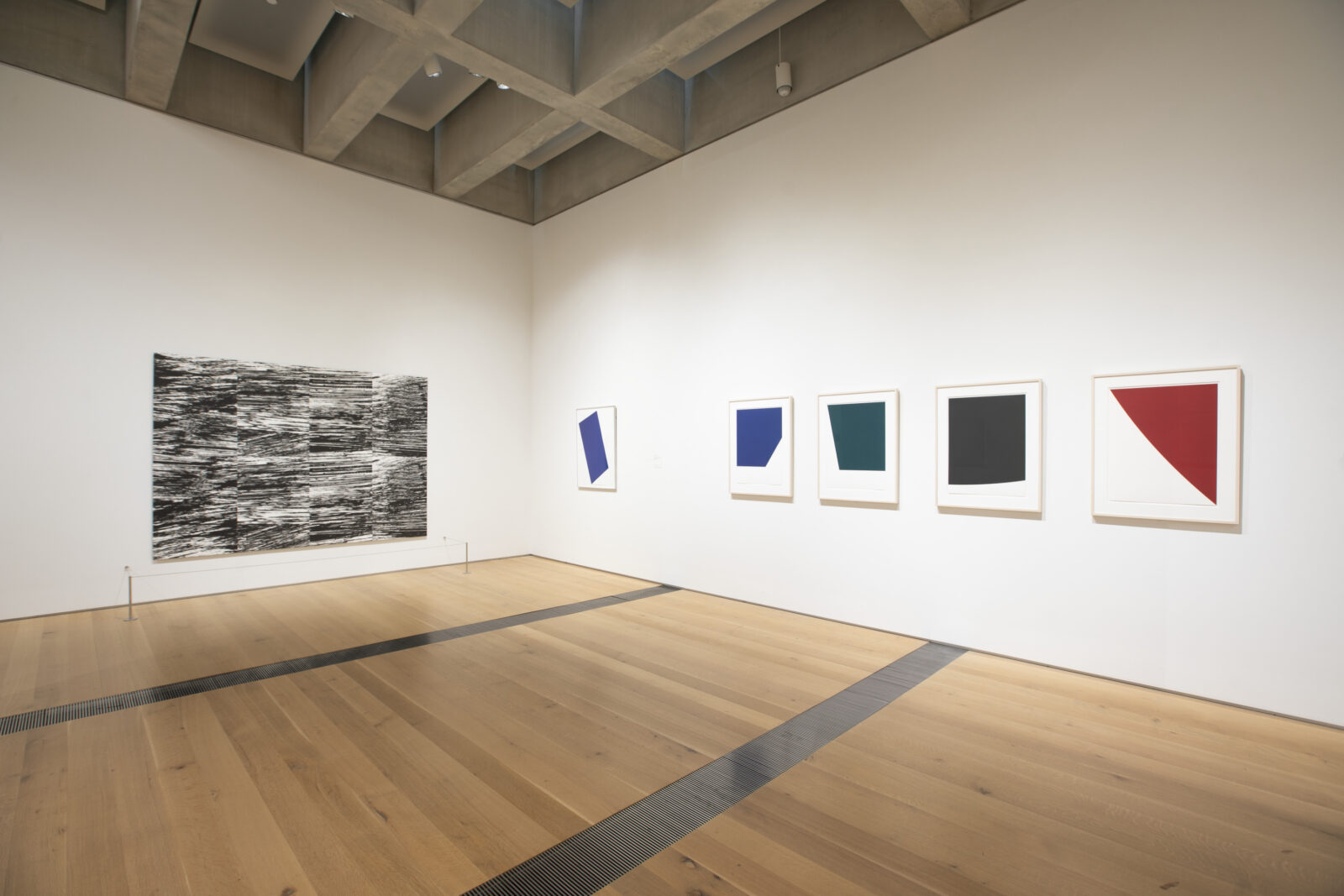
This exhibition has an impressive range of works, produced over six decades from 1950 until 2010, by one of the most important postwar American abstract artists, Ellsworth Kelly. There is a genuine diversity of paintings, sculpture, drawings, and prints on view. Above all, there are major large-scale paintings, from multipanel works to shaped canvases. Then there are fascinating plant drawings in which Kelly carefully outlined forms of leaves and flowers, reflecting his deep love of nature. I also appreciate the prints, including River II, a large-scale abstraction of the flowing surface of a river. And importantly, there’s a major outdoor sculpture, Untitled, which is installed on the South Terrace and visible from the galleries.
Installation view for Ellsworth Kelly; © Ellsworth Kelly Foundation
How did curating this exhibition change your understanding of Kelly and his work?
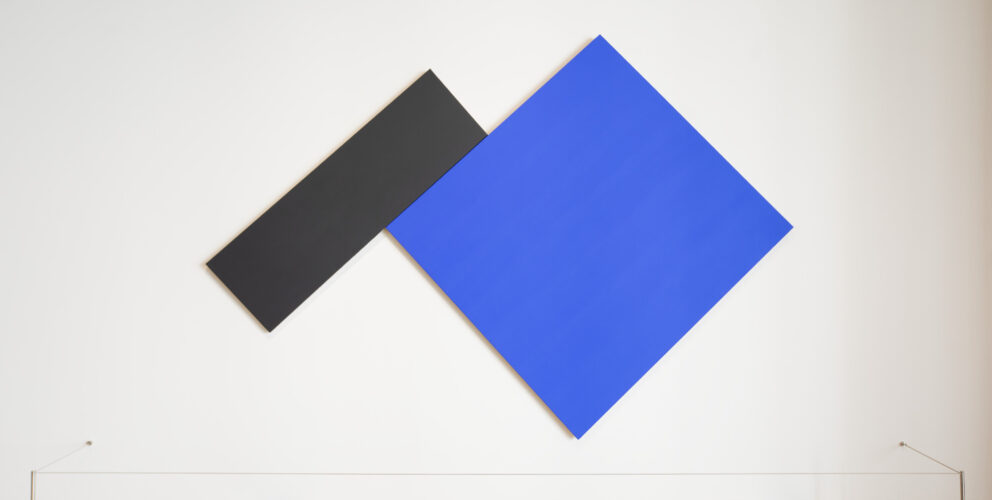
Curating this exhibition made me realize the importance of the shaped canvas in Kelly’s aesthetic. Kelly said that his shaped canvases were his signature achievement, and in this exhibition, you can see accomplished examples like Purple Panel, a promised gift to the Museum from Emily Rauh Pulitzer, that has subtly inward-curving lines that form each of its three sides. The blue polygon of Blue Black is irregular and asymmetrical rather than being a perfect diamond. Kelly’s canvases seem to operate somewhere between painting and sculpture, and I like that ambiguity about them.
Installation view for Ellsworth Kelly; © Ellsworth Kelly Foundation
How does seeing Spectrum II in context with other Kelly works change the way the painting may be perceived?
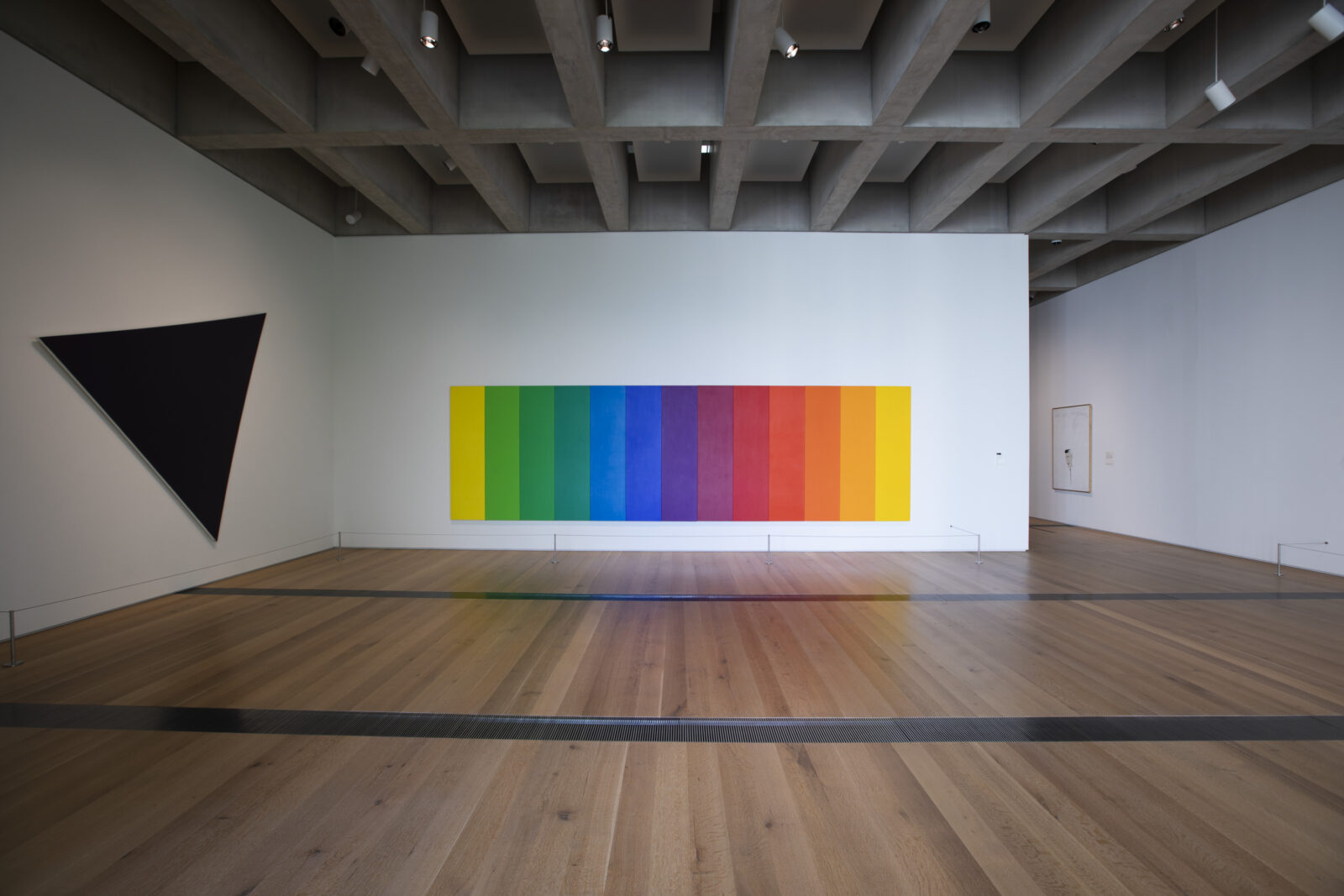
I think the other Kelly works give context to the colors of the panels in Spectrum II and encourage us to look more closely at each of the 13 individual panels and their progression. For example, the ultramarine blue panel—the sixth panel from the left—is now complemented by the ultramarine color of the Blue Black diptych, which hangs close by. Kelly was never very theoretical in his attitude toward color; rather, he had a wonderful eye. He developed his own personal spectrum of hues, moving from yellow to yellow, rather than red to violet as in the traditional rainbow spectrum. I hope people will look closely at each of the panels and even try to identify the individual colors.

Installation view for Ellsworth Kelly; © Ellsworth Kelly Foundation
How does this exhibition highlight the strength of Kelly’s work in St. Louis private collections?
The exhibition has major paintings, drawings, and prints from these collections. They range from the earliest painting in the show, the impressive 1965 Dark Blue Red, in which Kelly is exploring the push and pull between complementary colors, to the large triptych, Dark Gray, White, Gray, that highlights the importance of this format to the artist. Two of the plant drawings are local loans, as is River II. The drawing Briar is also a promised gift from Emily Rauh Pulitzer to the Museum. The strength of Kelly’s work in St. Louis private collections is remarkable and speaks to the artist’s close connection with the city and its collectors.
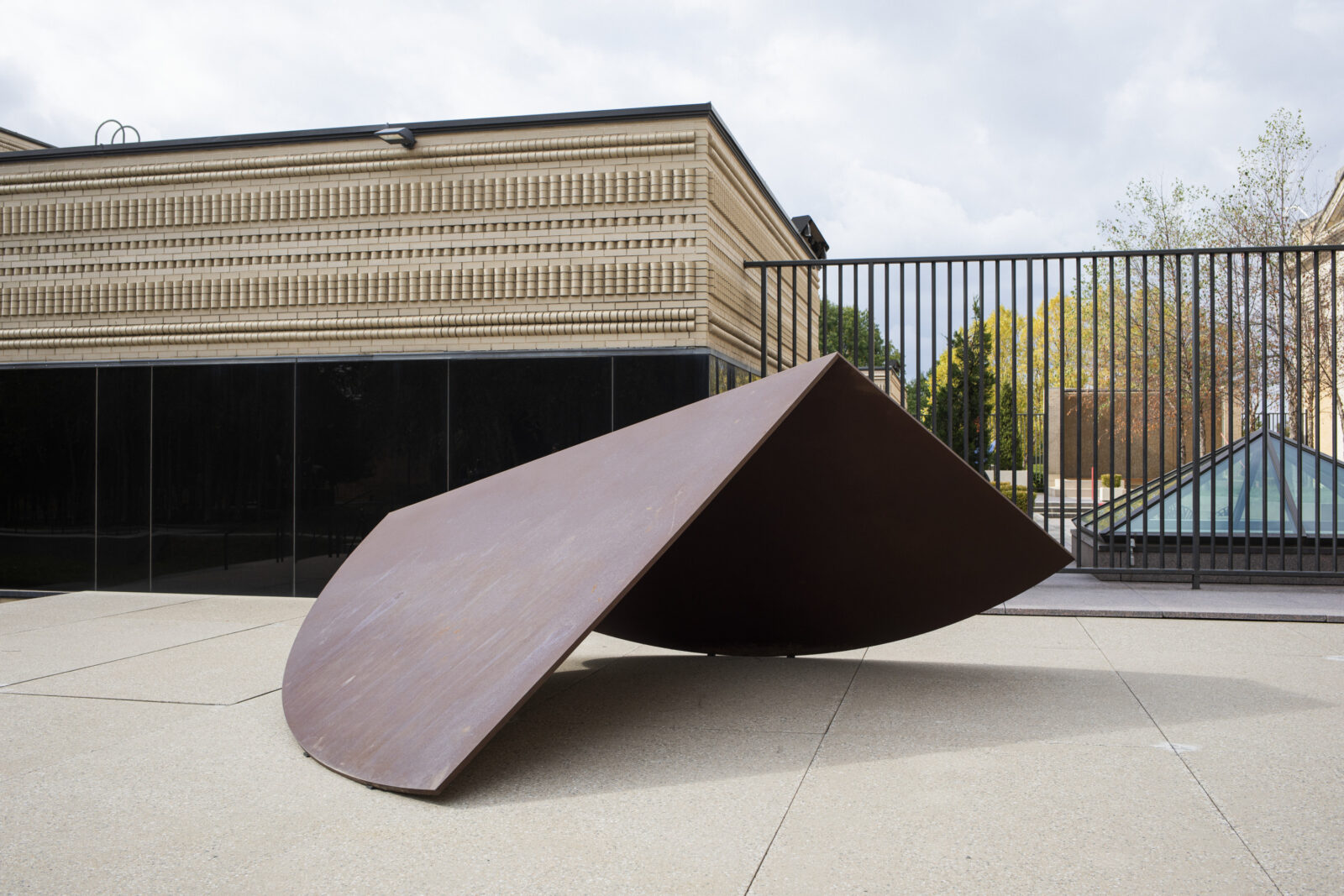
Ellsworth Kelly, American, 1923–2015; Untitled, 1982; weathering steel; 74 inches x 14 feet 6 inches x 13 feet 8 inches; Saint Louis Art Museum, Gift of the Ellsworth Kelly Foundation 108:2022; © Ellsworth Kelly Foundation
How does the outdoor sculptural work enhance the presentation?
The outdoor sculpture Untitled is a recent gift from the Ellsworth Kelly Foundation and a crucial part of the exhibition. The Museum did not have a sculpture by Kelly before this gift. Sculpture was an absolutely key aspect of Kelly’s practice, and over his career, he produced many outdoor sculptures in a range of different materials. I appreciate the almost soft and velvety rust-red patina of the weathering steel of Untitled. The rocker theme of this sculpture was also important to Kelly, dating back to 1959, when he first conceived the idea by folding the lid of a coffee cup and rocking it back and forth. Untitled is the culmination of his treatment of this theme but now on an infinitely larger scale.