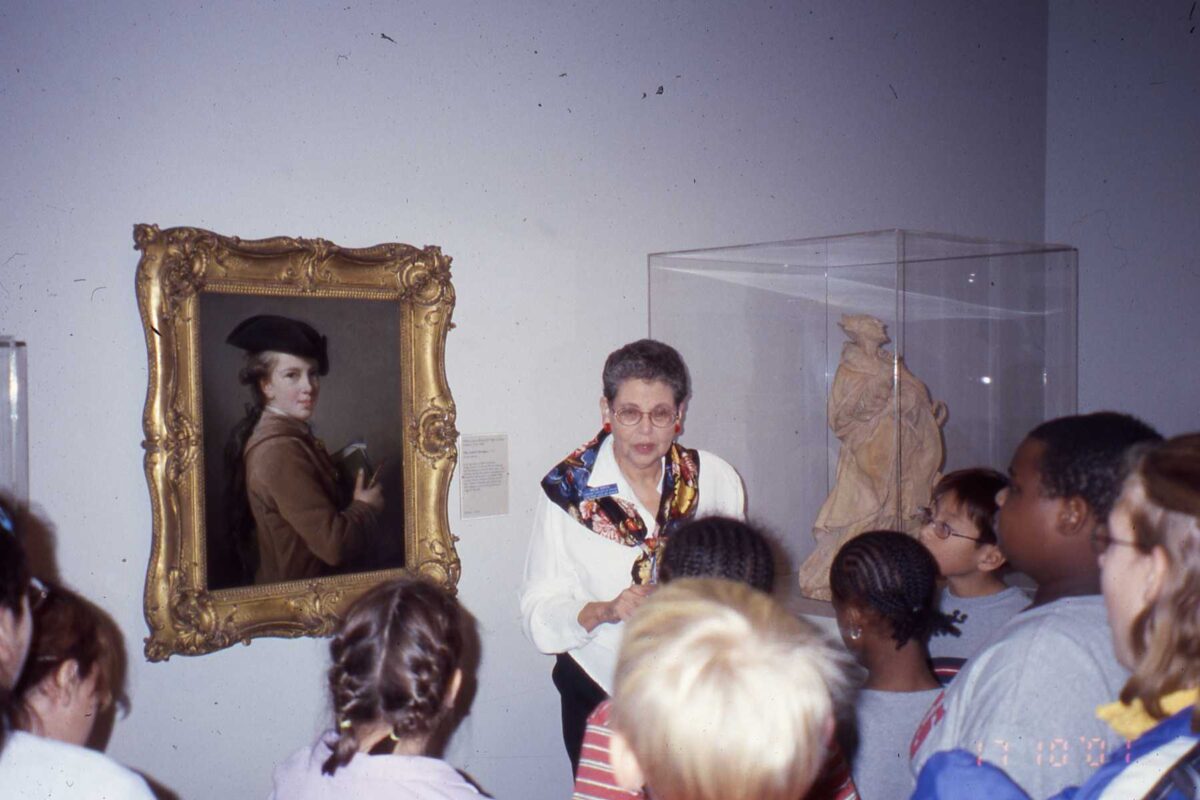
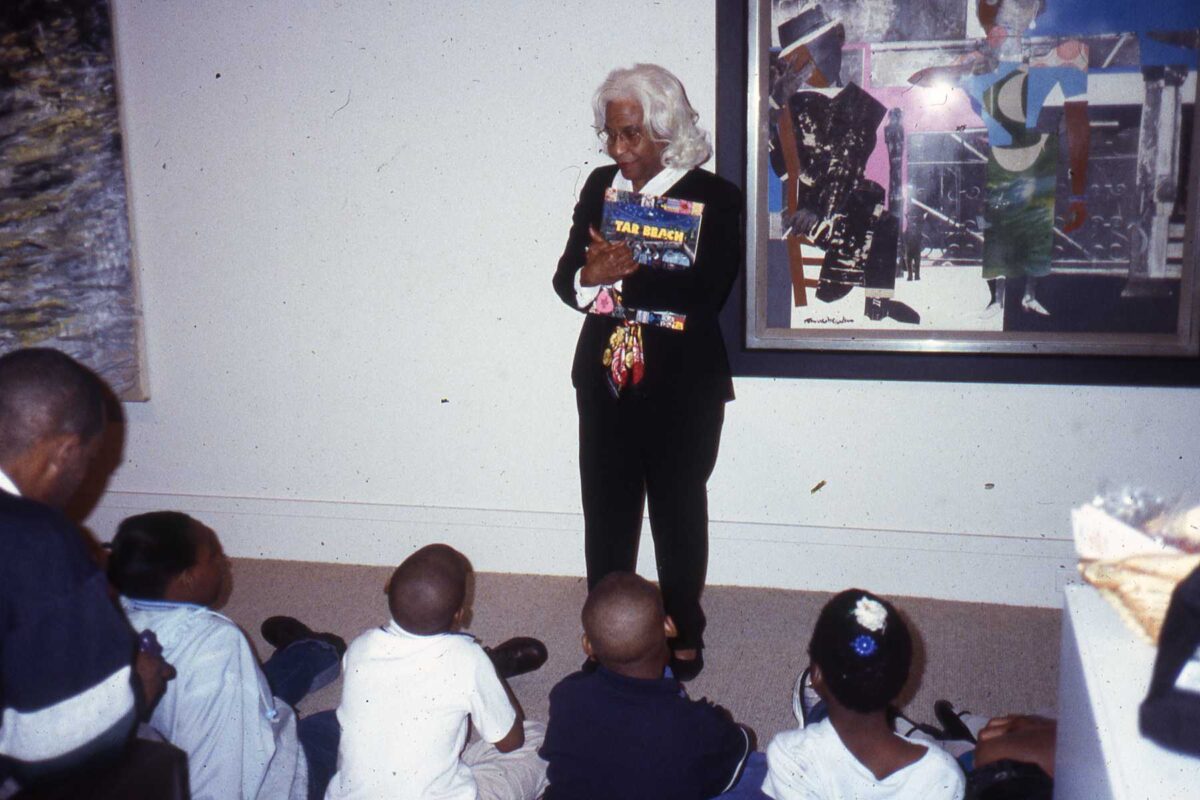
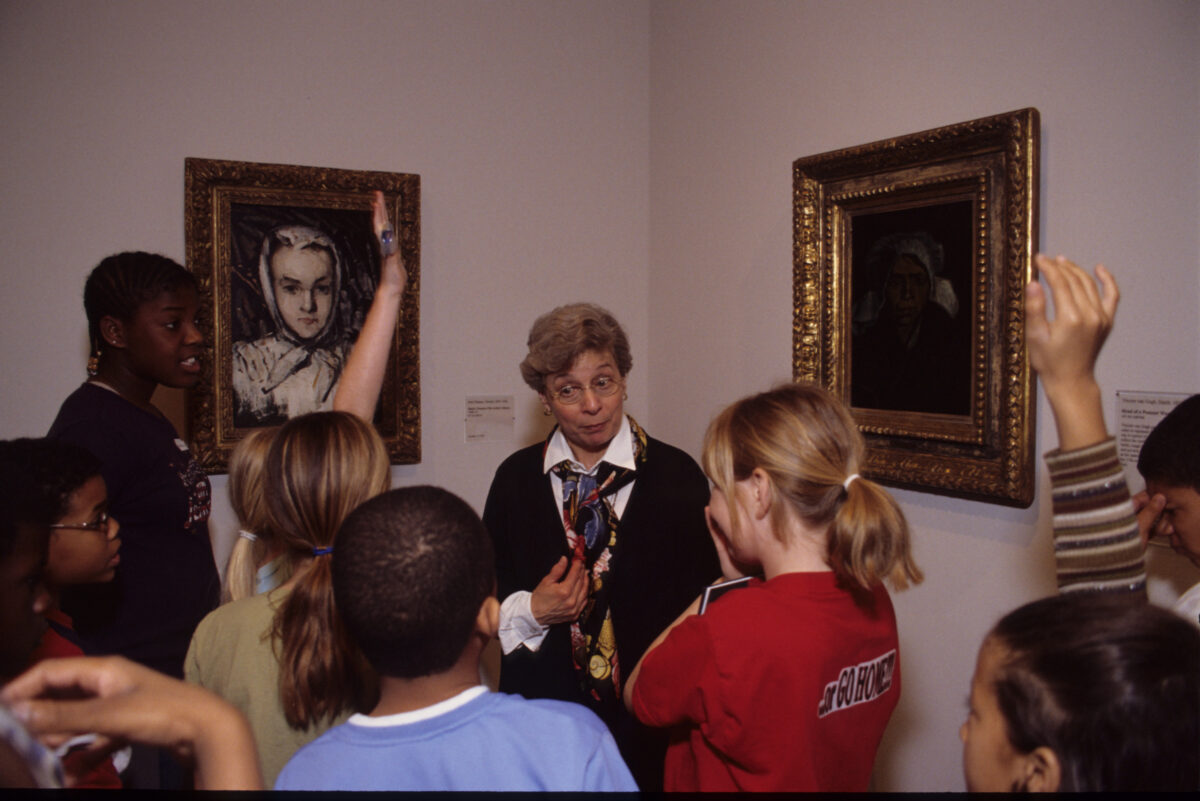
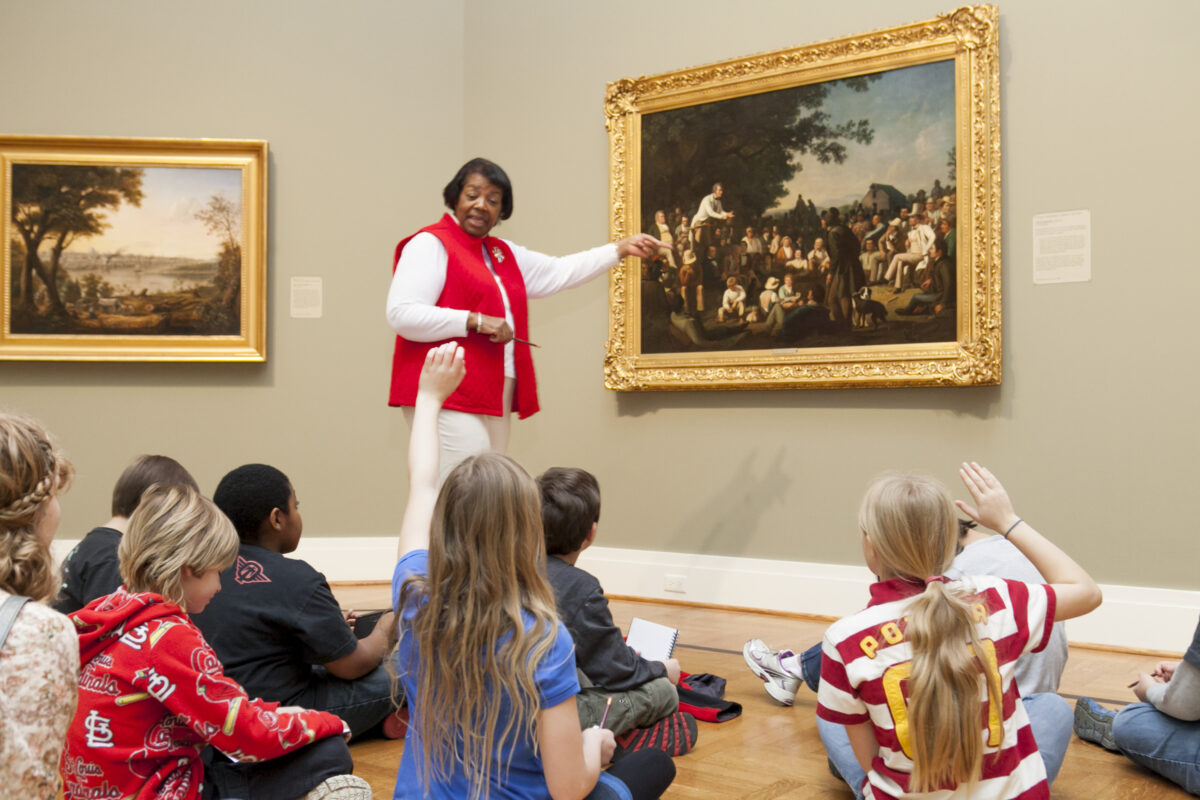
A past SLAM docent gives a tour to young visitors.
A common misconception in the museum world is that docent and gallery attendant are synonymous. While responsibilities vary by institution, the two equally important roles differ in their relationship to the art and the audience. Gallery attendants protect the art for future generations. Docents, also called guides, help visitors enjoy art in the present moment. SLAM docents lead drop-in collection tours as well as scheduled tours for schoolchildren, families, and adult groups.
This year, the Saint Louis Art Museum celebrates the 60th anniversary of its docent program and looks toward the future with a new cohort of volunteer guides beginning training next year—the first new class since 2014. SLAM currently has 54 active docents.
For more insight into the museum guide role, longtime docents Claudia Joyce and Monica McFee, both passionate about art and welcoming visitors, answered a few questions about SLAM’s docent program. McFee has been a SLAM docent for nine years, and Joyce for 12 years.
Learn how to become a docent by emailing ann.burroughs@slam.org.
Why did you become a docent?
Monica: I became a docent to make sure when people came here, they saw themselves. It brings me great joy to be selected for tours with people of color, or anyone who wants someone of color.
Claudia: My kids and I spent a lot of time in the summers going to museums. We all loved SLAM and attended many exhibits that my kids still talk about today. In fact, my son was in town recently, and he talked about the giant bags of spices that hung from the ceiling in one gallery. I knew this place was magical and ideas would stick to people’s brains without force. The art handed the beauty and ideas for free to an inner space in everyone that longs for soothing, for understanding. I guess I just wanted to be part of that. Also, another docent whom I worked with at the Pulitzer Arts Foundation, Gin Wachter, suggested that I might be a good candidate and encouraged me to apply.
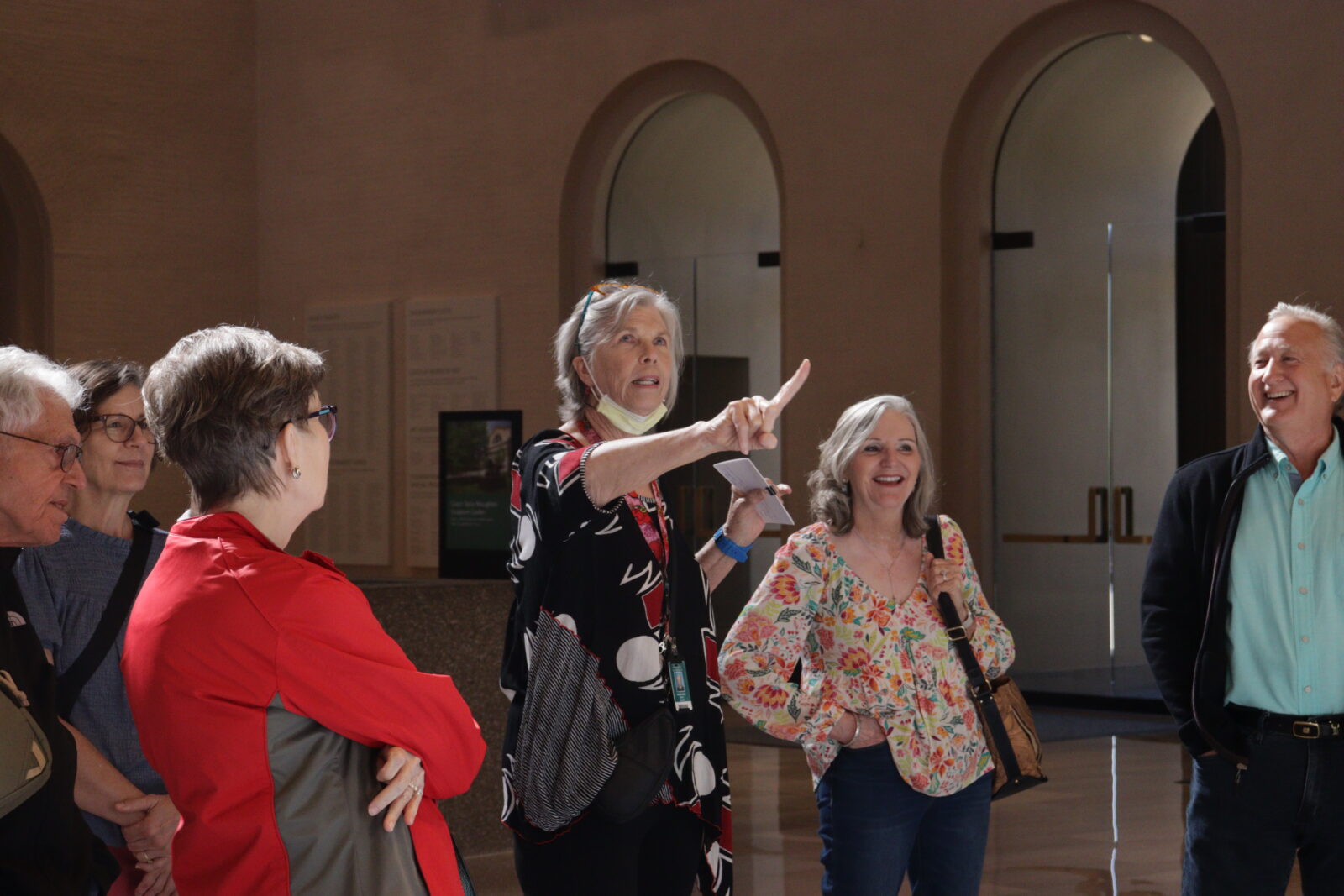
Docent Claudia Joyce leads a Member Morning tour.
How do docents impact or enhance the visitor experience at the Museum?
Monica: Engagement is the primary thing—learning something new, making sure that they see themselves as a part of what’s here and that they know that their story is also being told. This is the way we tell our stories, at this time, at this place, with these colors, and with these symbols. Then I let them tell me their own stories.
Claudia: One of the things docents can do is read their audience and make their tour accessible, interesting, challenging, enjoyable, or educational. Everybody comes in with their own set of experiences, so they’re going to see and feel different things. Part of my job is to facilitate that and open everybody’s minds to the possibility that there’s more than one way to look at art. My hope is that they then take that outside the Museum and look at life in a different kind of way, not just the way that they’ve only ever looked at it.
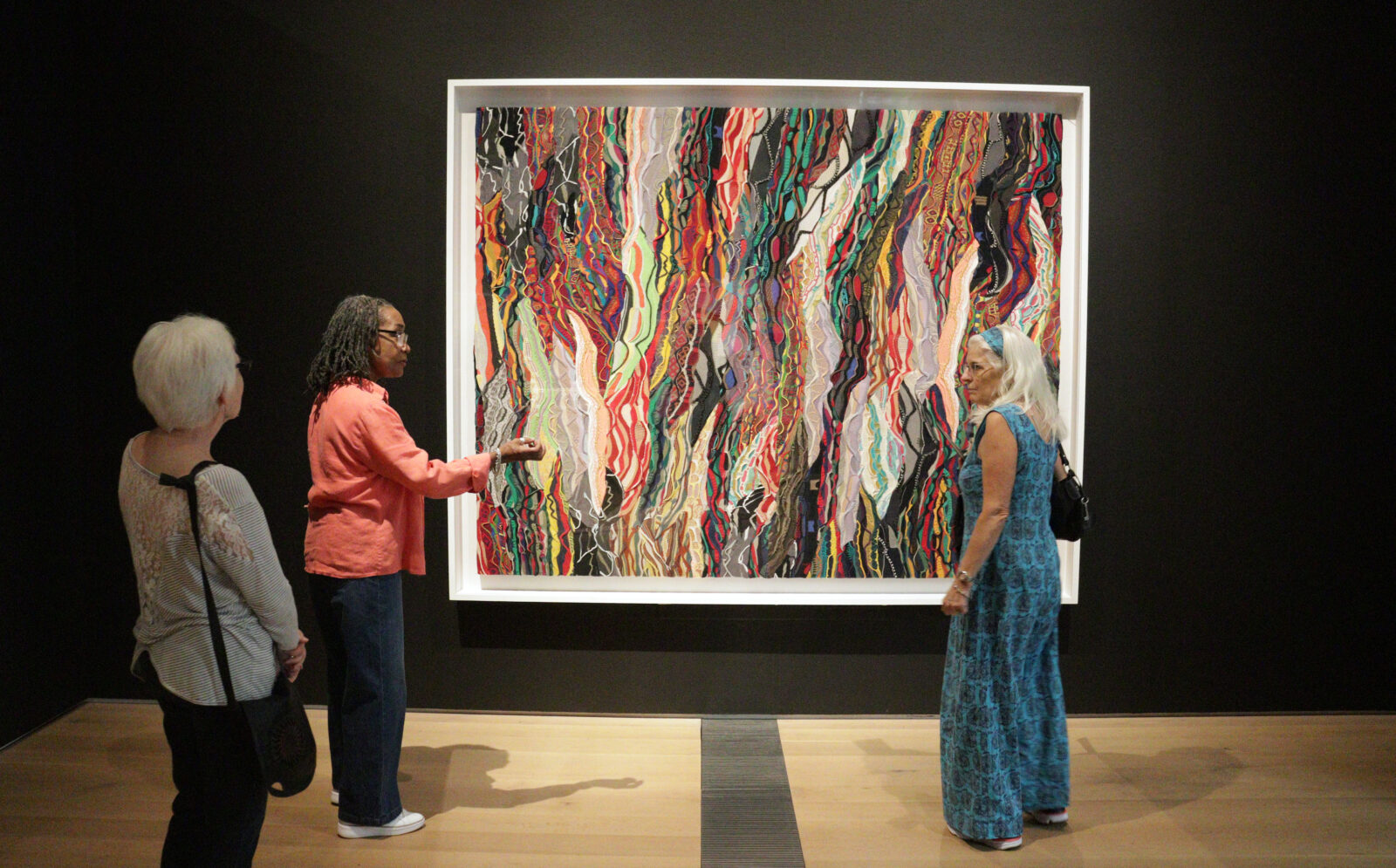
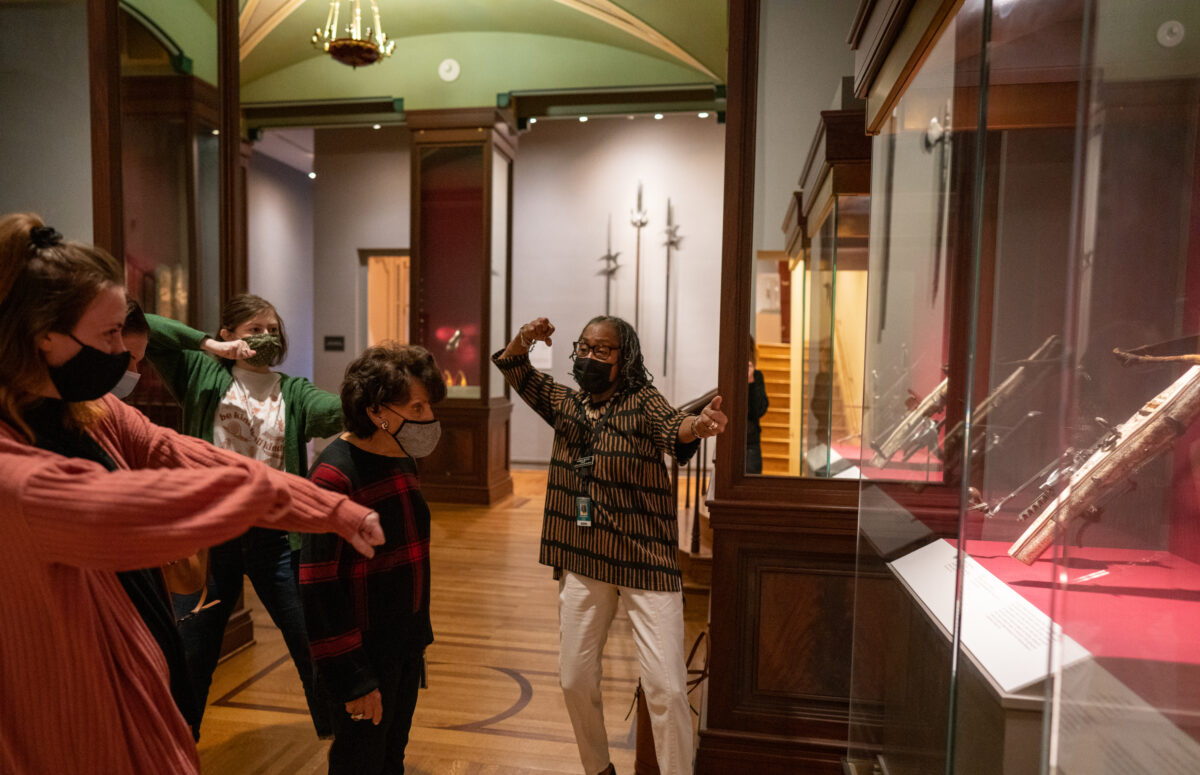
Docent Monica McFee (middle) leads a tour in The Culture: Hip Hop and Contemporary Art in the 21st Century; background: Jayson Musson, American, born 1977; Trying to find our spot off in that light, light off in that spot, 2014; mercerized cotton stretched over cotton; 72 x 96 x 1 5/8 inches; Philadelphia Museum of Art: Gift of Arthur Dantchik, 2014 2023.295; © Jayson Musson
How has the role of docents changed over the years?
Monica: The biggest change I can see is the interactions with public schools because their curricula have changed over the years. Now participating docents are trained for public schools’ criteria. For example, staff now preselects art objects for the Arts in the Basic Curriculum tours. And docents focus more on quality of engagement instead of quantity. This ensures more uniform experiences and post-tour discussions. So, everyone wins.
Claudia: Originally, the program was very strict; docents had to wear uniforms, take tests—they studied for years and were tested on all the galleries. It was super rigorous. We have evolved—there’s no more testing, no more uniforms. We want to avoid anything that puts a barrier between us and visitors. We’re also engaging visitors in different ways. Docents now ask people what they smell when they see a painting or what they’re hearing or what the temperature is. Engage the senses rather than just talking about the brushstrokes and the historical aspects.
What is your favorite memory during your years as a docent at SLAM?
Monica: Recently, during a tour with visitors with autism, one young man said to me, “I don’t want to do this activity because too much color overstimulates me,” and I said, “Okay.” Afterward, he came up to me and said, “I really had a great experience,” and gave me a great big hug. He said, “Thank you, Ms. Monica. I’m going to come back and I’m going to look for you.” So, we went from understandable reluctance to “I had a great experience.” That’s why I do it.
Claudia: My favorite tours are ones where the whole group makes connections, where we share thoughts with what I call the “community mind.” A place where everyone is comfortable and a little vulnerable looking at new ideas about what art means to them. When that is working, and it doesn’t always work, the energy created is so exciting. I want to work harder to find new ways to continue to grow that process, to make it personal and universal, so that what our visitors find in the power of art, they can take out the door and give it value in their lives.
Responses have been edited for length and clarity.
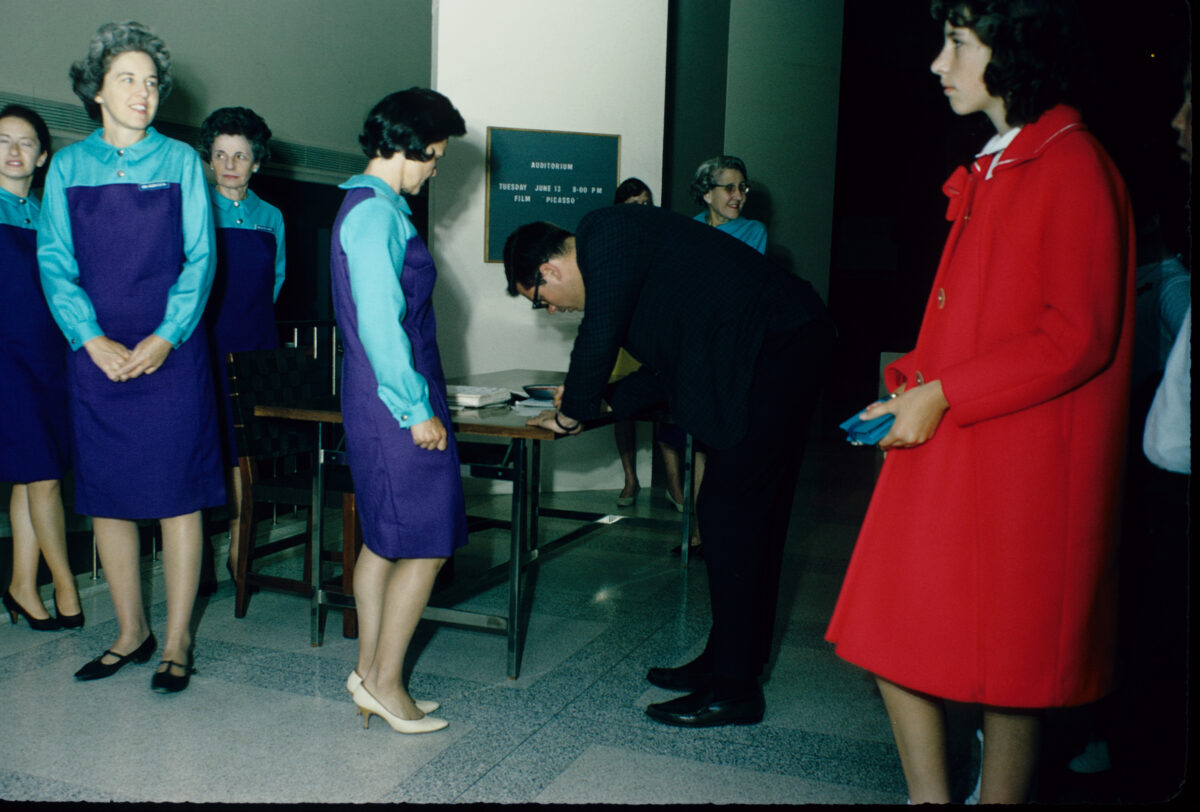
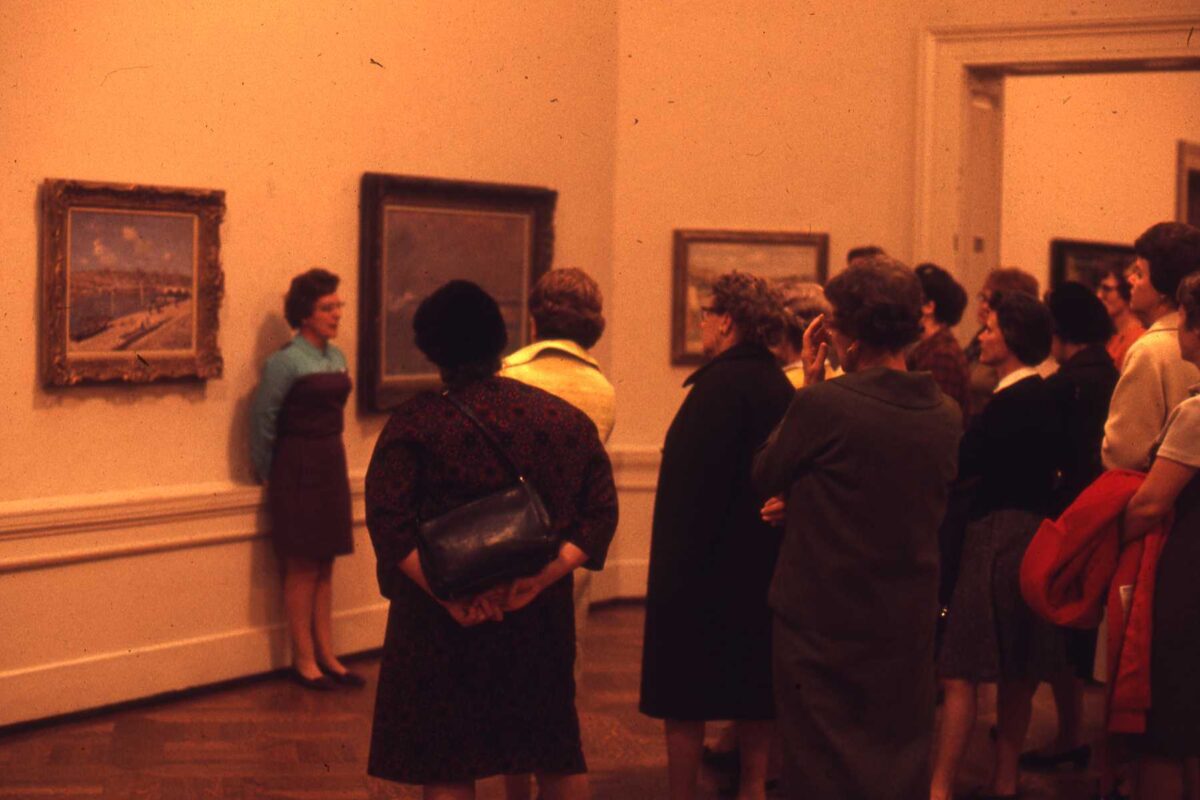
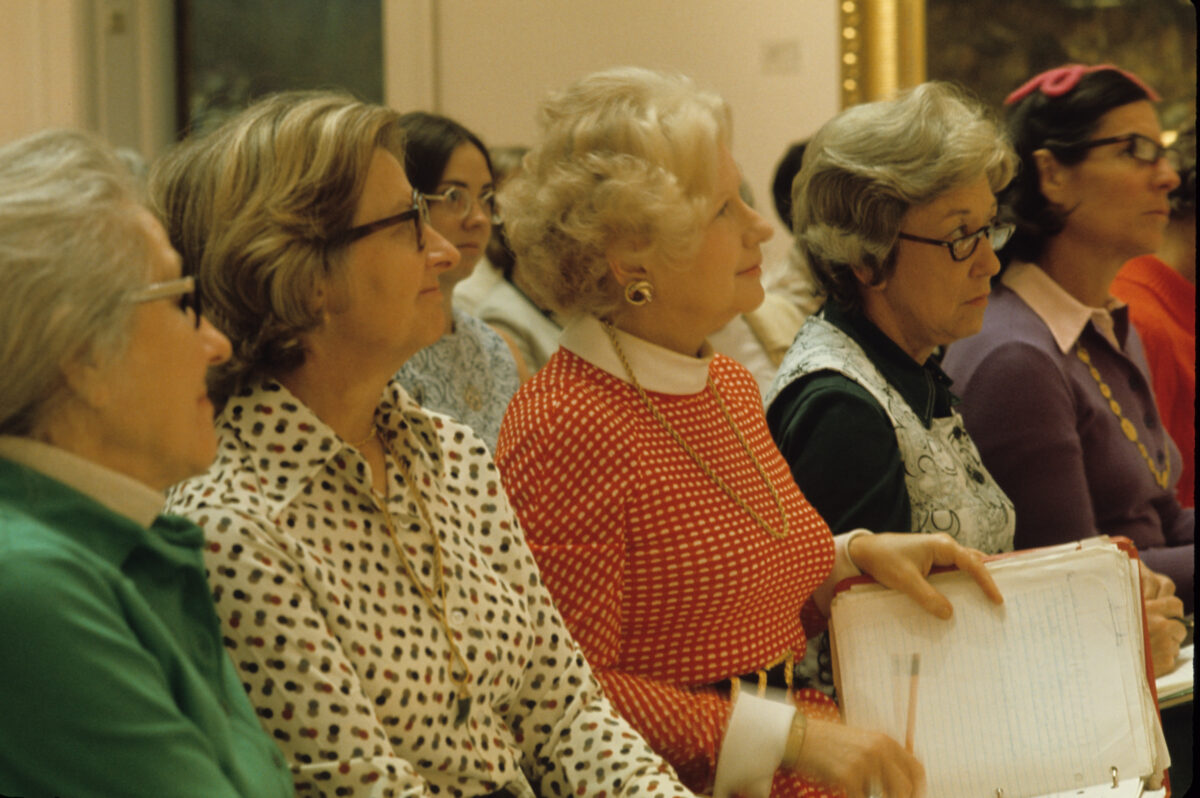
SLAM docents throughout the decades
-
SLAM docents in 1967.
-
A SLAM docent gives a tour in 1968.
-
A group of docents sits for a training session in 1973.
-
SLAM docent Irene Sokol leading a tour in 1985.
-
SLAM docent Billie Phillips leading a tour in 1997.
-
SLAM docent Betsy Zimbalist leading a tour in 2004.
-
SLAM docent Joyce Bluett leading a tour in 2013.
-
View 1 more
Docent Monica McFee leading a tour in 2021.