
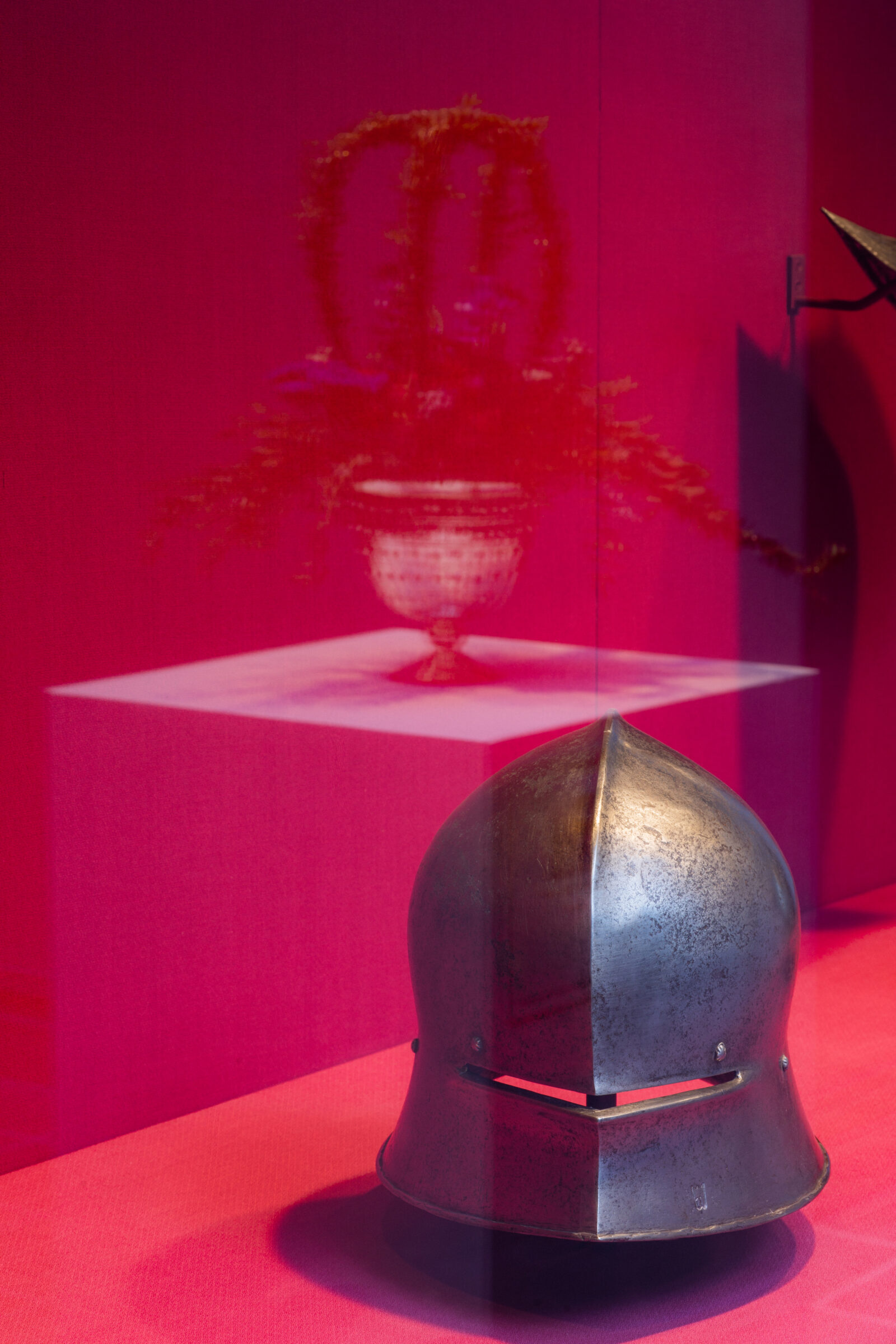
Sallet Helmet
- Culture
- Material
- Steel, iron, and leather

Arms and armor installation view
The Museum’s arms and armor galleries contain centuries-worth of outstanding metalwork and woodwork. Housed on Level 1 of the Museum, these galleries contain full suits of armor, various weapons, and art depicting historic figures dressed for battle. Visitors can view ceremonial weapons—such as a Partisan, a type of staff used to create an imposing presence when carried upright by a large group of bodyguards—and complete sets of field armor, the most common type made for war in the Middle Ages and the Renaissance. An exceptional example of armor in the Museum’s collection is the Sallet Helmet, SLAM’s earliest and finest helmet on view. Visitors can find this object in the William T. Kemper Foundation Gallery 125.
Sallet Helmet, c.1480; probably Austrian; steel, iron, and leather; 9 3/4 x 9 x 15 5/16 inches; Saint Louis Art Museum, Museum Purchase 58:1939
Made around 1480, this helmet was beaten from one large sheet of metal. Skill and finesse were required to hammer the smooth, sweeping form. This type of helmet is characterized by its horizontal profile and long pointed tail. The curve of its surface deflects weapons; viewers can see evidence of sword cuts. Pierced with a vision slit, the sallet exudes a mysterious, masklike presence. A series of star-shaped steel rivets at ear level were used to secure a cloth helmet lining.
Although a helmet was only one element of a knight’s armor, it was the crowning glory of military garb, and its form, construction, and decoration provide clues to its use, date, and place of manufacture. This sallet was probably wrought in late-15th-century Innsbruck, Austria. According to How to Read European Armor by Donald La Rocca for the Metropolitan Museum of Art, “some of the most beautiful armor in the late gothic and early Renaissance styles” was made in Innsbruck and the neighboring German town of Mühlau. The Austrian city had a reputation for its strong steel and skilled armorers.
Arms and armor installation view with reflection of Art In Bloom floral arrangement,
The oldest piece of armor on view in the Museum’s arms and armor galleries, Sallet Helmet was created in the years following a century bogged by war, ignorance, famine, and illness, often referred to as the Dark Ages. This period, between the fall of Rome and the beginning of the 14th century, is also known as the Middle Ages and characterized by a lack of societal advancement. Sallet Helmet was created and used during the early years of the Renaissance. The Renaissance was a time of global exploration, cultural expansion, and scientific and political advancement in Europe. The convergence of form and function shown in Sallet Helmet is indicative of the artistry of the time.