Unidentified artist(s), Mexico; Folding Screen with Indigenous Wedding, Mitote, and Flying Pole (Biombo con desposorio indígena, mitote y palo volador), c.1660–90; oil on canvas; overall (4 panels): 66 × 120 inches; Los Angeles County Museum of Art, Purchased with funds provided by the Bernard and Edith Lewin Collection of Mexican Art Deaccession Fund 2024.61a-d; photo © Museum Associates/LACMA
Spaniards began colonizing the Americas in the late 15th century in an effort to spread Christianity. Because of this, the region became a global crossroads, with artists there drawing on a range of traditions—Indigenous, European, Asian, and African—reflecting the interconnectedness of the world.
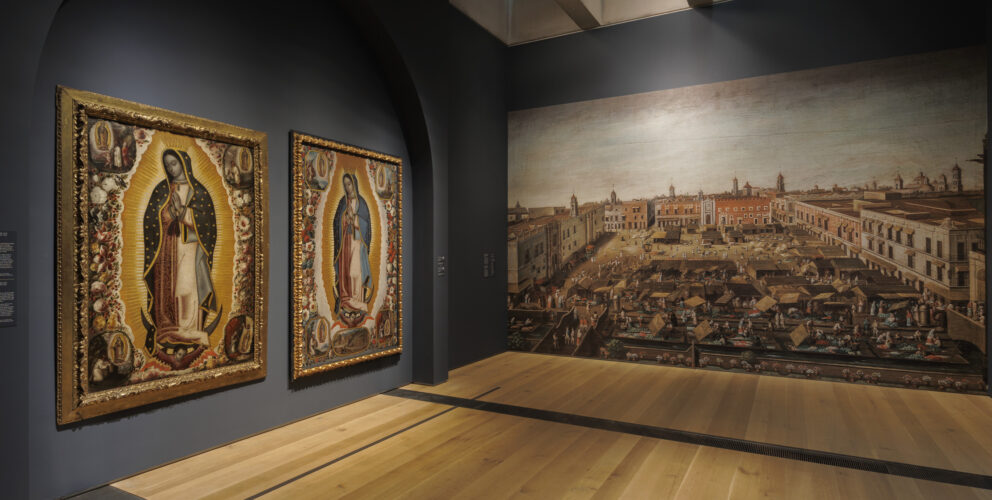
A prime example of this interconnectedness is this biombo, or folding screen, that’s featured in the opening galleries of SLAM’s summer 2024 exhibition Art and Imagination in Spanish America, 1500–1800: Highlights from LACMA’s Collection. Like many works in the exhibition, this folding screen portrays the region’s mixture of Indigenous and Spanish identities and offers a local interpretation stemming from global trade networks.
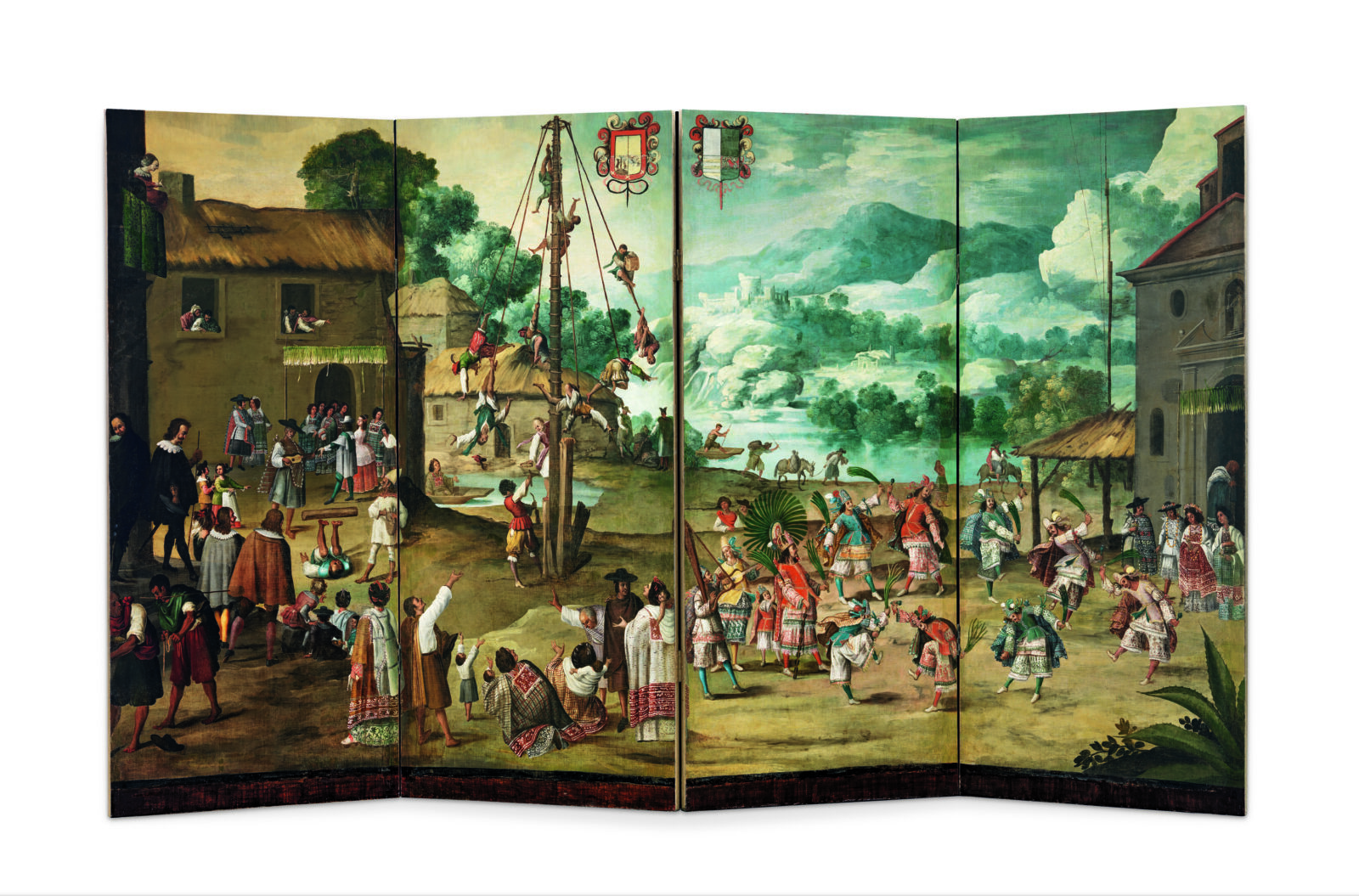
Unidentified artist(s), Mexico; Folding Screen with Indigenous Wedding, Mitote, and Flying Pole (Biombo con desposorio indígena, mitote y palo volador), c.1660–90; oil on canvas; overall (4 panels): 66 × 120 inches; Los Angeles County Museum of Art, Purchased with funds provided by the Bernard and Edith Lewin Collection of Mexican Art Deaccession Fund 2024.61a-d; photo © Museum Associates/LACMA
The biombo in SLAM’s exhibition is titled Folding Screen with Indigenous Wedding, Mitote, and Flying Pole (Biombo con desposorio indígena, mitote y palo volador). This impressive free-standing screen from the permanent collection of the Los Angeles County Museum of Art is 120 inches long and divided into four panels. It is perhaps the earliest to portray an Indigenous wedding. It depicts celebrations whose origins date to pre-Hispanic times and were still popular during the colonial period in Mexico.
The scene probably took place in Santa Anita, Iztacalco, a famous destination in the southern part of present-day Mexico City. At right, the newlyweds are seen leaving the church, and participants wearing typical mid-17th-century Spanish clothing gather outside the bride’s house at left. Full of life, other images on the screen include a group of dancers in ornate costumes performing a mitote (or Moctezuma dance) that imitates the dance of the legendary Aztec king; figures swinging from a flying pole (palo volador); and a log, suspended in the air, being juggled by the feet of a performer.
This screen was made in Mexico, c.1660–1690. It was possibly gifted by King Louis Phillippe of France, Duke of Orléans, to his son, François d’Orléans, Prince de Joinville, upon his marriage to Princess Francisca of Brazil in 1843. It was acquired by LACMA in 2005.
-
Unidentified artist(s), Mexico; Folding Screen with Indigenous Wedding, Mitote, and Flying Pole (Biombo con desposorio indígena, mitote y palo volador) (detail), c.1660–90; oil on canvas; overall (4 panels): 66 × 120 inches; Los Angeles County Museum of Art, Purchased with funds provided by the Bernard and Edith Lewin Collection of Mexican Art Deaccession Fund 2024.61a-d; photo © Museum Associates/LACMA
-
Unidentified artist(s), Mexico; Folding Screen with Indigenous Wedding, Mitote, and Flying Pole (Biombo con desposorio indígena, mitote y palo volador) (detail), c.1660–90; oil on canvas; overall (4 panels): 66 × 120 inches; Los Angeles County Museum of Art, Purchased with funds provided by the Bernard and Edith Lewin Collection of Mexican Art Deaccession Fund 2024.61a-d; photo © Museum Associates/LACMA
-
Unidentified artist(s), Mexico; Folding Screen with Indigenous Wedding, Mitote, and Flying Pole (Biombo con desposorio indígena, mitote y palo volador) (detail), c.1660–90; oil on canvas; overall (4 panels): 66 × 120 inches; Los Angeles County Museum of Art, Purchased with funds provided by the Bernard and Edith Lewin Collection of Mexican Art Deaccession Fund 2024.61a-d; photo © Museum Associates/LACMA
-
Unidentified artist(s), Mexico; Folding Screen with Indigenous Wedding, Mitote, and Flying Pole (Biombo con desposorio indígena, mitote y palo volador) (detail), c.1660–90; oil on canvas; overall (4 panels): 66 × 120 inches; Los Angeles County Museum of Art, Purchased with funds provided by the Bernard and Edith Lewin Collection of Mexican Art Deaccession Fund 2024.61a-d; photo © Museum Associates/LACMA
-
Unidentified artist(s), Mexico; Folding Screen with Indigenous Wedding, Mitote, and Flying Pole (Biombo con desposorio indígena, mitote y palo volador) (detail), c.1660–90; oil on canvas; overall (4 panels): 66 × 120 inches; Los Angeles County Museum of Art, Purchased with funds provided by the Bernard and Edith Lewin Collection of Mexican Art Deaccession Fund 2024.61a-d; photo © Museum Associates/LACMA
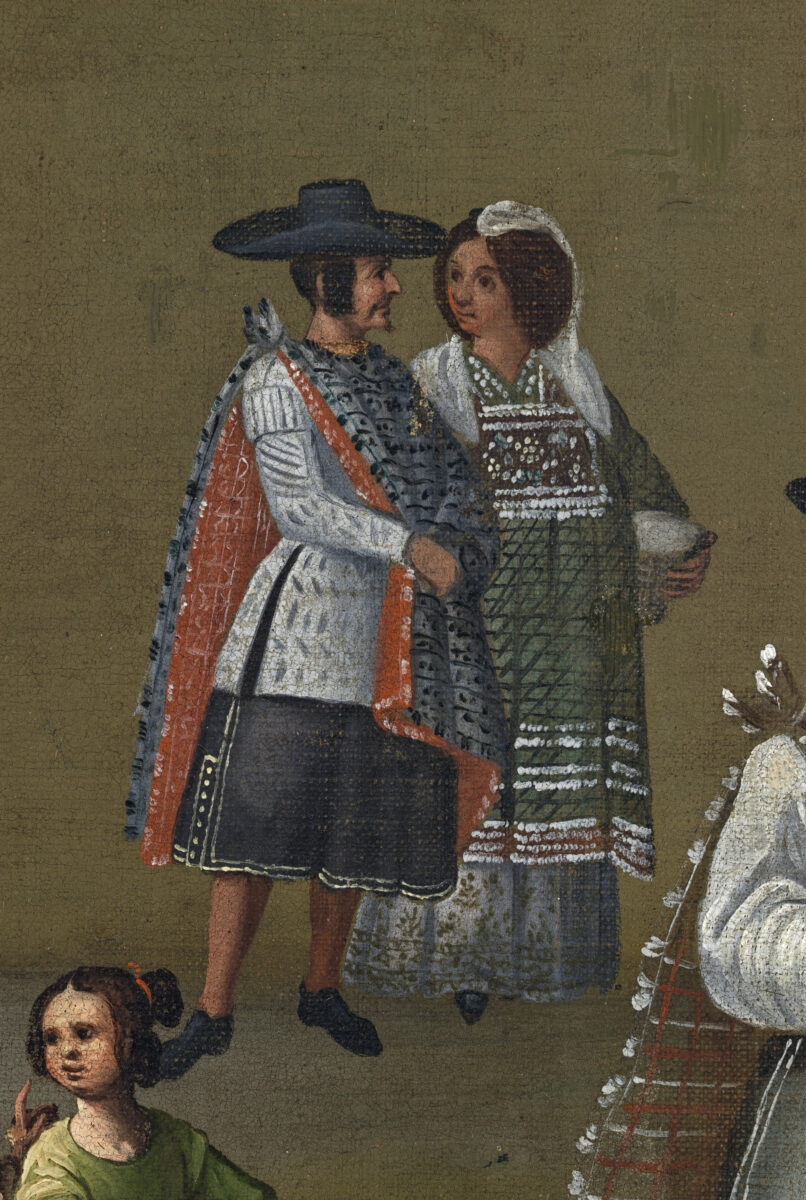
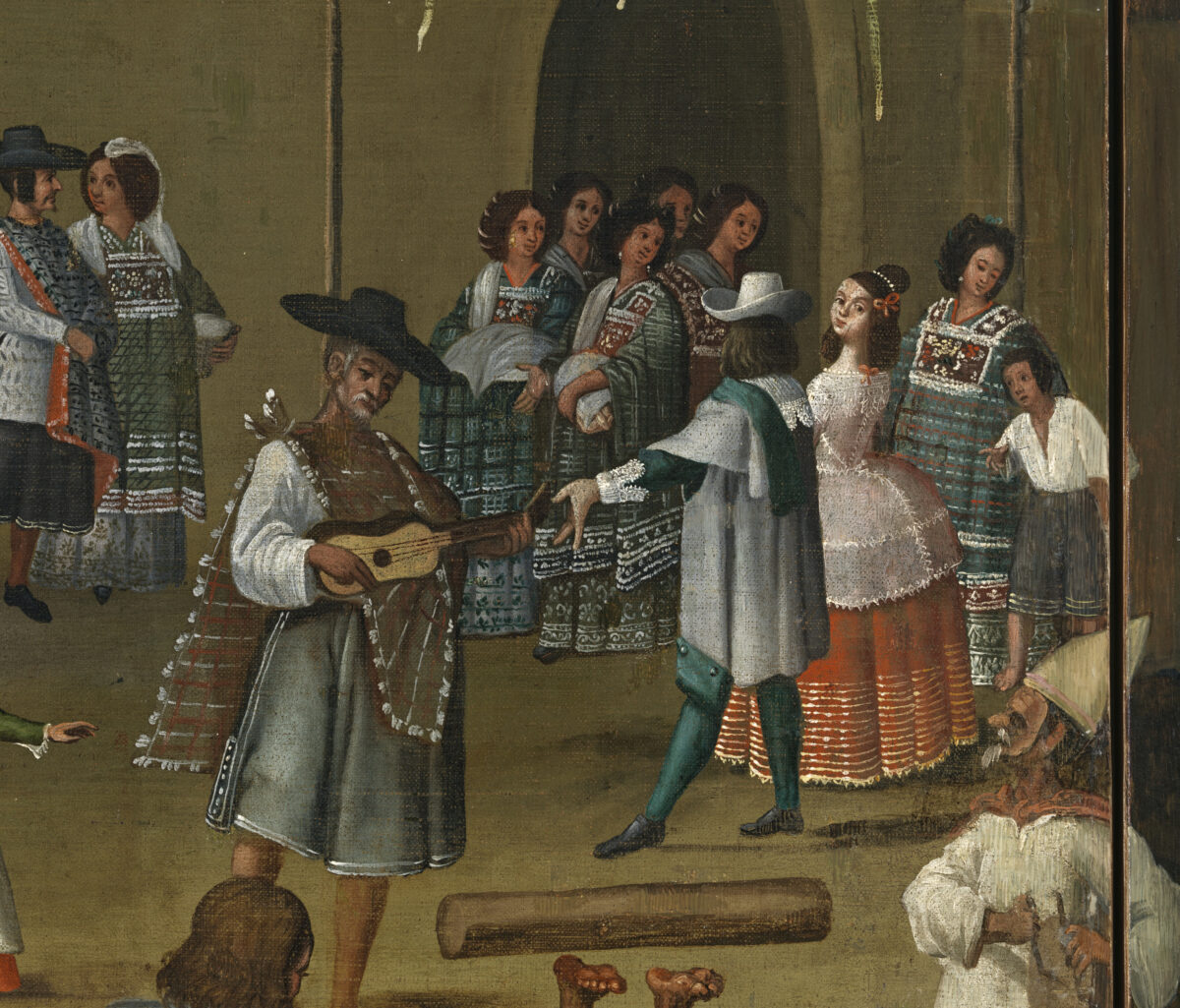
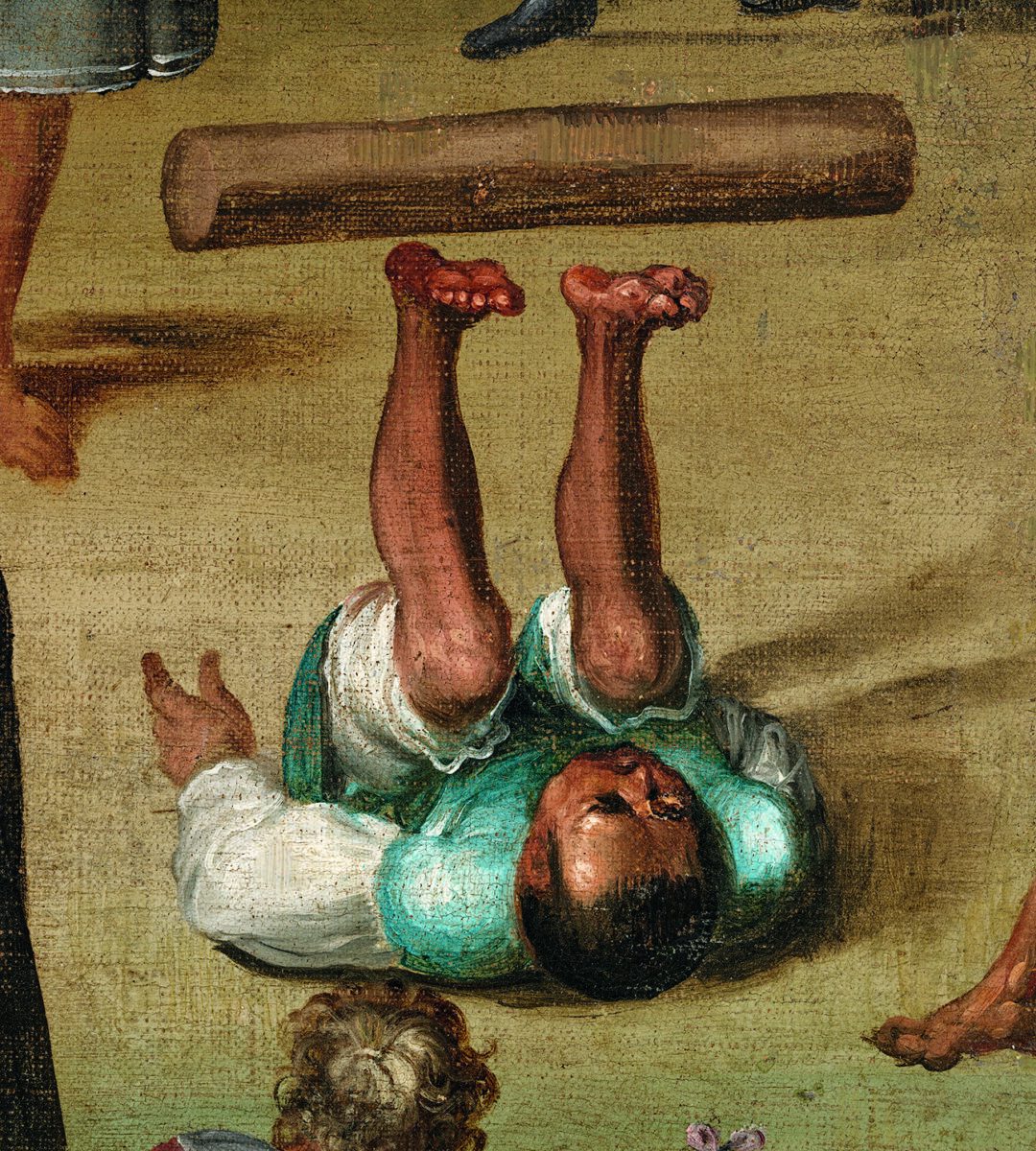
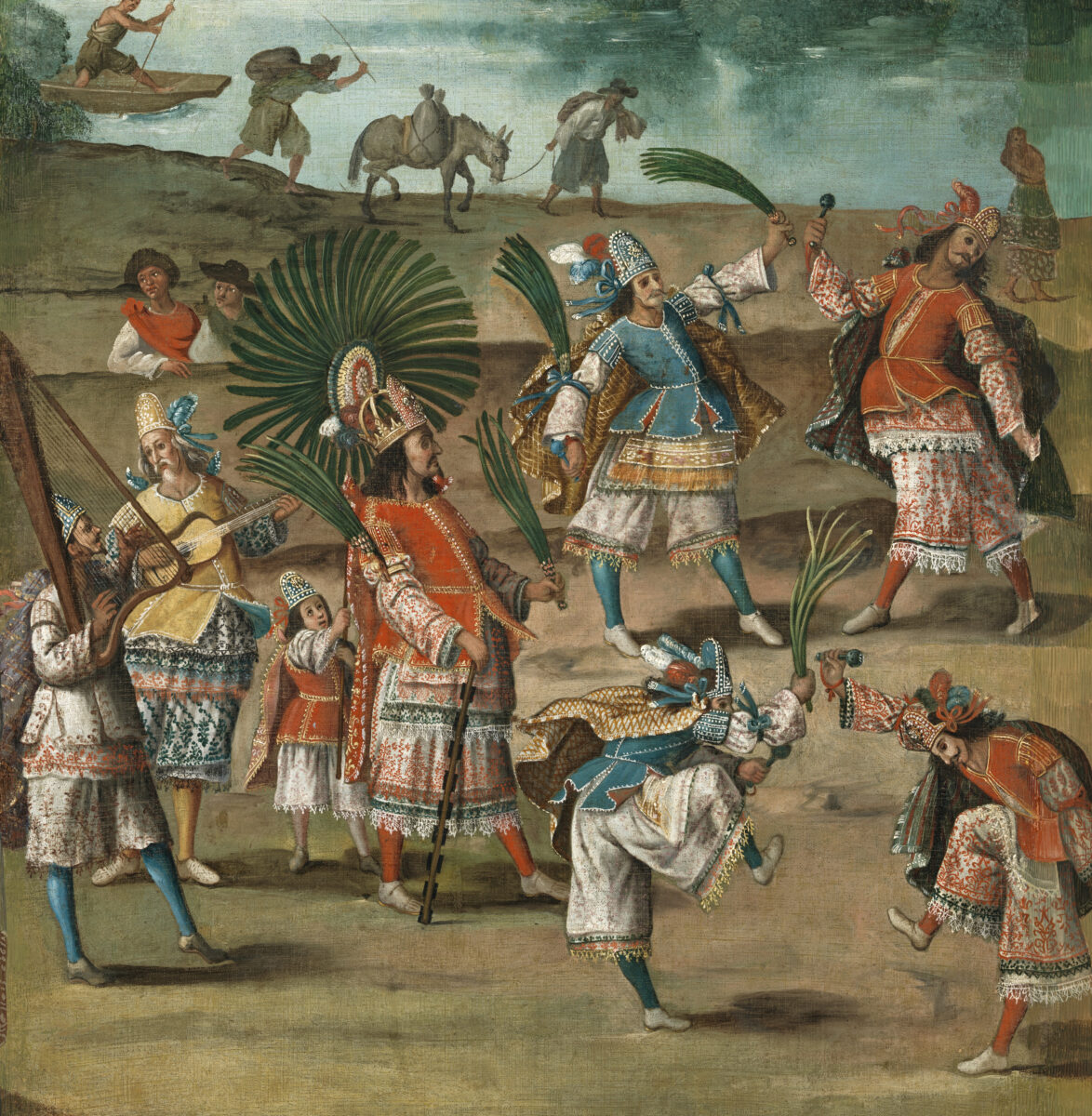
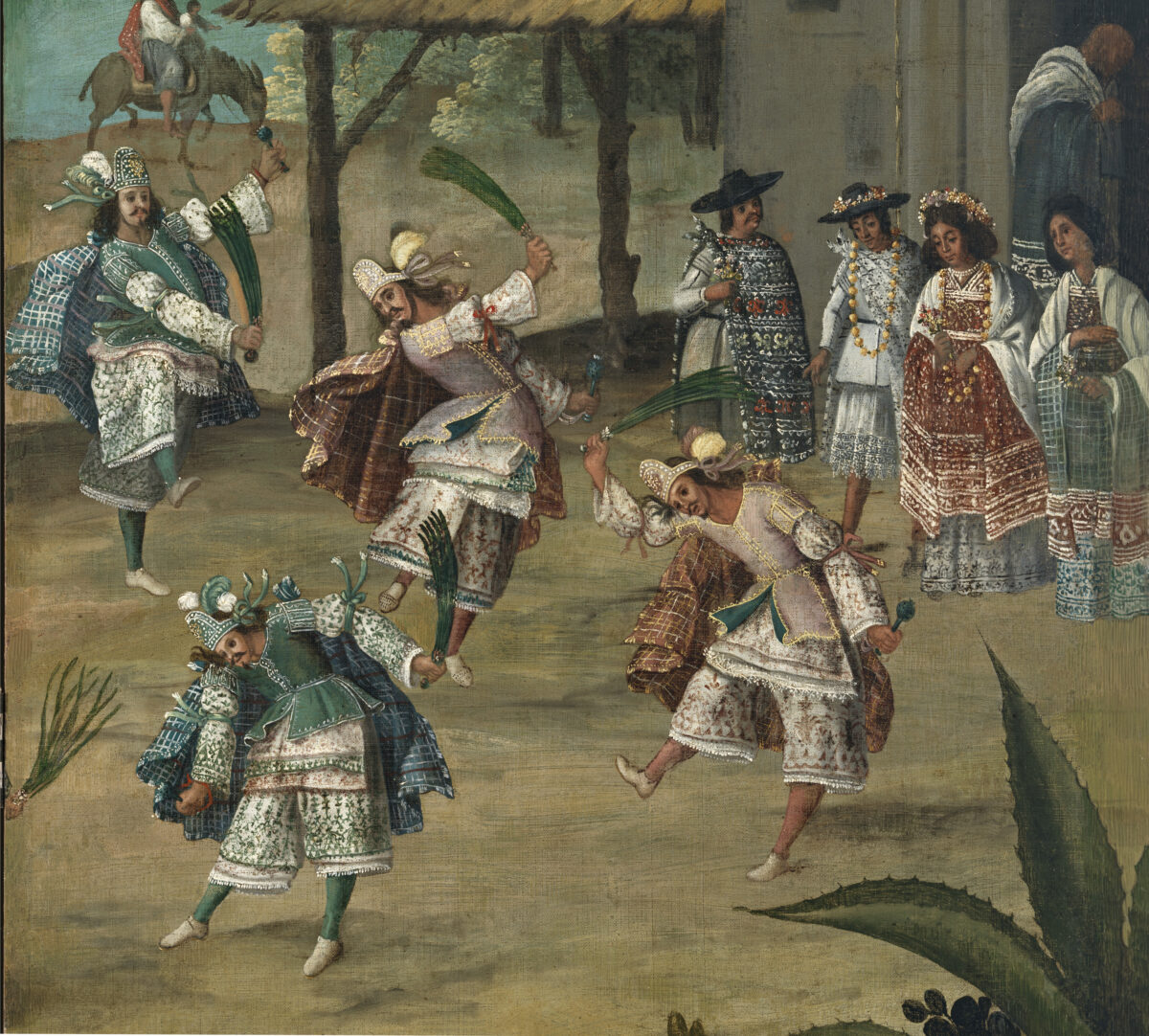
Biombos—from the Japanese word byobo that literally means “wind wall”—were introduced to New Spain as luxury items in the late 16th or early 17th century, according to research in the exhibition’s catalogue, written by Ilona Katzew with the Los Angeles County Museum of Art. They originated following the travels of Jesuit missionaries to Japan and conjured the idea of wealth and ostentation. While traditionally serving a practical purpose of dividing a space or concealing furnishings, the more high-end biombos were displayed in a prominent place in the home, showcasing the owner’s elevated taste.
These novel artifacts traveled through trade with Asia after the Spaniards conquered the Philippines in 1565. By the 17th century, the commercialization of Asian goods spread to royal, ecclesiastic, and civic authorities. Asian imports to New Spain continued through the 19th century, though various changes in the political sphere and global commerce created more complicated trading conditions. Painters in Mexico City and Puebla began creating their own biombos to satisfy the growing demand. The multipanel design also allowed creative flexibility for rendering sweeping themes, including local subjects but also mythical, allegorical, and historical narratives.
In the exhibition Art and Imagination in Spanish America, 1500–1800, the biombo is shown in the opening section, “Fashioning Identity.” This section also features paintings and textiles from Mexico, Peru, and Ecuador that demonstrate that clothing powerfully asserted social and ethnic differences and vividly exemplified global networks of exchange. The exhibition is on view June 22 through September 1, 2024.