
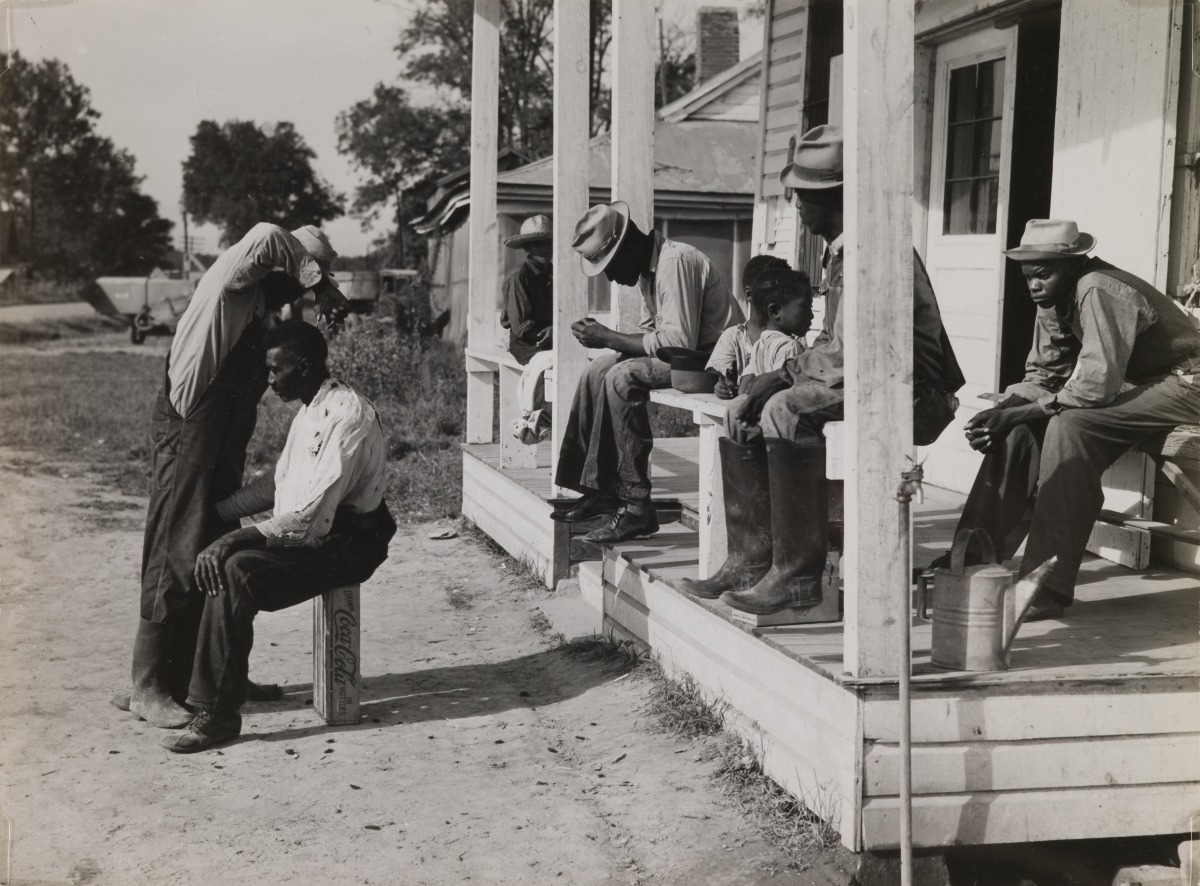
Haircutting in Front of General Store, Mileston Plantation, Mileston, Mississippi Delta
- Photographer
- Material
- Gelatin silver print

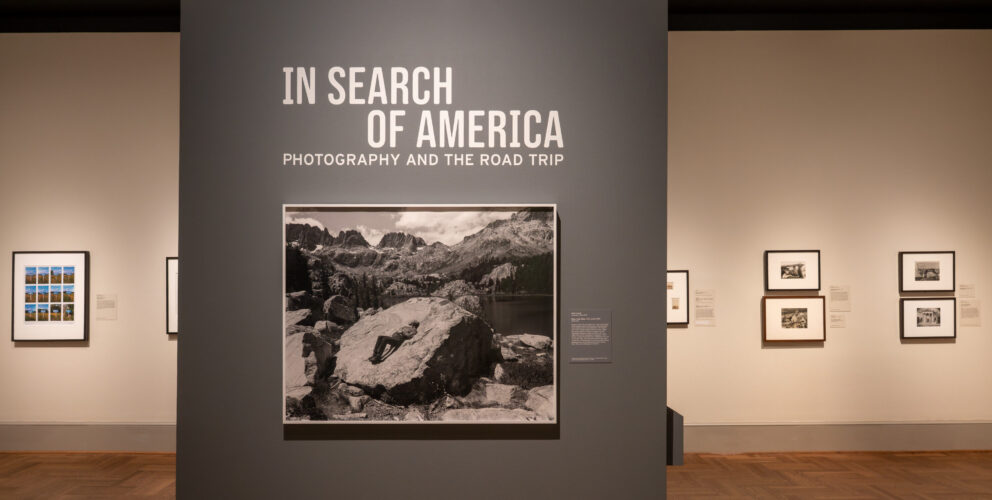
Installation view of In Search of America: Photography and the Road Trip
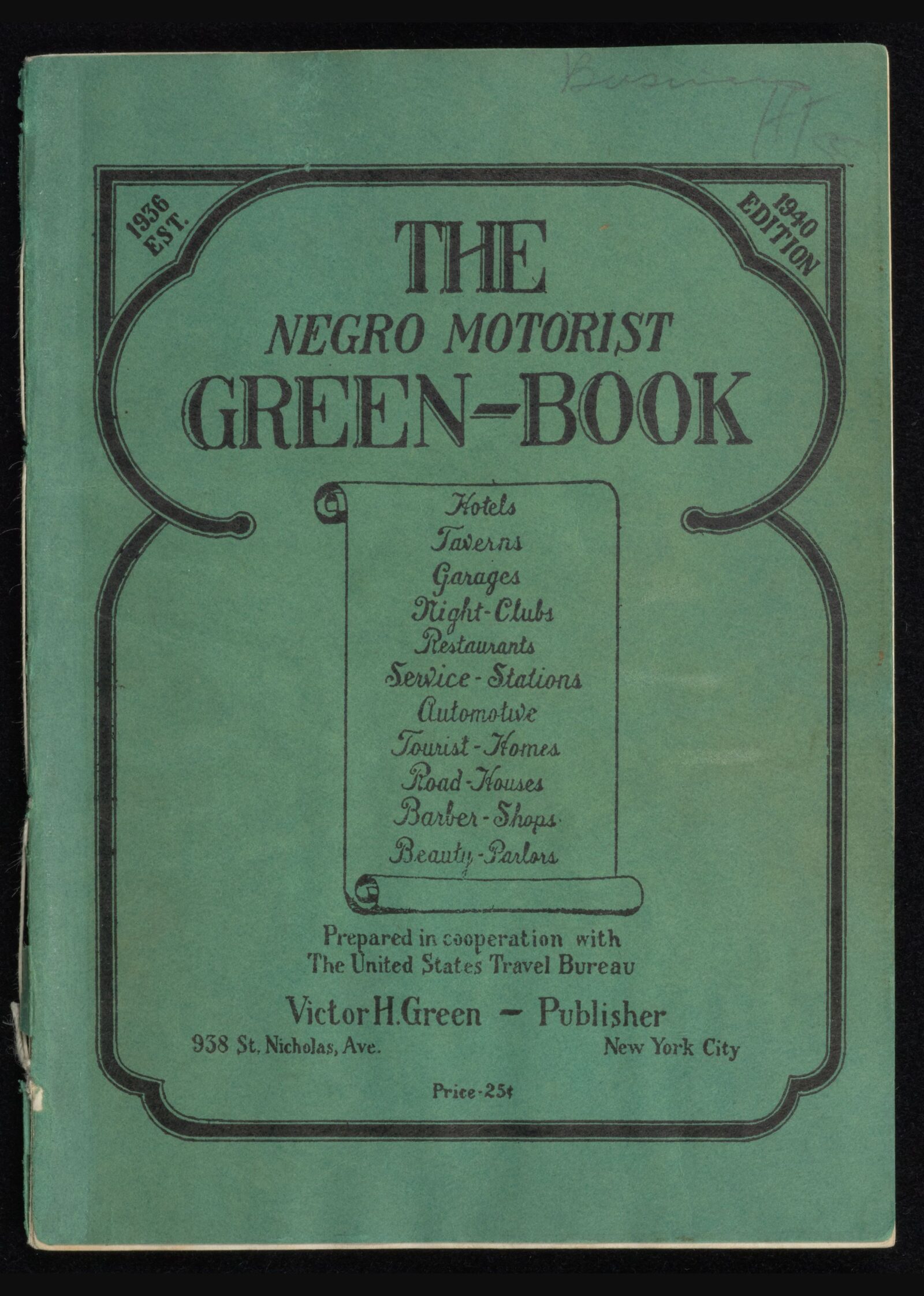
The burgeoning highway system was symbolic of freedom for many, but in the face of systemic oppression during the era of Jim Crow laws, Black Americans used the strength of community to find freedom for themselves along the open road. On view in the exhibition In Search of America: Photography and the Road Trip, the Green Book assists in telling the story of racial violence and segregation as it relates to traversing American highways.
The Negro Motorist Green-Book, 1940 edition; published by Victor H. Green & Co., New York; Schomburg Center for Research in Black Culture, Manuscripts, Archives and Rare Books Division, The New York Public Library
The Negro Motorist Green-Book, 1940 edition; published by Victor H. Green & Co., New York; Schomburg Center for Research in Black Culture, Manuscripts, Archives and Rare Books Division, The New York Public Library
Formally titled the Negro Motorist Green-Book, a facsimile of the 1940 edition is displayed in Sidney S. and Sadie M. Cohen Gallery 234. Its cover is illustrated with a scroll, upon which a list of vetted locations is written. Each edition of the book guided Black travelers to thousands of safe spaces during a time when white-owned businesses implemented segregation, Ku Klux Klan members assaulted innocent people, and sundown towns threated violence under the cover of darkness. Hotels, taverns, garages, nightclubs—these businesses and many more were assessed by previous travelers and listed in the Green Book after being deemed safe to visit in the midst America’s Jim Crow era. The long list of friendly franchises was compiled to provide information that would “keep [Black travelers] from running into difficulties, embarrassments and to make [their] trips more enjoyable,” according to the introduction of the 1949 edition. This invaluable resource served as a testament to the camaraderie of the disenfranchised.
Victor Hugo Green (1892–1960) wrote the original Green Book in response to the hateful political and social climate of early 20th-century America. He first published the resource in 1936, intended for his local community of Sugar Hill, New York. A postal worker for the city, Green frequently heard mortifying accounts of friends’ and neighbors’ travels upon their return home. He conceived of the idea for the Green Book in 1932, and over the following years “enlisted his fellow postmen to make contact with Black entrepreneurs along their routes, and invite them to list in the Green Book as well as sell the guide to travelers,” according to the Negro Motorist Green Book. By 1937, the book had proven to be a prudent resource, and Green expanded publication to service the Black population across the nation. In partnership with the United States Travel Bureau, the Green Book continued to be wildly successful. As word of the book spread across state lines, the resource brought together travelers and business owners from small towns and bustling cities alike. The Green Book’s influence reached as far as parts of Canada, Mexico, the Caribbean, and Bermuda. Green’s introduction to the 1949 guide ended with a declaration for the future for Black motorists, entrepreneurs, and everyone in between:
There will be a day sometime in the near future when this guide will not have to be published. That is when we as a race will have equal opportunities and privileges in the United States. It will be a great day for us to suspend this publication for then we can go wherever we please, and without embarrassment. But until that time comes we shall continue to publish this information for your convenience each year.
Green updated the guide annually for three decades until his passing in 1960. The Civil Rights Act, which outlawed racial discrimination, passed in 1964. The final edition of the Green Book was published in 1966 by Green’s wife and business partner, Alma, alongside an all-woman staff.
Marion Post Wolcott, American, 1910–1990; Haircutting in Front of General Store, Mileston Plantation, Mileston, Mississippi Delta, 1939; gelatin silver print; image: 6 3/4 x 9 inches, sheet: 6 3/4 x 9 inches; Saint Louis Art Museum, Museum Shop Fund 68:1985
The American highway system was a symbol of freedom for many non-Black travelers in the mid-20th century. But the risk of racial violence looming around every bend in the road, especially in segregated Southern states, caused Black American motorists to embark on long road trips far less frequently than white motorists. While Black people may be the subject of select works in the show, the lack of representation of Black photographers featured correlates directly to the vulnerability Black motorists faced along the American highway system.
The copy on view is a facsimile of the 1940 edition and a loan from Keli Rylance, the Saint Louis Art Museum’s Richardson Memorial Library head librarian. She purchased it from the Brown v. Board of Education National Historical Park in Topeka, Kansas, during a 2018 road trip.
In Search of America, on view through October 19 in Gallery 235 and Sidney S. and Sadie M. Cohen Gallery 234, displays work shaped mainly by car travel in the 20th century, exploring how the automobile and the road mediated what the photographers discovered. Themes include Depression-era documentary work, roadside culture, utopian impulses of escape, and fascination with the desert Southwest.