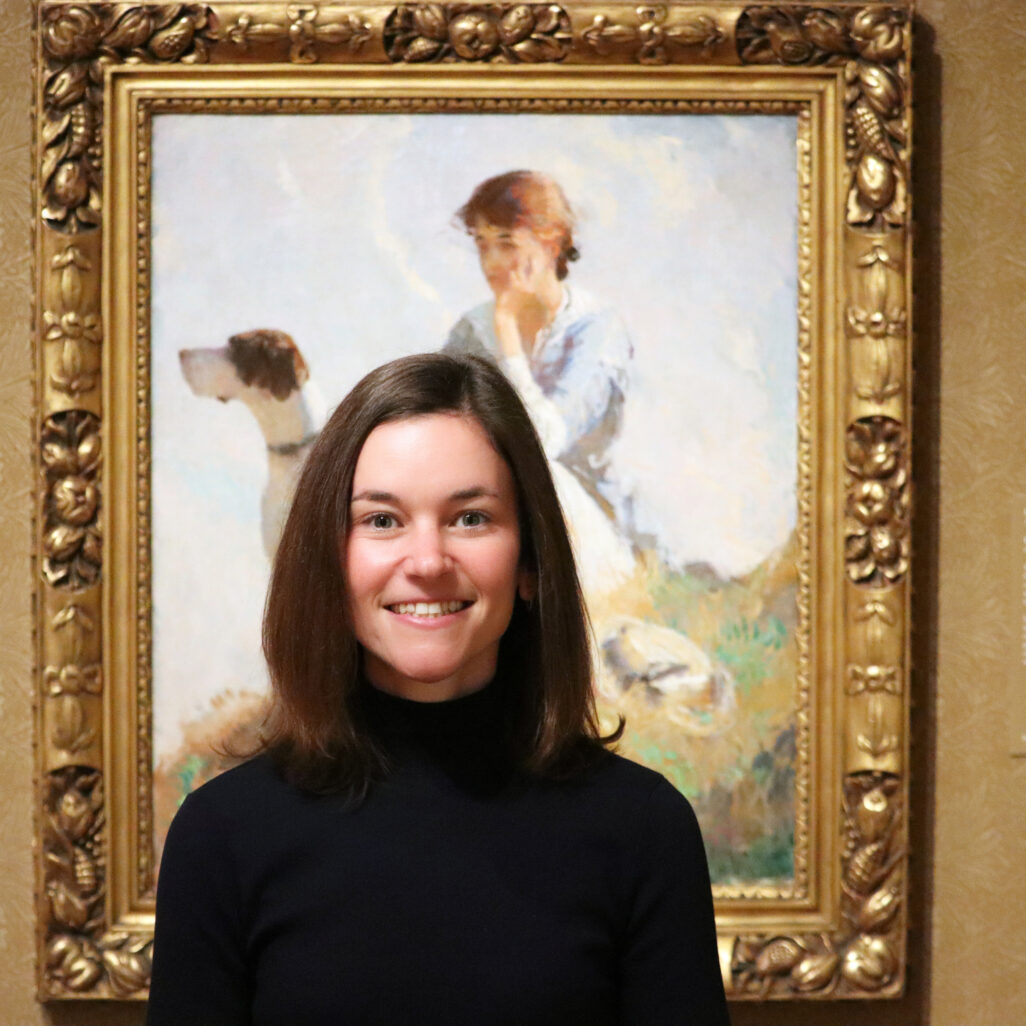
I was standing in the middle of the Los Angeles County Museum of Art during my first time in LA. This was back in September 2017, when I decided to travel through Southern California for two weeks alone without a car, which most people said was insane. Maybe it was; LA is sprawling, and the city was experiencing a heat wave that week. Instead of walking across the city, I took a bus from where I was staying in Koreatown to the art museum, watching the city fly by from behind large, glass windows.
I’d added LACMA to my list because for the past several years, I’d made it a habit to visit art museums alone in different cities. I did it when I lived in Chicago for grad school and visited the Art Institute; in DC when I was working as a journalist, I’d visit the Phillips Collection, which was only a couple blocks from my apartment in Dupont Circle. My strategy was simple: Wander through the museum with no set plan, following my own instincts, and seeing where they took me.
That day at LACMA, it led me to La Gerbe by Henri Matisse. I’d seen Matisse paintings before, but I’d never seen a work of his like this. As I learned that day, Matisse produced cut patterns like the ones found in this work later in his career. As I looked at the large, colorful, leaf tiles in plaster taking up a whole wall, I felt awe but also a strange sense of synchronicity. The work seemed to reflect my feelings as a solo traveler in a place I’d never been: large, expansive, bold. In a way, it even reminded me of Southern California, with its lush, oceanside landscapes. I started to wonder: Do we find pieces of art, or do they find us? I stood in front of the ceramic for a long time, pondering that question.
After many years of visiting art museums alone, I’m starting to believe the latter is true. I think pieces of art find us at specific moments, perhaps when we’re meant to see them. Even though visiting a museum alone can be intimidating, it offers almost unlimited opportunities for inspiration. I’ve learned this through years of going to art museums solo, and now working at SLAM, where I wander the galleries during breaks.
Below, I’ve rounded up some tips for visiting SLAM solo based on my own experience. I also spoke to Stephanie Recht, who leads visitor services at SLAM, and Darwin Michener-Rutledge, who assists with teacher and student learning, to get their advice. I hope our tips help as you consider visiting the Museum alone.

Early European gallery installation at the Saint Louis Art Museum
Pace yourself
The SLAM galleries are split among three levels, and there is a lot to see. But don’t try to see everything in one visit. Instead, pick a gallery, an exhibition, or even just a handful of works that catch your eye, and spend real time with them.
“An advantage of SLAM being a free museum is that you can visit multiple times and not pressure yourself to see every gallery in one day,” Recht said. “Choose one or two sections to visit, then take a break to digest what you’ve seen.”
Additionally, don’t put pressure on yourself while viewing the works. There is no “right” way to experience the Museum.
“It’s common for visitors of all ages to feel that the galleries are a test that can either be passed or failed, that there is only one right way to ‘get art.’ The truth, however, is that a single work of art will be different to every one of us, interpreted through our own experiences and our own vocabulary of references,” Michener-Rutledge said.

Henri Matisse, French, 1869–1954; Bathers with a Turtle, 1907–08; oil on canvas; 71 1/2 x 87 inches; Saint Louis Art Museum, Gift of Mr. and Mrs. Joseph Pulitzer Jr. 24:1964; © 2024 Succession H. Matisse / Artists Rights Society (ARS), New York
Also, some of the best and most-memorable visits can happen when you focus on only one piece. For example, I like to stop by Bathers with a Turtle by Henri Matisse in Sherry and Gary Wolff Gallery 215. Even though I’ve seen this work countless times, I always discover something new when I stand in front of the painting by myself. For example, I never realized one of the women in the painting was feeding the turtle; I thought she was just stooping down to touch it. Now, I wonder what’s in the woman’s hand.
“Do not discount your associations, feelings, and memories. It can be daunting to look at a work of art and ask, ‘What does it mean?’ Try asking first, ‘What does it mean to me?’ ” Michener-Rutledge said.
Prepare to wander
Sure, you can use the Museum map as a loose guide, but once you’re in a gallery, wing, or exhibition that interests you, wander through, following your own instincts. You might be surprised where it leads you. I often linger in front of a painting I’ve only glanced at, or I discover something completely new I can’t believe I haven’t seen before.
Recently, this led me to Kaylene Whiskey’s Mingkulpa 4 Sale, a comic-strip-style painting on view in Morton D. May and Louis D. Beaumont Gallery 103. I had never seen a painting like this one, which is playful and thought-provoking at the same time. Whiskey’s use of words, specifically speech bubbles, fascinated me. I lingered by the work during one of my breaks at the Museum, wondering why Whiskey chose the phrases for the speech bubbles.

Kaylene Whiskey, Yankunytjatjara, born 1976; Mingkulpa 4 Sale, 2021; acrylic on linen; 48 1/16 × 59 13/16 in.; Saint Louis Art Museum, Friends Endowment Fund; and Gift of Leila and Monroe R. Meyerson, by exchange 254:2022; © Kaylene Whiskey
Michener-Rutledge agrees about the advantages of wandering through a museum alone. “Even if you are a lover of guidebooks and explanations, I encourage you to look slowly. Allow the art to lead you back into your own mind,” they said.
Take breaks
Museum fatigue is real. After walking around for long periods of time, you’ll probably want to take a break and rest. SLAM has benches located throughout galleries and halls where you can sit down. You can even grab a folding gallery stool and take it to sit wherever you’d like, Recht said. Take advantage of these options as you move through the Museum. Sometimes, I also stop by the Cafe on the first level so I can get coffee or a muffin to fuel my visit.
When it’s nice outside, I like to take breaks by strolling around Forest Park. Art Hill is directly across the street from SLAM, so it’s easy to pop outside for some fresh air. I sit on the benches and people watch and consider some of the works I just viewed.

The Grace Taylor Broughton Sculpture Garden at SLAM.
I also like to take a break in the Grace Taylor Broughton Sculpture Garden, which is on the south side of the Museum. You can view modern sculptures while getting some fresh air. Often, I take a walk around the Garden’s green spaces, which extend all the way toward the East Building and are relatively secluded.
Revisit your favorite pieces
There are certain pieces at SLAM that hold a special place in my heart. For example, I will always love Little Dancer of Fourteen Years by Edgar Degas because it’s the first work that I remember seeing at the Museum when I visited on a field trip in elementary school in the early 1990s. I was barely the same height as the podium holding the sculpture, and I remember looking at it in awe. I couldn’t believe that someone created such a lifelike sculpture with their own hands. As time went on and I continued visiting SLAM throughout my teenage years and young adulthood, I became fascinated with other aspects of the sculpture, including Degas’s use of real materials, such as the muslin used for the dancer’s skirt.
As it turns out, I’m not the only one with fond memories of Little Dancer. Many visitors return to SLAM to revisit favorite works. Monet’s Water Lilies; the mummies; Degas’s Little Dancer; and suits of armor tend to get a lot of attention from kids or adults who remember visiting these pieces as children, Recht said.

Alice Rahon, French (active Mexico), 1904–1987; Sandstorm, 1947; oil on canvas; 35 1/8 x 57 1/2 in.; Saint Louis Art Museum, Gift of Mr. and Mrs. Joseph Pulitzer Jr. 240:1954; © Estate of Alice Rahon
Recently, I continued my practice of revisiting my favorite pieces, but this time as a SLAM employee. When I started working at the Museum earlier this year, I walked through the galleries during my lunch break. Once, on a cold, snowy day, I was immediately struck by Sandstorm. I had never seen this painting by Alice Rahon, which is on view in Mae M. Whitaker Gallery 212, not too far from Sculpture Hall. I loved its vibrant colors and patterns, and its depiction of rural Mexico. It had all the warmth I was craving, literally and figuratively. Ever since then, I’ve visited it at least once a month.
You’ll probably identify your own favorite works while visiting the Museum alone. Don’t be shy about heading back to these pieces before you leave for the day.