Anatolian; Large Fragmentary Ushak "Quatrefoil" Carpet, 16th century; wool; 119 x 90 1/4 inches; Saint Louis Art Museum, Gift of James F. Ballard 98:1929
The Saint Louis Art Museum is home to an impressive array of Oriental carpets assembled by an early 20th-century St. Louis collector who set a new standard for collecting.
At the turn of the 20th century, prominent local businessman James F. Ballard became one of the country’s foremost collectors of Oriental carpets. Celebrated for his approach to collecting at a time when most other rug connoisseurs were acquiring classical and Indian carpets, Ballard traveled the world, purchasing Anatolian carpets directly from provincial centers in Turkey.
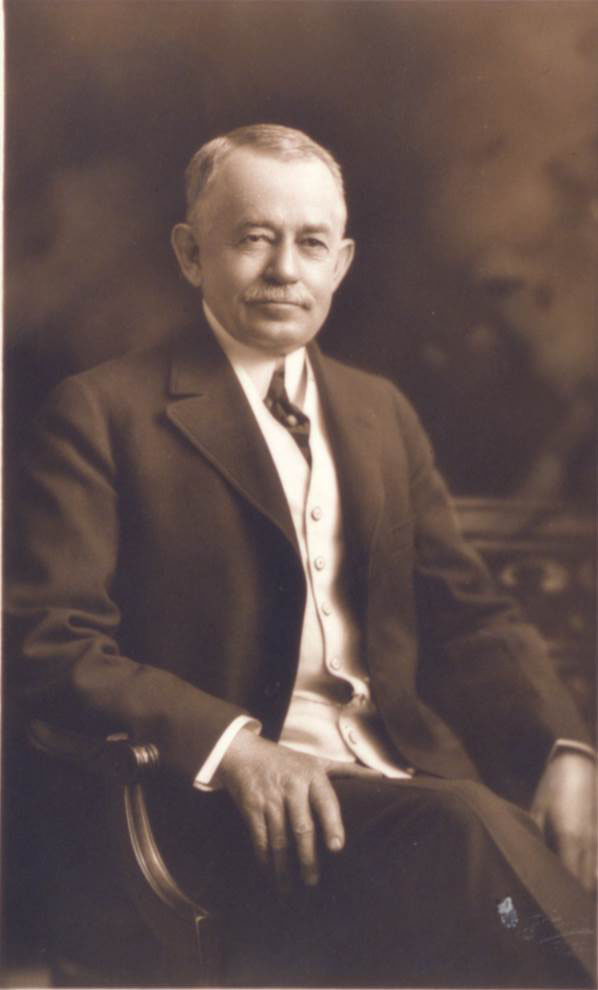
Portrait of James Franklin Ballard (1851–1931); Courtesy of Saint Louis Art Museum Archives
A number of the Ballard rugs in SLAM’s collection will be on view in a textile exhibition, Patterns of Luxury: Islamic Textiles 11th–17th Centuries, on view June 13 through January 4, 2026. Because these works are so large and light-sensitive, they are rarely on display.
Ballard’s interest in the rugs—and collecting in general—started by coincidence, a story he frequently shared, according to a catalogue essay by collector and scholar Thomas Farnham for the Museum’s 2016 exhibition The Carpet and the Connoisseur: The James F. Ballard Collection of Oriental Rugs. In 1905, Ballard was said to be walking through New York on a business trip when he happened to pass an Oriental rug store and saw a rug that intrigued him. The proprietor was asking $500 for the piece. Deeming that too much, Ballard left empty handed, but he returned the next day, unable to get the rug out of his mind. He did some haggling and left with the rug for $375. Ballard was 55 at that point and had spent much of his life prior to this devoted entirely to his work.
Unlike many collectors at the time, Ballard did not come from extreme wealth. He lived in an upper-middle-class St. Louis neighborhood and gained much of his money not from investments but rather his strong work ethic. In 1865 at age 14, Ballard began working at a drug store. By age 20, he became a traveling salesman for a wholesale drug company, and by age 32, he owned his own company, James F. Ballard Proprietary Medicines. Ballard claimed the medications he offered had the ability to perform miracles and cure nearly any illness: “positively, surely, absolutely, All Diseases of the Blood, Eczema, Rheumatism, Scrofula, Syphilis (inherited or acquired), Cancer, Chronic Ulcers and all forms of Blood Poison” was the claim for one drug, Swaim’s Panacea, that Ballard sold.
-
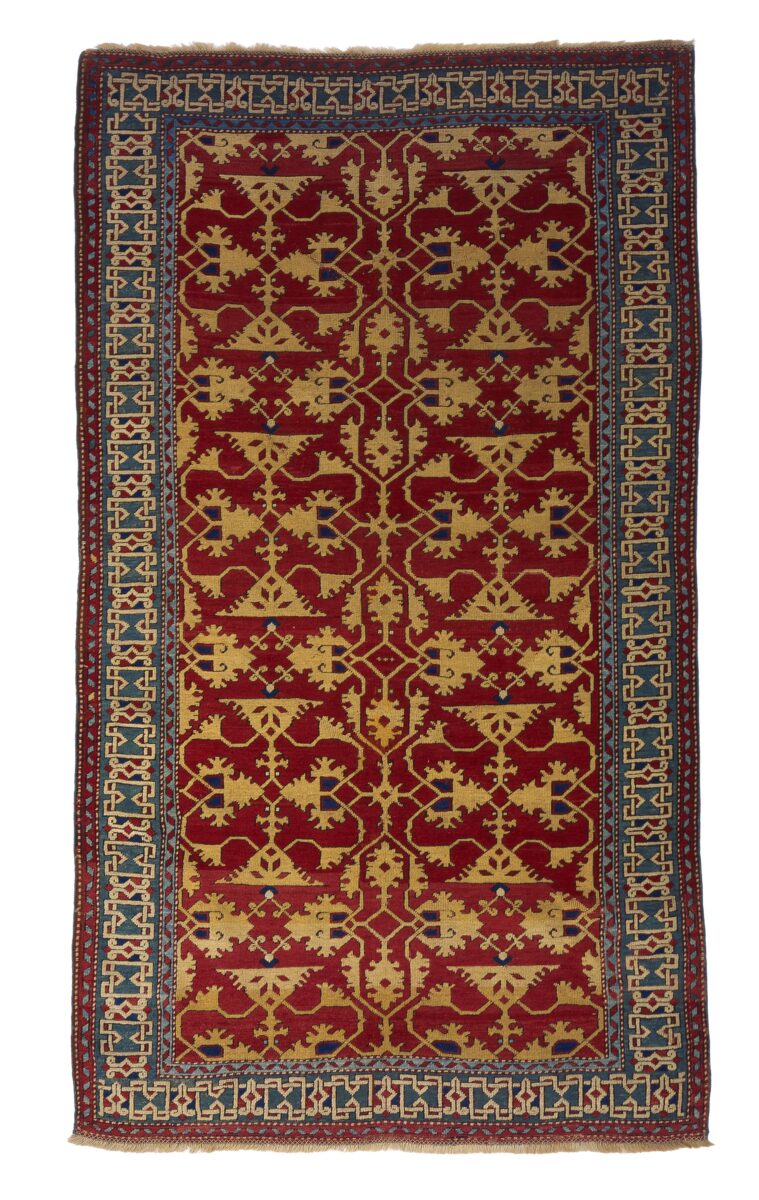
Ottoman Empire, 1281–1924; "Lotto" Carpet with Closed Kufesque Border, first half 16th century; wool; 80 x 44 inches; Saint Louis Art Museum, Gift of James F. Ballard 101:1929
-
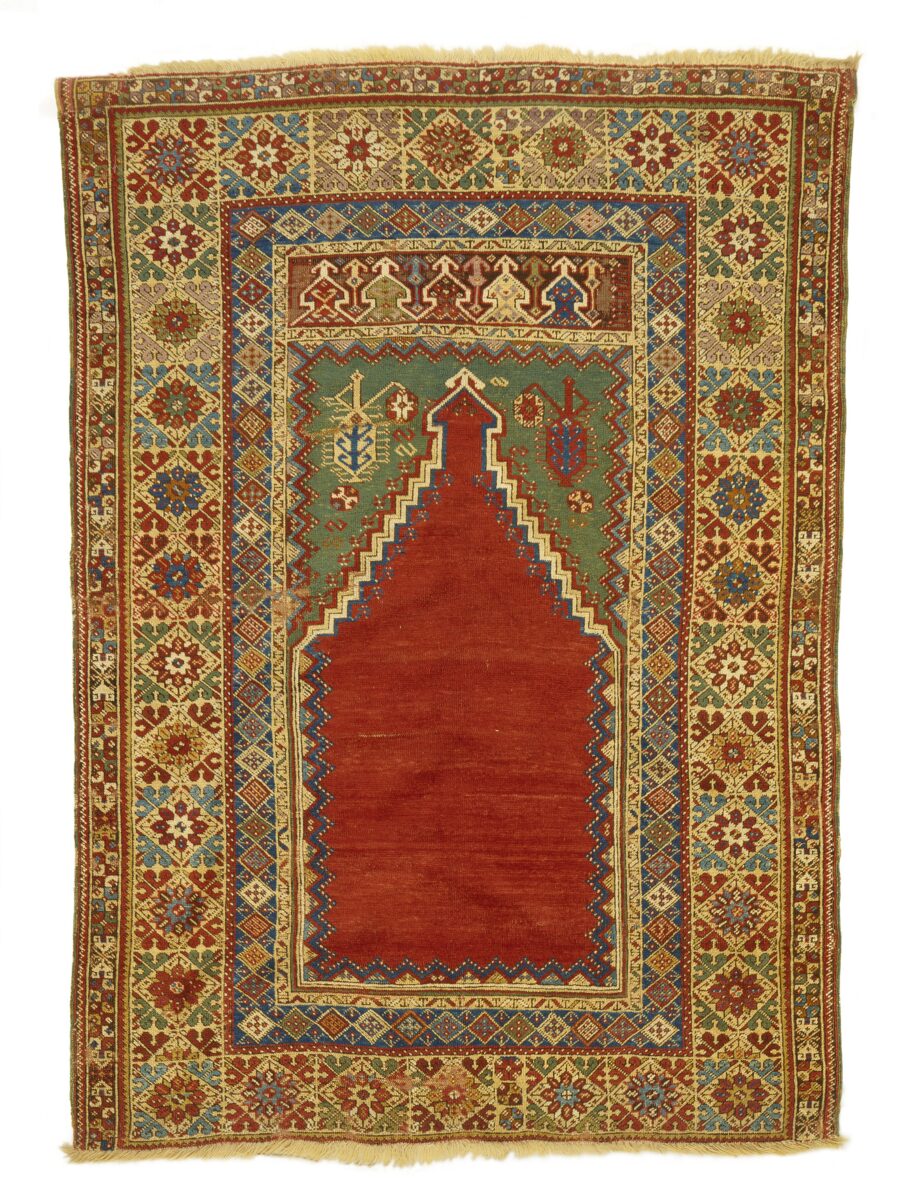
Ottoman Empire, 1281–1924; Prayer Carpet (seccade), early 19th century; wool; 76 x 52 inches; Saint Louis Art Museum, Gift of James F. Ballard 108:1929
-
Anatolian; Small-pattern "Holbein" Carpet with Closed Kufesque Border, early 16th century; wool; 78 x 48 inches; Saint Louis Art Museum, Gift of James F. Ballard 106:1929
-
Anatolian; Large Fragmentary Ushak "Quatrefoil" Carpet, 16th century; wool; 119 x 90 1/4 inches; Saint Louis Art Museum, Gift of James F. Ballard 98:1929
-
Anatolian; Medallion Carpet with Jewelry Motifs on Red Ground, late 18th–early 19th century; wool; 87 x 64 inches; Saint Louis Art Museum, Gift of James F. Ballard 88:1929
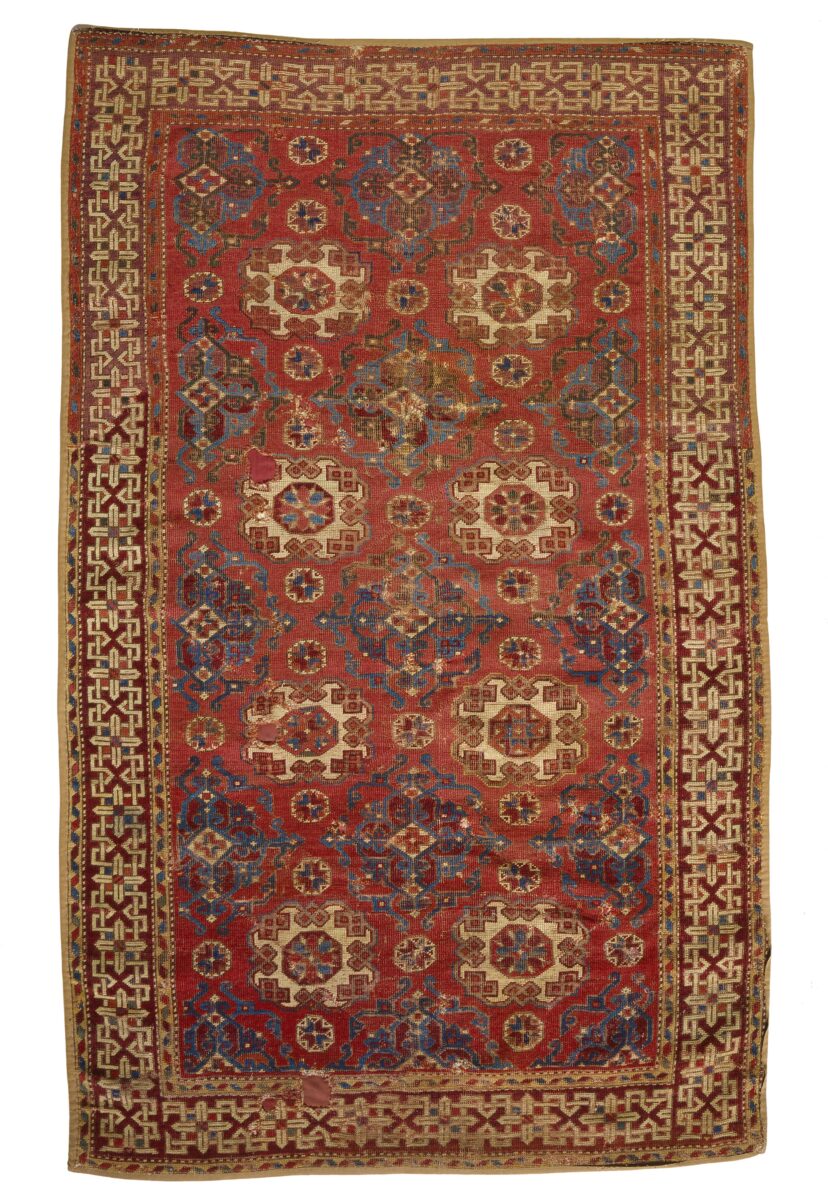
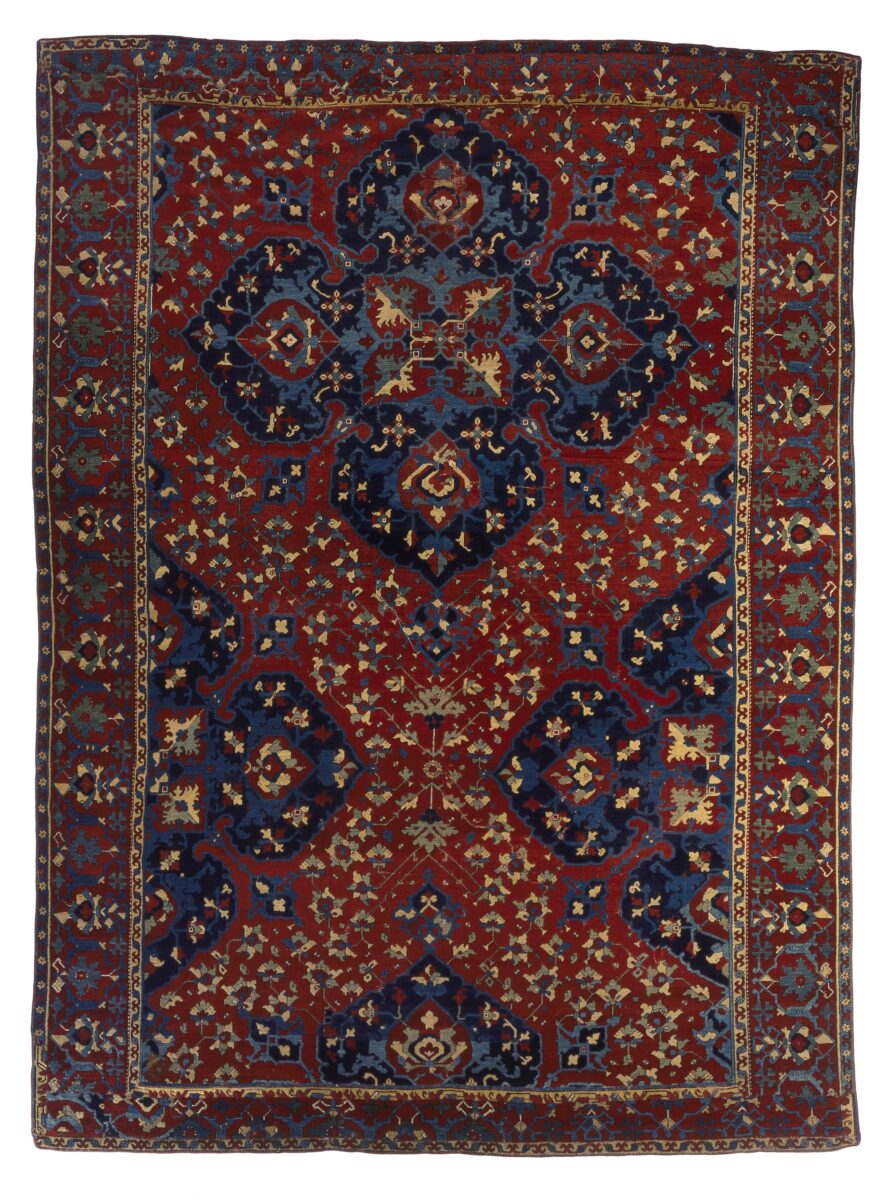
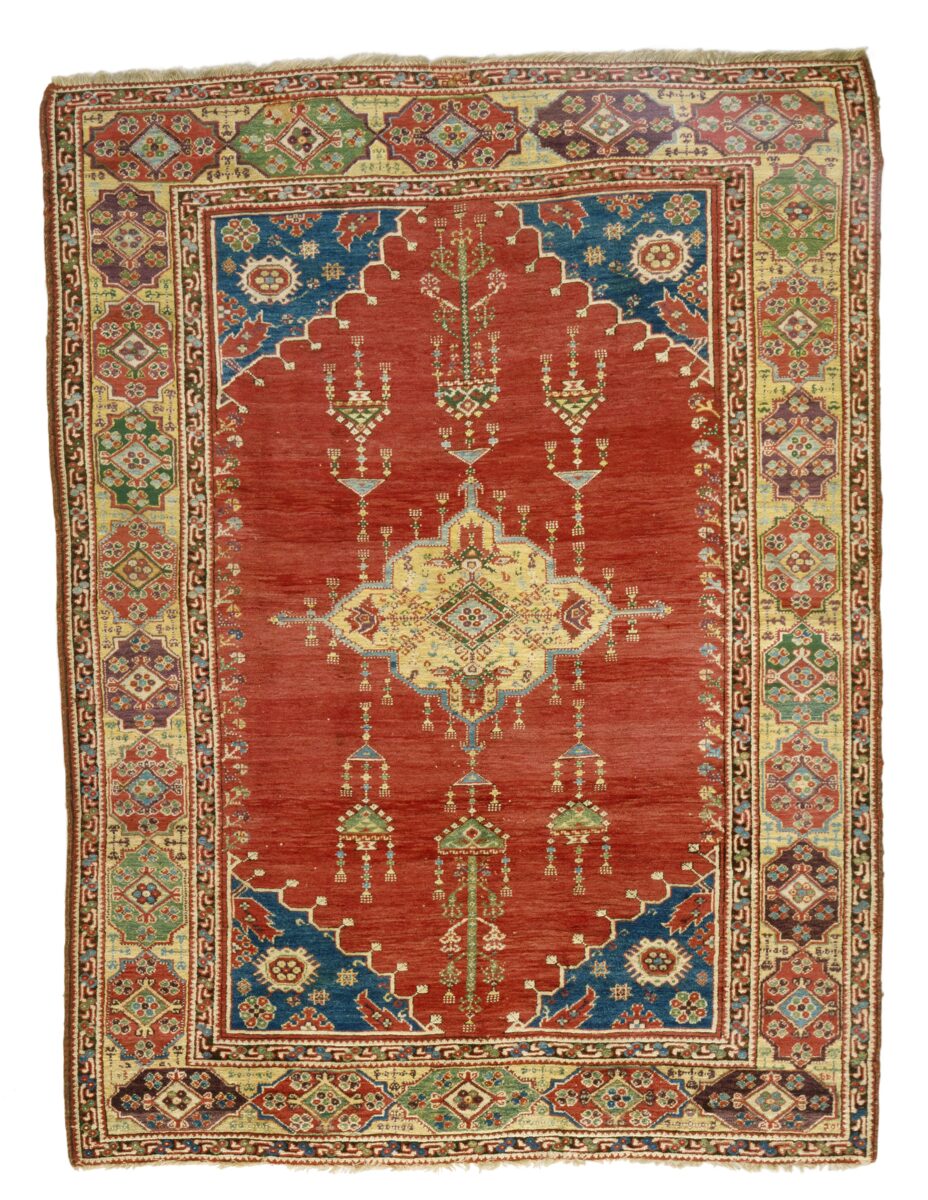
After he bought his first rug, though, an obsession began. Ballard bought 15 additional rugs in 1905, and over the next few decades, he would go on to collect around 300 rugs. In 1912, to accommodate his growing collection, Ballard had a gallery addition built on to his Washington Boulevard home in St. Louis. It was fire- and burglar-proof, featuring one door and high windows, and for added protection, there was a 24-hour security guard on the premises. He would publish catalogues of his collection in 1916, and he later began loaning rugs to major museums around the country for exhibitions.
Around a decade after his first acquisition, Ballard described the allure of rugs: “[Rugs] are full of love, passion, sentiment, religion, mysticism, tragedy, and tribal tradition [. . .] Some of these rugs have passed through war, riot, bloodshed—mute witness of robbery, pillage, and murder. They have made pilgrimages over the hot sands of deserts, on the backs of camels [. . .]”
Building his collection required a great deal of travel, which led to some possibly embellished narratives: An account of how he spent 17 years searching for a Bird rug only to find one in Istanbul after being held prisoner of war by Greek troops, or a story of how he rushed to Peking to buy an imperial Chinese rug after learning the deposed emperor needed the cash. In 1922, he told The New York Times that he had journeyed some 275,000 miles to find works—he claimed, for example, obtaining an imperial Chinese carpet required a trip of 30,000 miles, and locating an Indo-Persian rug meant a journey of 40,000 miles.

The carpet room at Ballard's home on Washington Boulevard, 1916; Courtesy of Saint Louis Art Museum Archives
Ballard continued to travel and grow his collection as he aged, but in 1929 this ended abruptly, much to his disappointment. He fell seriously with a parasitic disease transmitted by blood-feeding insects, likely transmitted by an infected mosquito he encountered during a previous trip to Egypt. Ballard’s health continued to decline until his death in 1931 at nearly 80 years old.
Ballard divided his carpet collection between the Saint Louis Art Museum and The Metropolitan Museum of Art in New York. Many of the best rugs came to the Saint Louis Art Museum as gifts from Ballard in 1929 and 1930. Another group was donated by his daughter Nellie Ballard White in 1972. Because of those two gifts, the Museum has 110 Ballard rugs in its collection.
This information was adapted from an essay in The Carpet and the Connoisseur: The James F. Ballard Collection of Oriental Rugs, written by Walter B. Denny with Thomas J. Farnham. The book examines James Ballard as a collector, the general topic of rug varieties, and a detailed look at SLAM’s Ballard collection.