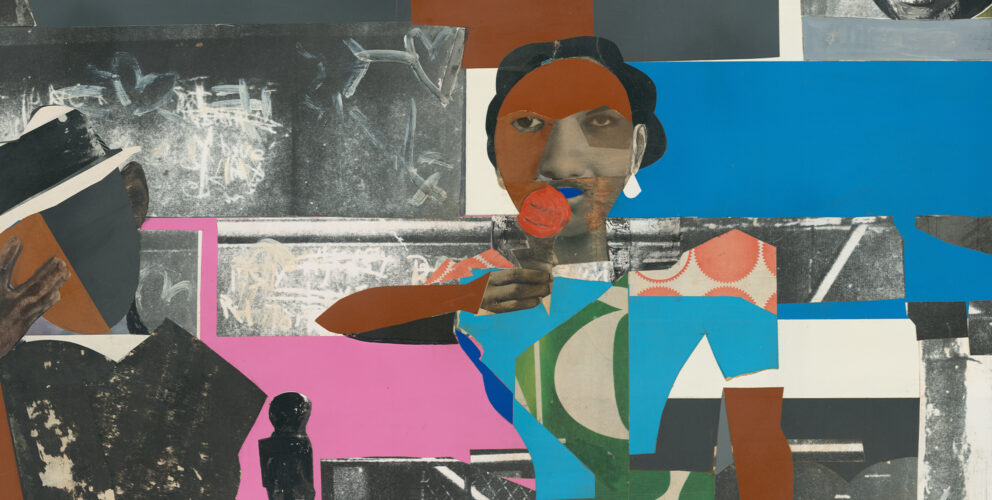
Romare Bearden, American, 1911–1988; Summertime (detail), 1967; collage on board; 56 × 44 inches; Saint Louis Art Museum, Museum Minority Artists Purchase Fund 22:1999; © 2024 Romare Bearden Foundation / Licensed by Artists Rights Society (ARS), New York
American artist Romare Bearden developed an affinity for jazz music at an early age. He was born in Charlotte, North Carolina, in 1911 and moved with his family to New York in 1914. His family settled permanently in Harlem in 1920. His mother was a prominent journalist and introduced her son to many notable figures of the Harlem Renaissance, a period of major migration during the 1930s that ushered in a new era of Black literature, music, and art. The effect of living and working at the heart of this movement is visible in his paintings, prints, drawings, and collages.
As a young adult, Bearden ran in similar circles to influential authors and musicians, including Langston Hughes, Zora Neale Hurston, and Duke Ellington. He was also in the company of artists such as Norman Lewis, Elizabeth Catlett, and Emma Amos and was inspired by artists including Pablo Picasso, Francisco de Zurbarán, Käthe Kollwitz, and Thomas Hart Benton. Bearden, and his relationships with other artists of the time, is the focus of a collections-based exhibition, Romare Bearden: Resonances, on view at the Museum through September 15 in the Roxanne H. Frank Gallery 257.

Romare Bearden in his Canal Street studio, 1976; Photo by Blaine Waller
In May 1941, when Bearden was 30 years old, he moved his art studio to the Apollo Theater building on 125th Street, with jazz music regularly reverberating through the floorboards and walls. Jazz themes frequently appeared in Bearden’s works during this time, alongside personal memories, Black history, and literature, according to the Bearden Foundation.
Bearden began to dabble in the collage medium because of experiments at Spiral, an art guild he helped found that discussed politics and race relations. The group sought to answer the question, “what is Black art and its place within the Civil Rights Movement?” In an attempt to answer, Bearden proposed making collaborative collage artwork with the members of Spiral. When the rest of the group was not interested in the project, he pursued creating works that became some of the most well-known of his oeuvre.
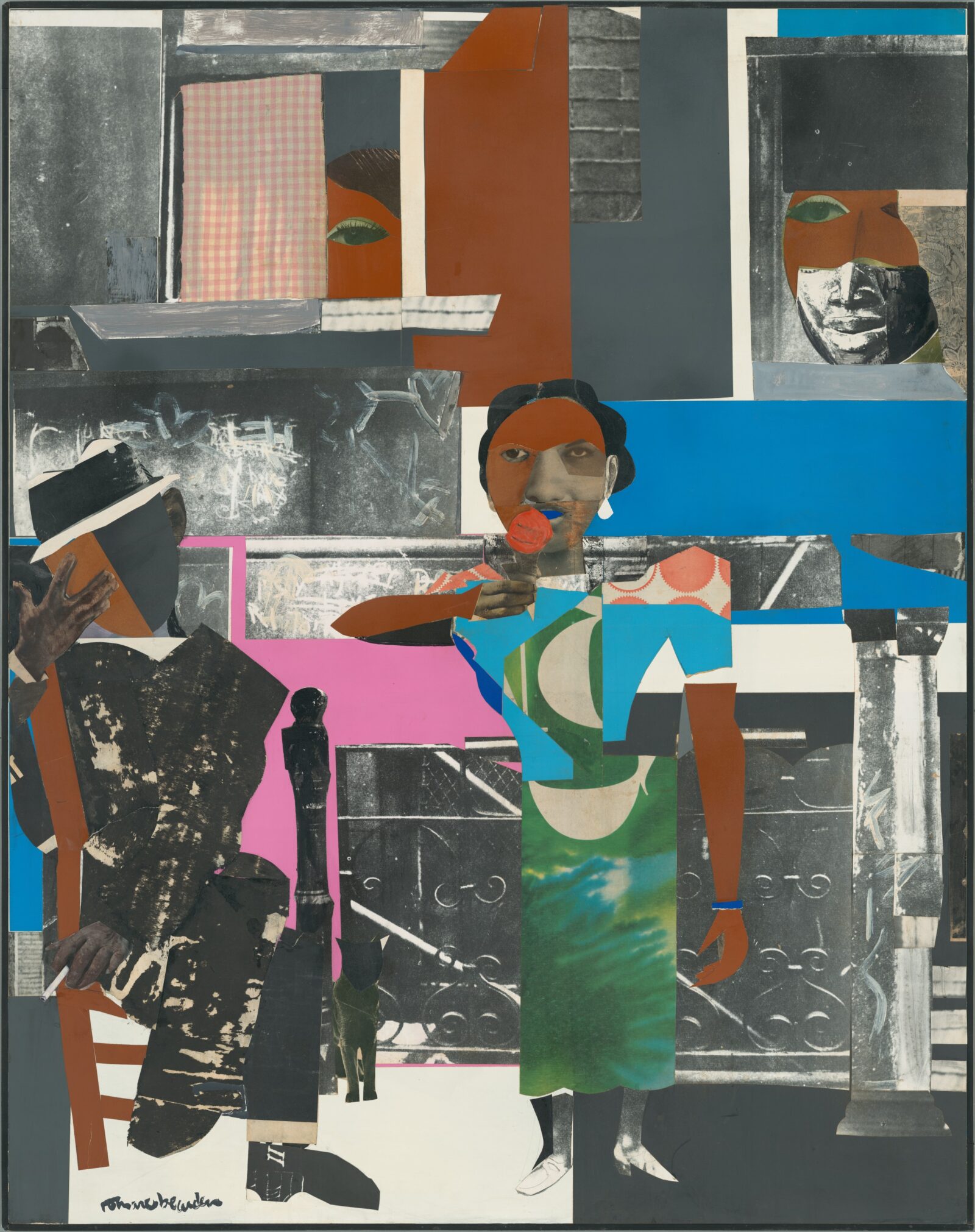
Romare Bearden, American, 1911–1988; Summertime, 1967; collage on board; 56 × 44 inches; Saint Louis Art Museum, Museum Minority Artists Purchase Fund 22:1999; © 2024 Romare Bearden Foundation / Licensed by Artists Rights Society (ARS), New York
Part of the Museum’s permanent collection, Bearden’s Summertime collage is featured in the current exhibition; the piece has not been on view in 20 years. The large-scale collage encapsulates the expansiveness of Black culture during the Harlem Renaissance and exemplifies the artist’s commitment to the African American experience. Jazz culture is apparent in this collage—in the center of the work, a woman poses, suggesting a singer holding a microphone, and the title brings to mind the lyric from Porgy and Bess, “Summertime, and the living is easy.” The work’s active pattern of materials, combined with its overwhelming size, evoke the excitement and vibrancy of an up-tempo jazz song. Branford Marsalis, a musician who dedicated a jazz album to Bearden, describes jazz itself as a “collage of sorts,” according to an interview with NPR.