American; Mourning Picture (detail), c.1798; ink and watercolor; 13 x 15 1/2 inches, framed: 20 1/4 x 17 3/4 x 1 1/2 inches; Saint Louis Art Museum, Gift of Mrs. Stratford Lee Morton in memory of Stratford Lee Morton 1863:1983

A 227-year-old mourning picture has made its collection gallery debut after a joint treatment effort by three members of the Museum’s conservation team.
Mourning pictures gained popularity in the early United States. Many of these works, this one included, were produced by self-taught artists whose names are no longer known. Martha and Nathan Fisk, prosperous farmers in southeastern New Hampshire, commissioned this watercolor in memory of their four-year-old son Leonard. The image shows two mourners wearing black garments standing beside a tombstone in the shape of an urn. The man leans on a broken anchor, symbolizing a life cut short. A weeping willow—a symbol of grief—spreads its branches overhead, while cherubs adorn the corners of the original frame.
Acquired as a gift in 1983, SLAM’s Mourning Picture was part of a 1984 exhibition of American folk art, but it has remained in storage ever since. To get it gallery-ready after more than 40 years required treatment from SLAM’s paper, paintings, and framing labs.

American; Mourning Picture, c.1798; ink and watercolor; 13 x 15 1/2 inches, framed: 20 1/4 x 17 3/4 x 1 1/2 inches; Saint Louis Art Museum, Gift of Mrs. Stratford Lee Morton in memory of Stratford Lee Morton 1863:1983
Associate paper conservator Sophie Barbisan worked on the watercolor. The paper was severely stained and discolored after being in contact with acidic materials within the frame. The watercolor required washing to lighten the overall appearance of the artwork. Unfortunately, the watercolor was sensitive to water, so a technique called blotter-washing was used to mitigate the amount of water that would come in contact with the watercolor. A damp piece of blotter-like material was placed on the back of the artwork. Through capillary action, it absorbed some of the discoloration and stains without disturbing the watercolor. Then some of the discolored areas were inpainted using pastels.
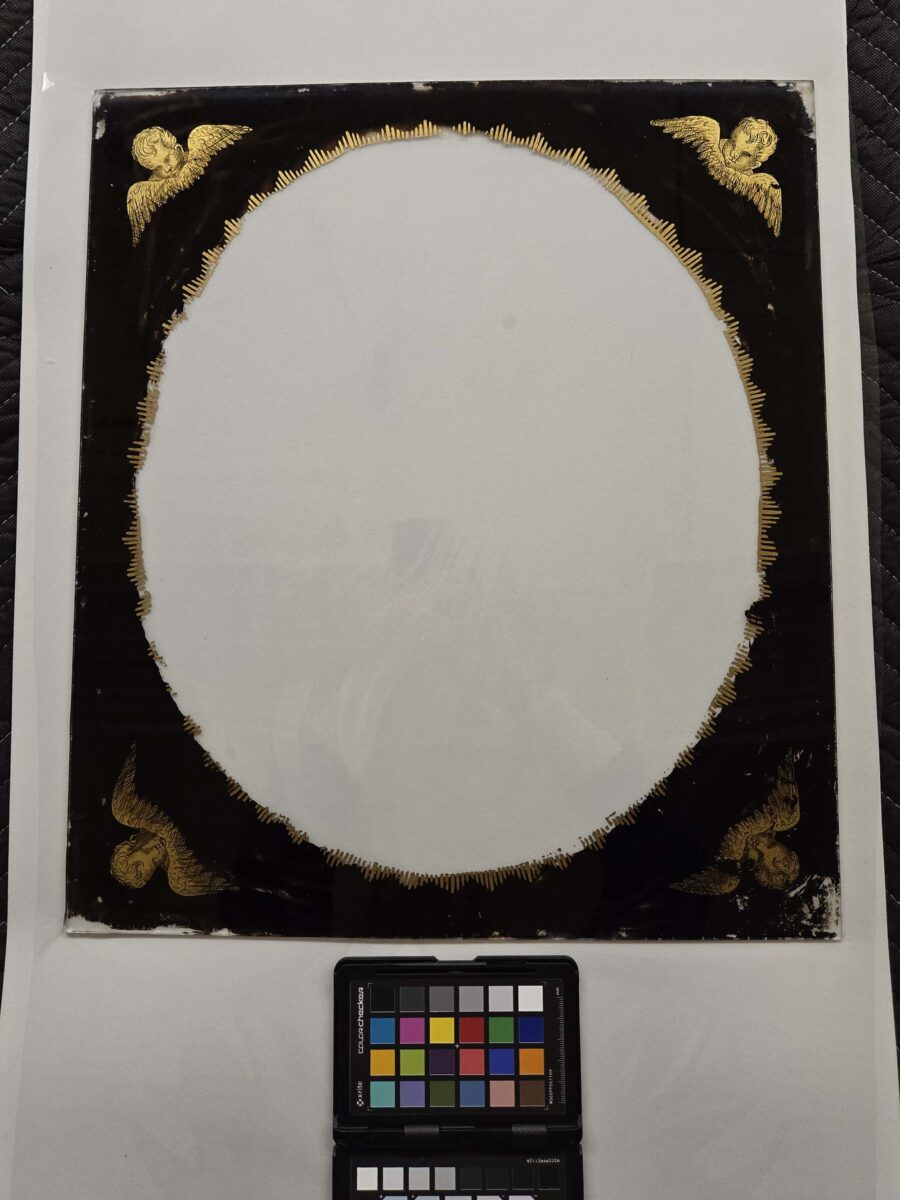
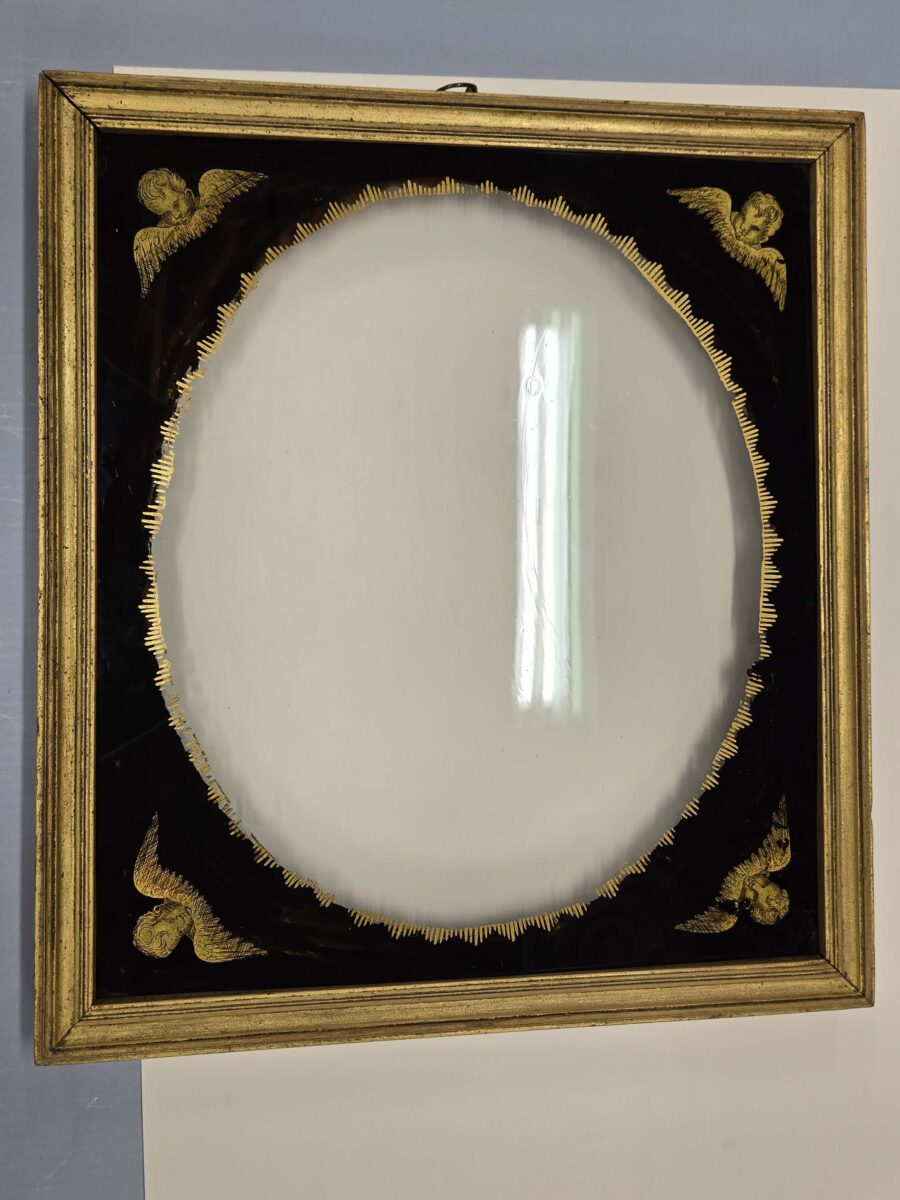
One unique aspect of Mourning Picture is the framing technique, which features reverse painting on the glass. In this case, the black border, angel heads, and gilded line details were all painted onto the back of the glass, meant to be seen from the opposite side. This type of painting is very fragile because paint does not adhere well to smooth glass. Many of the gilding details had been damaged and needed to be replaced. The goal, however, was not to repair every single line but to balance the overall look so the viewer notices the watercolor first and is not distracted by damages on the glass.
-
BEFORE TREATMENT: The glazing for the frame is an original 1790s piece of glass that is actually a reverse painting. Although the glass is remarkably intact, over time the paint has been damaged and chipped away.
-
AFTER TREATMENT: The treated glass now reads as a complete oval to effectively surround and direct attention to the watercolor. The balance between the tone of the cleaned frame and the original gilding is also much clearer.
-
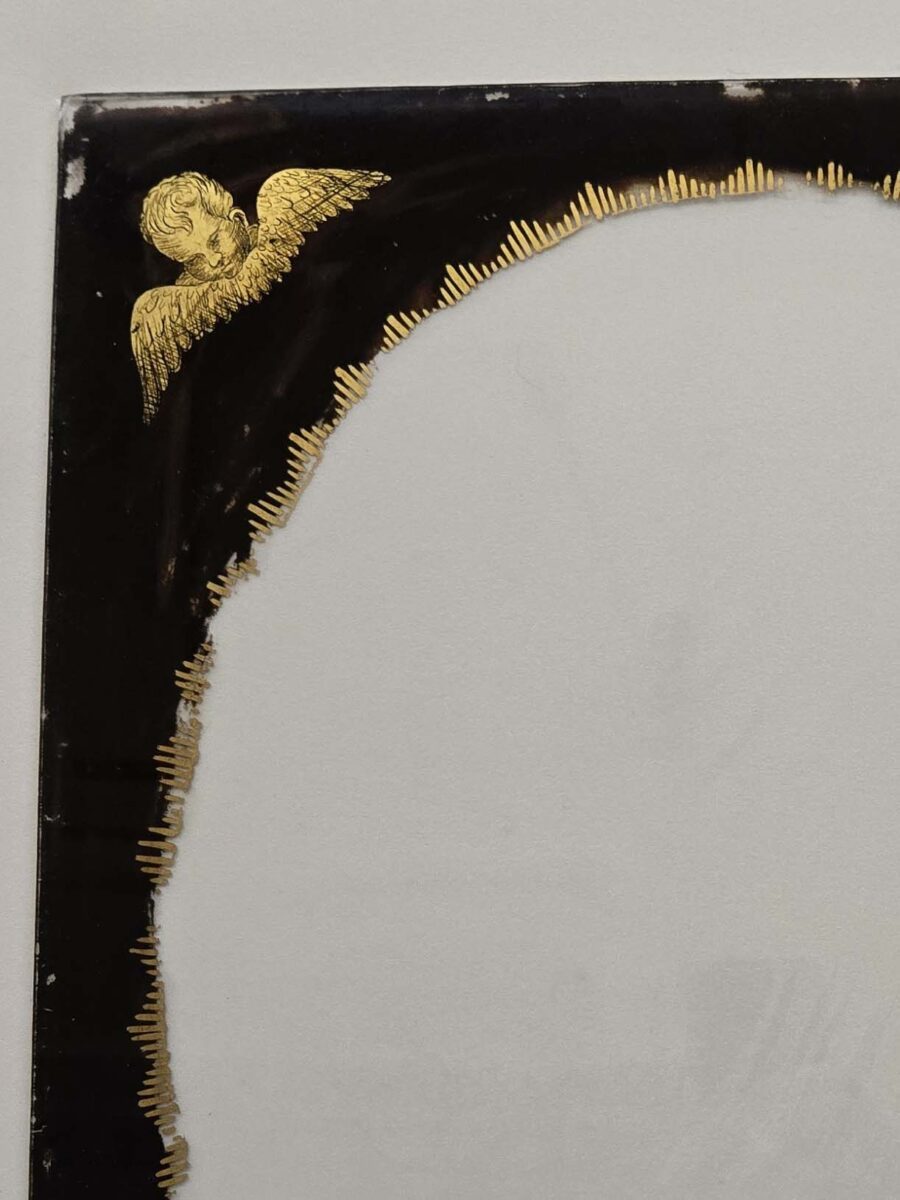
BEFORE TREATMENT: A close-up of one corner shows where losses to the gilding broke up the line of the oval and missing areas of black paint became distracting. The delicate details within the angel head are noteworthy and difficult to achieve with this technique.
-
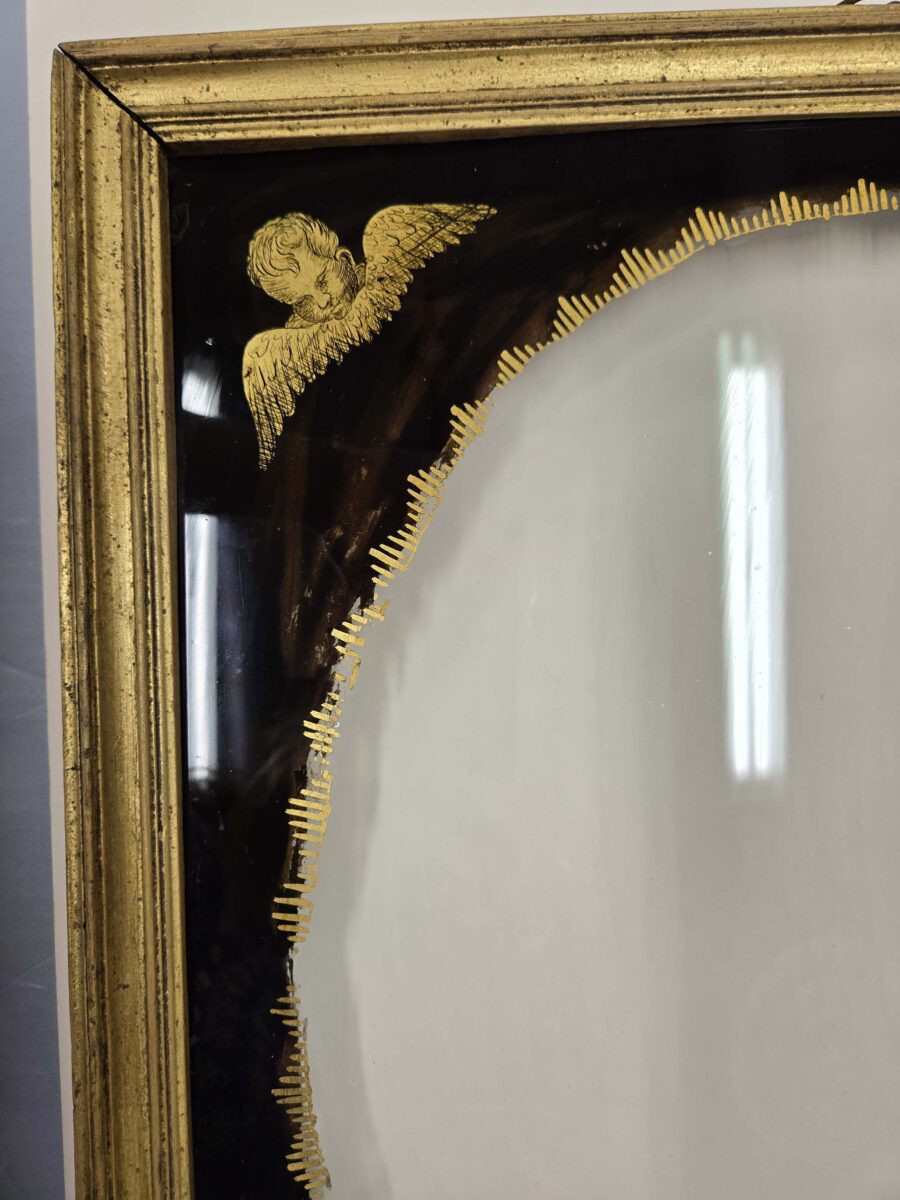
AFTER TREATMENT: The same detail of the frame after treatment shows that piecing together a few lines makes a big difference visually without making the over 200-year-old piece look too perfect.
To recreate the pattern of the gilded lines, paintings conservator Melissa Gardner made a stencil to trace all the intact areas and then mark the lines that were missing in a different color. Taking advantage of the transparency of the glass, the stencil could be overlaid on top of the glass and new gilding traced into place on the back of the glass. With reverse painting on glass, the first brushstroke has to be perfect, because when turned around, that is the first thing seen. The color or form cannot be adjusted with thin layers like on a traditional painting. To get the color and technique correct, Gardner did several mock-ups on other pieces of glass as practice. Then, to protect the brittle, original 1790s glass and stop further damage to the paint, small foam cushions were added when the work was reframed. These also help protect the watercolor from touching the paint layer.
Finally, the delicate wooden frame on the piece was treated by conservation technician Brian Koelz. It was thoroughly cleaned to reveal the original gilding from under an opaque layer of grime. Prior to treatment, the surface of the frame had lost any connection to the gold painted on the glass. However, much of the original gold leaf on the frame was still intact—and is now visible—transforming an incongruous frame into one that echoes and supports the decorative work on the glass.
Mourning Picture is on view in Gallery 338 through early 2026.