Brice Marden, American, 1938–2023; Uxmal (detail), 1991–93; oil on linen; 96 x 102 1/8 inches; Saint Louis Art Museum, Funds given by Dr. and Mrs. Alvin R. Frank, Friends Endowment Fund, Museum Shop Fund, donors to the 1992 Art Enrichment Fund, and Museum Purchase 91:1993; © 2026 Brice Marden / Artists Rights Society (ARS), New York
Curated by concepts rather than chronology, over 50 works from the Saint Louis Art Museum’s postwar and contemporary collection return to the East Building galleries this November.
Historically, the Museum displayed this collection in chronological order, focusing on artistic movements from Abstract Expressionism to the present. Melissa Venator, the Andrew W. Mellon Foundation Assistant Curator of Modern Art, used this reinstallation as a chance to reconceive the collection. “Each gallery will be self-contained and organized around a thematic subject,” Venator said. “That theme might come from the basic function or appearance of the art.”
Venator grouped the objects into eight themes: “Line,” “Material,” “Series,” “History,” “Expression,” “Color,” “Play,” and “Blur.” Unlike the rigidness of chronology, the theme-based curation allows visitors to follow their intuition through the galleries.
Understanding contemporary art can be hard, and Venator said she knows a visit to the Museum should be more than an art history lesson. She wants the new East Building installation to act as an open invitation to explore contemporary art. “I wanted to choose themes that didn’t need a lot of explanation. I wanted visitors—regardless of their knowledge of or familiarity with art—to be able to come in and for it to make sense,” Venator said.
-
Brice Marden, American, 1938–2023; Uxmal, 1991–93; oil on linen; 96 x 102 1/8 inches; Saint Louis Art Museum, Funds given by Dr. and Mrs. Alvin R. Frank, Friends Endowment Fund, Museum Shop Fund, donors to the 1992 Art Enrichment Fund, and Museum Purchase 91:1993; © 2026 Brice Marden / Artists Rights Society (ARS), New York
-
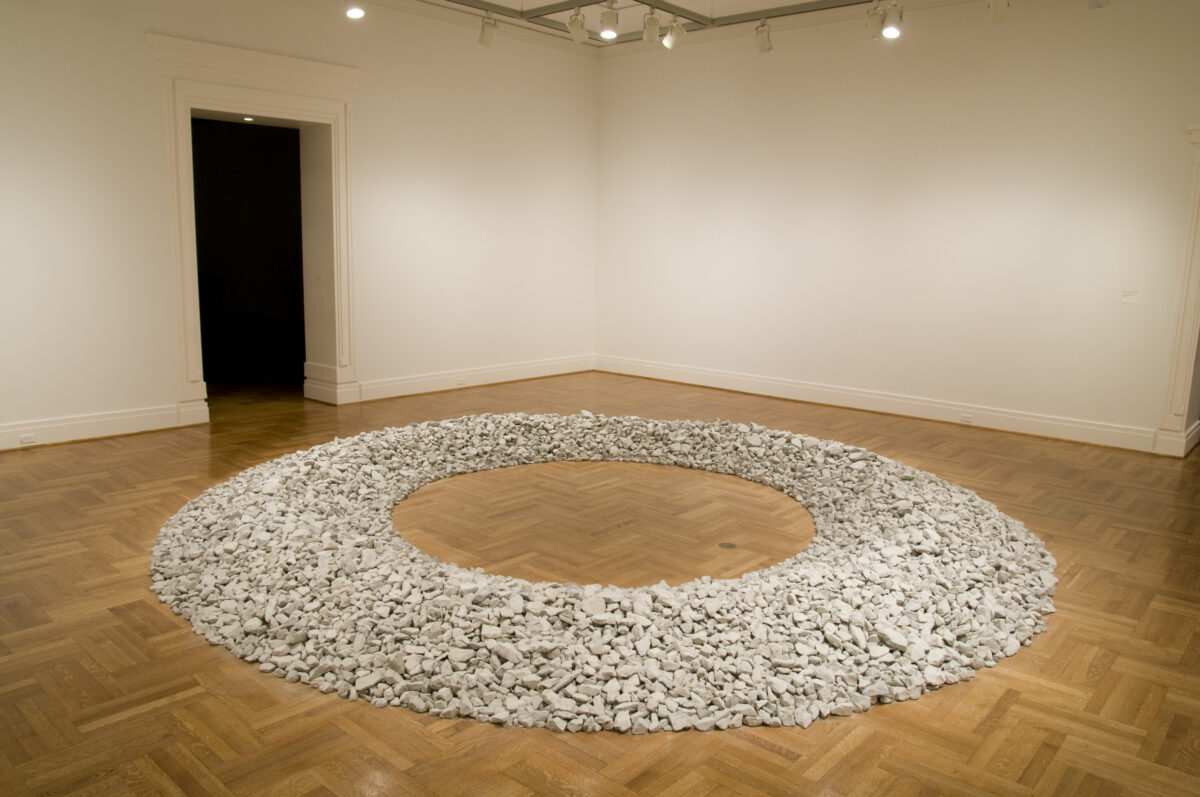
Richard Long, English, born 1945; Mississippi Circle, 1988; Missouri limestone; height of rock ring: 10 inches, overall diameter: 18 feet; Saint Louis Art Museum, Funds given by Mr. and Mrs. James E. Schneithorst 75:1988; © 2026 Richard Long. All Rights Reserved, DACS, London / Artists Rights Society (ARS), New York
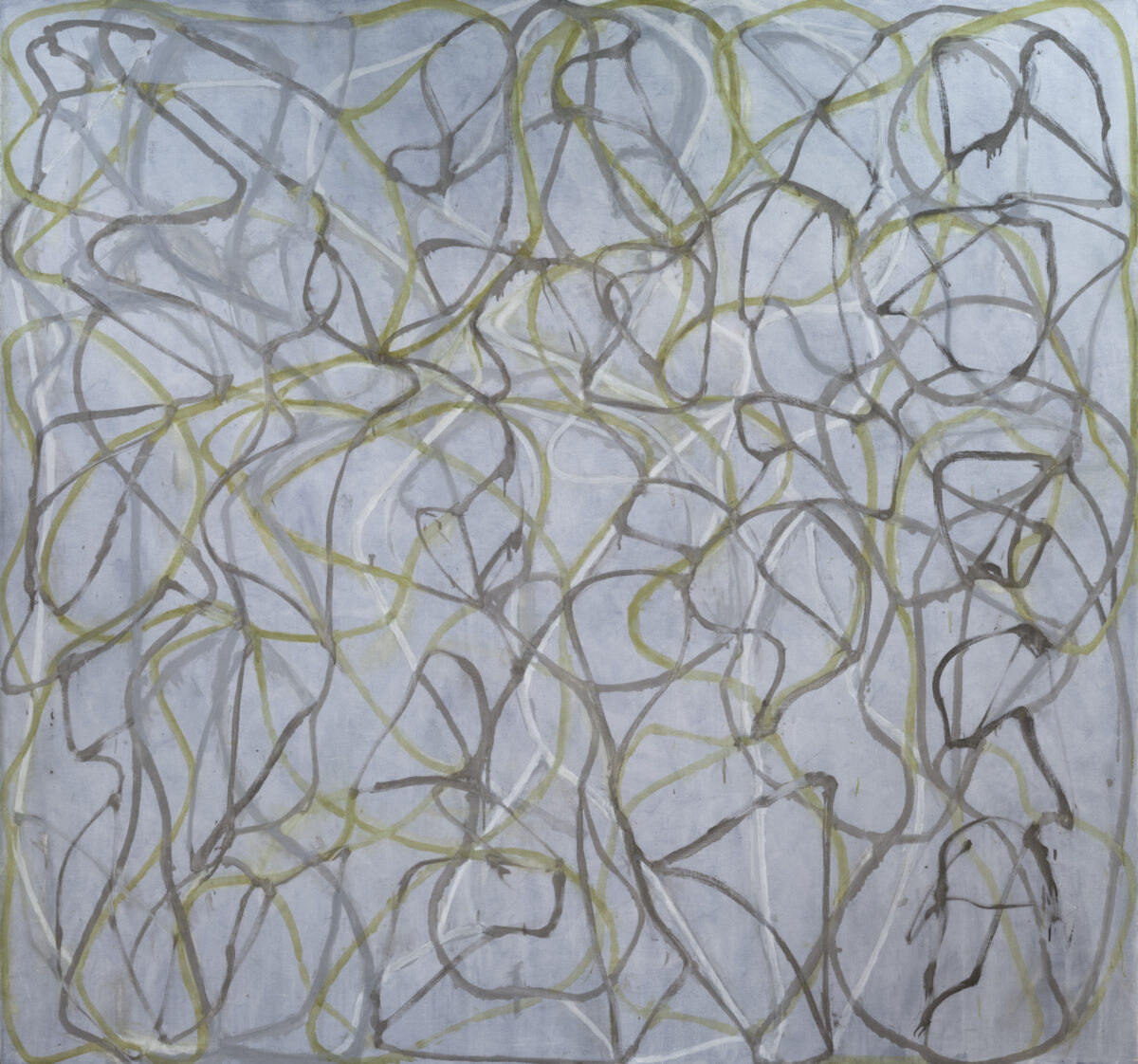
As you enter the space from Taylor Hall, the “Line” gallery needs no explanation. The objects inside explore how artists use lines in paintings and sculptures. While the property of lines connects each work, guests can see how each artist employs lines to convey different meanings. Examples include the meandering lines of Brice Marden’s Uxmal and the intricate web of colors in Jackson Pollock’s Number 3.
The “Material” gallery examines how artists use stone. Richard Long’s Mississippi Circle commands the space, basking in the center of the floor. Commissioned by the Museum in 1988, Long gathered four tons of limestone from the Mississippi riverbanks, giving the piece a St. Louis connection.
Unexpectedly, two objects in the “Material” gallery request visitors to experience art through sight and touch. Seduction, Pair 06 by Najla El Zein and Two-Part Table by Scott Burton are contemporary seats made for visitors to take a break, sit down, and touch the art.
“To touch the surfaces that the artists touched, and to do it in a way that you’re not going to be scolded, and to do it in a way that you can invite your children to do so as well. That’s a memory that people can take away with them,” Venator said.
-
David Smith, American, 1906–1965; Cubi XIV, 1963; stainless steel; 125 1/2 × 78 × 30 3/4 inches; Saint Louis Art Museum, Friends Endowment Fund 32:1979; © 2026 Estate of David Smith / Artists Rights Society (ARS), New York
-
Richard Anuszkiewicz, American, 1930–2020; The Edge of All Activity, 1965; acrylic on canvas; 60 1/4 × 60 1/8 inches; Saint Louis Art Museum, Museum Purchase 111:1966; © 2026 Estate of Richard Anuszkiewicz / Artists Rights Society (ARS), New York
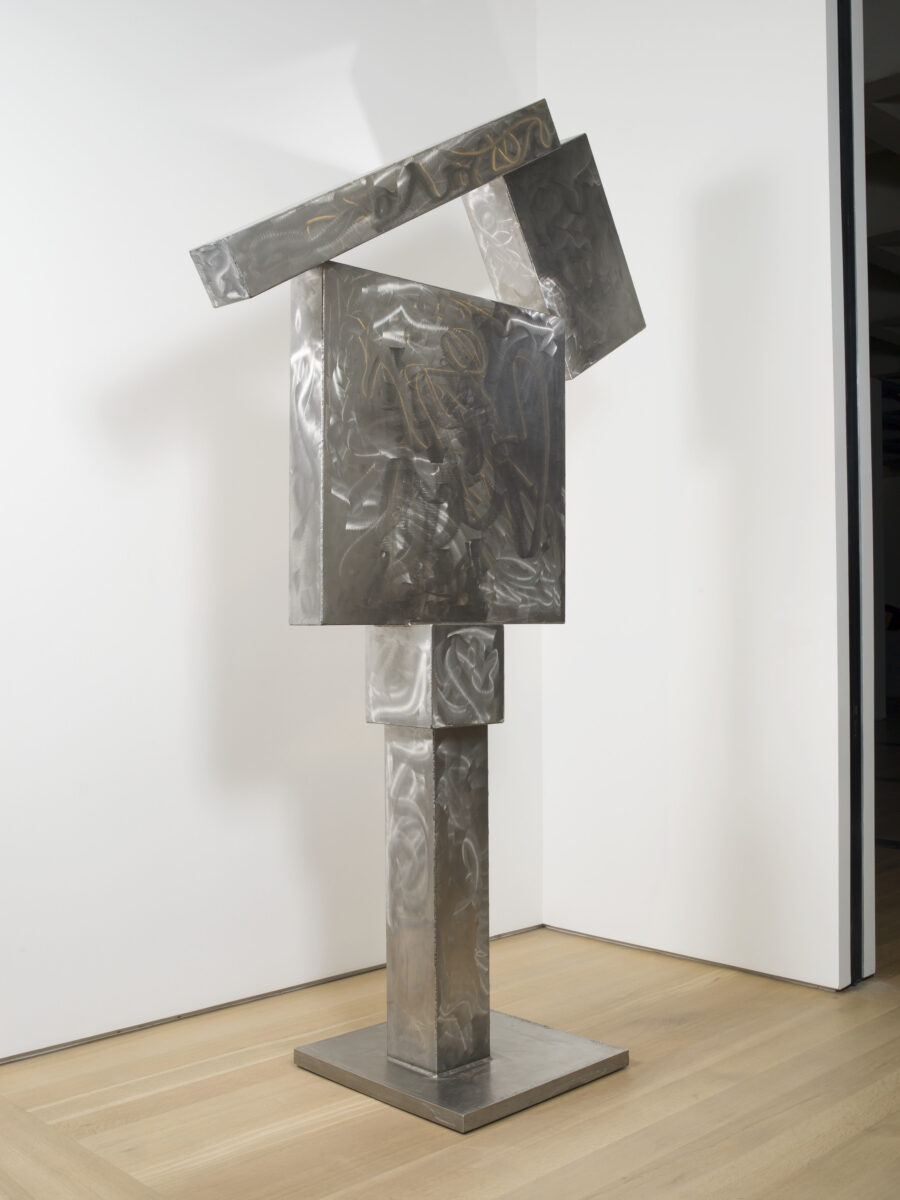
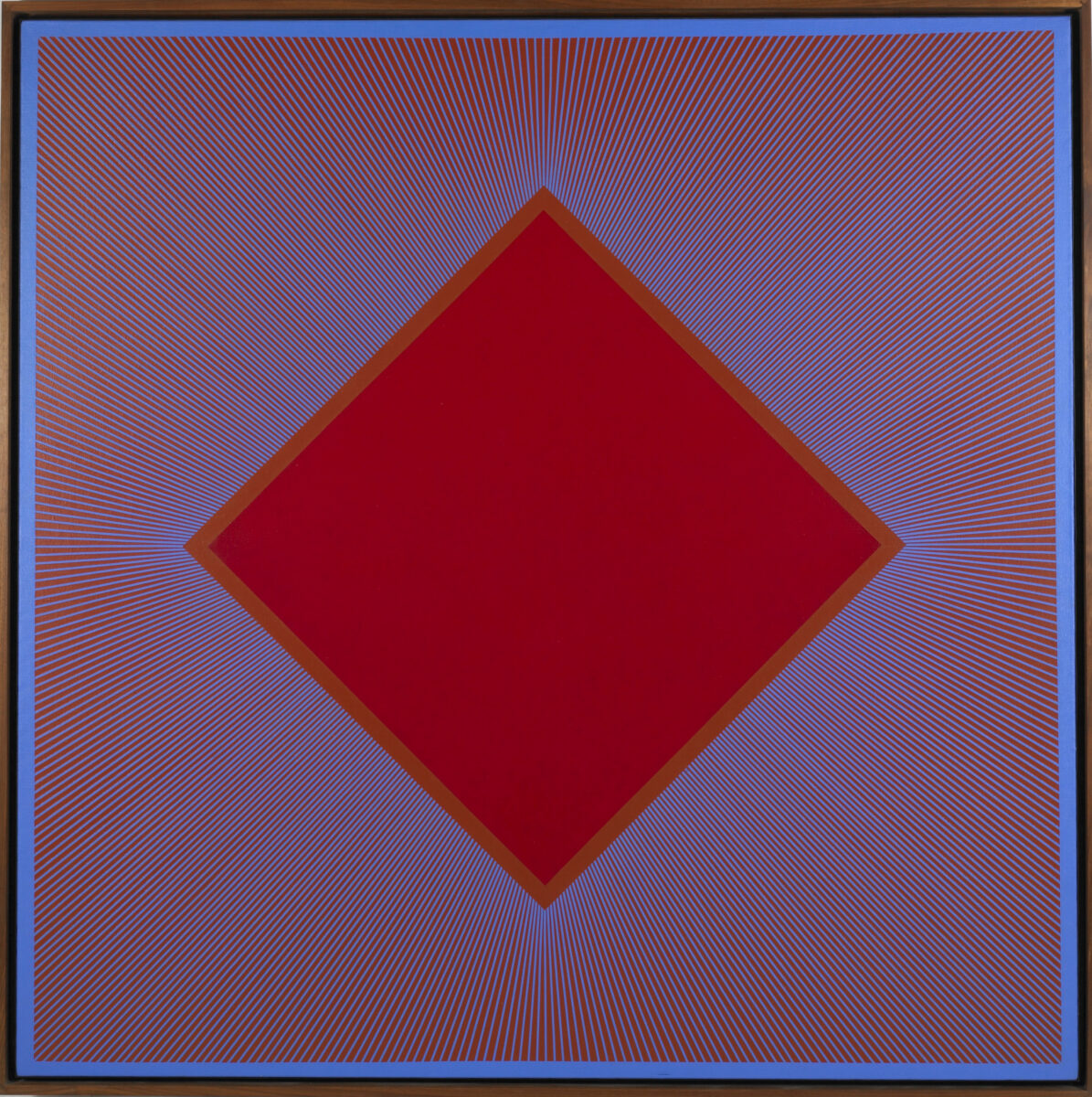
The “Series” gallery focuses on repetition. Some artists explore exact duplication, seeking the moment when individual parts become less prominent than the whole structure. Others use repetition as experimental problem solving.
An untitled fiberglass work by David Novros will be returning to the galleries for the first time since the East Building opened in 2013. A post-Minimalist, Novros created moveable murals after his site-specific works were destroyed. Novros’s piece at SLAM brightens the wall with vibrant shades of pink, fuchsia, and magenta. Other works in this gallery include Museum staples like the untitled boxes by Donald Judd and Gray Mirror by Gerhard Richter.
-
Jaune Quick-to-See Smith, enrolled Salish, Confederated Salish and Kootenai Nation, MT, 1940–2025; State Names Map: Cahokia, 2023; mixed media on canvas; overall: 80 inches x 12 feet 6 inches; Saint Louis Art Museum, The Siteman Contemporary Art Fund, and funds given by Barbara and Andy Taylor, The Werner Family, John and Susan Horseman, Christine Taylor-Broughton and Lee Broughton, Nancy and Kenneth Kranzberg, Pam and Greg Trapp, Mr. and Mrs. Gary Wolff, Dottie and Kent Kreh, Dwyer Brown and Nancy Reynolds, Suzy Besnia and Vic Richey, Clare M. Davis and David S. Obedin, Yvette Drury Dubinsky and John Paul Dubinsky, Judith Weiss Levy, Mr. and Mrs. Charles A. Lowenhaupt, and Mary Ann and Andy Srenco 71:2023a-c; © Jaune Quick-To-See Smith, Courtesy of the artist and Garth Greenan Gallery, New York
-
Leonardo Drew, American, born 1961; Number 45, 1995; compressed paper, fabric, feathers, rope, rust, wire, and wood; installed: 15 feet 8 inches x 37 feet x 5 inches; Saint Louis Art Museum, Gift of Mr. and Mrs. Donald L. Bryant Jr. 63:1997; © Leonardo Drew, Courtesy Galerie Lelong & Co.
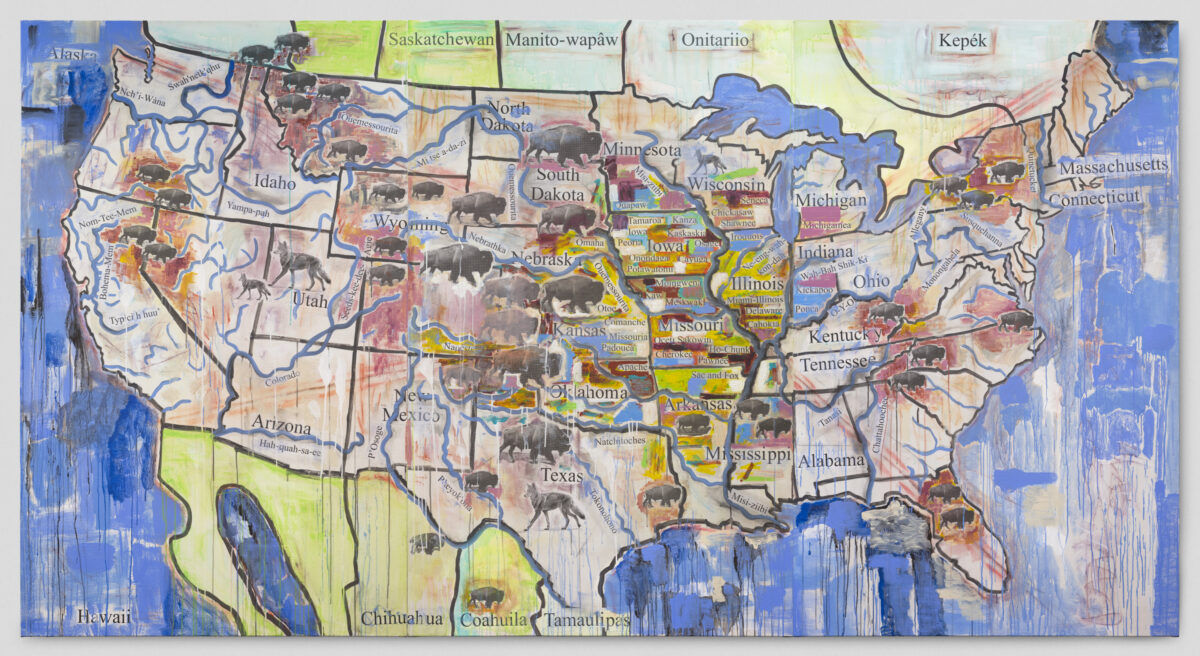
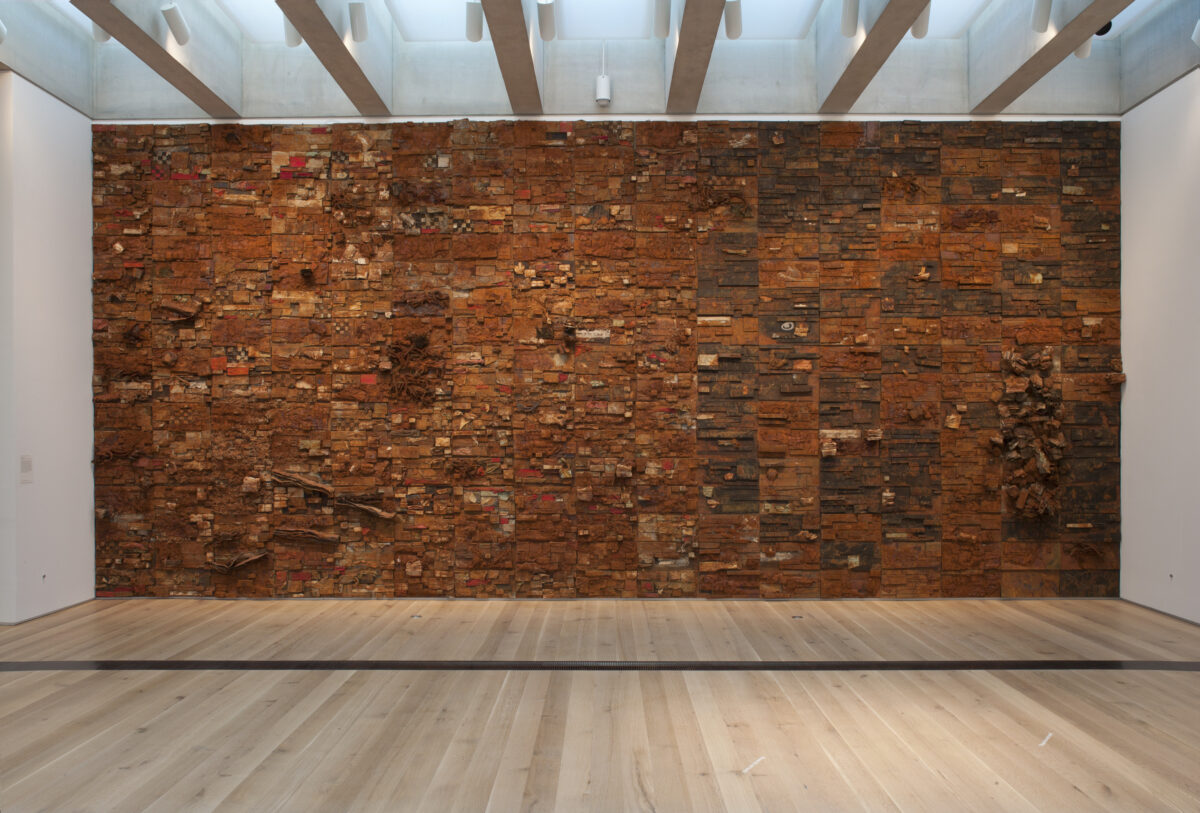
Walking into the “History” section, Leonardo Drew’s Number 45 takes up an entire wall of the gallery. Drew, an African American artist, used weathered materials to evoke the weight of slavery without depicting it directly.
On the opposite wall, State Names Map: Cahokia by Jaune Quick-to-See Smith explores Indigenous history through a map of the United States. Smith labeled only states whose names come from Indigenous languages, and she blurred state boarders that have long Indigenous presence and connection.
The works in the “History” gallery remind guests that the past is not as far away nor as absolute as the textbooks teach.
-
Mel Ramos, American, 1935–2018; Fonda, 1970; acrylic on canvas; 40 x 30 inches; Saint Louis Art Museum, Gift of Leila and Monroe R. Meyerson 248:1986; © 2026 Mel Ramos / Licensed by Artists Rights Society (ARS), New York
-
Kehinde Wiley, American, born 1977; Charles I, 2018; oil on linen; 96 x 72 inches; Saint Louis Art Museum, Funds given by Gary C. Werths and Richard Frimel, Barbara and Andy Taylor, Anabeth and John Weil, John and Susan Horseman, Nancy and Kenneth Kranzberg, Michael and Noémi Neidorff, David Obedin and Clare Davis, Adrienne D. Davis, Yvette Drury Dubinsky and John Paul Dubinsky, Mrs. Barbara S. Eagleton, Hope Edison, Roxanne H. Frank, Rosalyn and Charles Lowenhaupt, Jack and Susan Musgrave, Dr. and Mrs. E. Robert Schultz, Susan and David Sherman III, Pam and Greg Trapp, Mark S. Weil and Joan Hall-Weil, Keith H. Williamson, and the Third Wednesday Group 27:2019; © 2019 Kehinde Wiley, Courtesy of the Saint Louis Art Museum and Roberts Projects
-
Gerhard Richter, German, born 1932; Betty, 1988; oil on canvas; 40 1/4 x 28 1/2 inches; Saint Louis Art Museum, Funds given by Mr. and Mrs. R. Crosby Kemper Jr. through the Crosby Kemper Foundations, The Arthur and Helen Baer Charitable Foundation, Mr. and Mrs. Van-Lear Black III, Anabeth Calkins and John Weil, Mr. and Mrs. Gary Wolff, the Honorable and Mrs. Thomas F. Eagleton; Museum Purchase, Dr. and Mrs. Harold J. Joseph, and Mrs. Edward Mallinckrodt, by exchange 23:1992; © Gerhard Richter 2019
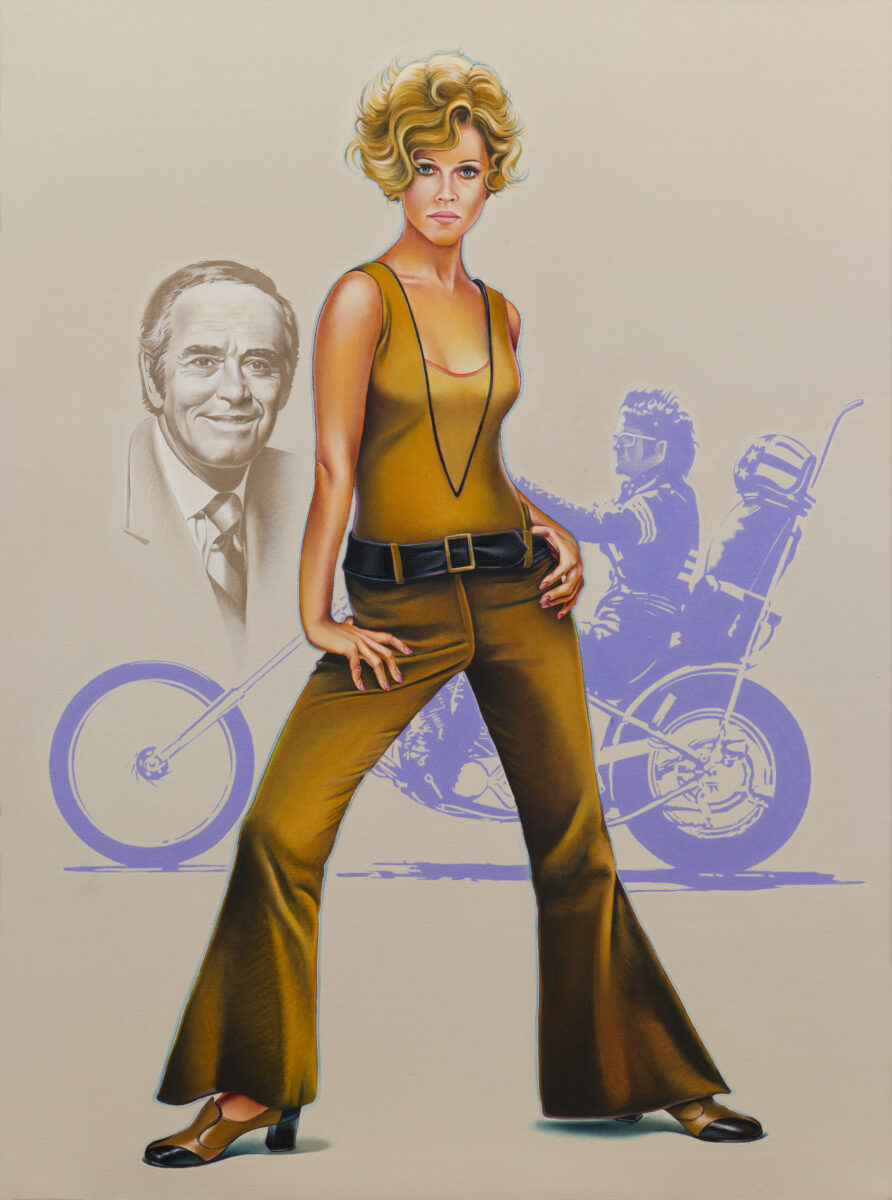
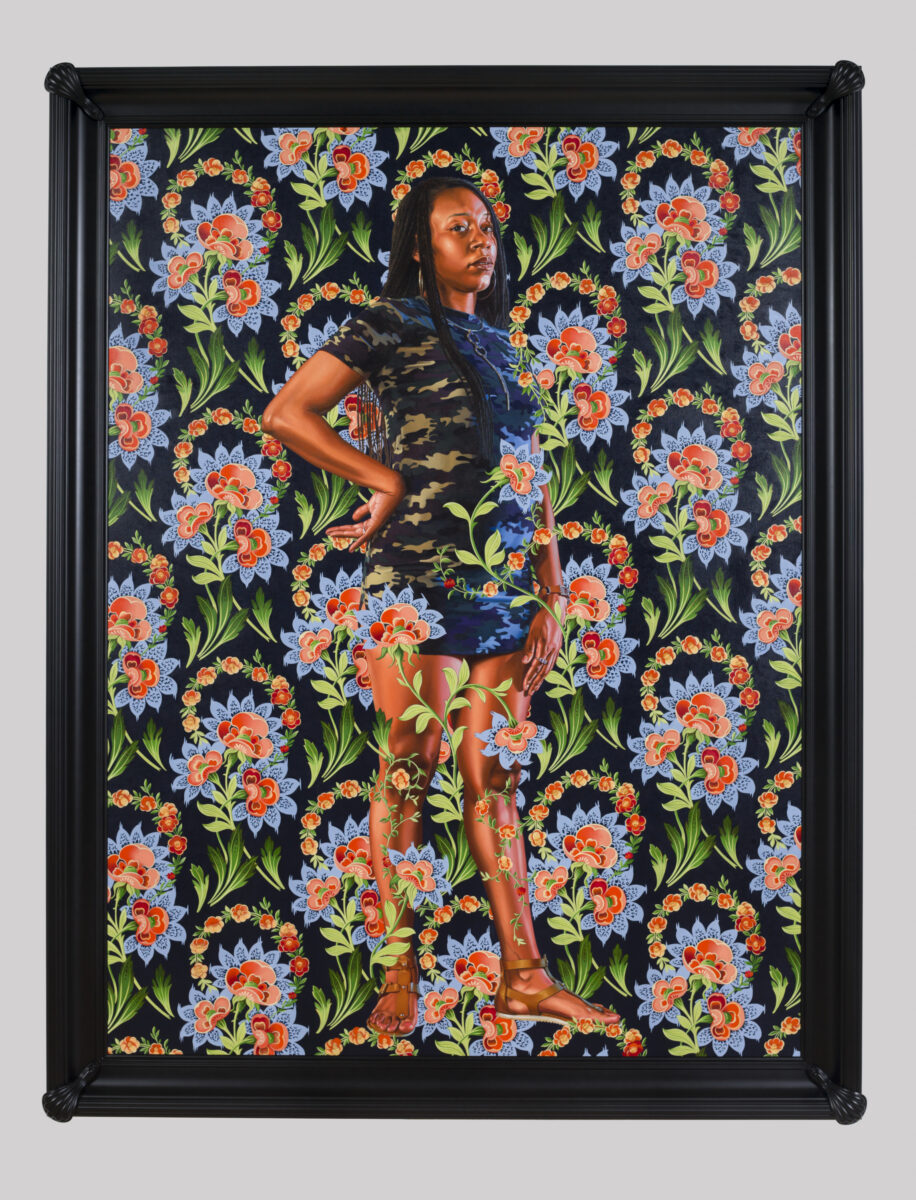
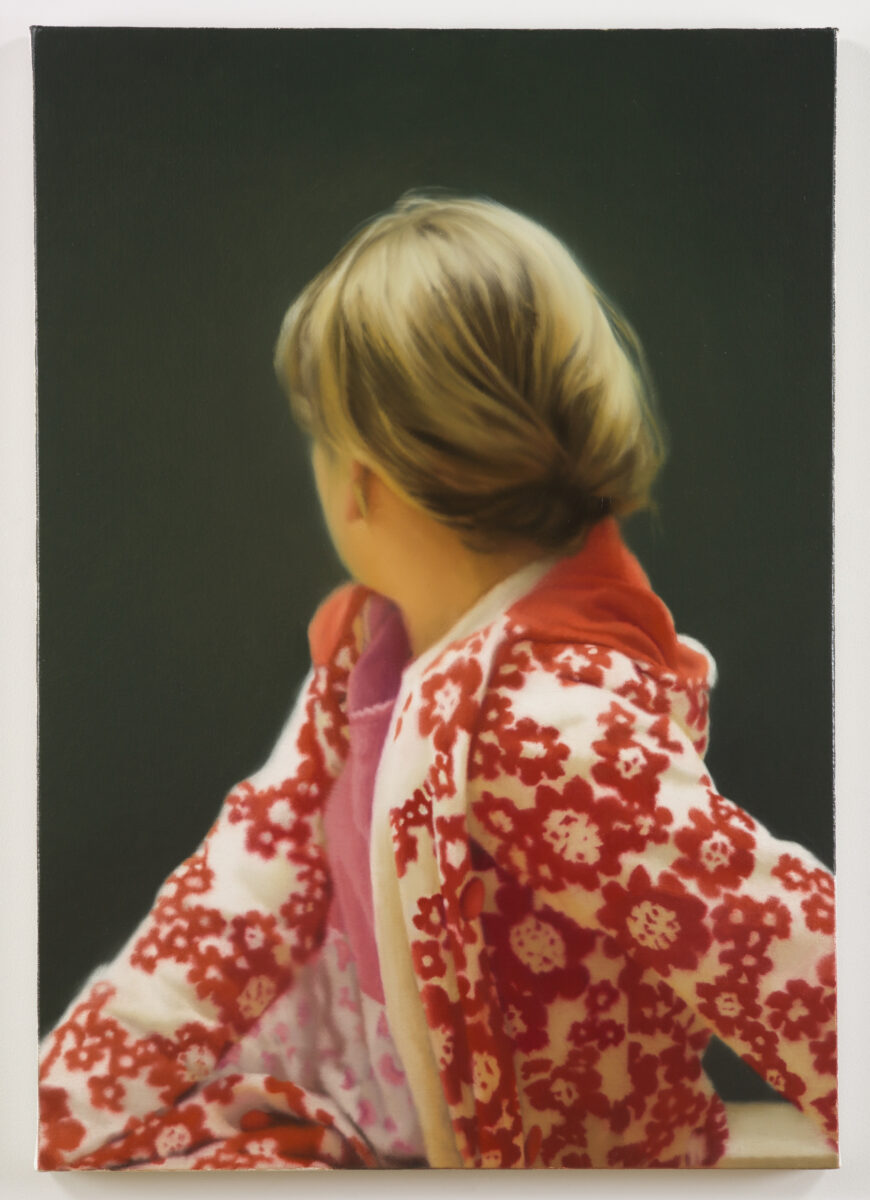
In the “Expression” gallery, portraiture investigates emotion and self-expression. Mel Ramos’s Fonda depicts Jane Fonda in a flamboyant pose, with her brother, Peter Fonda; and father, Henry Fonda, in the background—a family tree of actors. Likely depicted from Andy Warhol’s Time magazine cover, Ramos painted Jane Fonda based on his perception of her in advertising and mass media. Crowd favorites such as Betty by Gerhard Richter and Charles I by Kehinde Wiley will also be on view in this gallery.
-
Philip Guston, American (born Canada), 1913–1980; Ancient Painter, 1973; oil on canvas ; 66 1/4 x 67 3/4 inches; Saint Louis Art Museum, Bequest of Musa Guston 217:1992; © 2026 Estate of Philip Guston
-
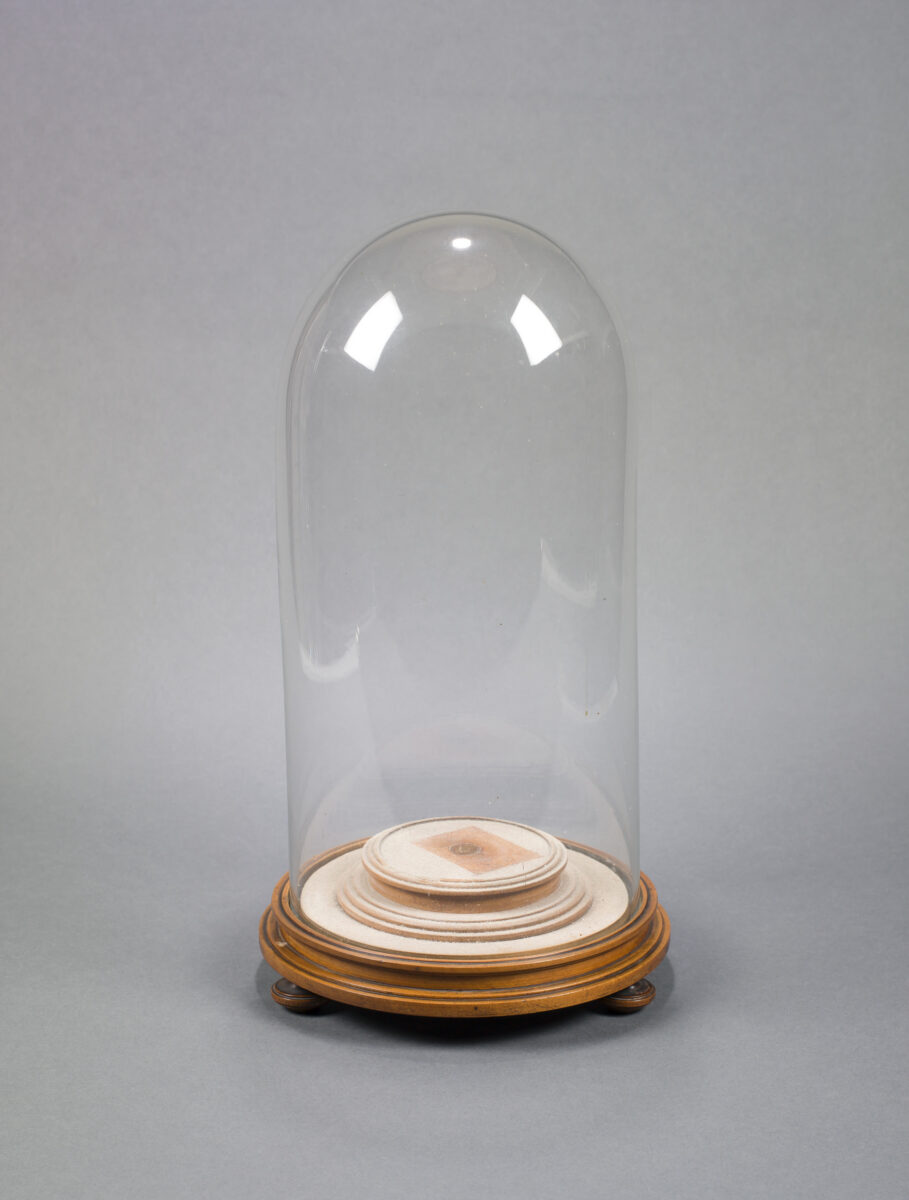
Erwin Wurm, Austrian, born 1954; Untitled, 1990; dust, wood, and glass; 18 1/2 x 9 13/16 x 9 13/16 inches; Saint Louis Art Museum, Partial and promised gift of Betsy Millard, the Earl and Betsy Millard Collection 117:2003; © 2026 Artist's Rights Society (ARS), New York
-
Tamara Johnson, American, born 1984; Cracker with Cheese, 2023; pewter, pigmented resin, oil-based paint, and matte varnish; 1/2 x 2 x 2 inches; Saint Louis Art Museum, The Henry L. and Natalie Edison Freund Charitable Trust 125:2024; © Tamara Johnson
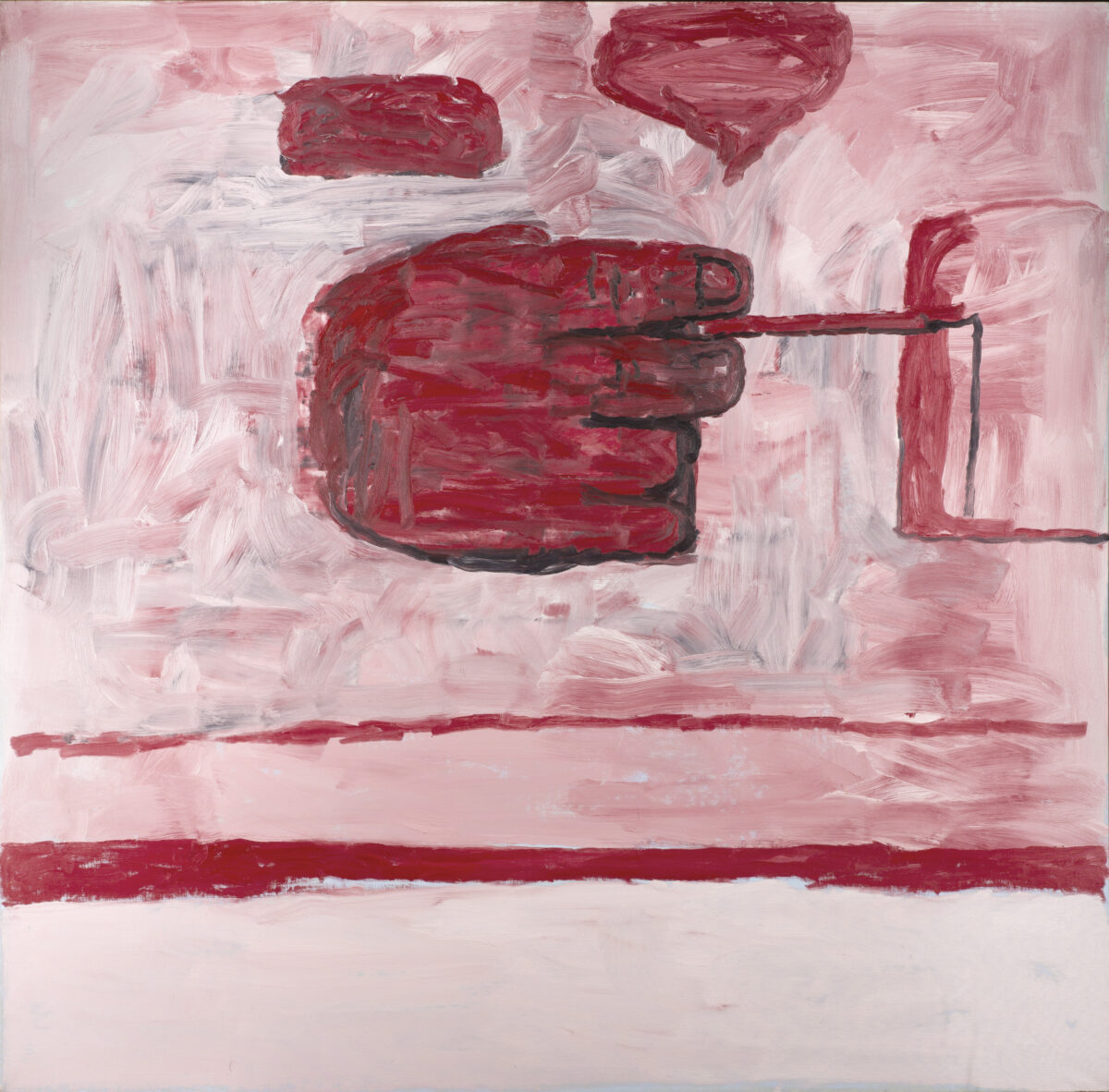
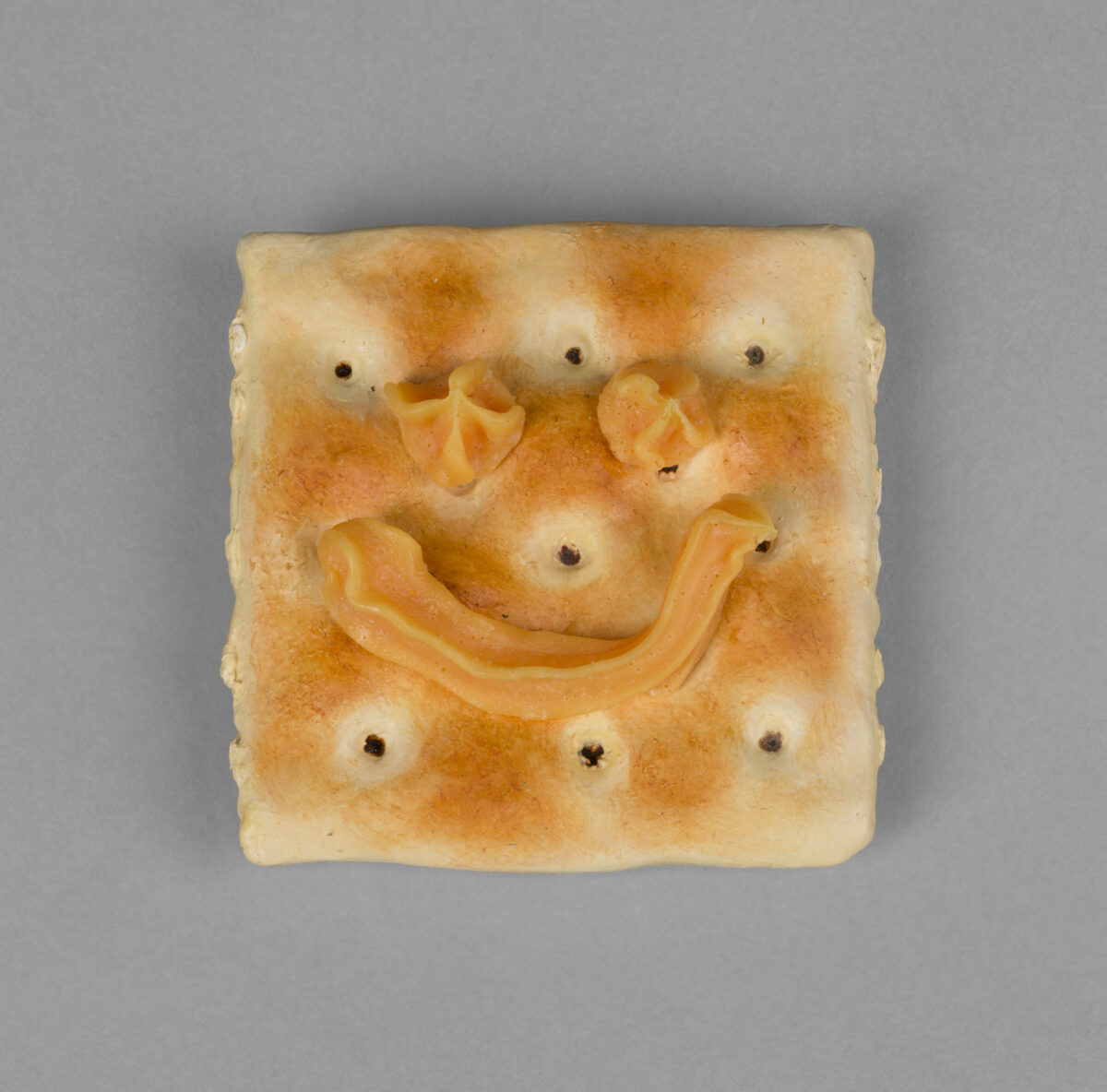
The “Color” gallery experiments with different hues and the meaning they convey. Color is not as simple as bright, dull, contrasting, or complementary. Venator said sometimes the artist uses color science to manipulate perception. Other times, the color of a painting depends on what is available.
Philip Guston painted with a signature dusty pink. Ancient Painter appears as an abstract painting, but the shapes create Guston’s self-portrait. The large red hand holds a brush to the canvas, painting a black line. Above him, a rectangle and bubble symbolize a cigar and puff of smoke.
Challenging the standard of art museums, Venator said the “Play” gallery wants to make you laugh. The objects are intentionally meant to be funny, such as Tamara Johnson’s Cracker with Cheese and Erwin Wurm’s untitled sculpture featuring a layer of dust inside an otherwise empty glass bell jar.
Looking at Erwin Wurm’s work, you might think he forgot an object inside the glass display case. But in fact, the case protects a layer of dust. Wurm placed an unknown object on the wood, let it gather dust, removed the object, and sealed the dust in the case. Ironic, as a display case usually protects objects from getting dusty.
-
Gerhard Richter, German, born 1932; Januar (January), 1989; oil on canvas; overall: 126 inches x 13 feet 1 1/2 inches; Saint Louis Art Museum, Funds given by Mr. and Mrs. James E. Schneithorst, Mrs. Henry L. Freund, and the Henry L. and Natalie Edison Freund Charitable Trust; and Alice P. Francis, by exchange 28:1990a,b; © Gerhard Richter
-
Gerhard Richter, German, born 1932; Dezember (December), 1989; oil on canvas; overall: 126 inches x 13 feet 1 1/2 inches; Saint Louis Art Museum, Funds given by Mr. and Mrs. Donald L. Bryant Jr., Mrs. Francis A. Mesker, George and Aurelia Schlapp; Mr. and Mrs. John E. Simon, and the estate of Mrs. Edith Rabushka in memory of Hyman and Edith Rabushka, by exchange 29:1990a,b; © Gerhard Richter
-
Gerhard Richter, German, born 1932; November, 1989; oil on canvas; overall: 126 inches x 13 feet 1 1/2 inches; Saint Louis Art Museum, Funds given by Dr. and Mrs. Alvin R. Frank and the Pulitzer Publishing Foundation 30:1990a,b; © Gerhard Richter
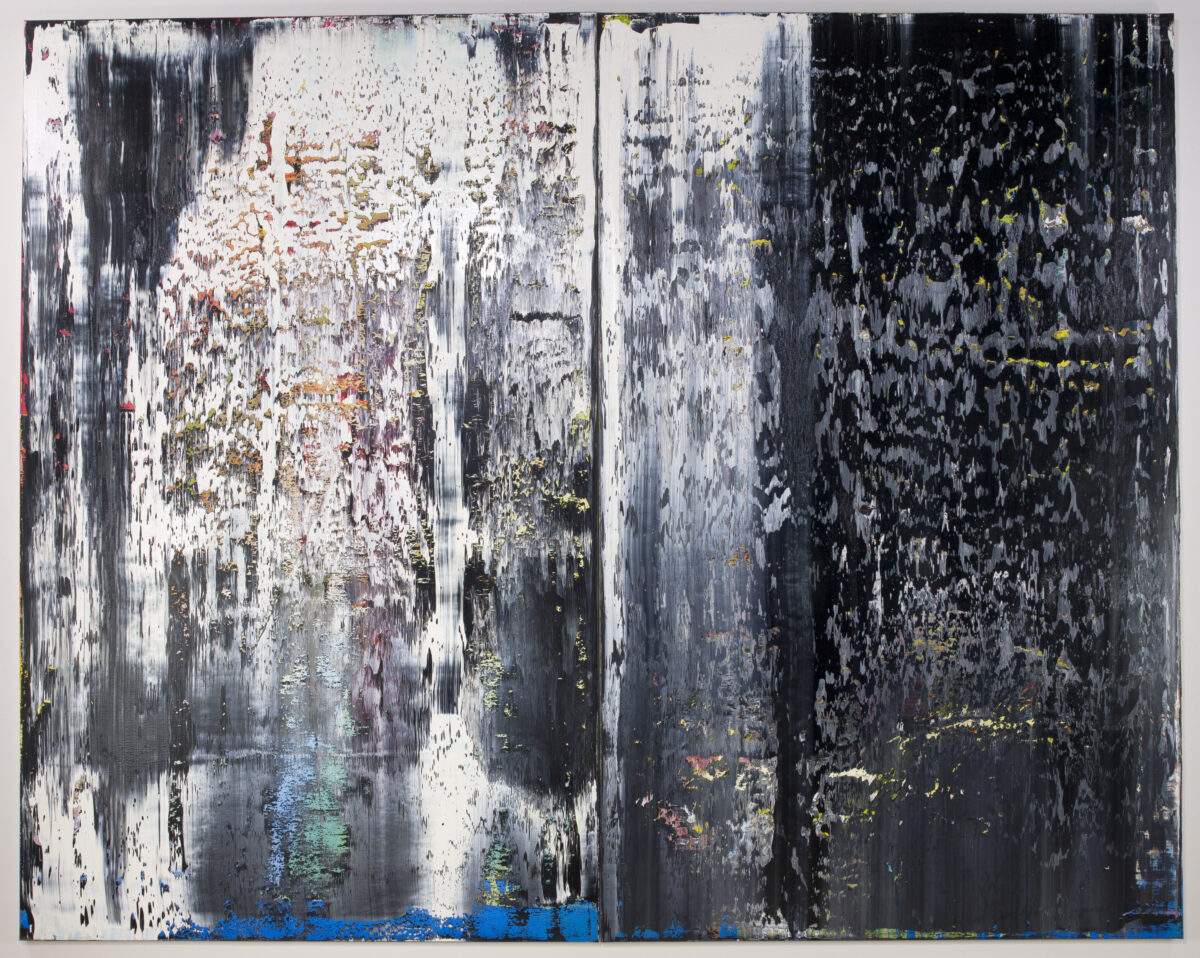
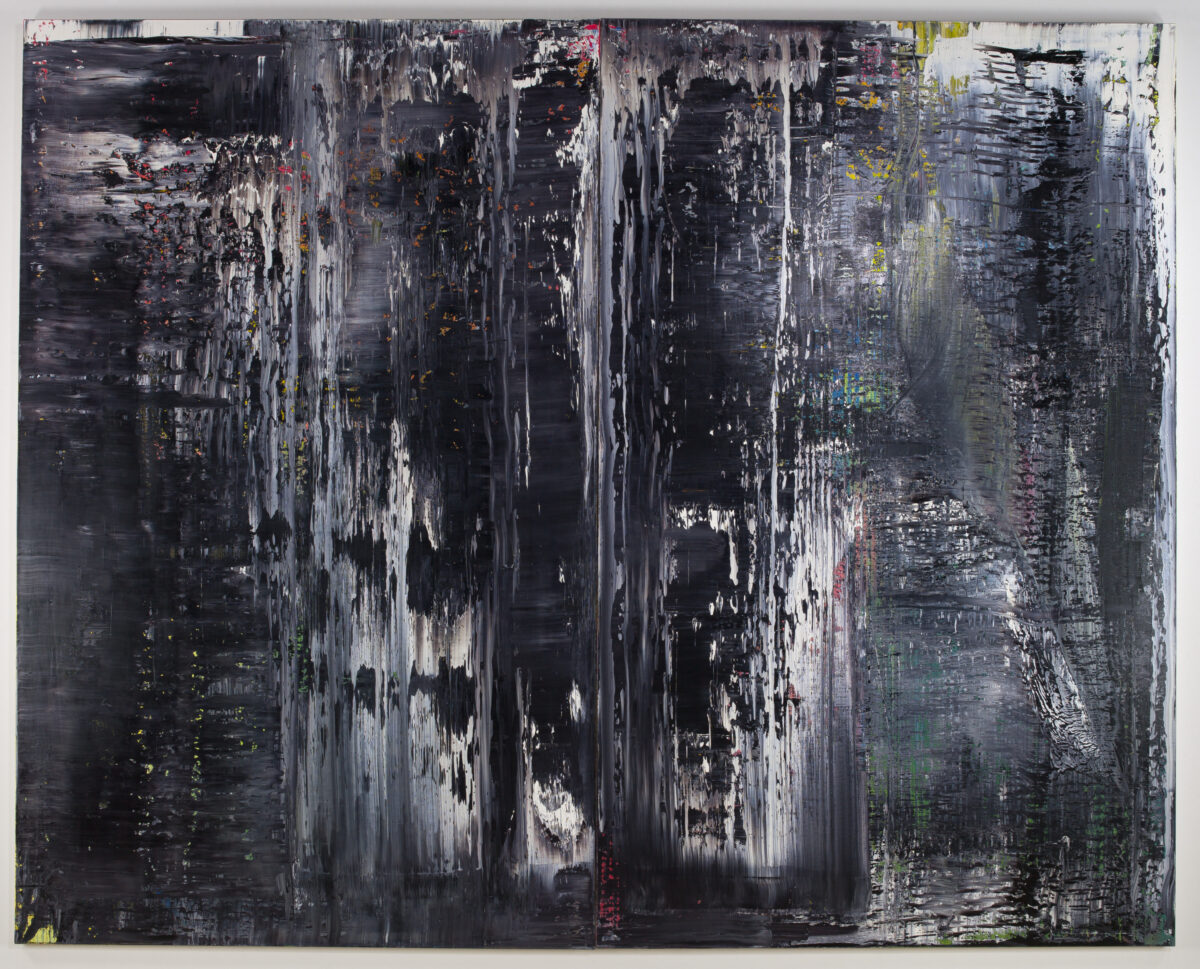
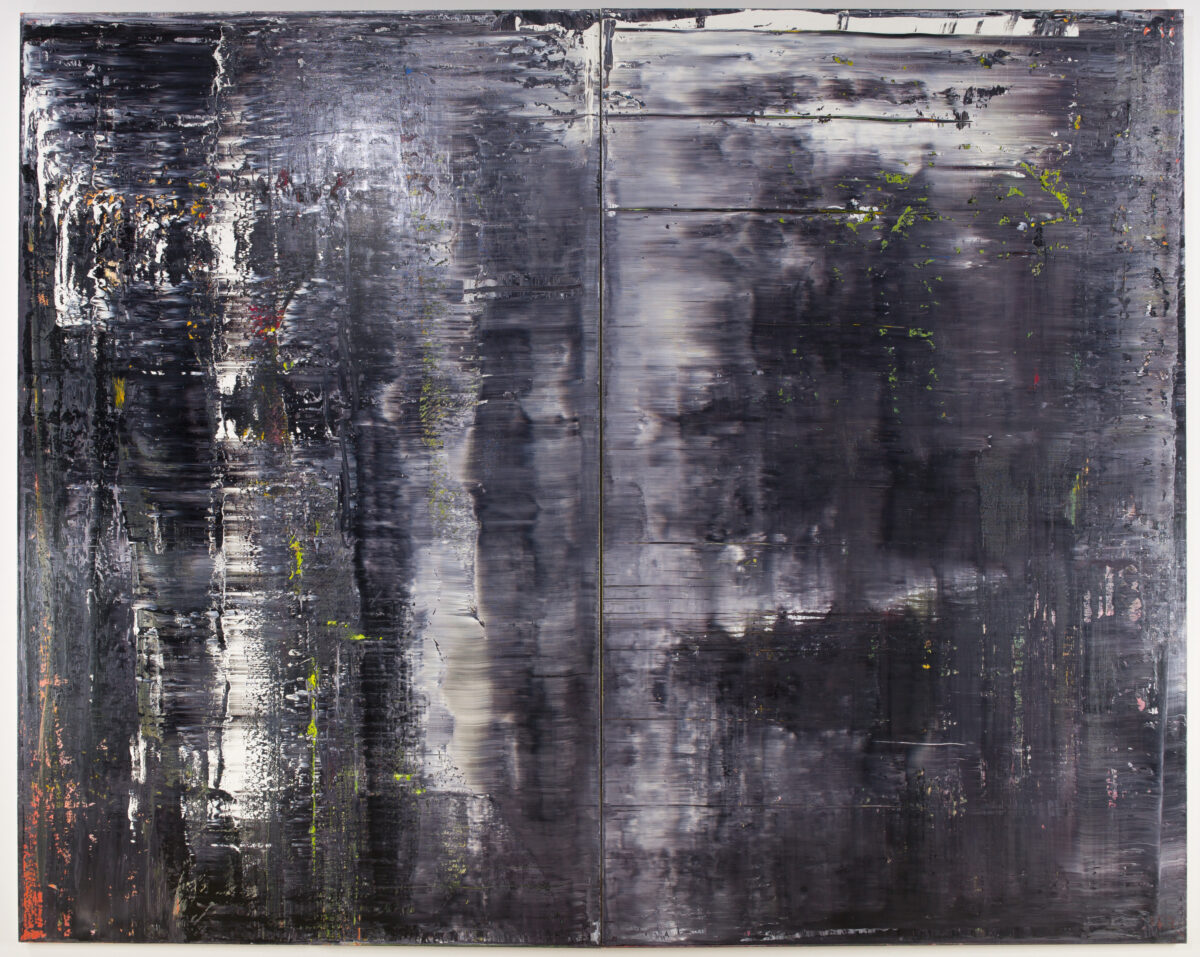
German art is a strength of the Saint Louis Art Museum’s collection. In the “Blur” gallery, the Museum re-created the original installation of Gerhard Richter’s triple diptych in Frankfurt, Germany after the Berlin Wall fell in 1989.
January, December, and November encompass three walls of the room, producing an ambiance rather than an exhibit. On fields of black and white, Richter used blurry, streaky brushstrokes to suggest speed. Yet visitors experience stillness.
-
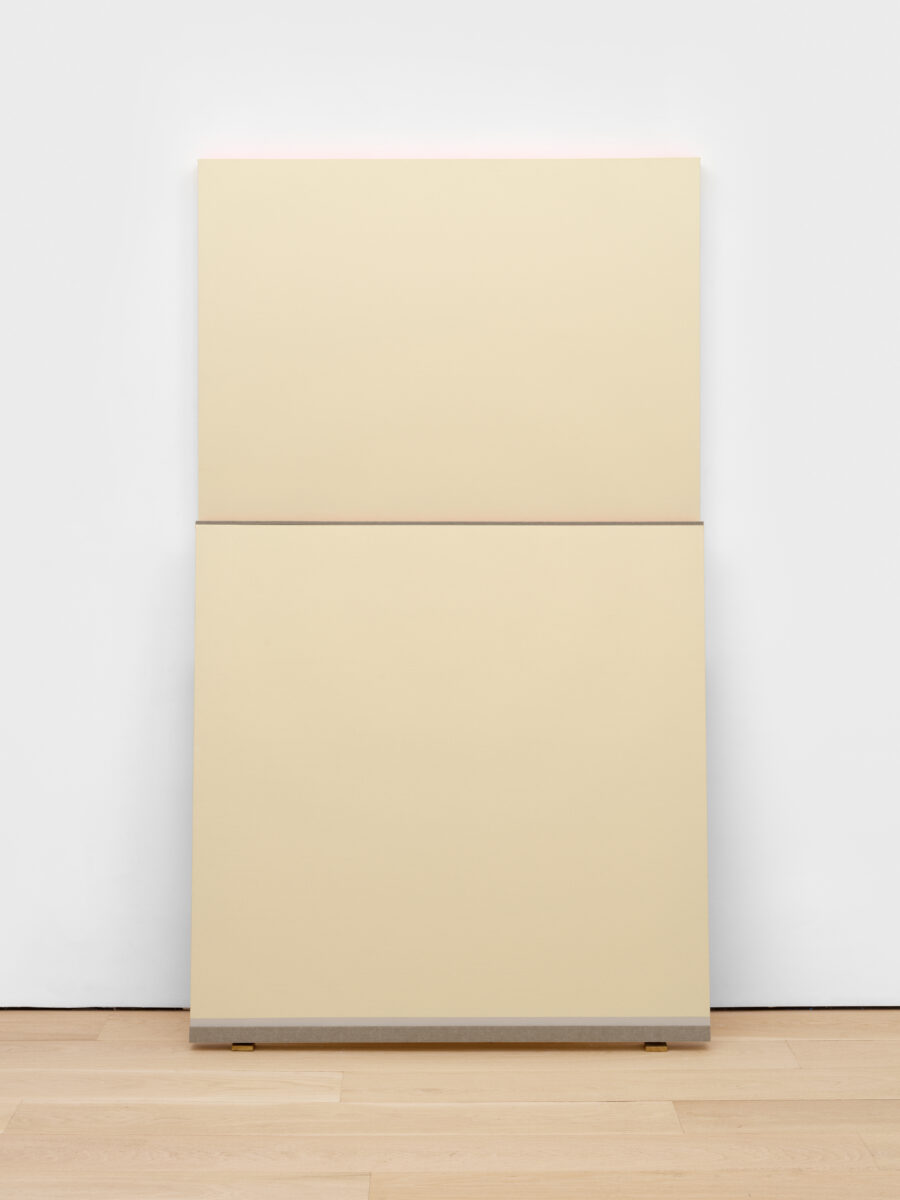
Jennie C. Jones, American, born 1968; Phrasing to the Floor, Softly, as in an Evening Sunset (for Nina), 2025; acrylic and architectural felt on canvas and brass in four parts; part 1: 48 1/2 × 48 × 2 1/2 inches, part 2: 48 × 48 × 2 inches, 2 brass blocks, each: 2 × 2 inches; Saint Louis Art Museum, Ruth and Alvin Siteman Contemporary Art Fund © 2026 Jennie C. Jones
-
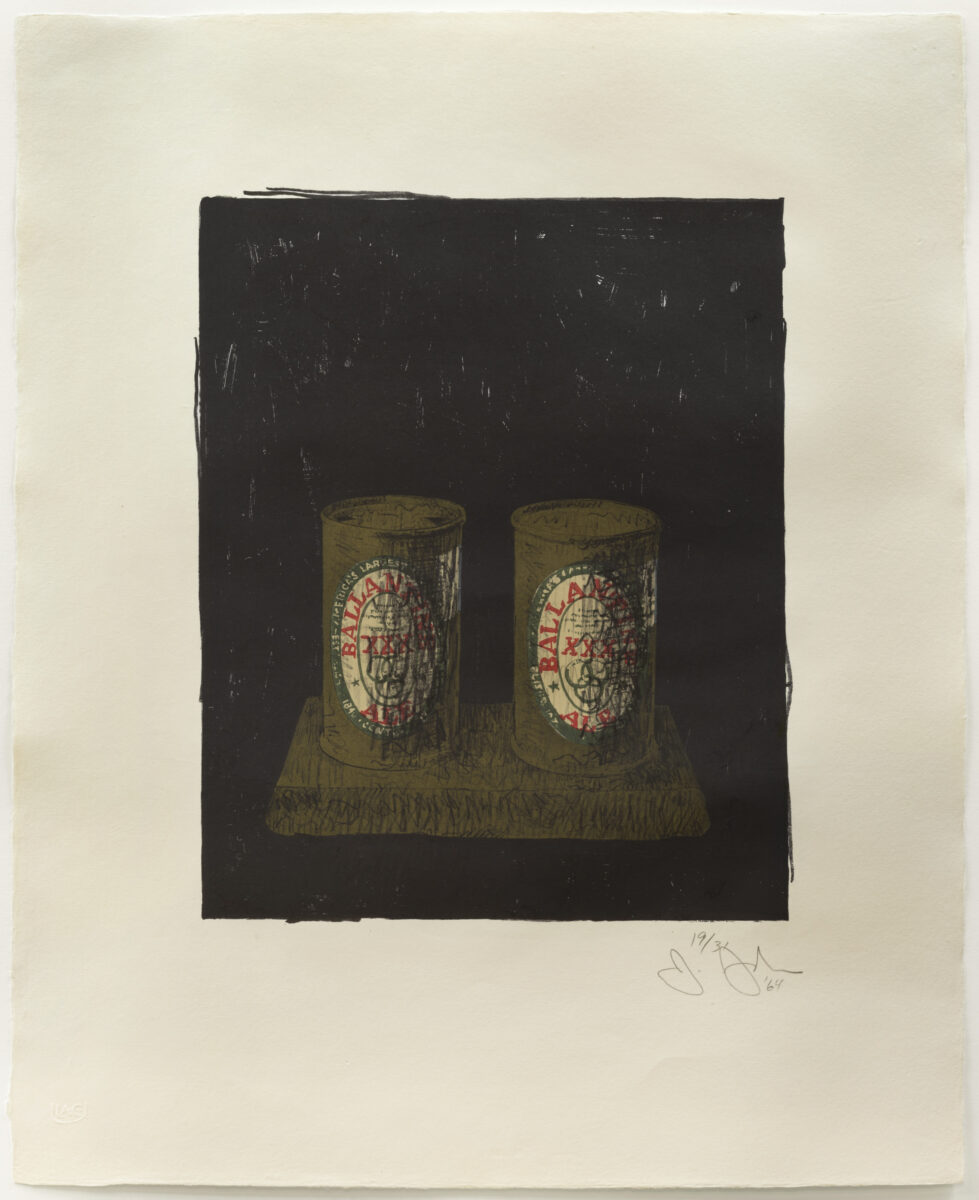
Jasper Johns, American, born 1930; printed by Zigmunds Priede, American (born Latvia), born 1935; published by Universal Limited Art Editions, West Islip, New York, founded 1957; Ale Cans, 1964; color lithograph, printed from seven stones; image: 14 1/4 x 11 inches, sheet: 22 1/2 x 17 1/2 inches; Saint Louis Art Museum, Gift of David C. Farrell and Betty J. Farrell 21:2024; © 2026 Jasper Johns and ULAE / Artists Rights Society (ARS), New York, Published by Universal Limited Art Editions
In addition to the eight themed displays, the East Building installation will also feature a new acquisition gallery and a temporary exhibition space.
The new acquisitions gallery will display new additions to the collection that otherwise wouldn’t get their immediate moment under gallery lights. The display will rotate twice a year. Phrasing to the Floor, Softly, as in an Evening Sunset (for Nina) by Jennie C. Jones will be the first object on view in the gallery. Acquired in 2026, Jones’s work translates the structures of Black music into visual terms. The distinct pieces—panels, felt strips, red paint, and brass blocks—harmonize like elements of a song.
Finally, a temporary exhibition in Gallery 250 will display a selection of SLAM’s Jasper Johns’s lithographic prints. Active from the ’50s until the end of his life, Johns is best known for applying an Abstract Expressionist style to everyday objects like the American flag, a target, or letters of the alphabet. Johns’s prints continue to explore the same motifs in a new medium. In collaboration with master printmakers, he created complex, multimatrix lithographic prints of the numbers 0 through 9, Ballantine beer cans, the Mona Lisa, and more.
Signs Under Pressure: Jasper Johns Lithographs will be on view through May 16, 2027.
