William Merritt Chase, American, 1849–1916; The Tenth Street Studio (detail), 1880; oil on canvas; 36 1/4 x 48 1/4 inches; Saint Louis Art Museum, Bequest of Albert Blair 48:1933
Pets are a common part of many peoples’ lives. They appear frequently in SLAM’s holdings: playing and napping in works by professional and amateur artists alike. Continue reading to see how people have immortalized their furry friends in works dating back to the 1800s.
Vernacular photographs
-
Unknown, Untitled (boy and dog), 1946; American; gelatin silver print; sheet: 5 x 3 1/2 inches; Saint Louis Art Museum, Gift of Peter J. Cohen in honor of Laura T. Cohen 222:2018
-
Unknown, Untitled (snow cat), 1890s; American; gelatin silver print; image: 3 3/8 inches, border: 4 5/8 x 3 11/16 inches, sheet: 5 1/4 x 4 3/16 inches; Saint Louis Art Museum, Gift of John R. and Teenuh M. Foster 323:2018
-
Unknown; Untitled (Man Looking Up Holding Cat), 1930s; gelatin silver print; sheet: 4 1/2 x 2 7/8 inches; Saint Louis Art Museum, Gift of Peter J. Cohen in honor of Laura T. Cohen 173:2018
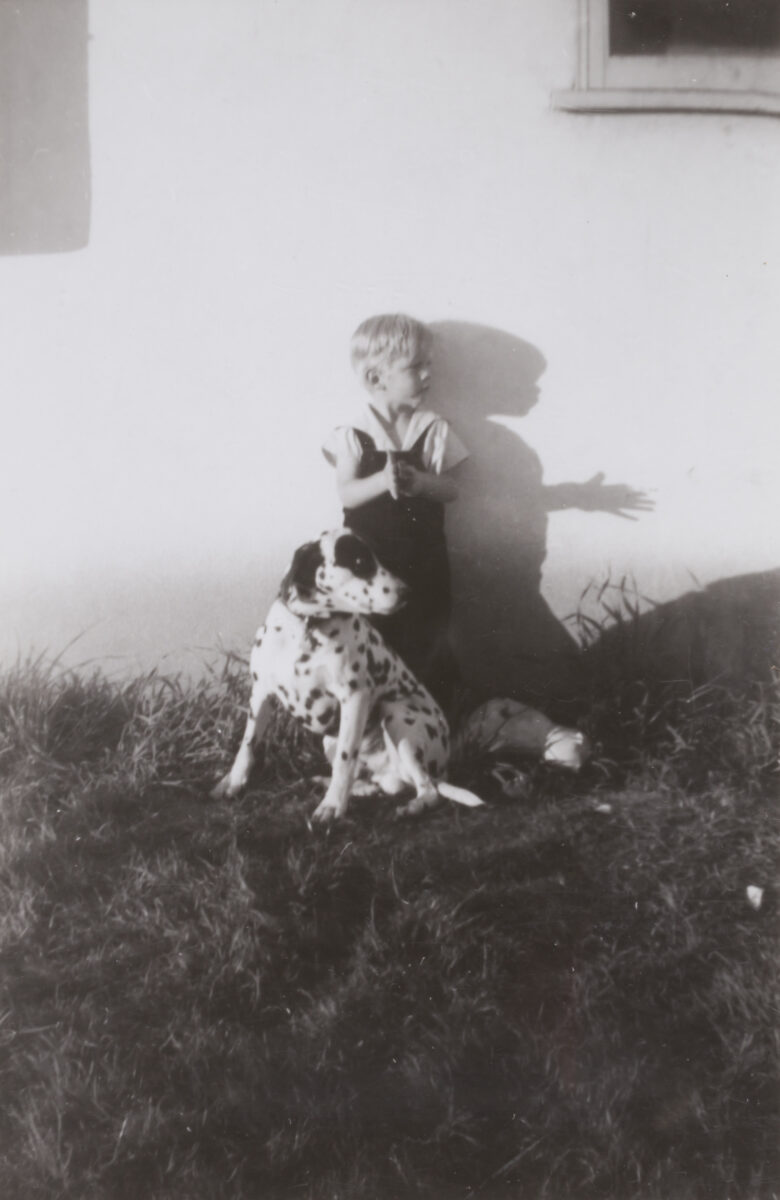
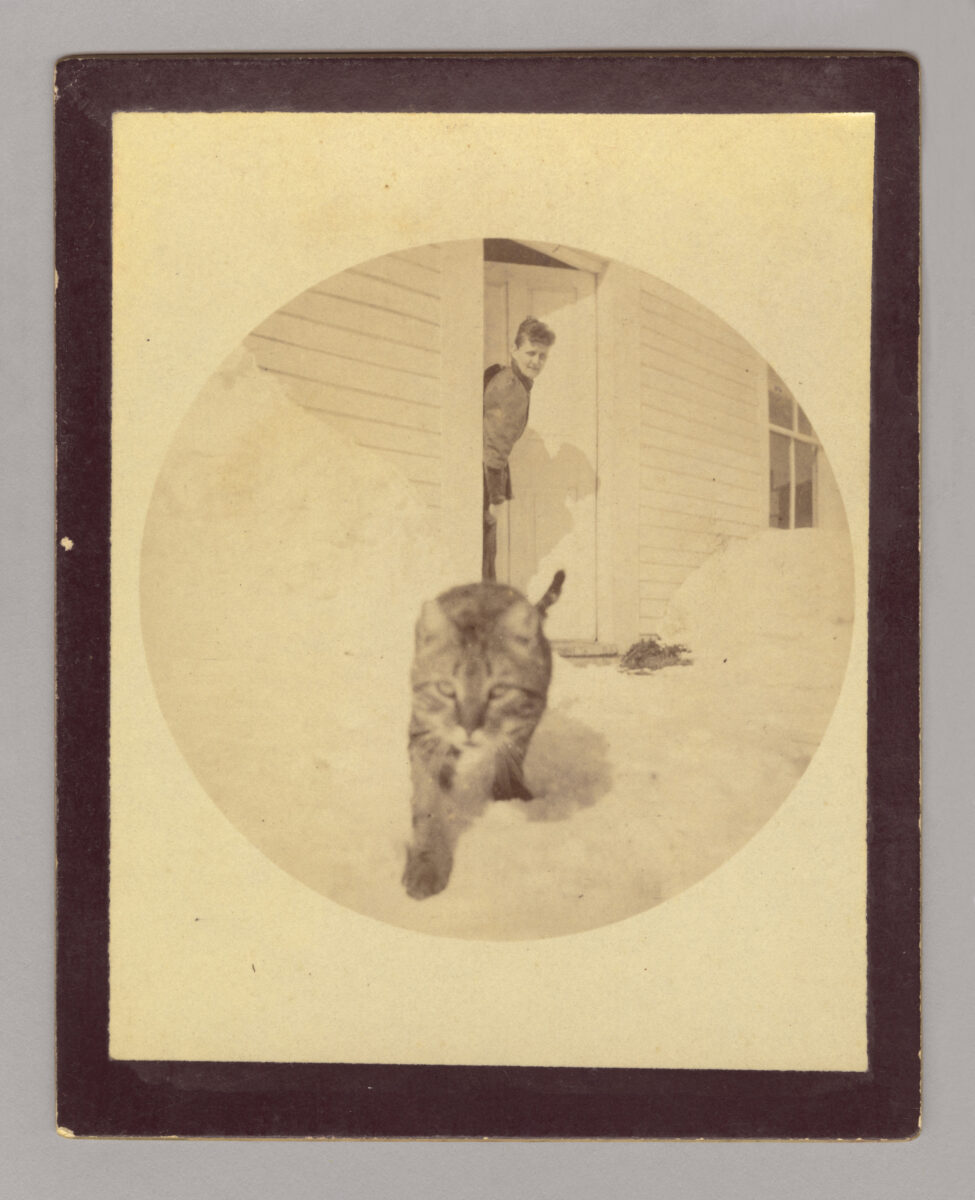
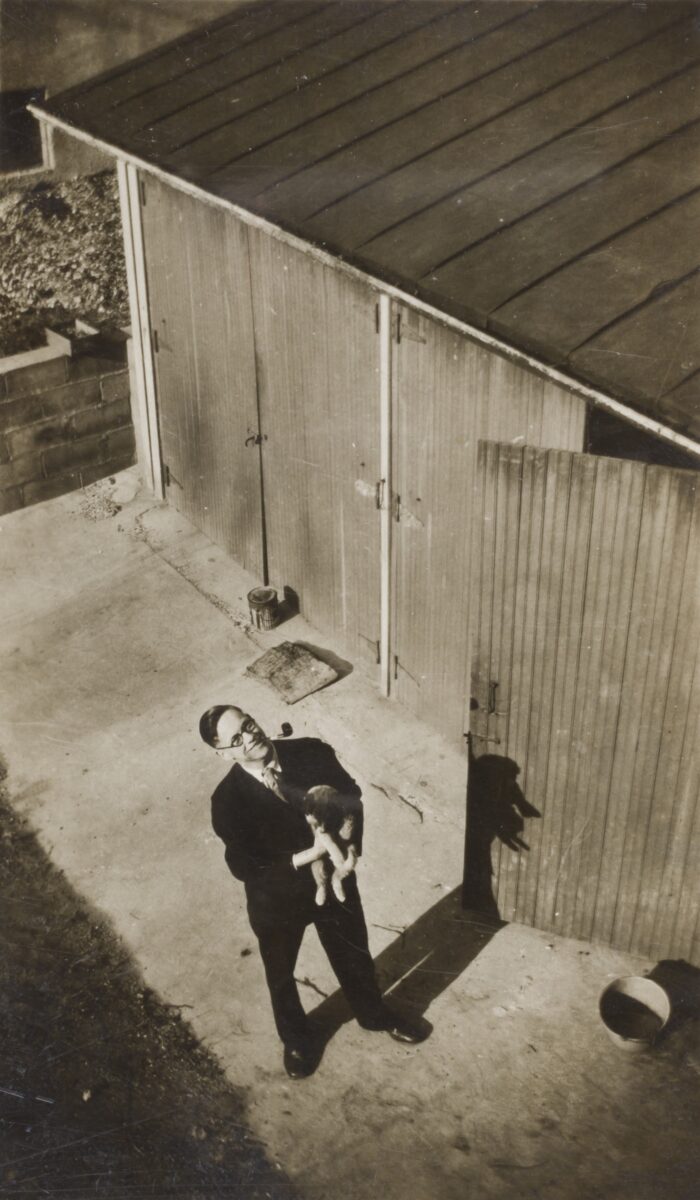
Pets are especially visible in vernacular photos—photos captured by someone unknown and amateur, taking photos for personal reasons rather than to make fine art. Vernacular photos document a specific moment, regardless of the moment’s impact or importance to history. It is not necessary to know who took the photographs for the resulting images to be fascinating, amusing, or moving to the viewer. The photos pictured here capture the popular pairing of children and pets.
Paintings

Louise Adéone Drölling, French, 1797–1831; Interior with Young Woman Tracing a Flower, c.1820–22; oil on canvas; 22 1/4 x 17 7/8 inches; Saint Louis Art Museum, Miss Lillie B. Randell by exchange 160:1946
Interior with Young Woman Tracing a Flower
A young woman traces a drawing of a tulip against a windowpane; her study lies discarded on the floor, and she has been distracted by her pet squirrel perched on an armchair nearby. This painting may be a self-portrait of the artist at work in her studio. The painting was awarded a gold medal at the 1824 Salon and was then acquired for the prestigious collection of the French aristocrat, the Duchesse de Berry. Squirrels were popular pets in the 1700s and 1800s.

William Merritt Chase, American, 1849–1916; The Tenth Street Studio, 1880; oil on canvas; 36 1/4 x 48 1/4 inches; Saint Louis Art Museum, Bequest of Albert Blair 48:1933
The Tenth Street Studio
Sumptuous tapestries, exotic metalwork, imported porcelains, fine art, and elegantly adorned patrons were sure to be found in the studios of artists at the end of the 19th century. This painting depicts the studio of its artist, William Merritt Chase, one of the most successful painters of the era. Appreciating—and being seen appreciating—such exquisite finery was an important cultural and social marker for both patron and artist. An invitation to a reception at Chase’s studio (sure to be in the society news) was the most sought after in New York City. In this image, a dog relaxes on the floor of the studio, a paw resting protectively on the dress of woman in a nearby chair.
This work is on view in Anheuser-Busch Foundation Gallery 335.

Alfred Stevens, Belgian, 1823–1906; In Deep Thought, 1881; oil on canvas; 18 3/4 x 23 1/4 inches; Saint Louis Art Museum, Museum Purchase 58:1916
In Deep Thought
The Belgian painter Alfred Stevens was a good friend of Édouard Manet and Edgar Degas, and like both of those artists, he painted scenes of fashionable modern life. Here, a woman in an elegant pink dress looks out to sea while her straw hat and gloves lie on the table and her pet dog sits nearby. The scene takes place at the Norman port of Le Havre; steamboats, a sign of modernity, are visible in the distance.
This work is on view in Alice and Fred Conway Gallery 217.
Prints

Enrique Chagoya, American (born Mexico), born 1953; printed and published by Universal Limited Art Editions, West Islip, New York, founded 1957; Homage to the Un-Square and My Cat Frida, 2009; etching, aquatint, and drypoint with watercolor additions; plate: 12 7/8 x 15 15/16 inches, sheet: 20 1/16 x 22 1/16 inches; Saint Louis Art Museum, Gift of Ted L. and Maryanne Ellison Simmons; and funds given by the Marian Cronheim Trust for Prints and Drawings, Museum Purchase, Friends Endowment Fund, The Sidney S. and Sadie Cohen Print Purchase Fund, and the Eliza McMillan Purchase Fund 482:2020; © Enrique Chagoya
Homage to the Un-Square and My Cat Frida
Enrique Chagoya’s cat Frida dashes across the room, away from a skeletal figure wearing an elaborate green dress. The figure’s ovaloid head, decorated with saturated red and yellow, represents a central Mexican underworld deity. With a toy in one hand and a cage in the other, the figure seems to be in pursuit of the cat.
On the wall hangs a painting by 20th-century German American artist Josef Albers, known for his explorations of perception and color theory, which included a long-running series entitled Homage to the Square. In Chagoya’s scene of the “un-square,” Albers’s neatly composed yellow painting becomes a mere backdrop to the drama of the cat and otherworldly figure at play.

Max Beckmann, German, 1884–1950; Self-Portrait with Cat and Lamp, 1920; lithograph; image: 18 3/8 x 12 11/16 inches, sheet: 22 1/8 x 15 7/16 inches; Saint Louis Art Museum, Neumann/Frumkin Collection, purchased with funds provided by the bequest of Morton D. May, by exchange, the bequest of Florene M. Schoenborn in honor of her father, David May, by exchange, Emily Rauh Pulitzer, Museum Shop Fund, Mr. and Mrs. Lester A. Crancer Jr., Phoebe and Mark Weil, The Sidney S. and Sadie Cohen Print Purchase Fund, Mr. and Mrs. David C. Farrell, the Julian and Hope Edison Print Fund, gift of George Rickey, by exchange, bequest of Helen K. Baer, by exchange, Suzanne and Jerry Sincoff, Museum Shop Fund, by exchange, gift of the Buchholz Gallery, by exchange, Museum Purchase, by exchange, Jerome F. and Judith Weiss Levy, bequest of Horace M. Swope, by exchange, and funds given by Fielding Lewis Holmes through the 1988 Art Enrichment Fund, by exchange 379:2002
Self-Portrait with Cat and Lamp
Max Beckmann presents himself smoking a cigarette and facing a cat that is seated on a table. The cat, Pumm, was the pet of the artist’s close friend, Friedel Battenberg, whose husband is pictured sleeping next to Beckmann. The cat may represent Friedel herself, as Beckmann and Friedel were rumored to be romantically involved. The artist may also have included the cat in his self-portrait to associate himself with the characteristics of being feline: enigmatic and aloof, yet ever watchful.