
Othello
- Material
- Marble and bronze

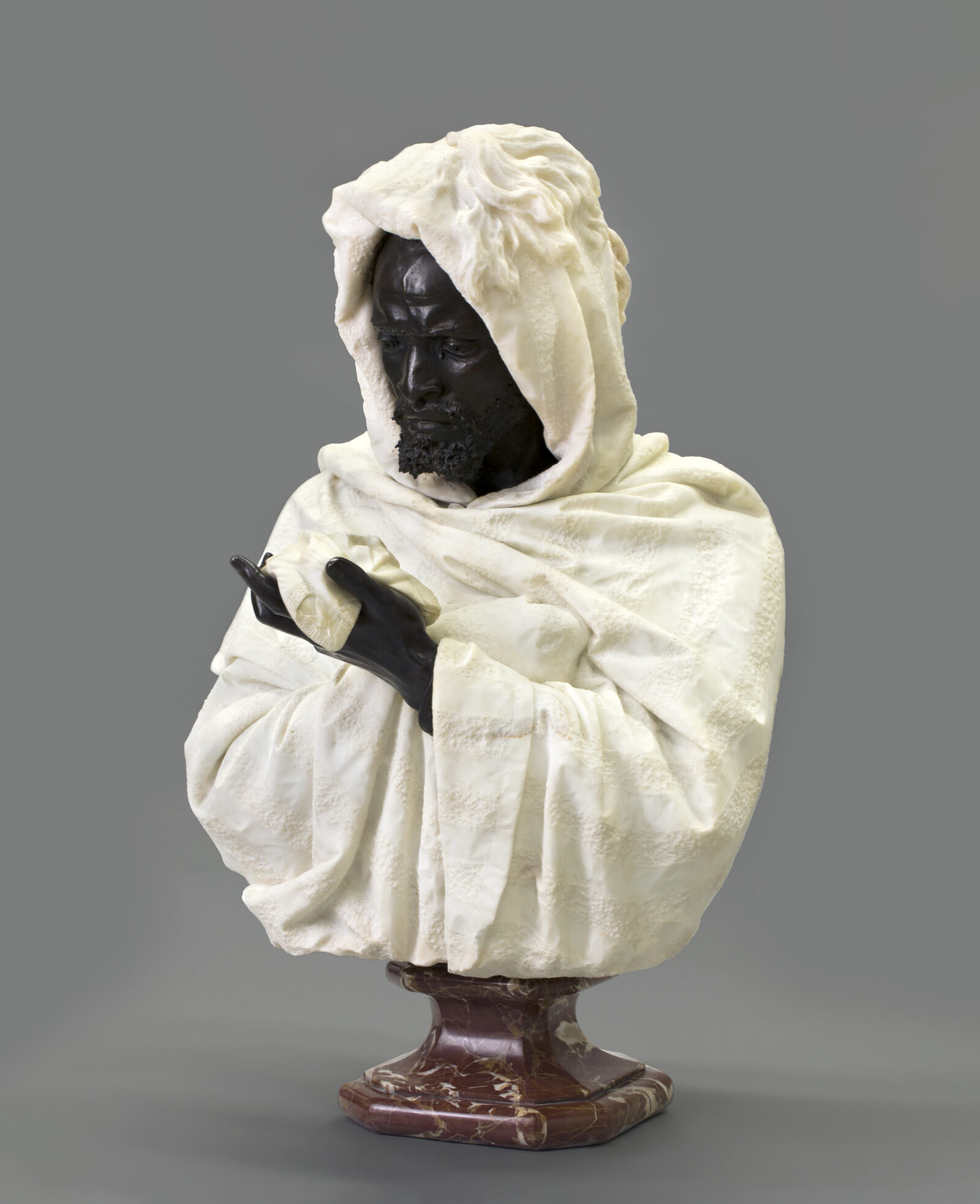
Pietro Calvi, Italian, 1833–1884; Othello (detail), c.1870; marble and bronze; height: 35 1/2 inches; Saint Louis Art Museum, Bequest of Morton D. May, Bequest of Edith J. and C. C. Johnson Spink, Gift of Margaret Donk Waters, and Gift of Professor and Mrs. Theo Haimann, all by exchange 13:2020a,b
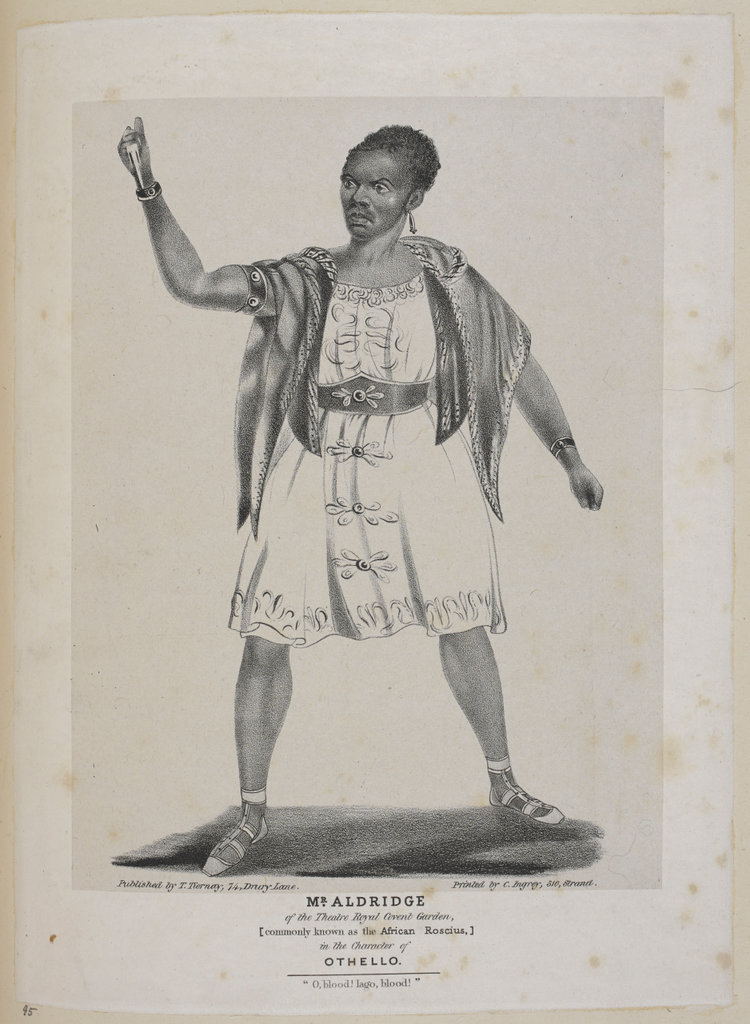
Warm, dark bronze cloaked elegantly with white marble, Pietro Calvi’s sculpture Othello captures more than just the visage of Shakespeare’s titular tragic hero. Calvi most likely modeled his sculpture from Ira Aldridge, the first Black actor to play Othello in England.
Courtesy of the British Library archive.
Aldridge, sometimes called the “African Roscius” after the famous ancient Roman actor, capitalized on his African decent in order to increase his appeal to English audiences. The actor was born in New York City in 1807 and gained a classical education at the African Free School in the same city. However, as Aldridge began his acting career in the United States, he quickly realized that rampant discrimination of Black actors in his country of birth would hold back his career.
Aldridge immigrated to Liverpool, England in 1824; he appeared on the London stage for the first time in May 1825, under the name “Mr. Keene, a tragedian of color,” according to various playbills close to the date of the actor’s arrival. What followed was a prominent career as a well-regarded actor in the European dramatic sphere, garnering both acclaim and derision from critics and audiences.
Pietro Calvi, Italian, 1833–1884; Othello, c.1870; marble and bronze; height: 35 1/2 inches; Saint Louis Art Museum, Bequest of Morton D. May, Bequest of Edith J. and C. C. Johnson Spink, Gift of Margaret Donk Waters, and Gift of Professor and Mrs. Theo Haimann, all by exchange 13:2020a,b
Pietro Calvi, Italian, 1833–1884; Othello, c.1870; marble and bronze; height: 35 1/2 inches; Saint Louis Art Museum, Bequest of Morton D. May, Bequest of Edith J. and C. C. Johnson Spink, Gift of Margaret Donk Waters, and Gift of Professor and Mrs. Theo Haimann, all by exchange 13:2020a,b
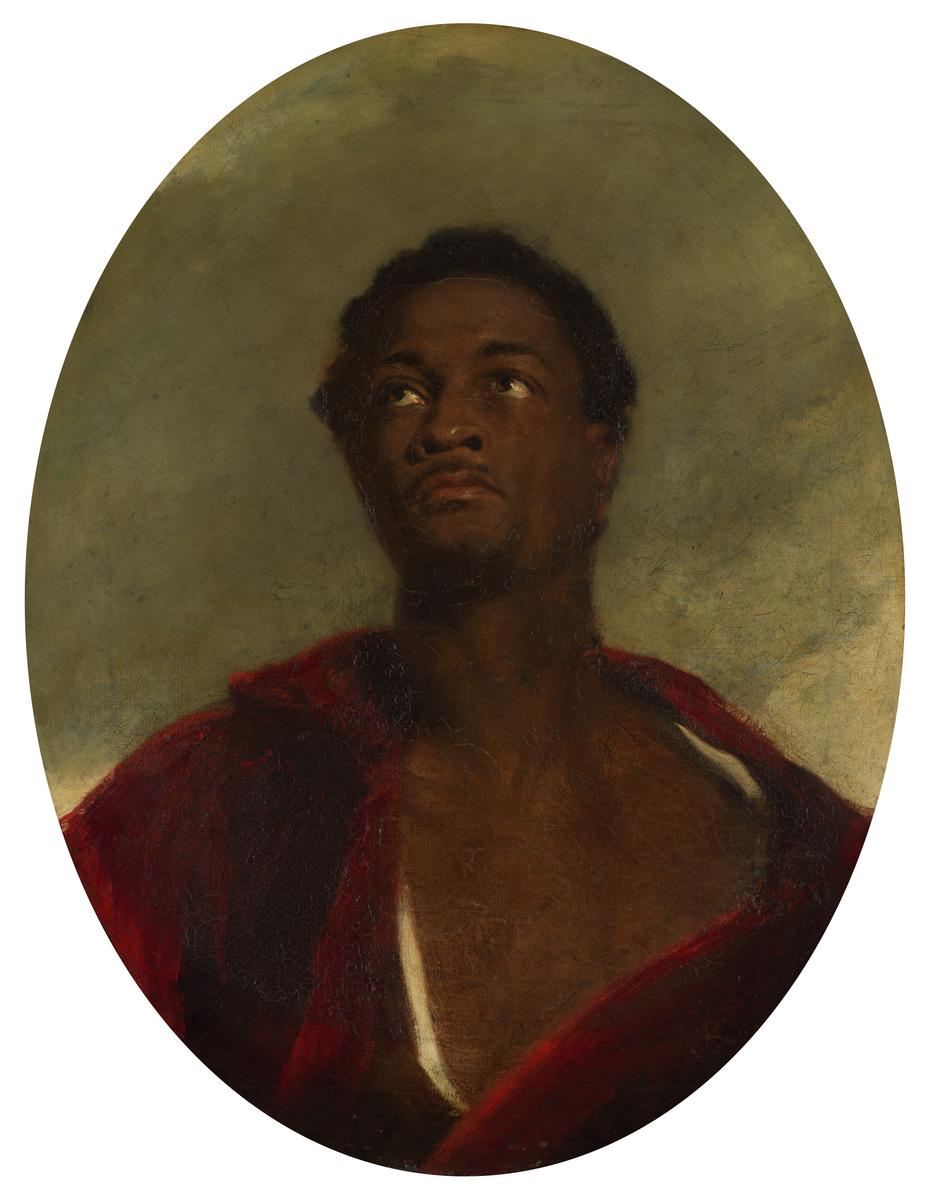
In 1833, Aldridge took over the role of Othello from well-known and well-regarded tragedian Edmund Kean on the Covent Garden stage, which effectively launched his career. Aldridge’s 43–year-long career saw him travel to many European nations, with a particular focus in Eastern Europe. Aldridge was never engaged with one major metropolitan theater for very long, instead taking short contracts with theaters across Europe. Despite this, European nobility awarded Aldridge many honors and decorations throughout his career. When he died in 1867 during an engagement in Poland, he was buried with honors there, demonstrating the high regard to which he was held. Aldridge’s status as a Black actor in a predominantly white space meant he was highly visible. His performances inspired many artists, such as Calvi and John Simpson, whose work is shown below.
John Simpson, English, 1782-1847; Head of a Man, probably Ira Frederick Aldridge, exhibited 1827; oil on canvas; 28 13/16 x 22 1/8 inches; Tate, London N00382
Although Aldridge received positive acclaim from critics and audiences alike, he still faced derision from those who believed his race should bar him from the stage. Criticism ranged from the assertion that the shape of Aldridge’s lips would prevent him from properly pronouncing Shakespearean English to rage over a Black actor playing Othello opposite a white actress’s Desdemona. Aldridge took advantage of the racial prejudices surrounding him. Though he was an American-born man, Aldridge took advantage of the “African Roscius” epithet and subtly rewrote his own history. In Memoir and Theatrical Career of Ira Aldridge, which was circulating around the time of his career, Aldridge’s ancestors are named “princes of the Fulah tribe, whose dominions were Senegal.” The memoir then elaborates on the Aldridge family’s strong ties to Senegal, claiming that Ira Aldridge lived there in his youth before regional conflict forced the family to live in the States.
This portrayal of Aldridge’s upbringing helped cement the exoticism surrounding his rise to stardom and ensured that his name was known throughout European theatrical circles. This did not mean that Aldridge was completely accepted in these same circles; rather, he utilized the unconscious bias that garnered favor in the public. According to “Ira Aldridge: Shakespeare and Minstrelsy” by Nicholas M. Evans, “Aldridge was neither [an] antiracist hero nor a hapless victim of dominant racial discourses, but a deliberate worker of the tensions between the two.”
Calvi’s Othello is on view in Jordan Charitable Foundation Gallery 207.