Decorative arts and design installation view
It’s that time of year when families and friends gather for food and fellowship. The Museum has hundreds of dishes, utensils, and other historic and contemporary tableware in its collection, many of which are on view in the Level 1 galleries devoted to decorative arts and design. For inspiration for your own dinner party, join SLAM in setting the table this holiday season.
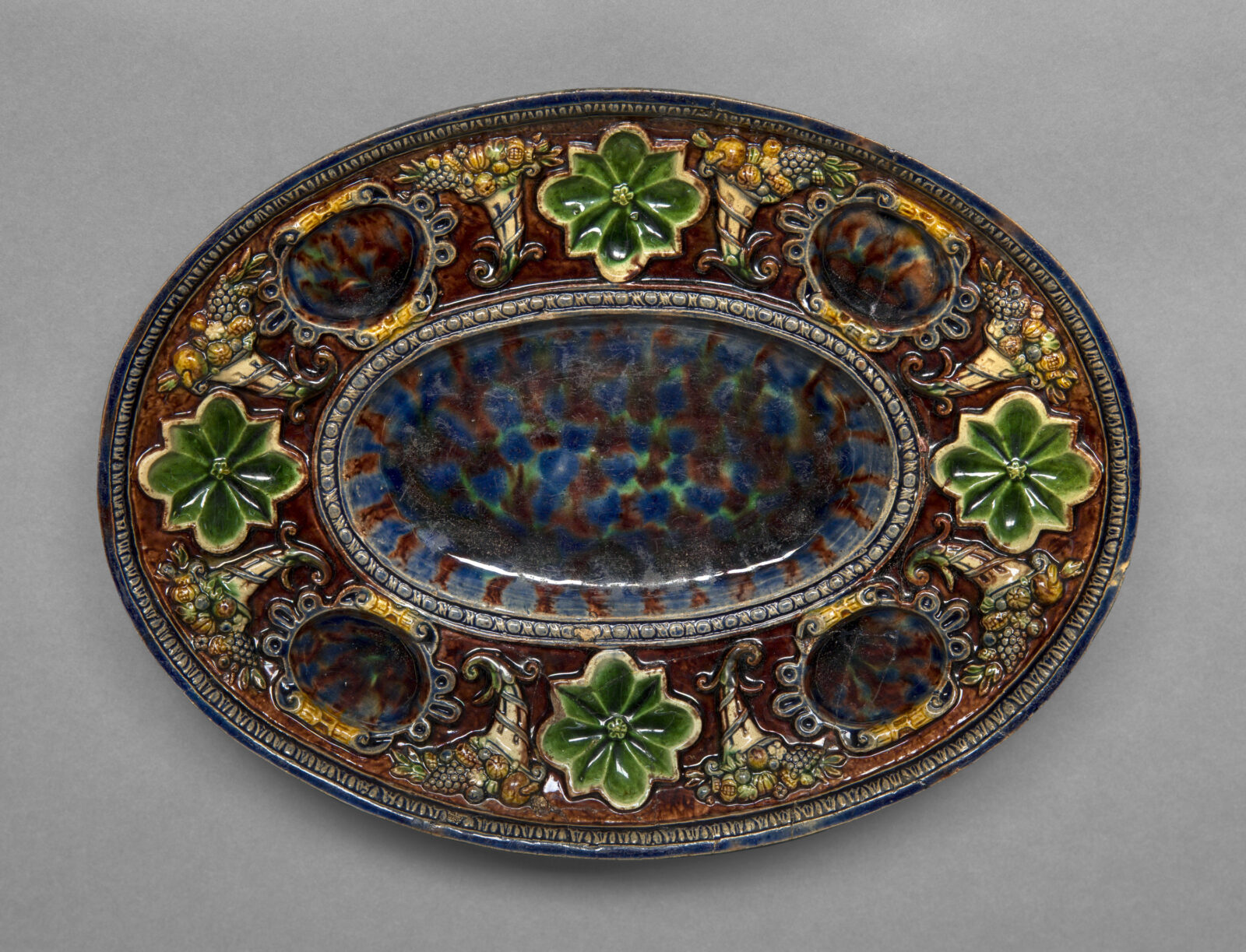
Dish, 1600–1650; French; glazed earthenware; 2 1/8 x 13 1/8 x 10 inches; Saint Louis Art Museum, Museum Purchase 14:1925
Ceramic dish
Made in Paris in the early 1600s, this oval dish has cornucopias, symbols of plenty, decorating its molded rim. Brown, blue, and green glazes were sponged on its earthenware body to imitate precious stones. Like today, formal dining in the Renaissance provided an opportunity for hosts to demonstrate their good taste and knowledge of the latest fashions. When not in use, colorful ceramics like this, along with exceptional glassware and silver, would have been artfully displayed in the dining room.
It is currently on view in the Lopata Gallery 124.

designed by Christopher Dresser, Scottish, 1834–1904; made by James Couper & Sons, Glasgow, Scotland, active 1850–1922; retailed by Liberty & Co., London, England, founded 1875; Clutha Pitcher, 1890–95; blown glass; 10 7/16 x 7 3/4 x 7 5/16 inches; Saint Louis Art Museum, Gift of Denis Gallion and Daniel Morris in memory of Susan Lorenz 50:2006
Glass pitcher
The Clutha Pitcher, produced between 1890 and 1895 in Scotland, was designed by Christopher Dresser, a pioneering British modernist intent on improving the quality of ordinary household objects. The blown glass pitcher’s exaggerated spout and jaunty handle cut a striking profile. Inspired in part by ancient Roman and Near Eastern vessels, Dresser embraced tinted glass textured with air bubbles and colored striations in his organic free-flowing forms.
It is currently on view in Gallery 122.

Wineglass, 1550–1600; Italian; filigree glass; 6 7/8 x 4 3/8 x 4 3/8 inches; Saint Louis Art Museum, Gift of Mrs. Hugo A. Koehler in memory of her daughter, Virginia Koehler Hunt (1902-1944) 93:1945
Wine glass
Created between 1550 and 1600 in Venice, Italy, this wine goblet, with its delicate networks of fine white threads, is an exceptional example of filigree glass. The technique, which fuses clear molten glass over canes, or rods, of white glass, was developed on the Venetian island of Murano in the 16th century but quickly spread across Europe.
It is currently on view in the Lopata Gallery 124.

possibly made by Leeds Pottery, Leeds, England, active c.1760–1881; or made by Wedgwood, Barlaston, England, founded 1759; Centerpiece, c.1790; glazed earthenware with painted and transfer-printed decoration; assembled: 23 3/4 x 15 1/4 x 16 inches; Saint Louis Art Museum, Gift of Roland E. Jester in memory of Margo Jester 77:1985a-k
Centerpiece
The figure of Plenty holding a cornucopia and standing atop this extravagant centerpiece embodies the ideal of plentiful display that characterized 18th-century dining tables. From her position above an urn-shaped bowl, the goddess surveys three tiers of pierced baskets and dishes intended to contain pickles, nuts, or sweets, and pairs of cruets and casters for oil, vinegar, and spices consumed during the savory courses of the meal. It was made around 1790, possibly by Leeds Pottery in England, or the Wedgwood factory.
This centerpiece is currently on view in Gallery 136.
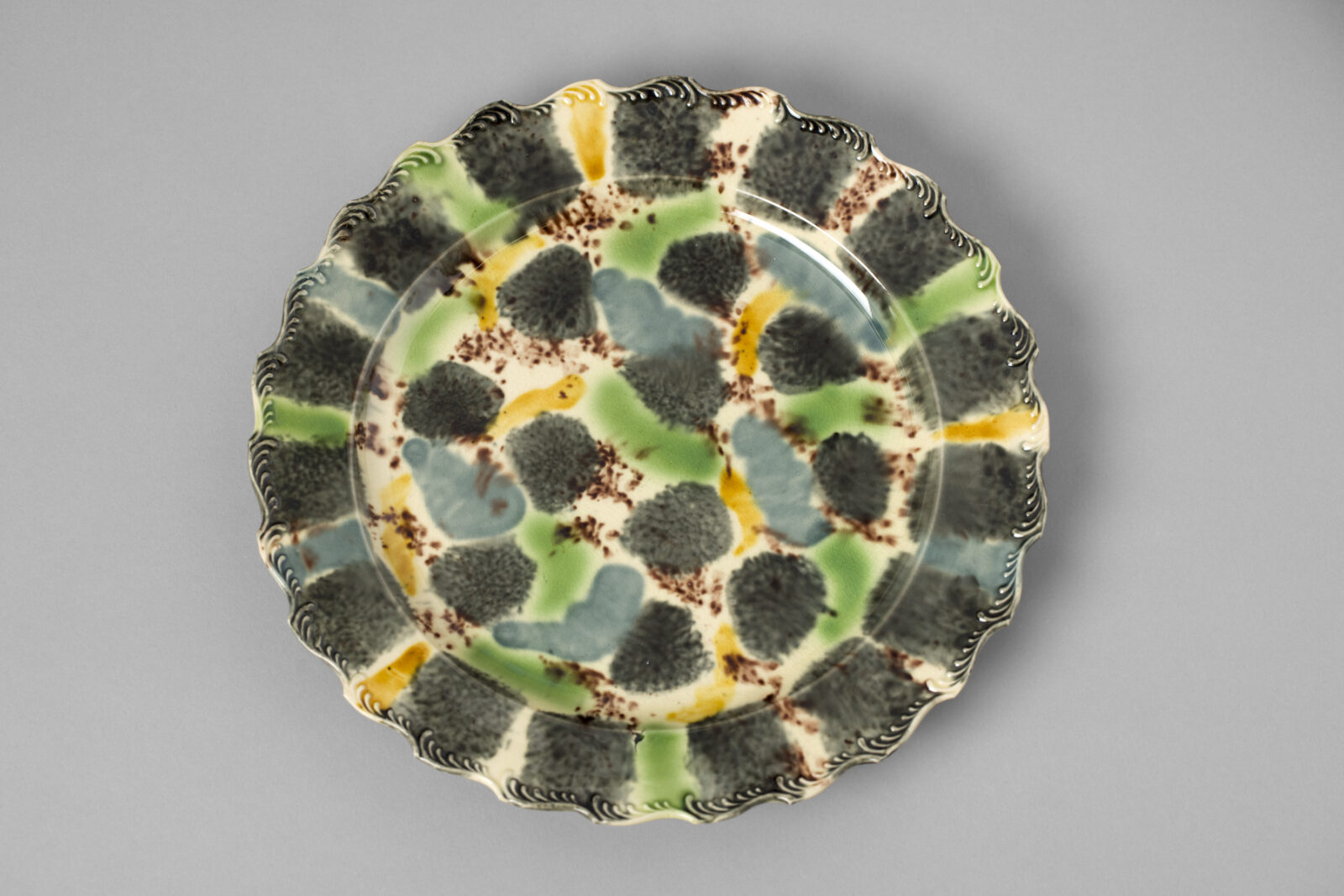
Plate, 1760–70; English; glazed earthenware; 7/8 x 9 3/4 inches; Saint Louis Art Museum, Gift of Mr. and Mrs. Roland E. Jester 113:1962
Tortoiseshell plate
This 18th-century glazed earthenware plate’s abstract design—with splotches of blue, black, ochre, green, and brown—lend it an unexpectedly modern air. Called Tortoiseshell ware, during firing, the sponged or painted on oxides flow together to produce a surface similar to the marbled colors of tortoiseshells.
It is currently on view in Gallery 136.