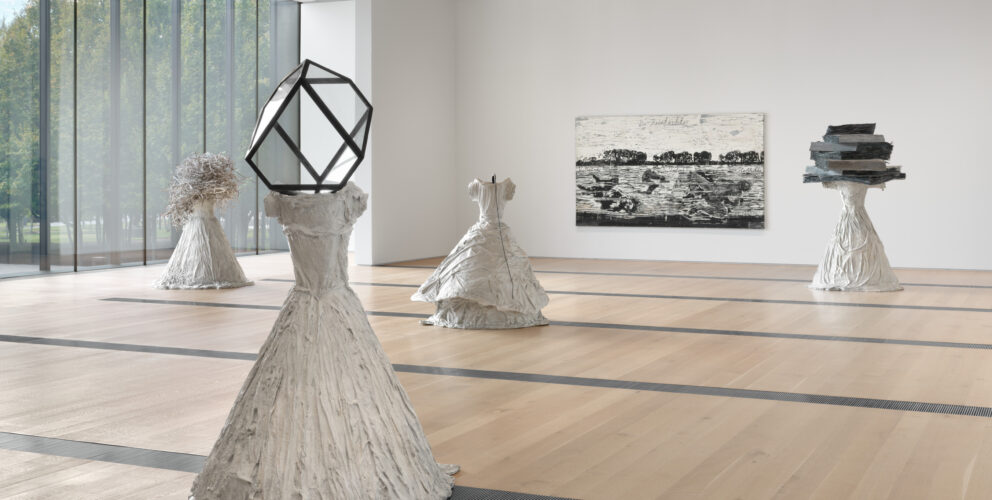
Installation view of Sculpture Hall in Anselm Kiefer: Becoming the Sea

The Saint Louis Art Museum is known internationally for its collection of 20th-century German art. This strength is thanks in large part to the Museum’s most-prolific benefactor, St. Louis businessman Morton D. May, who in the late 1940s began collecting the works of Max Beckmann and other German Expressionists. May bequeathed his substantial collection to the Museum upon his death in 1983.
Read more on that origin story in a previous blog post.
This strength in the Museum’s modern-art holdings has, in the years since, spurred Museum directors and curators to prioritize acquisitions of important contemporary German artists to offer a more complete view of German art history.
Cue Anselm Kiefer.
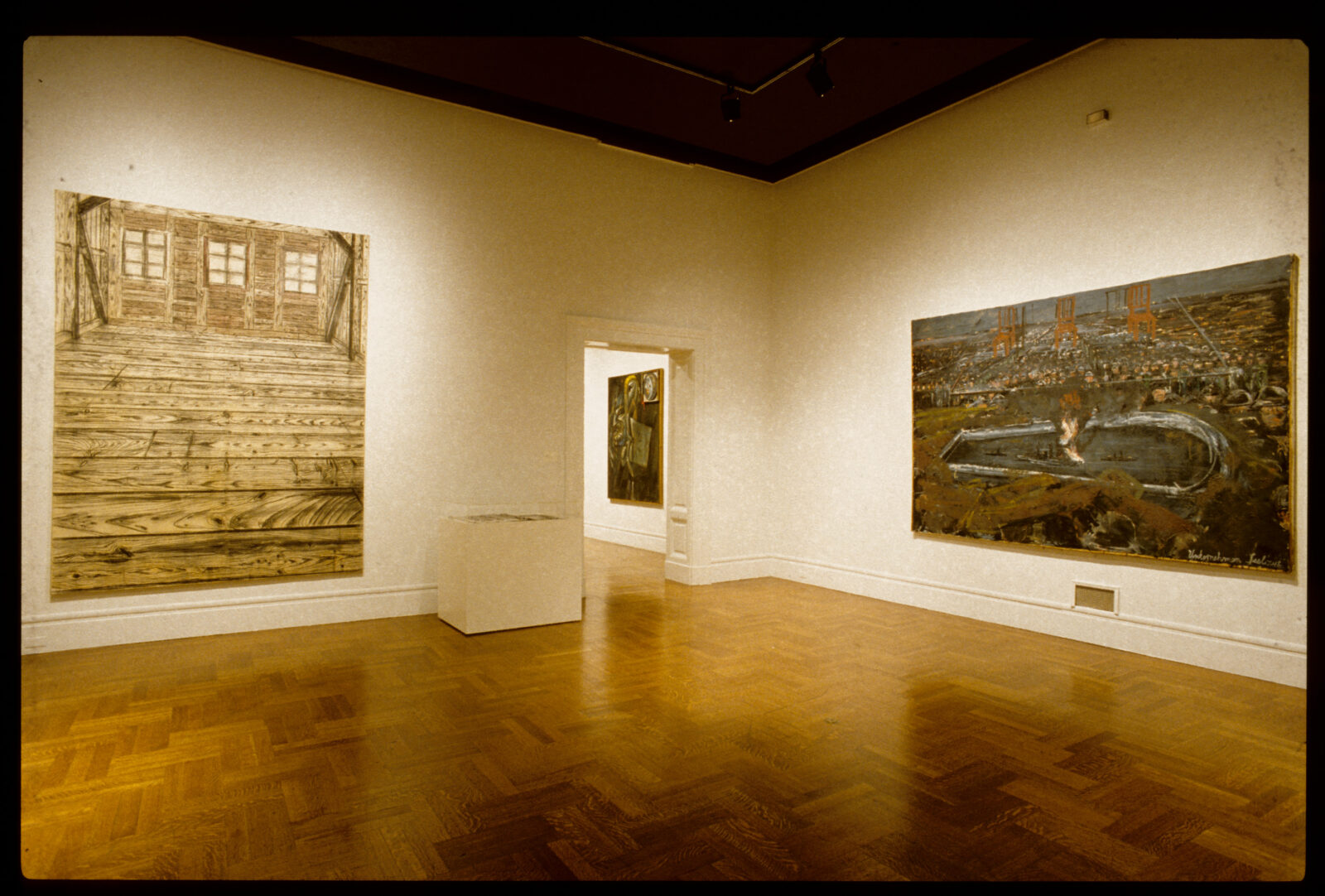
1983 installation view of Anselm Kiefer's work in Expressions: New Art from Germany
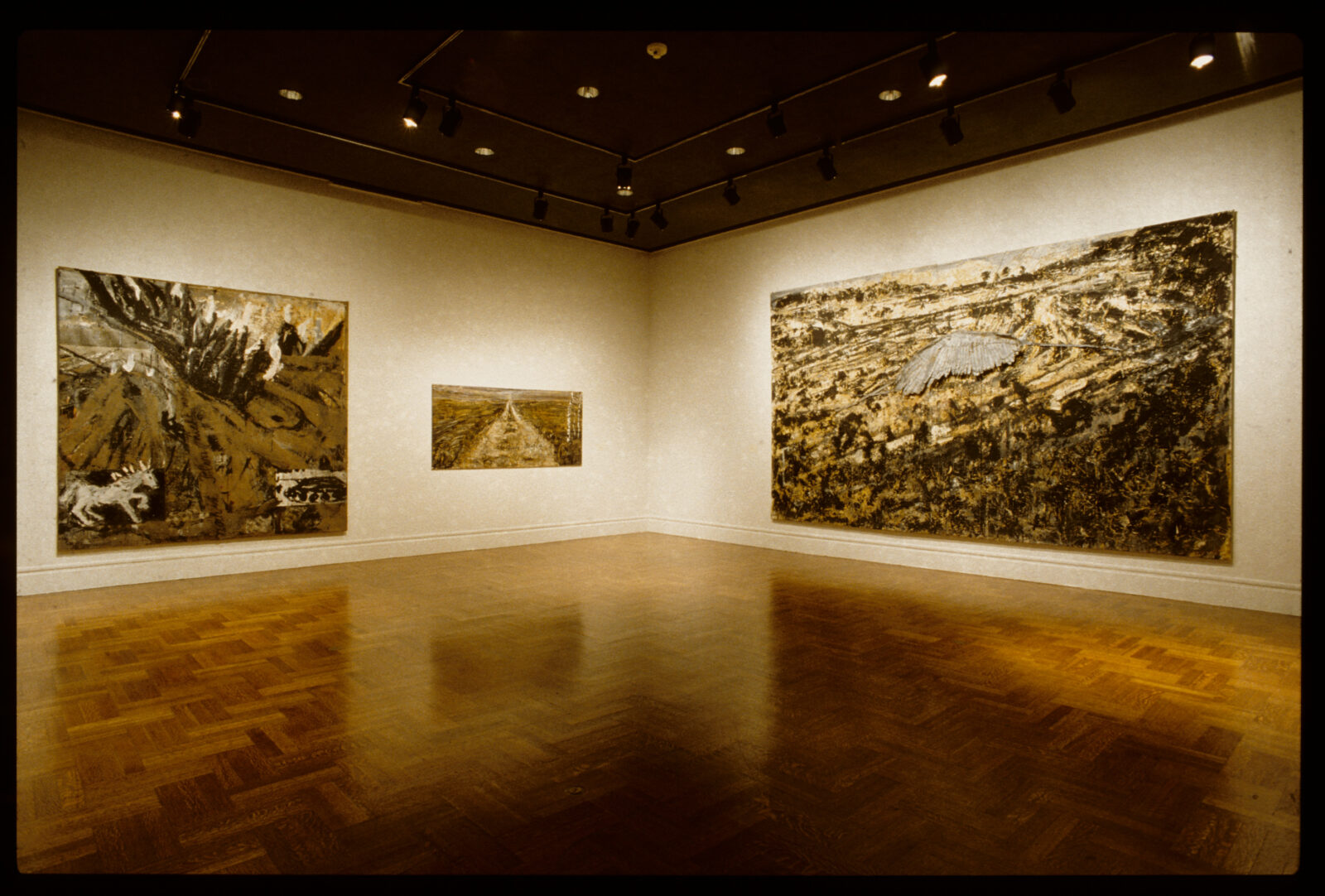
1983 installation view of Anselm Kiefer's work in Expressions: New Art from Germany
The subject of the Museum’s 2025 landmark exhibition, Anselm Kiefer: Becoming the Sea, the German artist began his relationship with SLAM in 1983, when the Museum organized Expressions: New Art from Germany, a traveling show that introduced American audiences to Neo-Expressionism and included works by Kiefer. The exhibition traveled to seven museums across the country after debuting in St. Louis.
Before Expressions, Kiefer—whose first mature body of work was produced in the 1960s—was not a well-known name in American museums. The exhibition was able to bring far more attention to the movement’s key figures, including Jörg Immendorff, Georg Baselitz, Markus Lüpertz, A. R. Penck, and of course, Kiefer. Each artist was represented by a dozen or so works spanning their career and major mediums. Kiefer’s section included 12 paintings, 3 artist books, 2 overpainted photographs, and 1 woodcut. The exhibition was widely reviewed in both the art and mainstream press.
For Kiefer, Expressions marked a turning point: Over the next several years, he became a national figure with works in museums across the country. In 1985, he was awarded the Carnegie Prize, and in 1987, he had his first solo exhibition in a US museum, organized by the Art Institute of Chicago and the Philadelphia Art Museum. That same year, SLAM acquired its first Kiefer work, Brennstäbe (Fuel Rods), an 18-foot-wide, vast, charred landscape created from paint, lead, copper, and straw. A fixture of the Museum’s contemporary collection, Brennstäbe is also on view in Becoming the Sea.

Anselm Kiefer at SLAM in 1991 installing Breaking of the Vessels
The Museum’s second Kiefer work, Bruch der Gefäße (Breaking of the Vessels), was acquired in 1991. The sculpture stands 27 feet tall and features a bookcase filled with lead books and panes of broken glass. Kiefer came to St. Louis to oversee the installation of this complex piece. During his visit, he traveled up the Mississippi River in a small boat through a newly constructed lock-and-dam complex in Alton, Illinois. The memory of this experience was rekindled more than 30 years later, when Min Jung Kim, the Museum’s Barbara B. Taylor Director, approached the artist, now 80, about the prospect of a solo exhibition in St. Louis. Kim said that Kiefer was enthusiastic about the idea from the beginning, and they worked together to plan Becoming the Sea, which is Kiefer’s first major American exhibition in more than 20 years.
Kiefer came to SLAM in late 2023 to discuss the exhibition, and according to Kim, he immediately began imagining new paintings for Sculpture Hall that recalled his 1991 trip to the confluence of the Missouri and Mississippi Rivers.
Read more on Kiefer’s interest in bodies of water in a previous blog post.
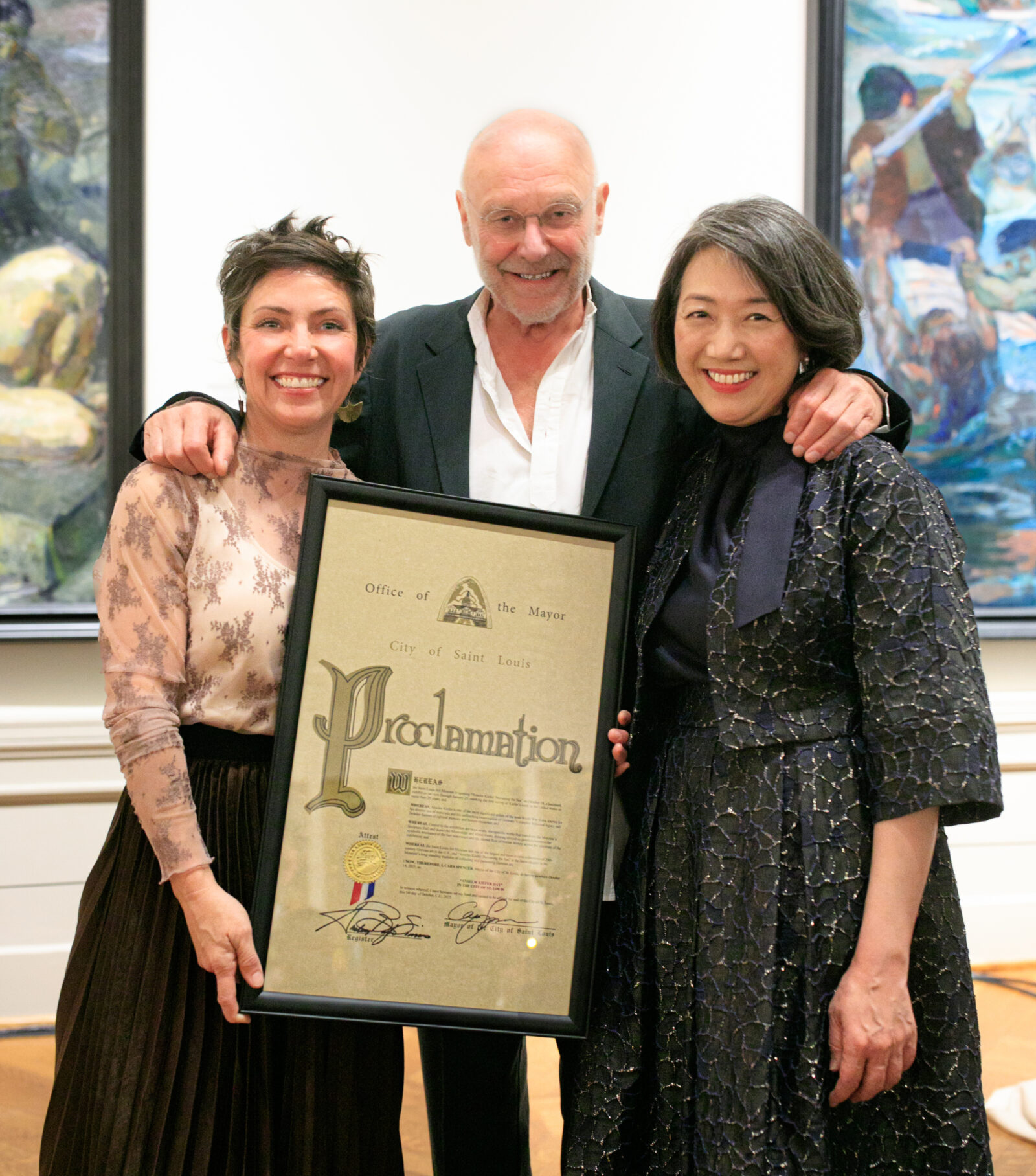
From left, St. Louis Mayor Cara Spencer, Anselm Kiefer, and Min Jung Kim holding a proclamation naming October 14, 2025, as Anselm Kiefer Day in the city

Anselm Kiefer and Min Jung Kim in 2025 at the Saint Louis Art Museum
The Sculpture Hall installation features five monumental canvases—two of which are inspired by the Mississippi River—that respond to the architecture of the Museum’s Cass Gilbert–designed main hall. Together they create an immersive experience, transforming the iconic space and offering new insight into Kiefer’s understanding of place, history, and memory.
According to Kim, St. Louis—with its unique location at the confluence of two large rivers and the Museum’s historic, Beaux arts–style building—is at the heart of this once-in-a-lifetime exhibition that extends the Museum’s longstanding commitment to celebrating German art.