Oscar Edward Berninghaus, American, 1874–1952; Fremont, the Pathfinder (detail), 1912; oil on canvas; 22 1/2 x 44 1/2 inches; Saint Louis Art Museum, Gift of August A. Busch Jr. 268:1977
Oscar Edward Berninghaus is one of dozens of artists with ties to the St. Louis region who are represented in SLAM’s global collection. A painter and illustrator, Berninghaus developed his artistic skill in his hometown of St. Louis before spending the later part of his life in the American Southwest where he helped form an important society of American artists. There are six Berninghaus works in SLAM’s collection, showcasing the artist’s love for capturing various American landscapes.
Berninghaus was born into a family of lithographers in 1874. He developed a fascination with art, fostered by the family business. He quit school at the age of 16 to develop his watercolor and sketching skills, selling art to tourists and local newspapers. Soon, the artist took up work as a professional lithographer while simultaneously taking night courses at the St. Louis School of Fine Arts at Washington University, which was originally called the Saint Louis School and Museum of Fine Arts. The school and museum separated in 1909, with the art transferred to the organization that would become the Saint Louis Art Museum; the school remained operational and is now known as the Sam Fox School of Design & Visual Arts at Washington University in St. Louis.
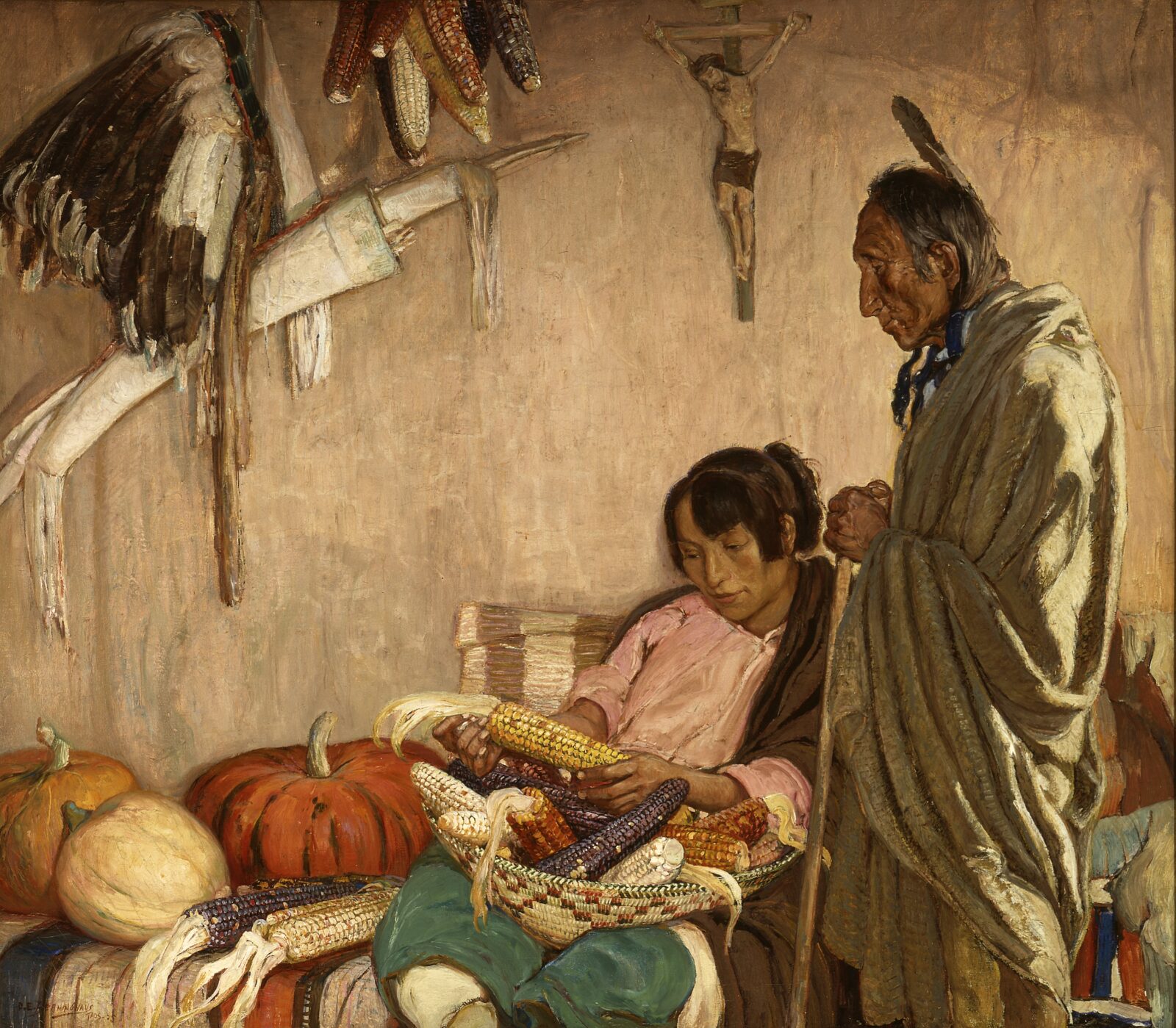
Oscar Edward Berninghaus, American, 1874–1952; Peace and Plenty, 1925; oil on canvas; 35 x 39 1/2 inches; Saint Louis Art Museum, Museum Purchase 6:1927
Berninghaus continued to develop his lithography skills and his reputation as an artist in the city. As a result, he received a significant commission from the Denver and Rio Grande Railroad in 1899 to sketch the landscapes of New Mexico and Colorado as seen by the railroad. He travelled west, where he refined his skill depicting landscapes. During this time, he fell in love with the scenery and community of Taos, New Mexico, where he would go on to spend summers; in the winter, he would return to his home in St. Louis.
Berninghaus continued to work as a commercial artist while maintaining his connection to New Mexico. He painted the warm and arid landscapes from memory with uncanny accuracy. He also painted the familiar landscapes of St. Louis, including the busy Mississippi River to the east.
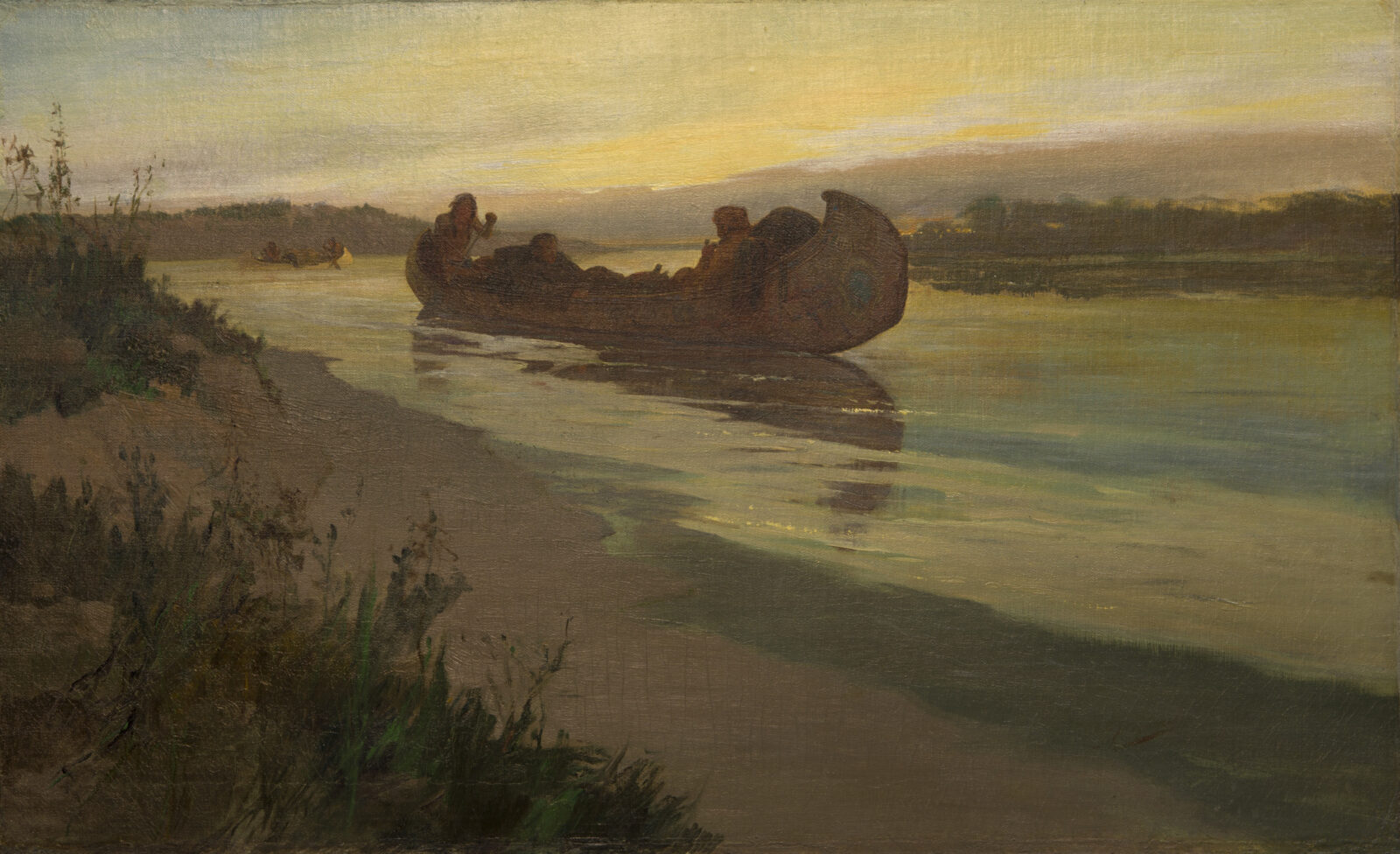
Oscar Edward Berninghaus, American, 1874–1952; Marquette and Joliet on the Mississippi, 1907; oil on canvas; 22 x 36 inches; Saint Louis Art Museum, Gift of August A. Busch Jr. 151:1976
Shown above, this landscape painting is an imagined depiction of French explorers. Father Jacques Marquette and Louis Joliet recline in a canoe paddled by a Native American man on their 1673 voyage charting the Mississippi River. Completed in 1907, the painting achieved one of his most significant professional breakthroughs: It won first prize in the annual exhibition of St. Louis artists at Noonan-Kocian Gallery and was soon purchased by August A. Busch Jr., grandson of the Anheuser-Busch founder.
In July of 1915, while summering out west, Berninghaus became a founding member of the Taos Society of Artists. This society’s proposed mission was “to promote the showing and sale of their work,” successfully marketing themselves to travelling exhibitions.
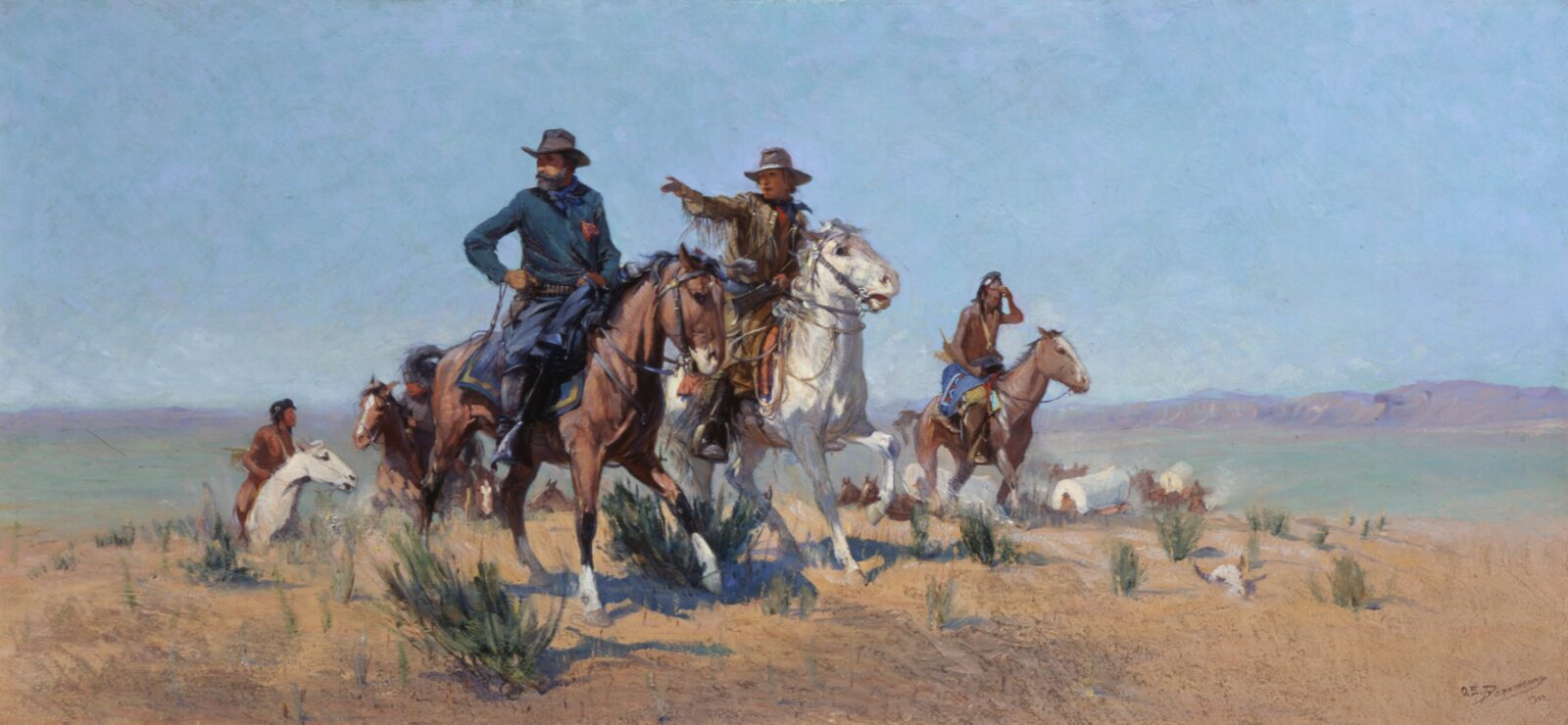
Oscar Edward Berninghaus, American, 1874–1952; Fremont, the Pathfinder, 1912; oil on canvas; 22 1/2 x 44 1/2 inches; Saint Louis Art Museum, Gift of August A. Busch Jr. 268:1977
Berninghaus would permanently move to Taos in 1925. There, he continued to paint, sell his works, and collaborate with other artists who lived and worked in the region. While the society disbanded in 1927 after ten years, it turned Taos into a desirable destination for other artists. Over the next decade, a wave of painters flocked to the city. This new generation of artists ushered in aspects of modernism and cubism. According to the Taos Museum’s website, “artists enjoyed painting the Picuris Mountains to the south, patterns created by strip farming, and adobe houses seemingly growing out of the terra firma (dry land).” Today, Taos is estimated to be the city with the most artists per capita in the world.
Berninghaus spent 27 years living in Taos full time. He died in 1952 with a well-regarded and diverse body of work.
Berninghaus was featured in the 2021 SLAM exhibition Art Along the Rivers: A Bicentennial Celebration, which explored the artwork produced and collected over 1,000 years in the region surrounding St. Louis.