The Saint Louis Art Museum opened its East Building on June 29, 2013. In honor of the landmark expansion’s 10th anniversary, here are 10 facts about the project.
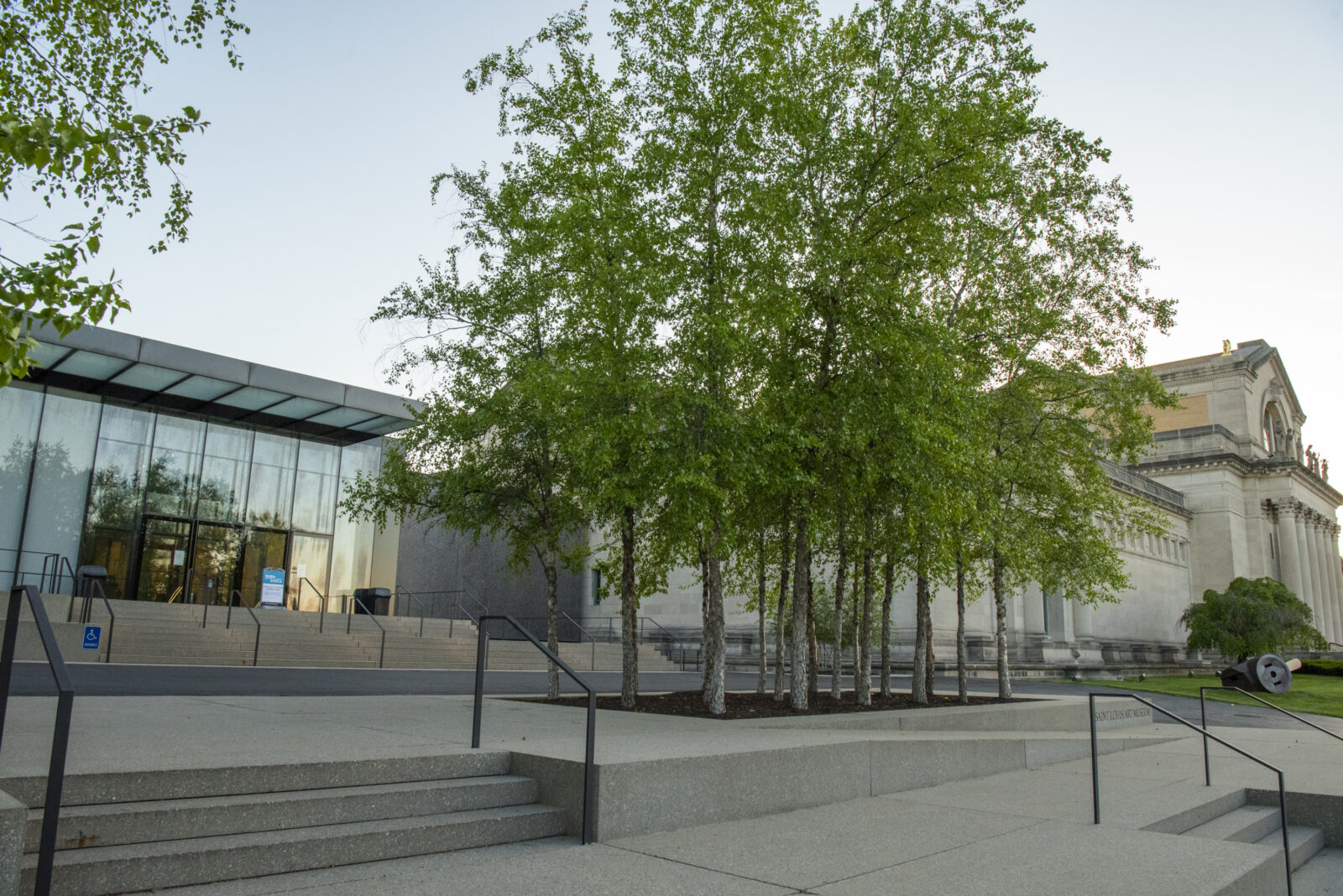
1. The architect
Working in collaboration with St. Louis–based HOK, Sir David Chipperfield designed the East Building. Earlier this year, the British architect was awarded the Pritzker Architecture Prize, one of the profession’s highest honors and an award that is often called “the Nobel Prize of architecture.” Chipperfield is known primarily for his cultural projects like the Museum’s expansion, and other noteworthy projects include the Museo Jumex in Mexico City and the restoration and reconstruction of the Neues Museum in Berlin. The Pritzker Prize jury lauded Chipperfield for his minimalist designs that balance history and modern aesthetics.
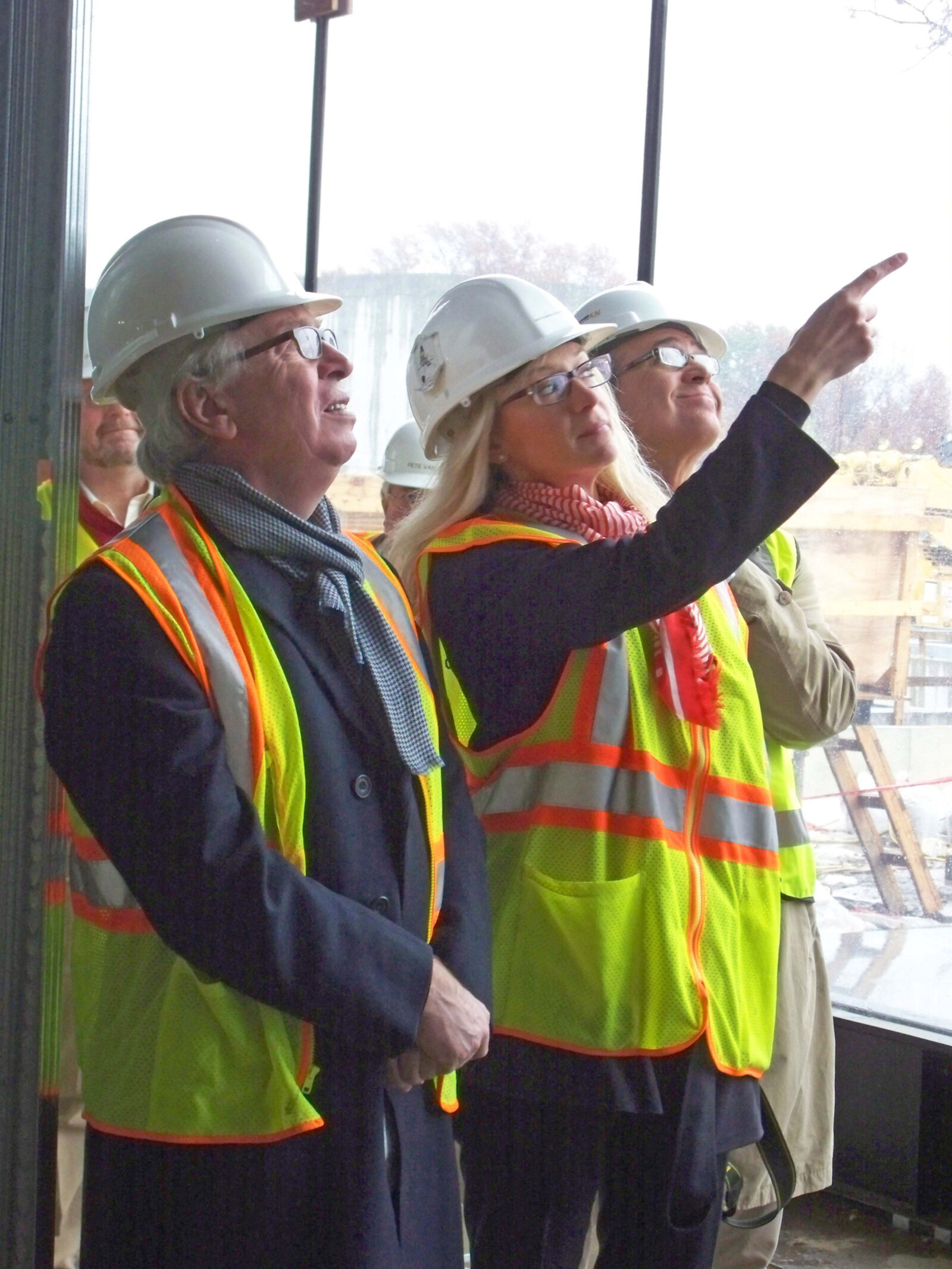
From left: Sir David Chipperfield; project architect Julie Bauer; and Brent R. Benjamin, who retired as SLAM's Barbara B. Taylor Director in 2021
2. The financing
The expansion was funded by private dollars. With fundraising commitments of more than $160 million, it was the largest capital campaign for a cultural institution in the history of St. Louis at the time. The Museum made its final payment of $9.6 million on debt related to the project in February 2019, more than 30 years ahead of schedule.
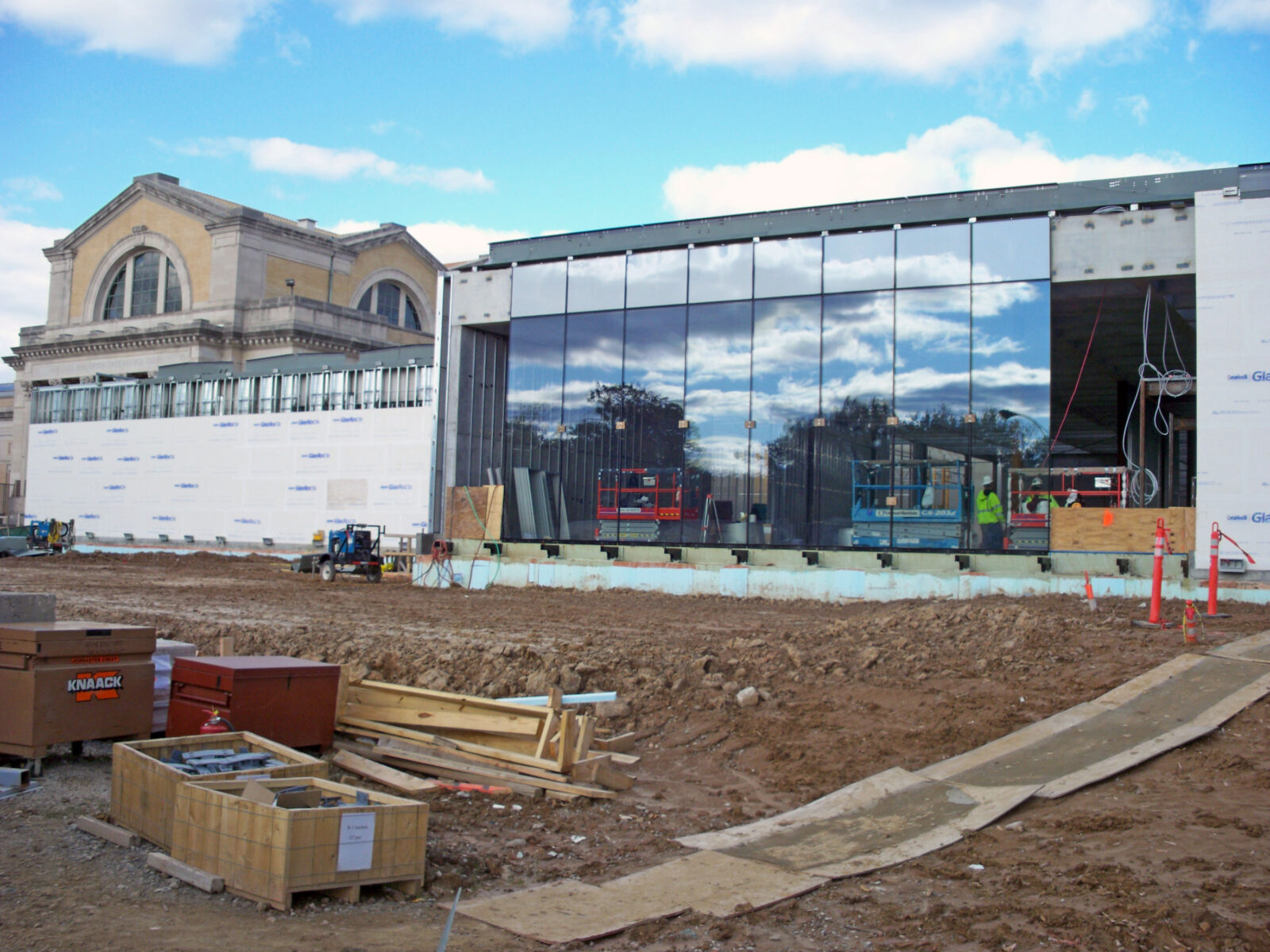
View of the East Building expansion project from the south in 2011
3. THE DESIGN
The East Building was designed to be the modern counterpart to the Museum’s iconic Main Building, which was designed by Cass Gilbert for the 1904 World’s Fair. For Chipperfield, it was important to respect the historic building’s prominence as a focal point of Forest Park. As a result, the East Building “presents itself as a single-storey pavilion that steps out and back in four directions, keeping its visual impact to a minimum,” his firm says on its website. The expansion also added 21 galleries—increasing the Museum’s total gallery space by approximately 30 percent—along with a 300-car garage, a 100-seat restaurant, and a 60-seat cafe. The expansion facade is formed with 23 large concrete panels composed of a dyed-concrete mix of Missouri and Wisconsin river aggregates. Inside, visitors will see six-inch, solid white oak flooring; 668 rectangular ceiling coffers with 7,500 square feet of skylight glass; and three floor-to-ceiling window galleries spanning each exterior-facing side of the expansion.
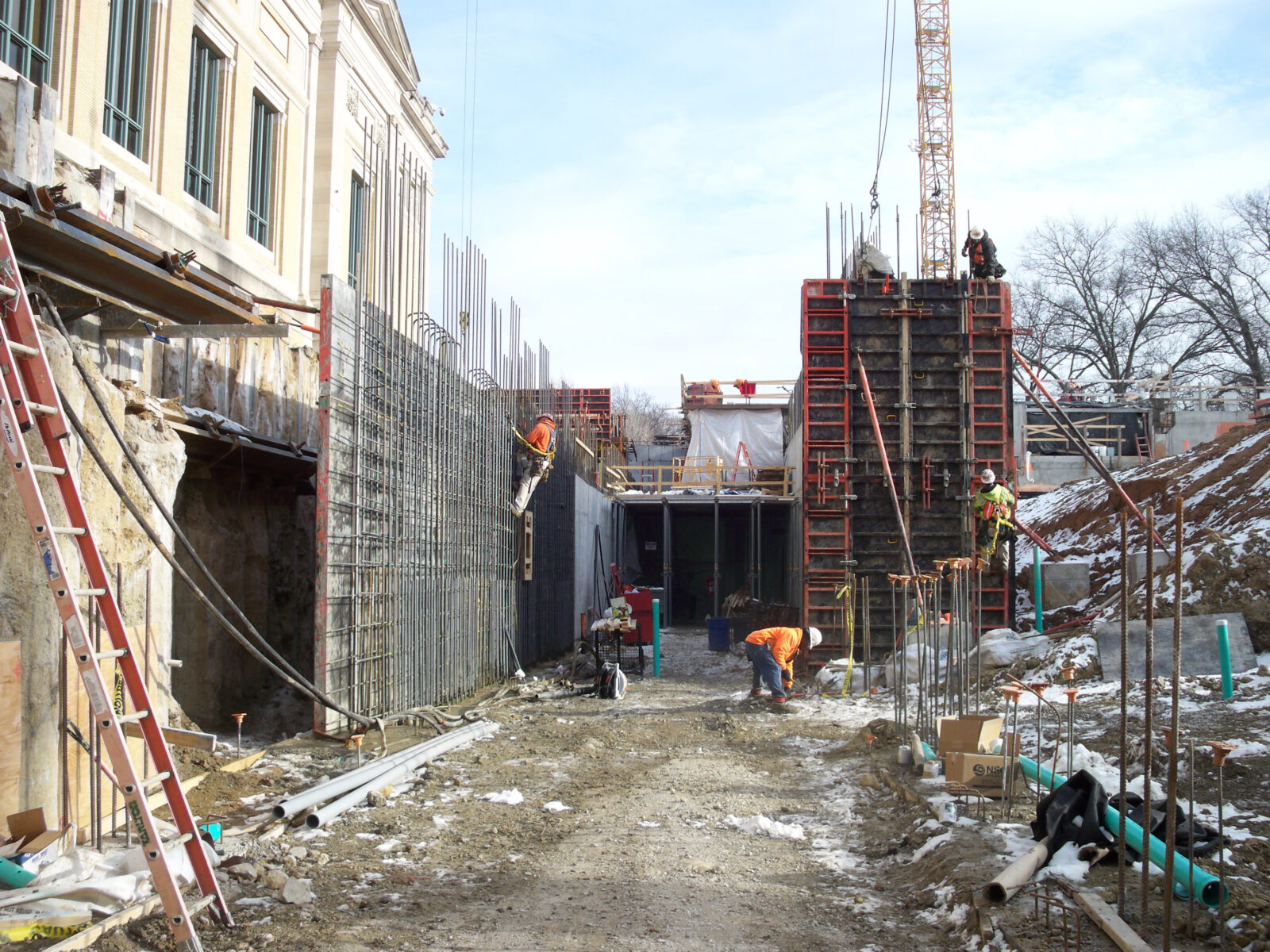
View of excavation and construction work for the expansion project looking east toward the parking garage from the south entrance
4. THE CONSTRUCTION
Construction of the East Building took two years. Excavation was 35 feet deep—just 5 feet from the existing structure—and 10,500 dump-truck loads of soil were hauled away with 9,000 cubic yards of bedrock, equivalent to the weight of 10,000 medium-size cars. The work required nearly 17,000 cubic yards of concrete (enough to fill six Olympic-size swimming pools) and 600,000 feet of power wiring (enough to string out and make it to the Arch and back nine times).

An East Building gallery near the end of construction
5. THE TECHNOLOGY
The East Building features smart technology. The lighting system uses photocells on the roof along with detailed software to help ensure the correct amount of light is reflected onto the works of art. The window shades use the same technology to automatically open or close based on lighting conditions, even when the Museum is closed. Building sensors automatically adjust humidity and temperature levels from floor grates that are positioned so the direct flow of air does not affect the art.
6. THE TUNNEL
A 376-foot-long service corridor runs the length of the building under the concourse, allowing for a 10-by-10-foot passageway for transporting works of art. One of the larger objects to move through the tunnel was a 1954 Corvette featured in the 2015 exhibition St. Louis Modern. The tunnel also connected the entire campus with a new boiler room and houses HVAC and other mechanical requirements.
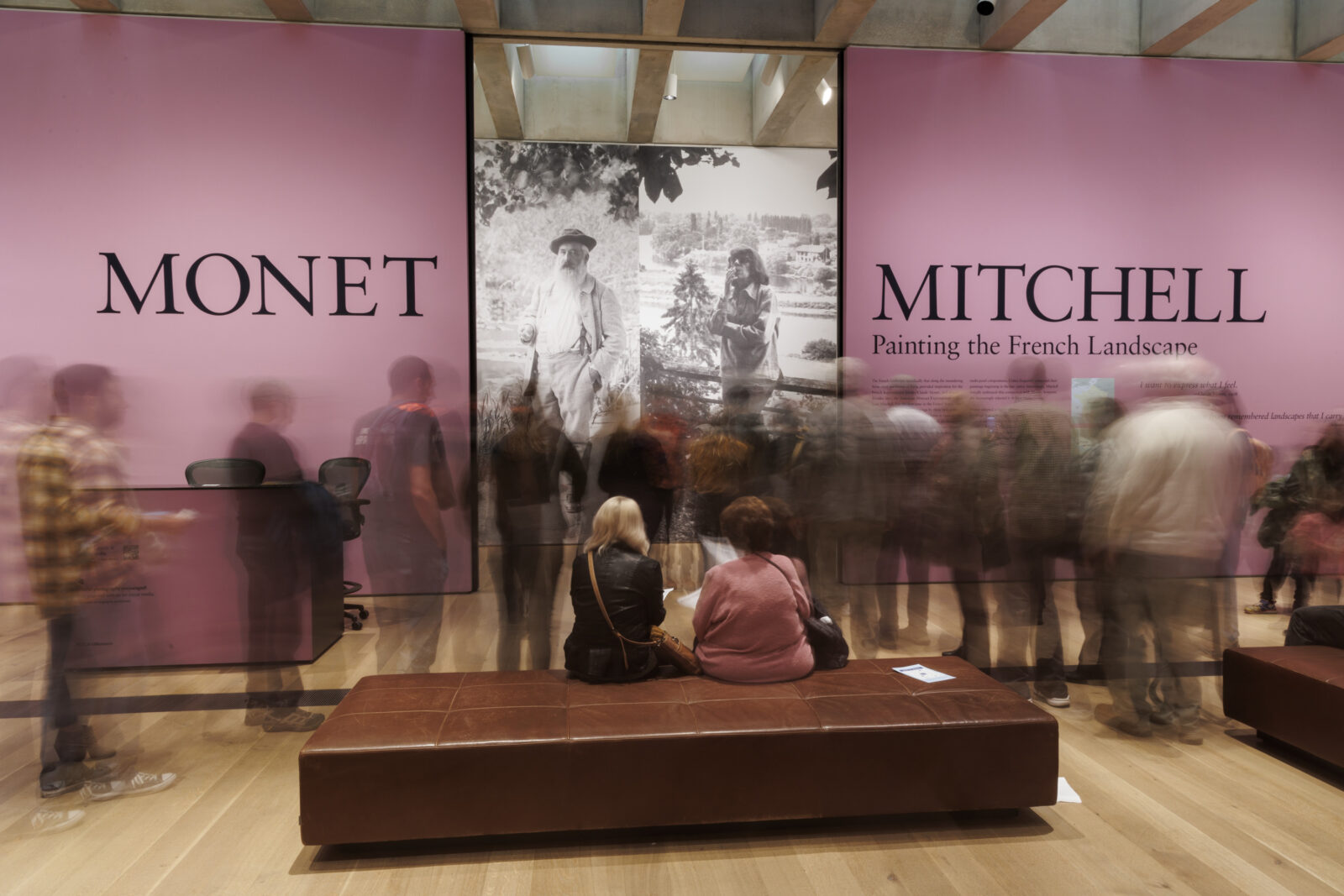
The ticketed exhibition entrance in the East Building
7. THE EXHIBITIONS
There have been 24 ticketed exhibitions in the East Building in the last decade, most recently Monet/Mitchell: Painting the French Landscape, which closed June 25. More than 900,000 visitors have seen ticketed exhibitions in the 10-year-old space.

Ancient art in the East Building’s Andrew C. and Barbara B. Taylor Gallery 259
8. THE COLLECTION
Most of the newest works in the Museum collection are on display in the East Building’s contemporary galleries, including works from 2020 by Elias Sime and Eddie Martinez. However, some of the oldest art at SLAM can be found in the East Building’s Andrew C. and Barbara B. Taylor Gallery 259, which presents ancient art, including Greek and Roman figures dating back to the first century. An adjacent antiquities gallery, which connects the Main Building to the East Building, is named after Brent R. Benjamin, the retired SLAM director who oversaw the capital campaign and construction.
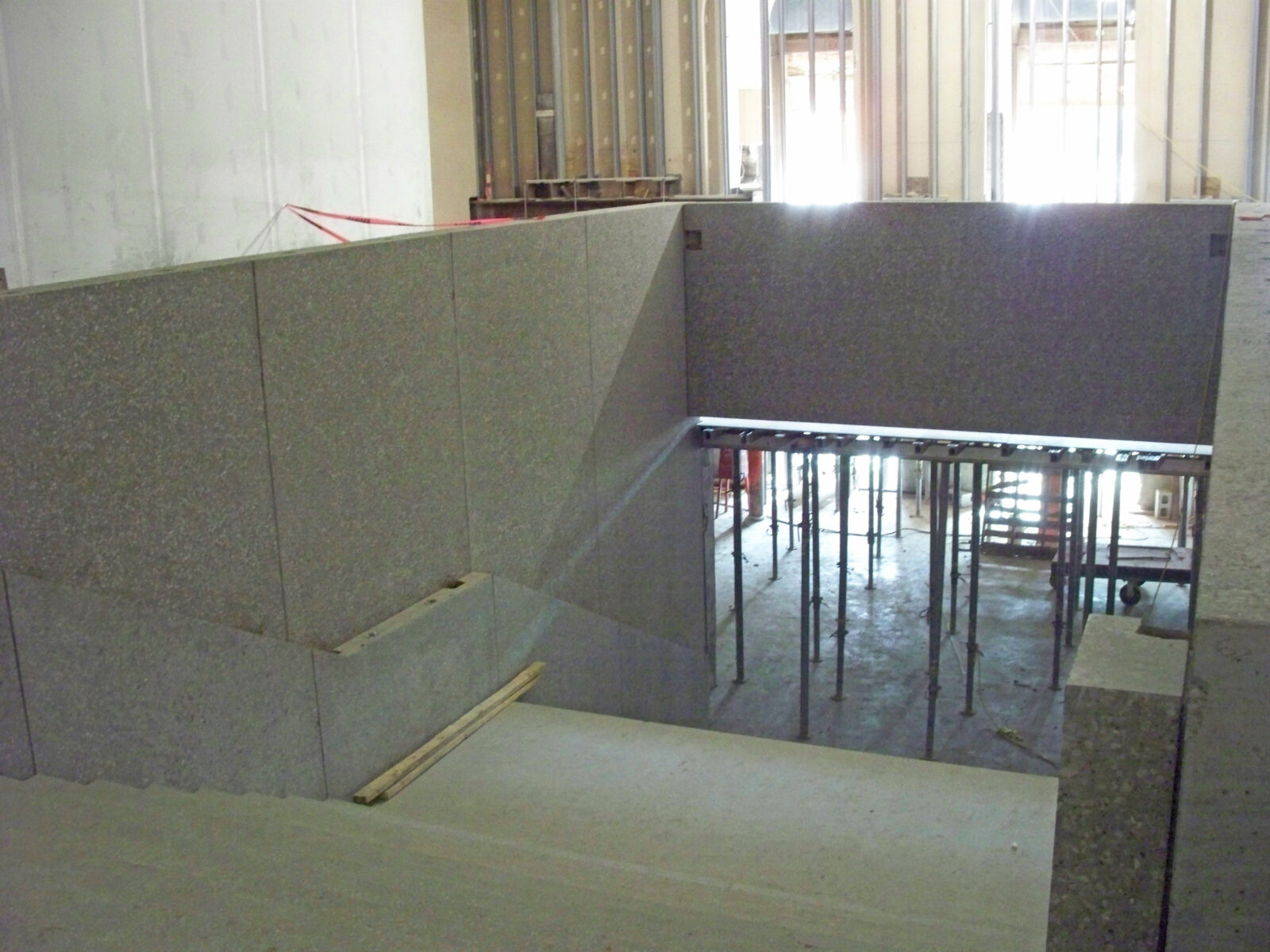
Construction of the grand staircase in Sculpture Hall as part of the East Building expansion
9. THE RENOVATIONS
Construction of the East Building allowed the Museum to repurpose its existing space to connect the new and old spaces. Portions of Sculpture Hall were removed to make way for the new Grand Stair that leads to three galleries on Level 1 that were constructed and integrated into the Main Building, giving visitors access to the new Cafe, renovated Museum Shop, underground parking garage, and upgraded 480-seat auditorium. The expansion also allowed the Museum to repurpose its educational infrastructure, including three new classrooms, a study space for works of art, and the dedicated school group entrance. A new dock entrance was also built to allow works of art from museums and collectors around the world to arrive at SLAM in a secure and enclosed space.
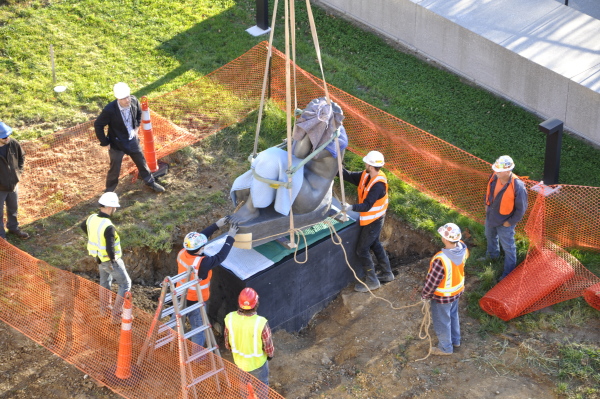
Placement of objects in the Grace Taylor Broughton Sculpture Garden in 2014
10. THE GARDEN
The Museum marked the second anniversary of the East Building in 2015 with the completion of the Grace Taylor Broughton Sculpture Garden, the culmination of the campus expansion. The garden, created by landscape designer Michel Desvigne, showcases the Museum’s international collection of modern and contemporary sculpture in a landscape design that connects the campus with its Forest Park setting.