City Art Museum dining room, September 1955. Museum archives
“Time Capsule” is a 1 Fine Arts Blog series drawing on the rich history of the Saint Louis Art Museum as documented through its institutional records. Established in 1976, the Museum Archives preserve and provide access to historic records chronicling spaces, events, exhibitions, and other activities. Materials from the Archives are open to the public by appointment in the Richardson Memorial Library’s reading room.
From tea and sandwiches served in a basement corner to a modern air-conditioned restaurant, the Museum’s dining facilities evolved alongside the institution itself. In October 1925, the Museum opened a modest tearoom in the southwest corner of the Main Building’s basement, offering visitors a convenient place to pause for refreshments during their visit. Initially open from noon to 2 pm, the tearoom served pastries, sandwiches, and hot beverages. Despite its small size, it quickly became a popular destination. Its success reflected a broader national trend, as tearooms proliferated in art museums, department stores, and other public spaces during the early 20th century.
Local clubs and organizations, particularly women’s clubs and civic groups, became important patrons of the tearoom at SLAM. The space provided an accessible setting for meetings, luncheons, and social gatherings, making it a lively center of Museum activity. Mary Powell, the Museum’s first head of education from 1923–60, coordinated reservations for group events and activities held in the space.
The tearoom’s popularity grew rapidly. During the 1926–27 operating year, it served 4,254 visitors, and attendance continued to climb throughout the decade. By the late 1920s, the original basement quarters could no longer comfortably accommodate the growing number of clubs and other patrons. What began as a modest visitor convenience evolved into a social destination in its own right.

Museum café, September 25, 1936. Museum archives
As part of extensive Museum renovations in 1930, the tearoom relocated to a larger, more-accessible space in the southeast corner of the basement, formerly occupied by staff offices. The new facility included an expanded kitchen, enabling a broader food service operation. When the cafe opened in November 1930, it accommodated up to 50 patrons and offered plate lunches from noon to 2 pm, and tea and sandwich service from 2 to 4:30 pm. Museum staff regularly gathered there for lunch, and the restaurant served approximately 50,000 meals annually.
The cafe balanced practicality with comfort. Wooden Windsor-style chairs and tables furnished the dining room, while framed prints added visual interest to the walls. Three large windows brought natural light into the basement space, and wall-mounted fans provided essential ventilation before the advent of central air conditioning. Together, these features created an inviting environment where visitors could rest, socialize, and enjoy a meal.
The physical relocation marked a significant turning point in the tearoom’s history. Expanded facilities, increased seating, and a broader menu transformed it from a simple refreshment room into the Museum’s restaurant, reflecting its growing importance as both a dining facility and social gathering place.

City Art Museum dining room, September 1955. Museum archives
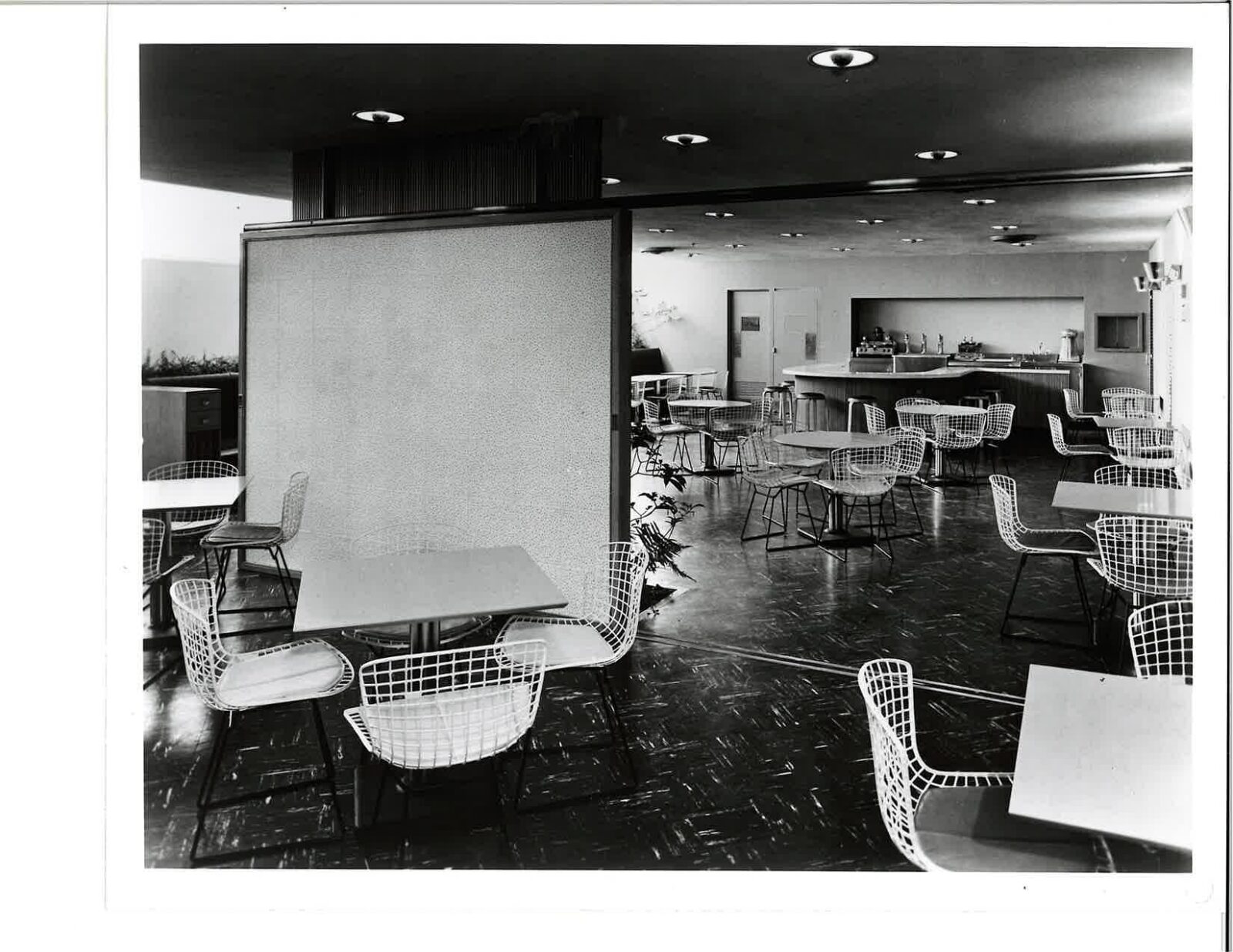
City Art Museum dining room, September 1955. Museum archives
In September 1955, the Museum unveiled a renovated kitchen and a new dining room at the south end of the basement floor, the first air-conditioned space in the building. Designed to seat 102 patrons, the restaurant featured a horseshoe-shaped soda fountain counter, Alto bar stools, and Harry Bertoia chairs. Plants and other natural elements softened the modern interior, while a sliding partition allowed a private dining area to be created when needed. The 1955 renovation marked the next chapter of the Museum’s dining experience. What began in 1925 as a modest tearoom in the basement had evolved into a modern restaurant with a fully equipped kitchen, expanded seating capacity, and contemporary amenities.
Stay tuned for Part II of this blog, which features dining options at SLAM after 1955.