Gothic Stairway (detail), early 16th century; French; oak; 36 feet 8 inches x 169 feet 9 1/2 inches x 91 inches; Saint Louis Art Museum, Museum Purchase 26:1931
A recent blog post highlighted the Museum’s West Grand Stair, a favorite spot for selfies. For more than 40 years, one of visitors’ most popular stops was a different staircase in a period room representing the interior of a 16th-century maison in Morlaix, a seaport town in Brittany. Even today, museumgoers ask about the room’s Gothic Stair, a monumental architectural element that went off view nearly 50 years ago.
Advanced experimentation in the late 12th century led to northern France’s first buildings in the Gothic style, an architectural style characterized by pointed arches, vaulted ceilings, elaborate decorative features, and external buttressing. The style spread throughout Western Europe. Although the history of medieval art is primarily the story of building churches, from the 13th century on, secular architecture, such as the house SLAM’s Gothic Court was based on, grew in importance.

Gothic Stairway, early 16th century; French; oak; 36 feet 8 inches x 169 feet 9 1/2 inches x 91 inches; Saint Louis Art Museum, Museum Purchase 26:1931
Gothic Stair is typical of the fine staircases of Morlaix during the 1500s. Because of Morlaix’s limited space, stone masons built houses four and five stories tall—creating a need for grand constructions like Gothic Stair, which spirals upward 36 feet.
Reminiscent of folded cloth, a linenfold pattern covers the flat panels of three branching balconies. A newel post—the stair’s central support beam—is carved from a single long piece of timber. Relief foliage decorates the length of the post: Starting from the bottom, the reliefs depict St. Barbara, St. Catherine, Mary, and Jesus.
-
Gothic Stairway (detail), early 16th century; French; oak; 36 feet 8 inches x 169 feet 9 1/2 inches x 91 inches; Saint Louis Art Museum, Museum Purchase 26:1931
-
Gothic Stairway (detail), early 16th century; French; oak; 36 feet 8 inches x 169 feet 9 1/2 inches x 91 inches; Saint Louis Art Museum, Museum Purchase 26:1931
-
Gothic Stairway (detail), early 16th century; French; oak; 36 feet 8 inches x 169 feet 9 1/2 inches x 91 inches; Saint Louis Art Museum, Museum Purchase 26:1931
-
Gothic Stairway, early 16th century; French; oak; 36 feet 8 inches x 169 feet 9 1/2 inches x 91 inches; Saint Louis Art Museum, Museum Purchase 26:1931
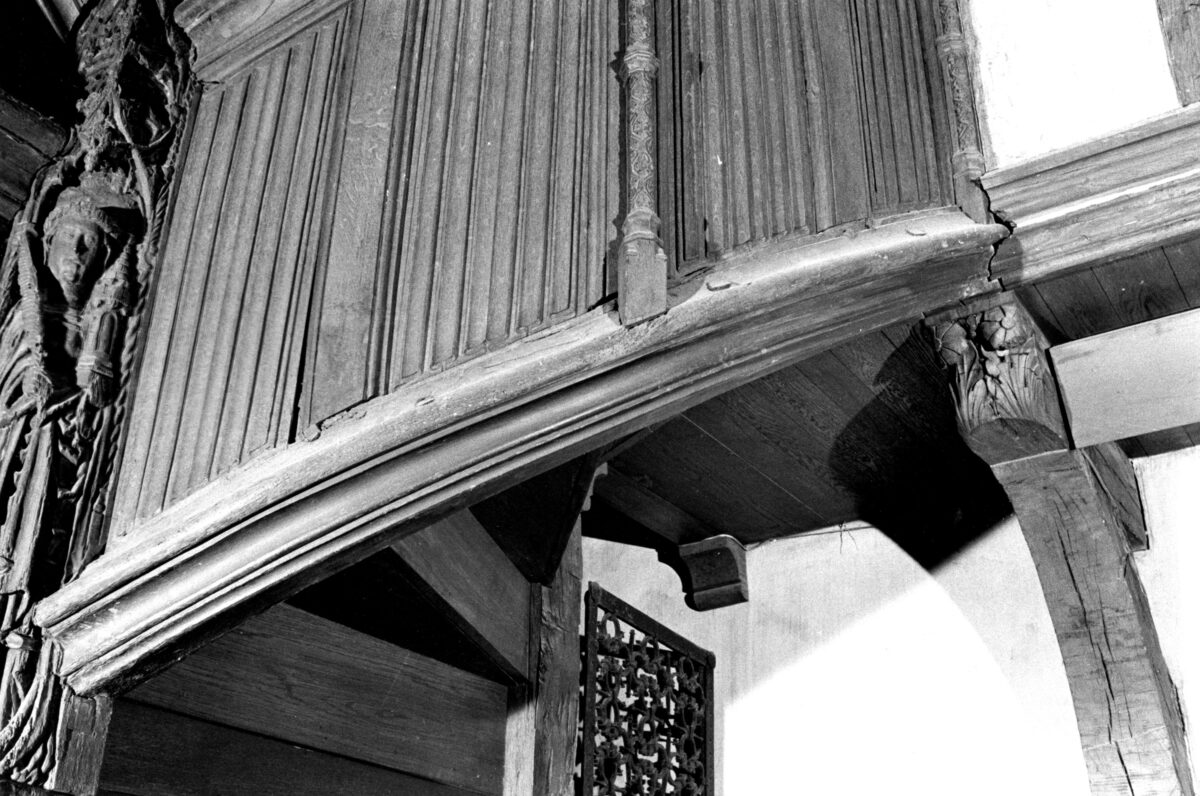
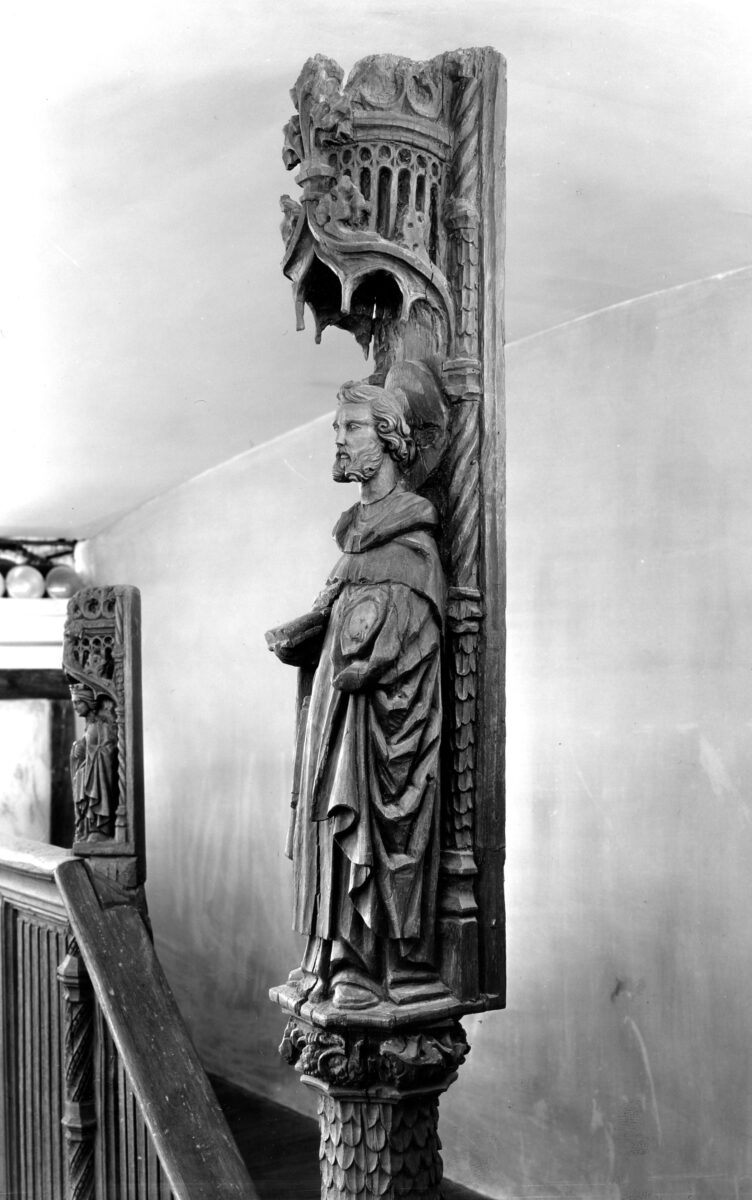
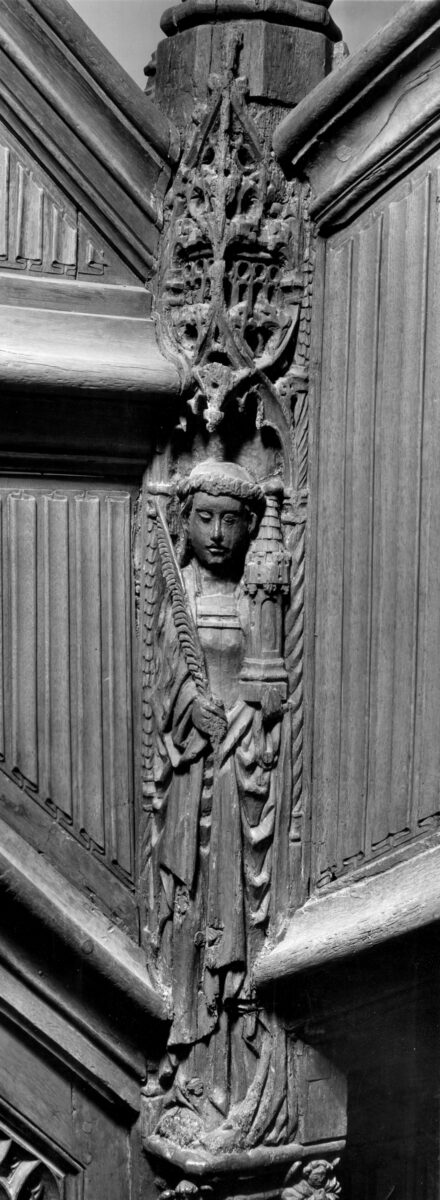
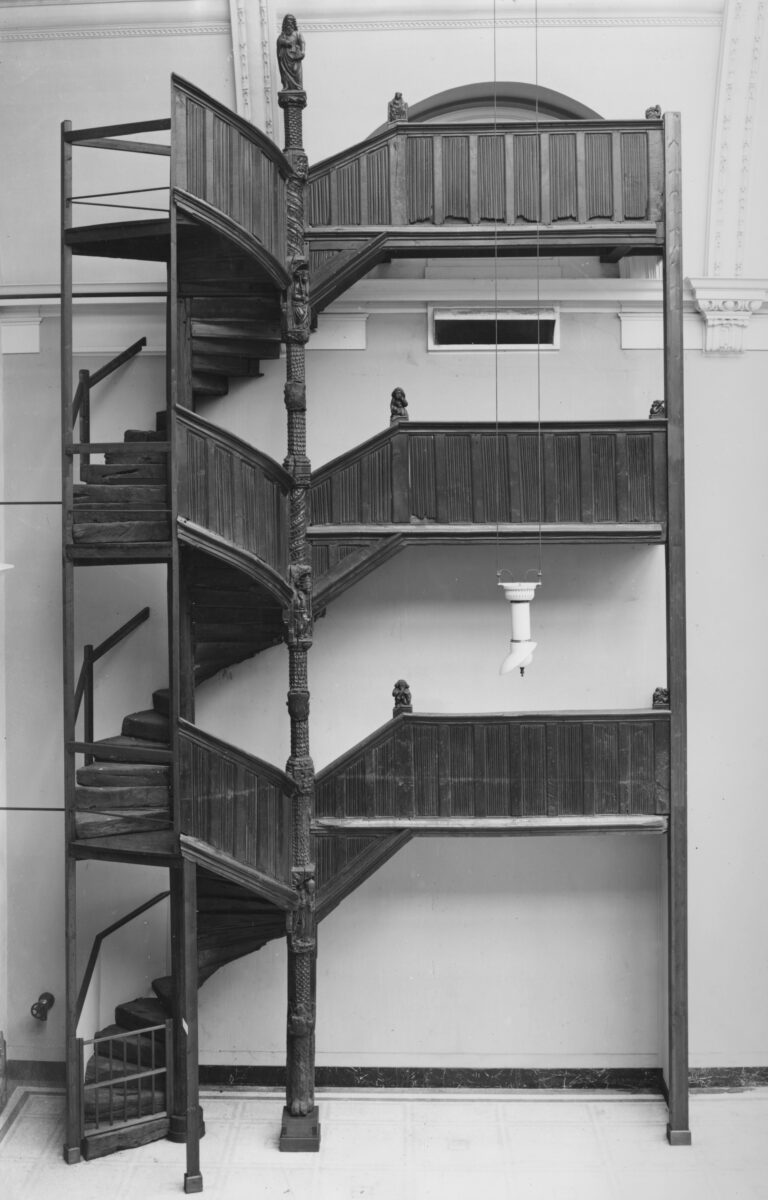
When the staircase arrived at SLAM in early 1931, it was meticulously rebuilt in a half-timber setting located just east of what is now Grigg Gallery. The Morlaix Gothic Court period room was opened to the public on a cold night in December of 1931 as a set for late medieval objects in the Museum’s collection, including Virgin and Child and Field Armor. During its time on view, the Morlaix Gothic Court additionally served as a backdrop for many Museum programs, like the Museum Shop’s Christmas Sale in the 1950s. Girl Scout troops used to sing Christmas carols in the space.
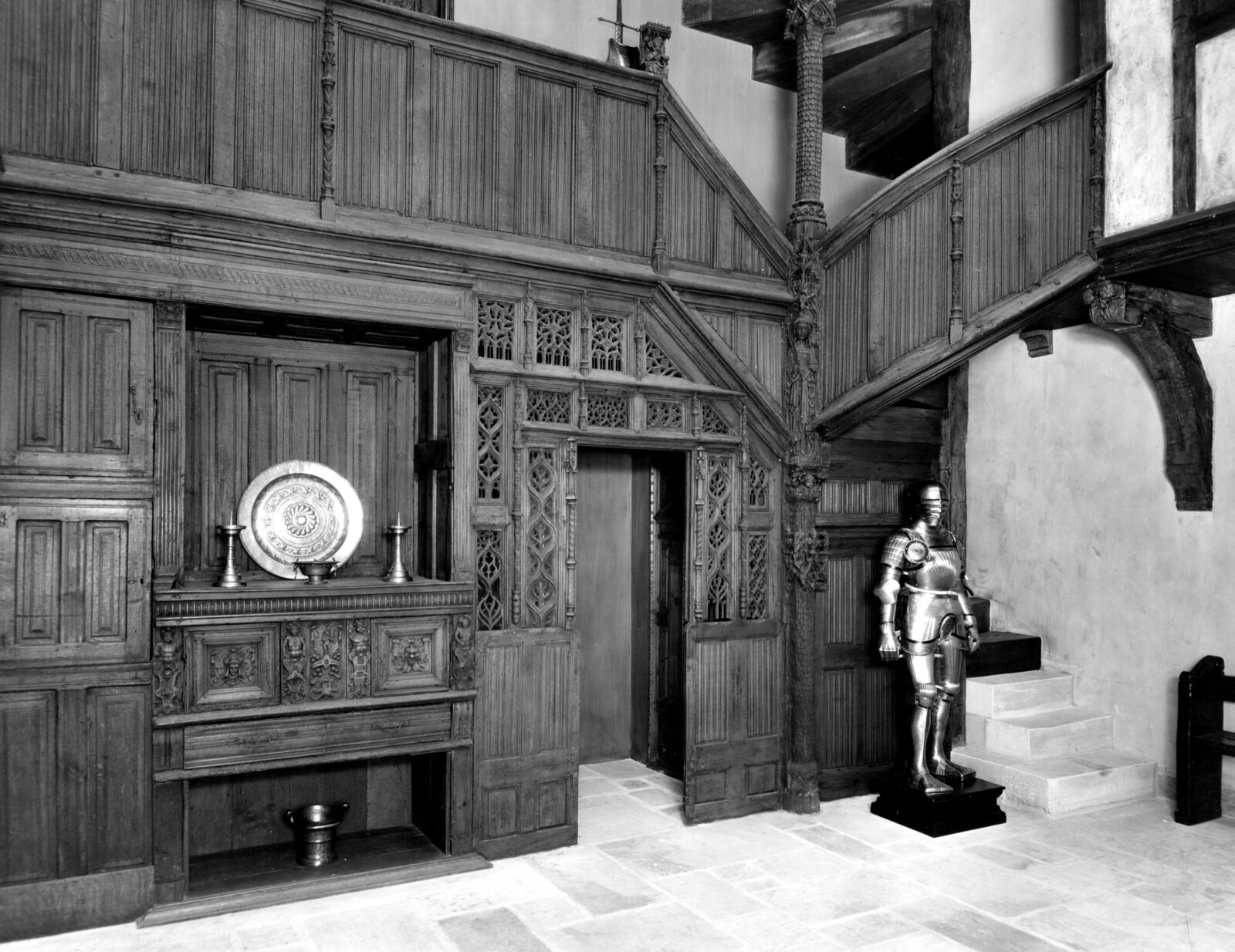
Gothic Stairway (detail), early 16th century; French; oak; 36 feet 8 inches x 169 feet 9 1/2 inches x 91 inches; Saint Louis Art Museum, Museum Purchase 26:1931
Few historic timber-framed houses remain in Morlaix. The house that once was home to Gothic Stair—called Maison Pouligen—is one of five authentic houses still standing in the area. It is owned by architect Christian Faliu.
During campus-wide renovations in 1975, the period room, along with the Gothic Stair, was carefully dismantled and moved into art storage, where it remains today.