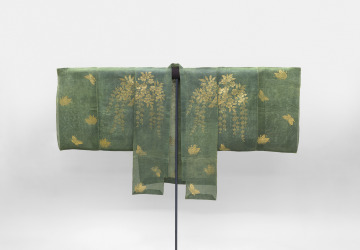
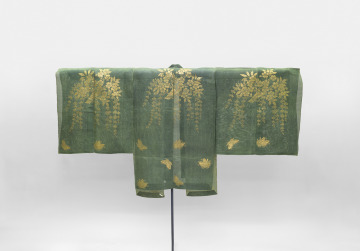
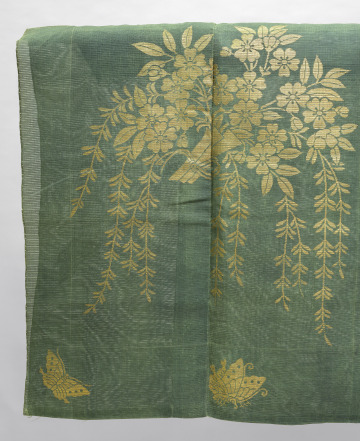
Nō Costume (chōken) with Design of Butterflies and Weeping Cherries

Culture
Japanese
Date
18th century
made in
Japan, Asia
Collection
Asian Art
Current Location
Not on view
Dimensions
43 1/4 × 81 in. (109.9 × 205.7 cm)
Credit Line
Museum Purchase
Rights
Public Domain
Object Number
112:1919
NOTES
This unlined outer robe (chōken) was worn for dancing by a male Nō actor performing a female role. The large sleeves are joined only slightly to the body of the garment, allowing the dancer to move freely during the performance. The robe is made of silk gauze delicately patterned with gold butterfies and weeping cherries.

The Japanese term for this type of garment, chōken, literally means “long silk” in reference to the long sleeves. The use of such robes dates back to the Muromachi period (1392–1573), when they were worn by young boys of elite samurai families. High-ranking samurai would also present Nō actors with elegant chōken hitatare (long-sleeved jacket paired with a trouser-skirt) to use as costumes.

We regularly update records, which may be incomplete. If you have additional information, please contact us at provenance@slam.org.