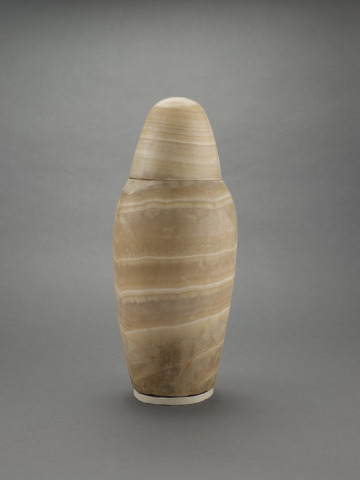
Canopic Jars for the Royal Scribe Khera
- Culture
- Ancient Egyptian
- Period
- Late Period, 664–332 BCE
- Dynasty
- Dynasty 26 (Saite), 664–525 BCE
- Dynasty
- or Dynasty 30, 380–332 BCE
- Date
- 664–332 BCE
- Material
- Travertine (Egyptian alabaster)
- Classification
- Containers, stone & mineral
- Collection
- Ancient Art
- Current Location
- On View, Gallery 313
- Dimensions
- 15 1/2 x 6 3/8 in. (39.4 x 16.2 cm)
- Credit Line
- Museum Purchase
- Rights
- Public Domain
- Object Number
- 210:1924a,b
NOTES
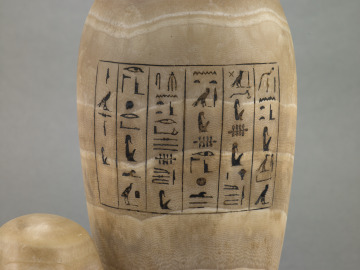
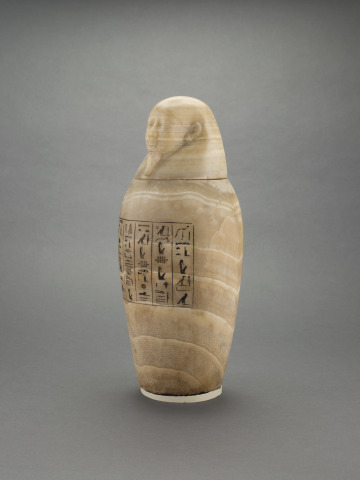
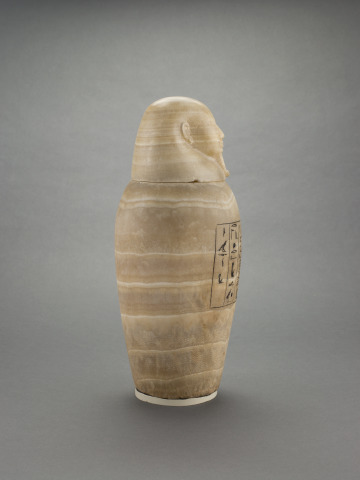
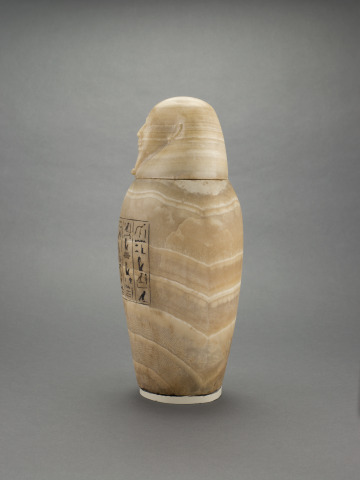
The lid of this large jar features a bearded man. It is part of a group of vessels topped with the heads of a baboon, a falcon, and a jackal—an odd combination. Yet together they represent a group of funerary deities known as the Four Sons of Horus. The heads act as lids for the canopic jars, containers for a mummy’s liver, lungs, stomach, and intestines. This set belonged to a scribe named Khera. Each jar is inscribed with text from the Book of the Dead that calls upon a Son of Horus to protect its contents. Made of a type of limestone called travertine, the material is also sometimes referred to as alabaster or Egyptian alabaster. The stone was easily worked, and it was favored for its color and translucent quality.
We regularly update records, which may be incomplete. If you have additional information, please contact us at provenance@slam.org.