NOTES
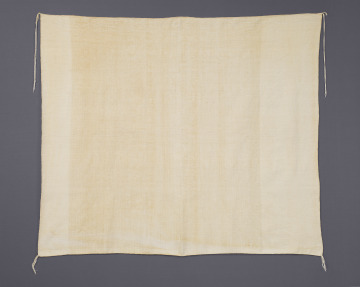
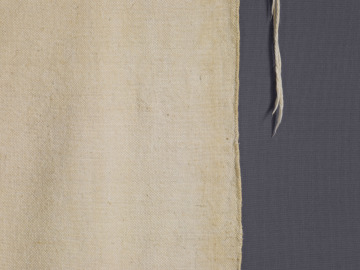
Over 800 years ago, each Ancestral Puebloan person likely had a rectangular manta, or wider-than-long wearing blanket, similar to this textile. Ancient mantas served as shoulder robes and, perhaps, as wrap-around dresses. These garments generally consist of cotton fibers in a plain weave, such as this one. In plain weaves, each horizontal weft strand crosses over and then under each other vertical warp element.
Domesticated cotton plants arrived in the Southwest sometime around 500, moving north from Mesoamerica. The Hohokam peoples of the Gila River Valley (in present-day southern Arizona) first cultivated cotton in the Southwest and supplied its fibers to neighboring Ancestral Puebloan and Mogollon groups. By 1100, Ancestral Puebloan and Mogollon farmers began to grow their own cotton crops. Southwestern weavers simultaneously acquired loom technology, likely from Mesoamerica as well, which enabled production of fabric in large swaths.