
- Category
- Panel conversation
- ASL (American Sign Language)
-

If It Wasn’t for the Women—The Art of Resistance and Change
Is it an artist’s job to address issues of today and difficult histories? In this panel, three artists will share their perspectives on this question as they discuss the importance of representation and wrestling with the past through their art. Moderated by Daniella Statia, 2025–27 Romare Bearden Graduate Museum Fellow.
This program is supported by the Mary Strauss Women in the Arts Endowment.

Daniella Statia is the 2025-2027 Romare Bearden Graduate Museum Fellow.
Ticket information
Tickets can be reserved in person or through MetroTix. All tickets reserved through MetroTix incur a service charge; the service charge is waived for tickets reserved at the Museum.
About the panelists
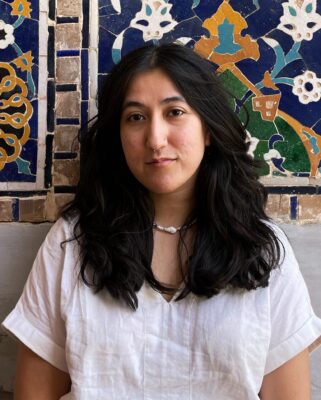 Layla Zubi is an interdisciplinary artist and educator of Palestinian and Uzbek heritage from the St. Louis metropolitan area and southern Illinois region. They earned an master’s of fine arts degree from Cornell University and a bachelor’s degree from Southern Illinois University Edwardsville. Influenced by spatial living environments of their youth and art history, they make experimental displays using building materials found in suburban design houses as an act of resisting homogeneity. Visual explorations that inform their multicultural, spiritual experience in their work include aerial layouts, bodily presence, communal gathering, and cultural resistance symbols.
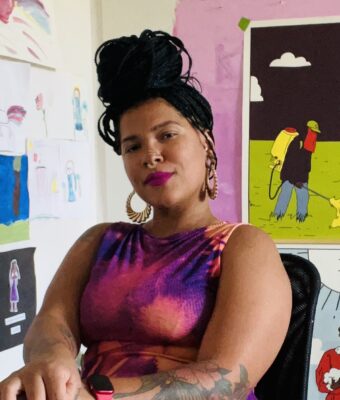 Simiya Sudduth is a mother and transdisciplinary artist based in St. Louis. Their practice spans murals, digital illustration, sound performance, and socially engaged public work, centering healing, ecology, and collective liberation. Drawing from ancestral knowledge, hip hop, ritual, and community collaboration, Sudduth creates work grounded in care, resistance, and kinship with people and the land. Their projects often activate shared space, invite participation, and honor lived experience as a source of knowledge and transformation, emphasizing public art as a tool for connection, storytelling, and collective care.
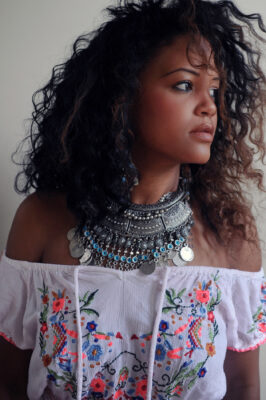 Tawny Chatmon is a self-taught artist based in Maryland. Through a layered process of photography, painting, and hand embellishment, she creates works that honor and celebrate the beauty of Black childhood and the Black family, while at times confronting historical misrepresentation and erasure. She has recently expanded her practice to use pigments, paints, and mixed media to articulate her message as well as creating deeper research-based work, assemblage, and film. In 2022, she was featured in The Afro-Futurist Manifesto: Blackness Reimagined, a collateral exhibition of the Venice Biennale. Her work is held in both private and public collections.