- Category
- Corporate Partners
Virtual CPP Day for Nubia: Treasures of Ancient Africa
Spend the day as an archaeologist and learn how objects like those featured in Nubia: Treasures of Ancient Africa were discovered. As you excavate in the field, you’ll also learn about Nubian culture through an art activity, recipes, and a podcast.

Courtesy of the Qatari Mission for the Pyramids of Sudan (QMPS), photo: Dr. Pawel Wolf
The Exhibition
Nubia: Treasures of Ancient Africa was organized by the Museum of Fine Arts, Boston, home to the most important collection of Nubian art outside the Sudan. In 1913, the Sudanese government granted George Reisner permission to undertake excavations in Kerma on behalf of the Harvard University-Boston Museum of Fine Arts Expedition. Reisner’s primary interest was to excavate temples and tombs—in part because they were the most likely to yield objects, and his work was sponsored by a museum looking to build a collection.
A century later, international teams continue to work at every accessible site that Reisner excavated, and other sites as well. Those teams often employ cutting-edge techniques, but their starting points have often been Reisner’s notes, records, and photographs, preserved by the MFA. Current technologies, like micro-analyzing floral and fauna remains, can reveal new information about climate, diet, and religious practices. Google Earth, ground-penetrating radar, and magnetometer surveys help identify structures underground so that excavation can be precisely targeted.
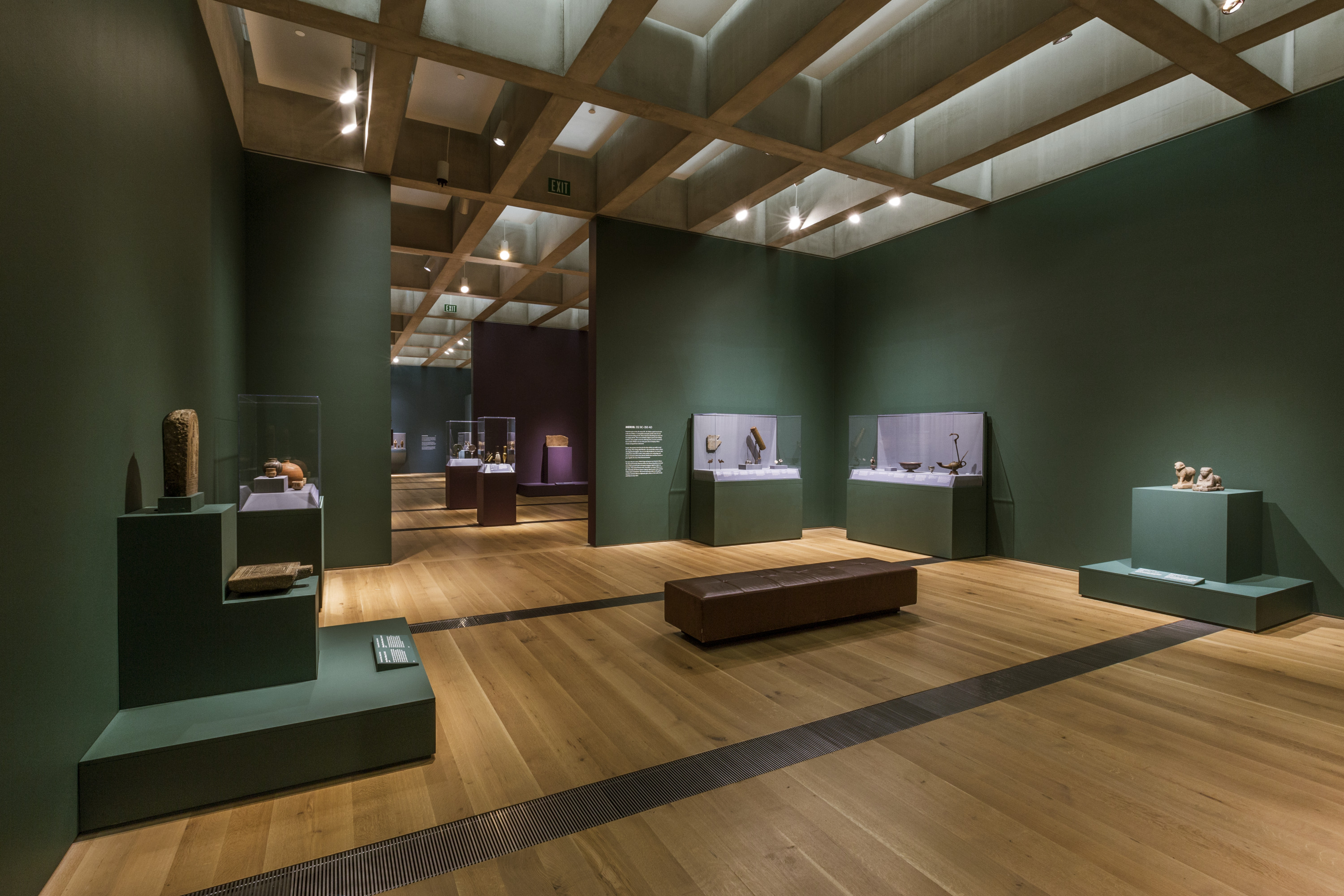
Although frequently overshadowed in the public imagination by its northern neighbor Egypt, ancient Nubia has a long and glorious past. There, a series of civilizations flourished for more than 6,000 years. Nubia’s location made it a strategic link between central and eastern Africa, western Asia, and the Mediterranean, but its history was often misinterpreted. Through a majestic display of art and objects, this exhibition offers new ways of understanding Nubia’s history and contemporary relevance.
The exhibition presents the Nubians’ artistic achievements, including magnificent jewelry, pottery, sculpture, metalwork, and more. Through Nubian art, the exhibition examines concepts of power, representation, and cultural bias in the ancient world, in the early 20th century, and today.
How Egyptologists Removed Ancient Egypt from Africa
A Day in the Life of an Archaeologist
5 am Snooze my alarm.
5:15 am Second alarm goes off, and preparation for the day starts. Clothes: multiple thin layers for a hot day in the Sudan sun, work boots, and a hat.
6:00 am Double-check supplies in my backpack: filled water bottles, sunscreen, bug spray, and Ibuprofen.
6:10 am Walk from my host family’s house to the excavation site. Say hello to neighbors along the way.
6:30 am Return to the trench I was working on yesterday, and remove the tarps. Local workers arrive and begin their tasks, too. I carefully use a four-inch pointed hand trowel, spade, and mattock (flat-edged pick) to make a new slot, or section, in the soil. I start cleaning, or slowly troweling soil away to reveal deposits, within that area. Soil samples are bagged as well.
7:30 am My supervisor checks up on me and records progress in the trench book, which will be typed up and added to the excavation database later. They take photographs, since I’ve reached a new locus, or layer in the soil.
7: 45 am Resume cleaning. Workers use buckets and wheelbarrows to take away the soil and other material removed from my trench.
9:00 am Break time.
Your turn: Learn about Nubian jewelry and create a necklace inspired by one from the exhibition
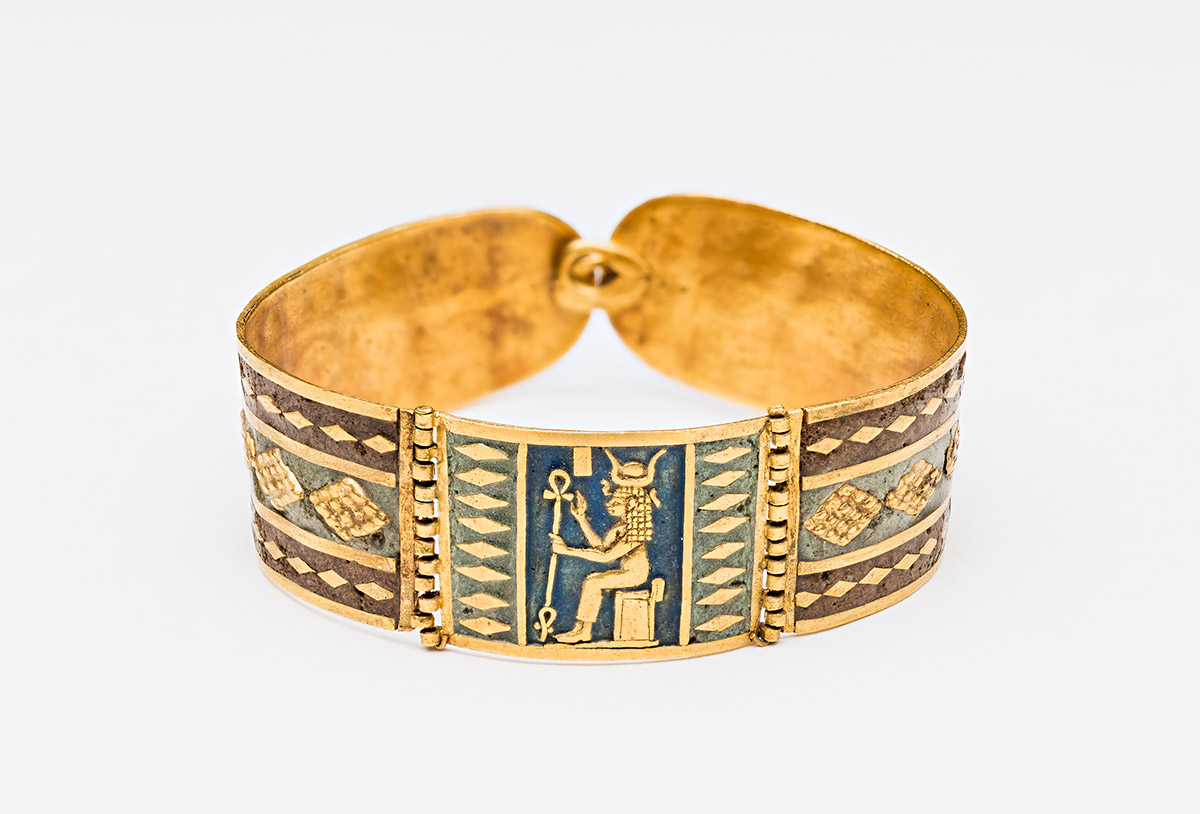
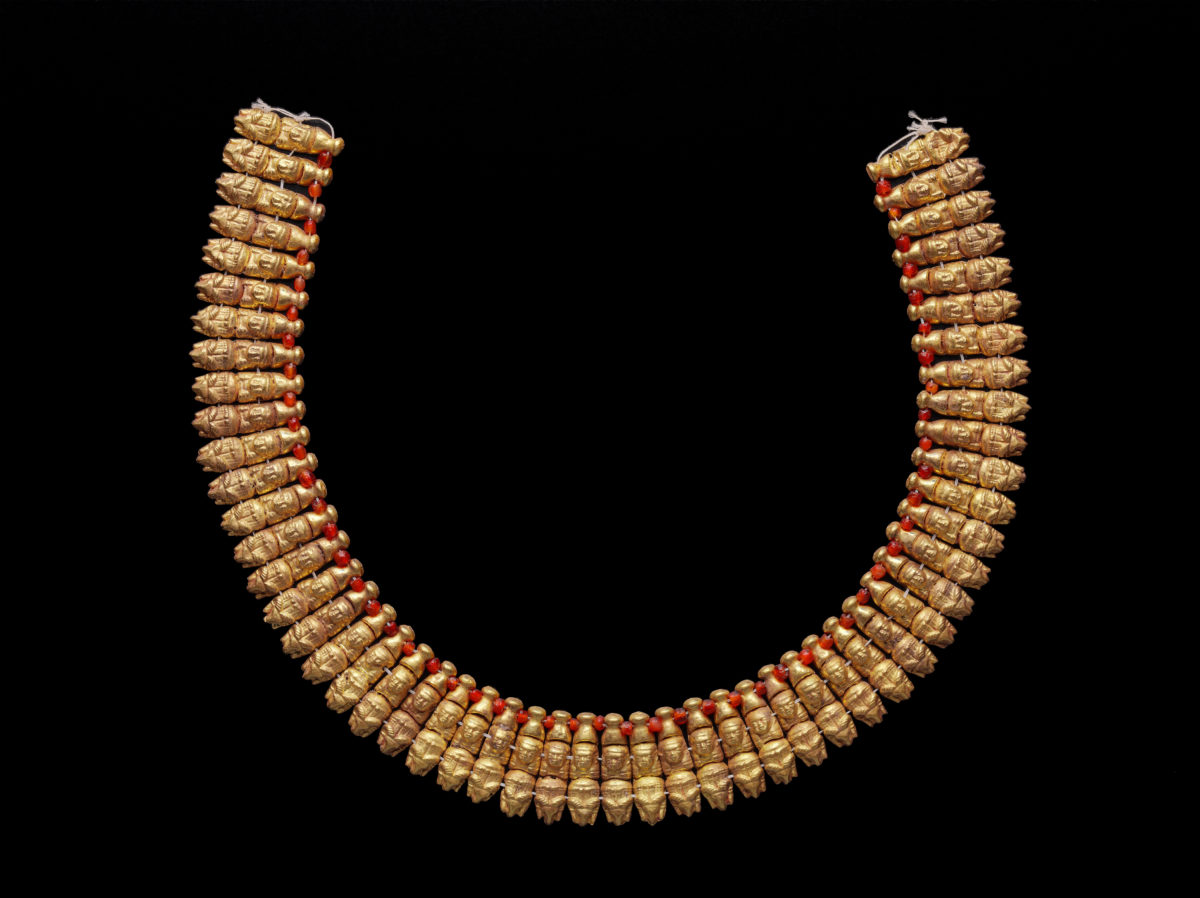
While on break, read up on jewelry of Ancient Nubia and discover that Nubian artisans employed techniques that would not be reinvented in Europe for another thousand years, and how the original owners valued these possessions not only for their inherent beauty, but also because they were imbued with magical meanings.
-
Necklace with Cylinder Amulet Case; Nubian, Classic Kerma, 1700–1550 BC; silver, glazed crystal, carnelian, and faience; Museum of Fine Arts, Boston. Harvard University—Boston Museum of Fine Arts Expedition 13.3969; Photograph © Museum of Fine Arts, Boston
-
Bracelet with Image of Hathor; Nubian, Meroitic period, 250–100 BC; gold and enamel; Museum of Fine Arts, Boston. Harvard University—Boston Museum of Fine Arts Expedition 20.333; Photograph © Museum of Fine Arts, Boston
-
"Necklace with human and ram's head pendants"; Nubian, Meroitic Period, 270–50 BC; gold and carnelian; Museum of Fine Arts, Harvard University—Boston Museum of Fine Arts Expedition 23.366; Photograph © Museum of Fine Arts, Boston
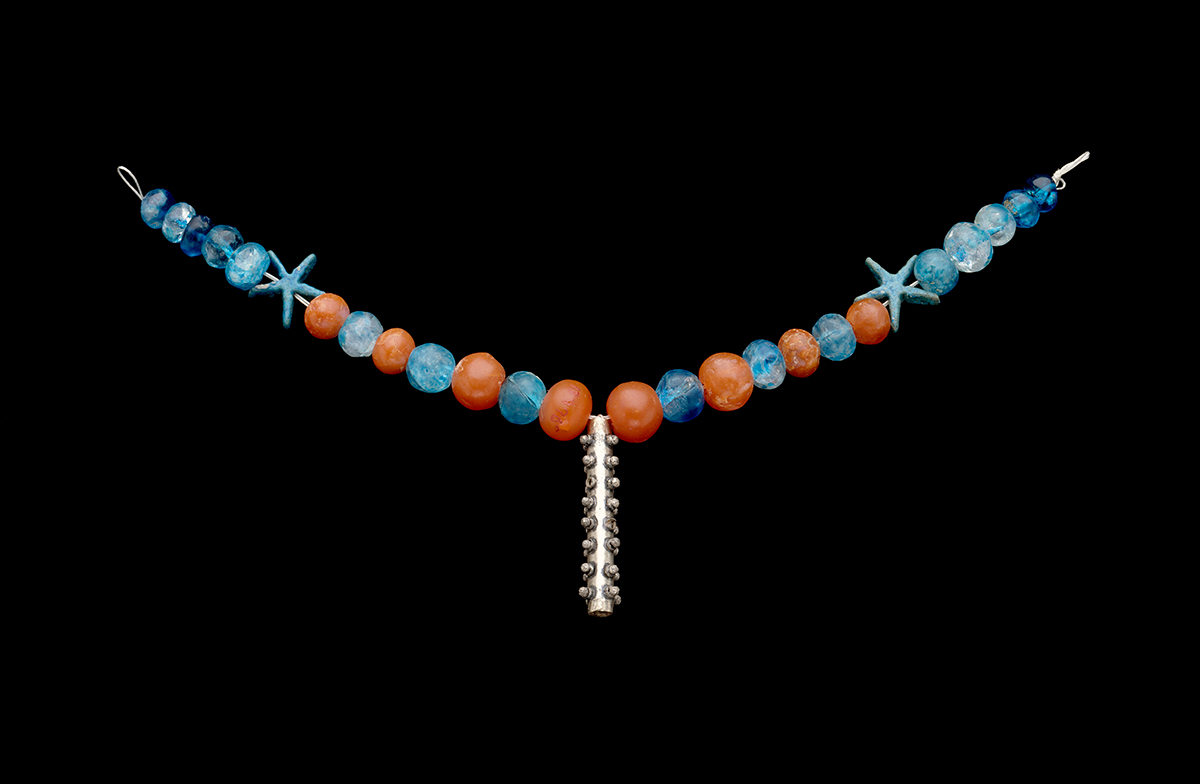
Recreate the silver, glazed crystal, carnelian, and faience necklace seen in the exhibition using common household materials. You'll need glue, scissors, different color paper, aluminum foil, string, a toothpick, and a pencil, pen, or wooden skewer.
9:15 am More digging. The site director checks up on each trench.
11: 00 am Workers gather for fatur (breakfast). Everyone shares large dishes and eats with their hands: ful medames (mashed and stewed fava beans); hardboiled eggs; a cucumber and tomato salad with gebna (a feta-like cheese); dates; and gourrassa (a circular, wheat-based flatbread).
Your turn: Make Sudanese flatbread
Recipe for Gourrassa (Sudanese flatbread)
Serves 4
Ingredients
3 cups all-purpose flour
1 tsp. baking powder
Water, as needed
Salt, to taste
Sesame oil or vegetable oil, for cooking
Instructions
1. Wisk the flour, baking powder, salt, and water together in a large bowl. You want a consistency similar to pancake batter. If the batter is too thin, add more flour.
2. Heat a nonstick skillet on the stove and coat with oil.
3. Spoon the batter into the pan, spreading out to form a circle. Cook for 4 to 5 minutes on medium heat until the top dries out.
4. Remove from pan and serve immediately or place in a bowl and cover with a towel to keep warm.

11:30 am Return to my trench.
12:15 pm Uncover pottery fragments. My supervisor records and photographs the context, or physical location, of the discovery on a site plan. The objects are then securely bagged and labeled with the soil level, site, and excavation unit numbers.
1:00 pm Extract an intact cup and partial bowl, which are also collected by my supervisor. For more precise, delicate work, I start to use smaller trowels, dental picks, paintbrushes, and spoons to clean the slot.
-
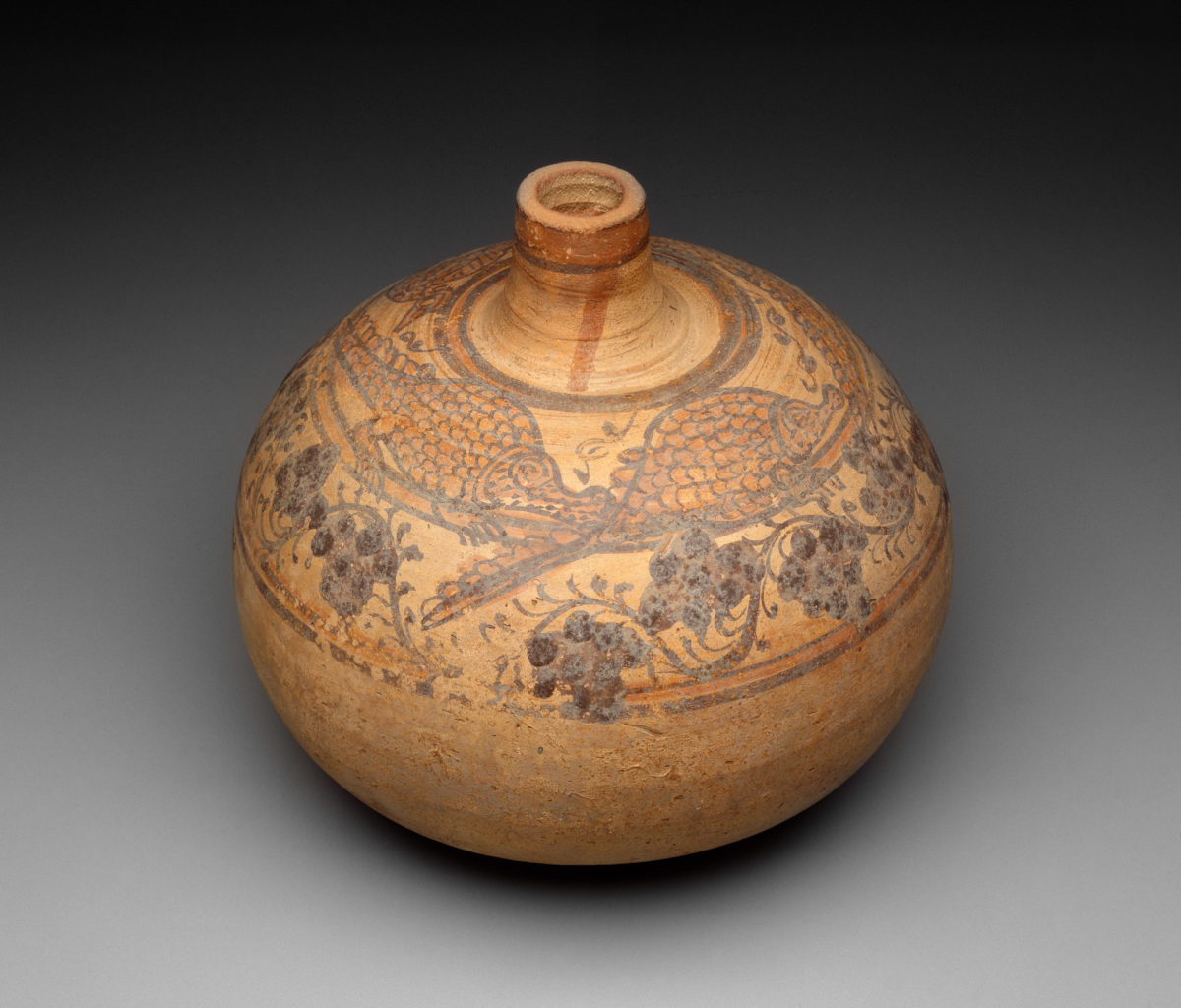
“Decorated spheroid jar”; Nubian, Meroitic Period, 2nd century AD; pottery; Museum of Fine Arts, Harvard University—Boston Museum of Fine Arts Expedition 13.4038; Photograph © Museum of Fine Arts, Boston
-
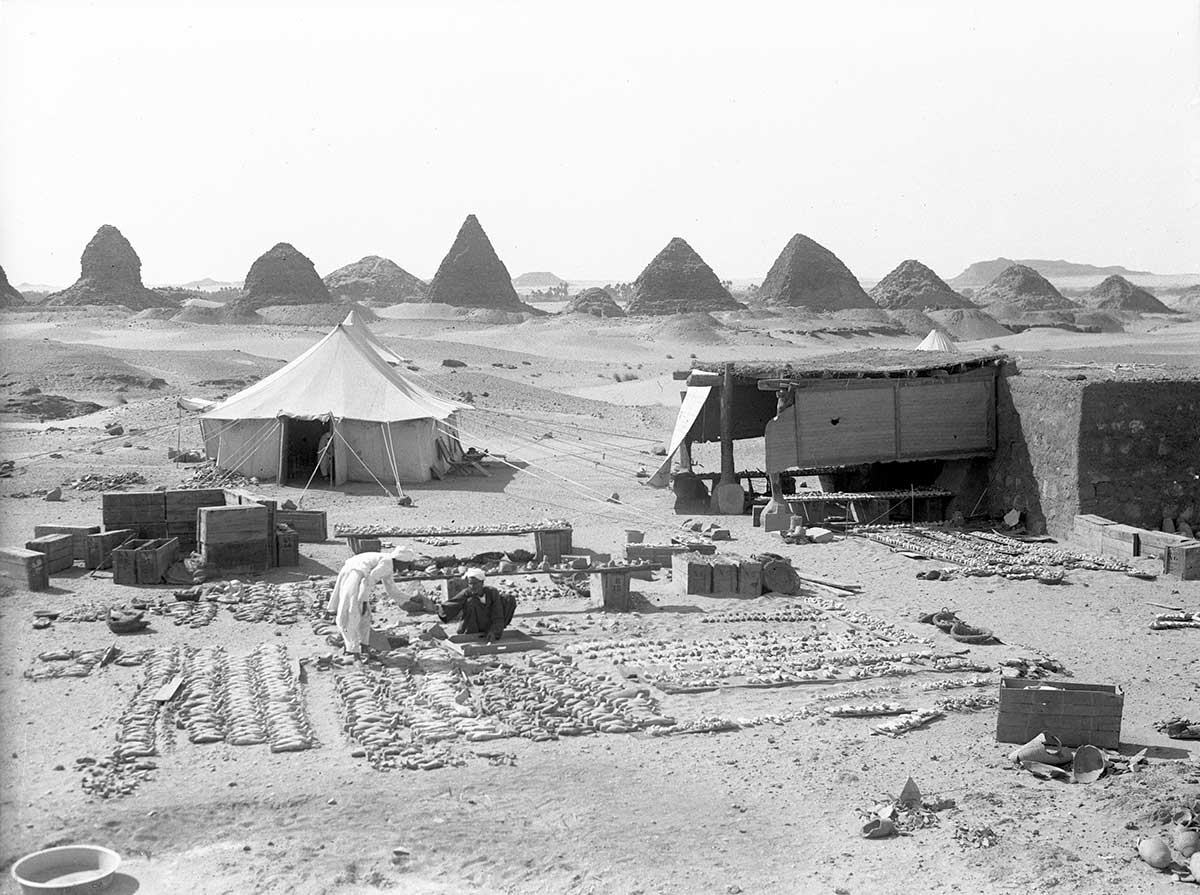
George Andrew Reisner; Nuri: Camp, Showing Shawabties Laid Out, March 19, 1927; Museum of Fine Arts, Boston. Harvard University—Boston Museum of Fine Arts Expedition; Photograph © Museum of Fine Arts, Boston
-
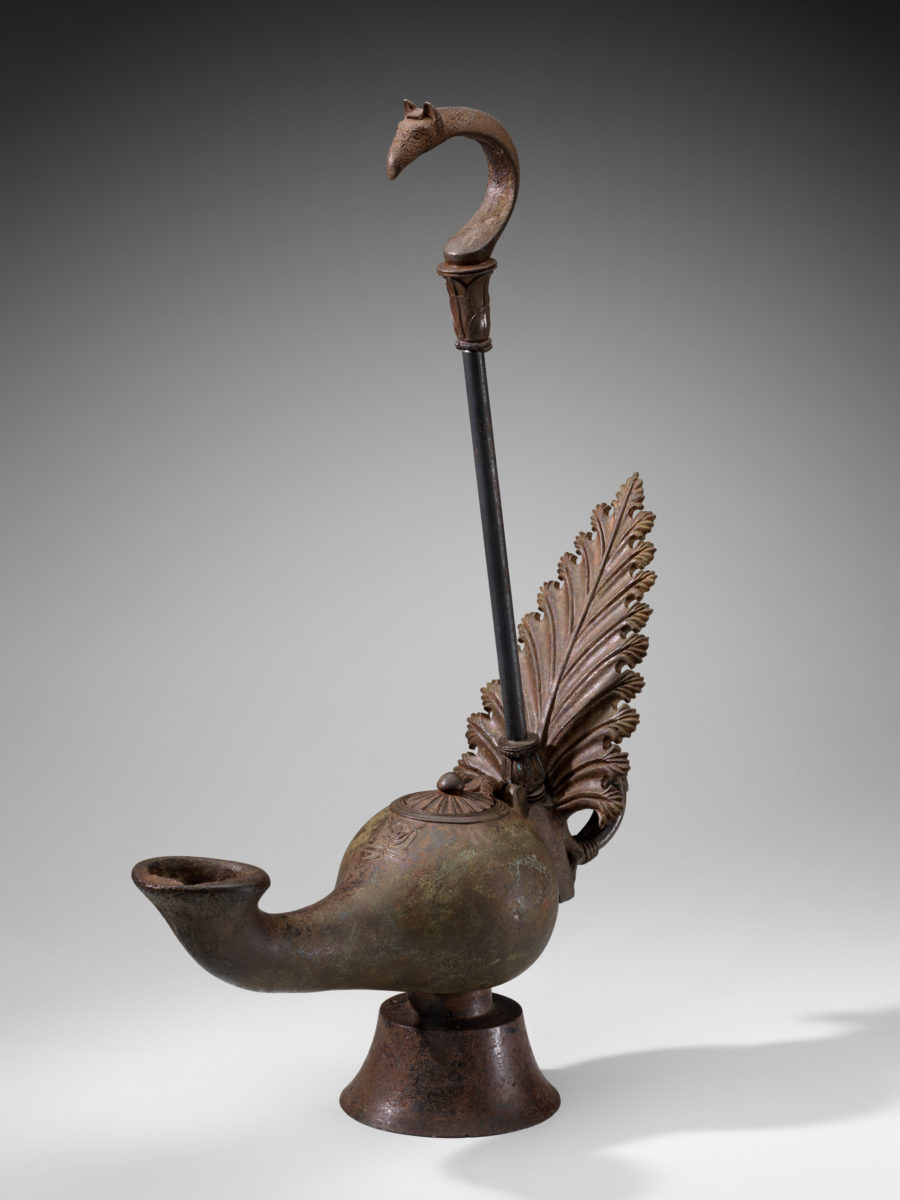
"Hanging lamp"; Nubian, Meroitic Period, reign of Takideamani, 140–155 AD; bronze; Museum of Fine Arts, Harvard University—Boston Museum of Fine Arts Expedition 24.959; Photograph © Museum of Fine Arts, Boston
3:30 pm Everyone wraps up for the day. I gather found objects, clean my tools, and put supplies away.
4:15 pm Arrive home, and take a shower.
5:00 pm Take a walk along the Nile River.
Your turn: Hear from the exhibition curator
While walking, listen to a St. Louis on the Air podcast featuring Denise Doxey, Curator of Egyptian, Nubian, and Near Eastern Art at the Museum of Fine Arts, Boston.
6:00 pm Dinner time. My host family makes a communal feast: stewed okra, fried fish, kisra (a crêpe-like bread made with sorghum flour), tamiya (falafel), rice, and basbousa (sweet semolina cake topped with almonds).
7:15 pm Enjoy some Sudanese cinnamon black tea outside with friends from past field seasons.
Your turn: Brew a cup of Sudanese tea
Recipe for Sudanese Cinnamon Tea
Makes 3 cups
Ingredients
3 Cinnamon sticks
3 Cups of water
1 Tbsp. loose-leaf black tea
Sugar cubes, for taste
Instructions
1. Heat water in a pan on the stove and bring to a boil.
2. Remove pan from heat and add cinnamon sticks and tea.
3. Allow to steep for about five minutes.
4. Strain the tea and pour into cups. Add sugar cubes for a bit of sweetness.

8:30 pm Zoom date with my partner in the United States on their lunch break (12:30 pm in Saint Louis, Missouri). Read in bed until I fall asleep.
The journal entry above is a fictional account based on current archaeological practice. See the timeline in person within the exhibition Explore Lab.