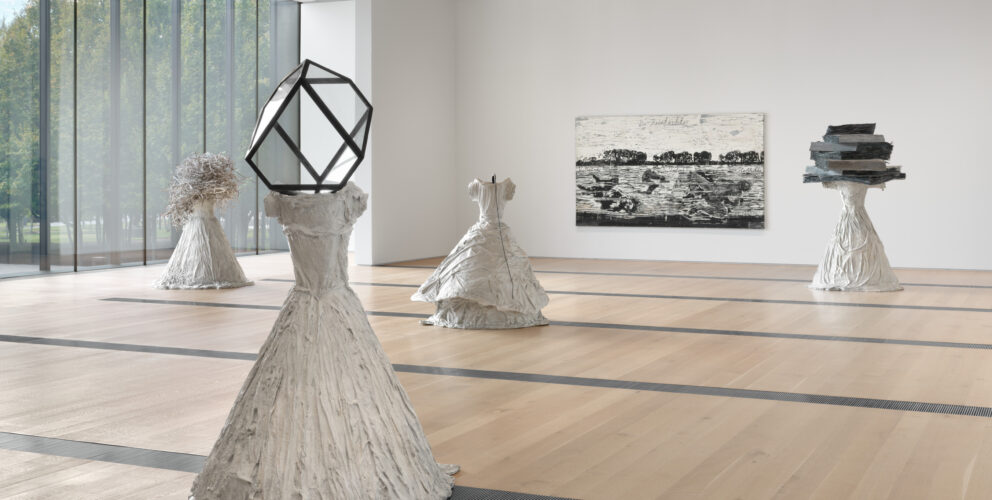
The five monumental paintings in this Sculpture Hall installation were at the heart of the Museum's landmark exhibition Anselm Kiefer: Becoming the Sea, which opened in October 2025 and also featured around 40 Kiefer works in the Museum's East Building galleries. That exhibition was Kiefer's first American retrospective in 20 years and included breathtaking new landscapes joining iconic works to celebrate his nearly 60-year career. For more information about the original presentation, visit the exhibition page.
Installation view of Sculpture Hall in Anselm Kiefer: Becoming the Sea
Anselm Kiefer: Becoming the Sea
Sculpture Hall Installation
Through Spring 2027- Location
- Sculpture Hall
- Admission
- Free
The paintings in this installation rise three stories tall and surround visitors in Sculpture Hall, the heart of the Museum’s original 1904 World’s Fair building. Created specifically for this space, the installation allows the architecture and paintings to shape one another. The massive green and gold-leaf works showcase the Rhine River of Kiefer’s youth and the Mississippi and Missouri Rivers he encountered during a trip to St. Louis 35 years ago.
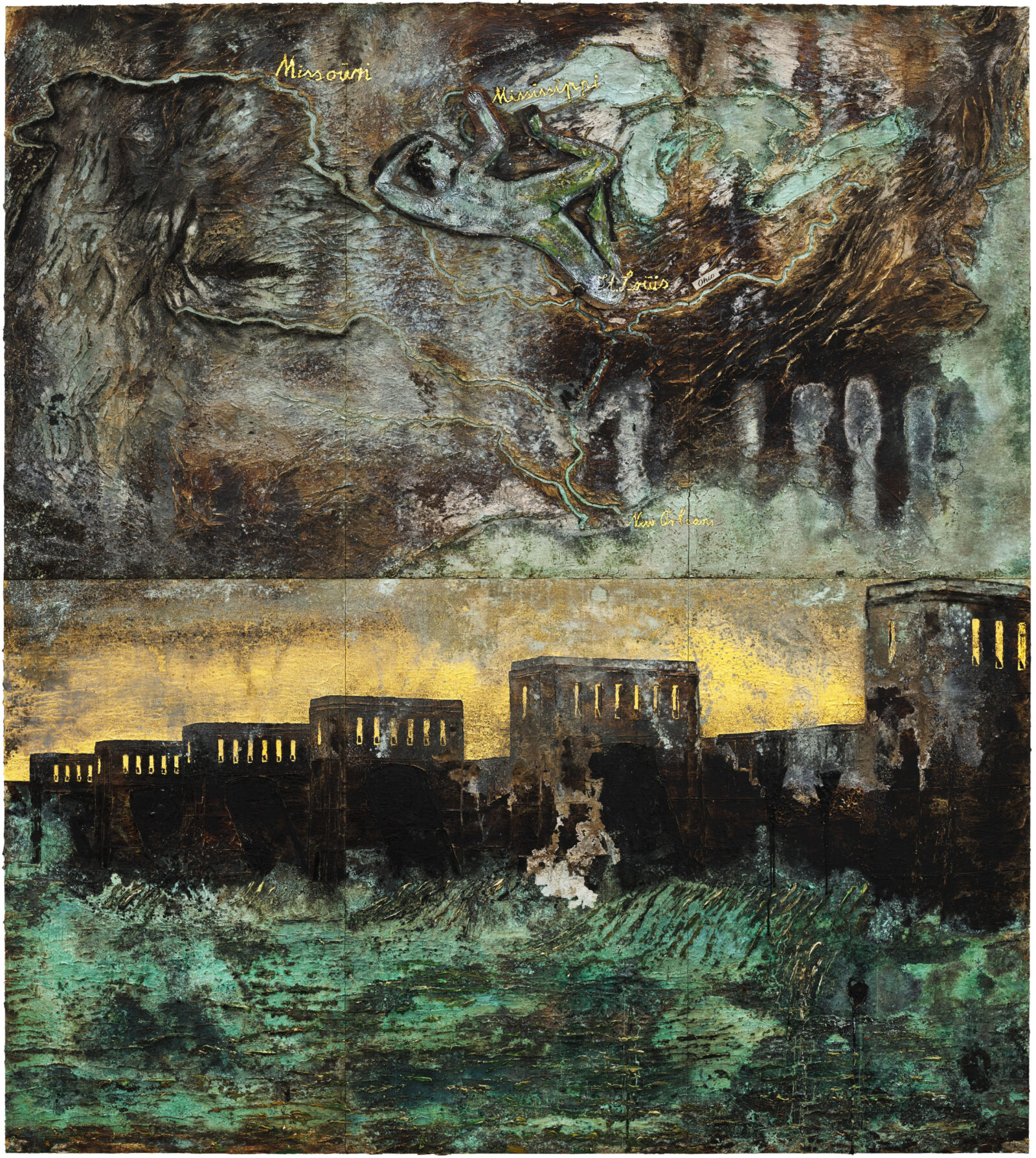
Anselm Kiefer, German, born 1945; Missouri, Mississippi, 2024; emulsion, oil, acrylic, shellac, gold leaf, sediment of electrolysis and collage of canvas on canvas; 30 feet 10 1/16 inches x 27 feet 6 11/16 inches x 3 15/16 inches; Collection of the artist and courtesy Gagosian 2025.310; © Anselm Kiefer, Photo: Nina Slavcheva
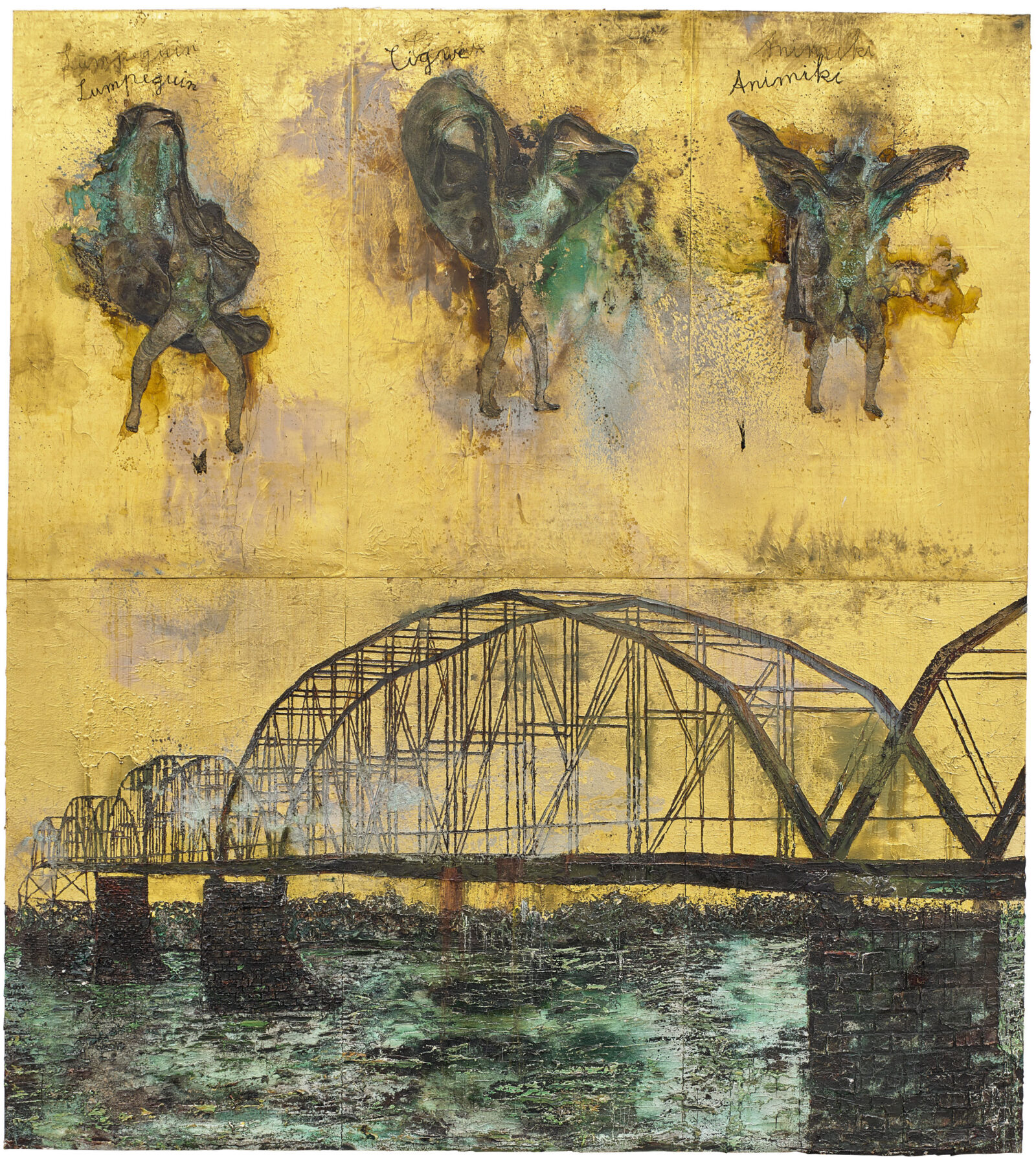
Anselm Kiefer, German, born 1945; Lumpeguin, Cigwe, Animiki, 2025; emulsion, oil, acrylic, shellac, gold leaf, and sediment of electrolysis on canvas; 30 feet 10 1/16 inches x 27 feet 6 11/16 inches x 3 15/16 inches; Collection of the artist and courtesy Gagosian 2025.311; © Anselm Kiefer, Photo: Nina Slavcheva

Anselm Kiefer, German, born 1945; Am Rhein (On the Rhine), 2025; emulsion, oil, acrylic, shellac, gold leaf and sediment of electrolysis on canvas; 30 feet 10 1/16 inches x 27 feet 6 11/16 inches x 3 15/16 inches; Collection of the artist and courtesy Gagosian 2025.334; © Anselm Kiefer, Photo: Nina Slavcheva

Anselm Kiefer, German, born 1945; Anselm fuit hic (Anselm Was Here), 2024; emulsion, oil, acrylic, shellac, gold leaf and sediment of electrolysis on canvas; 30 feet 10 1/16 inches x 27 feet 6 11/16 inches x 3 15/16 inches; Collection of the artist and courtesy Gagosian 2025.309; © Anselm Kiefer, Photo: Nina Slavcheva
In 1991, Kiefer was in St. Louis to oversee the installation of Breaking of the Vessels at the Museum. During the visit, he traveled up the Mississippi River in a small boat to a newly constructed lock-and-dam complex just north of the city. The violent waves and hulking dam in the Sculpture Hall work Missouri, Mississippi recall that event. Above the dam, a woman with outstretched arms and legs floats over a tributary map of the Mississippi River system, personifying the river and its many branches. In Lumpeguin, Cigwe, Animiki, three female figures representing spirit beings from Anishinaabe and Wabanaki Native peoples protect the river below.
Two other Sculpture Hall works—Am Rhein (On the Rhine) and Anselm fuit hic (Anselm Was Here)—return to the Rhine River with a tree-lined, blue-green ribbon flowing through the countryside beneath a golden sky. These four canvases stand nearly 31 feet tall and are installed in each corner alcove of Sculpture Hall. They are made with sediment of electrolysis, a material Kiefer created in which he submerges metal—in this case, copper—in a bath and exposes it to an electrical current that corrodes the surface of the metal, creating debris that he uses to paint his canvases.
The fifth Sculpture Hall work, Für Gregory Corso (For Gregory Corso), which is 27 feet tall, is dedicated to the Beat poet Gregory Corso, from whose poem Kiefer took the title of the exhibition. In the 1981 poem, Corso contemplates the idea of an eternal spirit that survives death, comparing it to a river “unafraid / of becoming / the sea.”

Anselm Kiefer, German, born 1945; Für Gregory Corso (For Gregory Corso), 2021–25; emulsion, oil, acrylic, shellac and gold leaf on canvas; 27 feet 6 11/16 inches x 31 feet 2 inches x 3 15/16 inches; Collection of the artist and courtesy Gagosian 2025.333; © Anselm Kiefer, Photo: Nina Slavcheva
About the artist
Born in 1945 in Donaueschingen, Germany, Anselm Kiefer is one of the most significant artists of the post–World War II era. His art is known for unflinching examinations of Germany’s complex historical legacy and broader themes of cultural memory and human existence. Working across diverse media, Kiefer creates large-scale works with raw, tactile surfaces made from unconventional materials, including lead, ash, clay, and dried flowers.
SLAM’s relationship with Kiefer began in 1983 with the exhibition Expressions: New Art from Germany, which introduced American audiences to Neo-Expressionism. Since then, the Museum has built one of the nation’s great collections of postwar German art.
Anselm Kiefer: Becoming the Sea is curated by Min Jung Kim, the Barbara B. Taylor Director of the Saint Louis Art Museum, assisted by Melissa Venator, the Andrew W. Mellon Foundation Assistant Curator of Modern Art. The exhibition is presented with generous support from the William T. Kemper Foundation, Jeanne and Rex Sinquefield, and Gagosian. Additional support provided by the Missouri Arts Council, a state agency; and the National Endowment for the Arts.
Presented by

Major sponsors