Daniel Interpreting to Belshazzar the Writing on the Wall
- Material
- Oil on canvas

Benjamin West, English (born colonial North America), 1738–1820; Daniel Interpreting to Belshazzar the Writing on the Wall, 1775; oil on canvas; 50 3/4 × 73 1/2 in. (128.9 × 186.7 cm) framed (approx.): 68 × 92 1/2 in. (172.7 × 235 cm); Saint Louis Art Museum, Funds given by Mr. and Mrs. John Peters MacCarthy and the Edwin and Betty Greenfield Grossman Endowment; Gift of Mr. and Mrs. John Alden Sears, by exchange 485:2018
In 2018, the Museum acquired an 18th-century oil painting by Benjamin West, the first American artist to achieve transatlantic fame. West created Daniel Interpreting to Belshazzar the Writing on the Wall at the height of his skill as a history painter, but the surface of the painting had become obscured by deteriorated layers of yellowed varnish and brown residues. After more than four years of conservation research and treatment, the monumental painting was installed in February 2023 in American art Gallery 338.
In order to understand the full scope of the conservation treatment, it is necessary to explore both the artist’s original materials and techniques, as well as the condition of the painting when it arrived at the conservation labs at SLAM.
To achieve the luminous colors and dramatic, contrasting tones West was known for, he applied multiple layers of opaque oil paint topped with delicately pigmented glazes as well as saturating mixtures of oils, waxes, and resins. Once all of the paint layers were fully dry, West preferred to apply a thick coat of varnish in order to maximize the saturation of the pigments and impart a glossy finish to the painted surface.
Contemporary correspondence and treatises demonstrate that artists in the 18th century understood that the types of painting materials, particularly the varnishes distilled from natural tree resins, would yellow over time – these layers would eventually be removed and replaced by future “picture restorers” by using chemical solvents. As SLAM conservators began to study the painting in preparation for treatment, they discovered additional complications: notably, the cleaning chemicals used in early historic restorations often placed many of West’s materials at risk of damage and loss. Furthermore, West infamously continued to change his paintings’ compositions over decades—and these later alterations are often mistakenly attributed to later restorers.
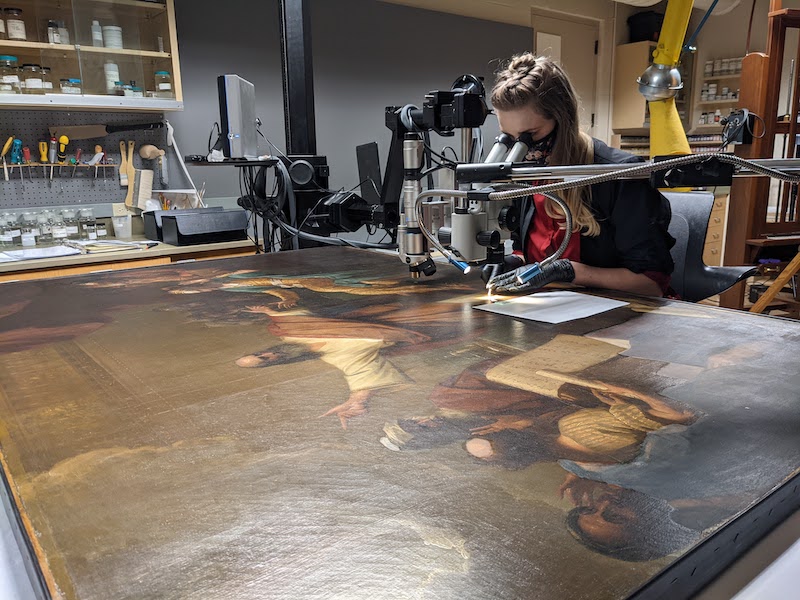
Associate paintings conservator Courtney Books examining the painted surface of Daniel Interpreting to Belshazzar the Writing on the Wall with digital, high-resolution microscopy in 2020.
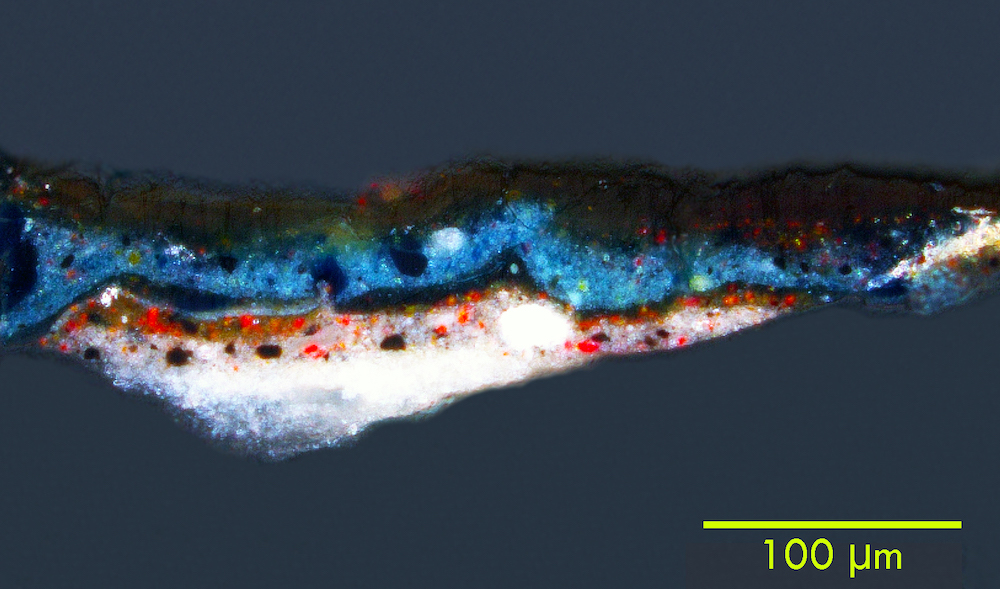
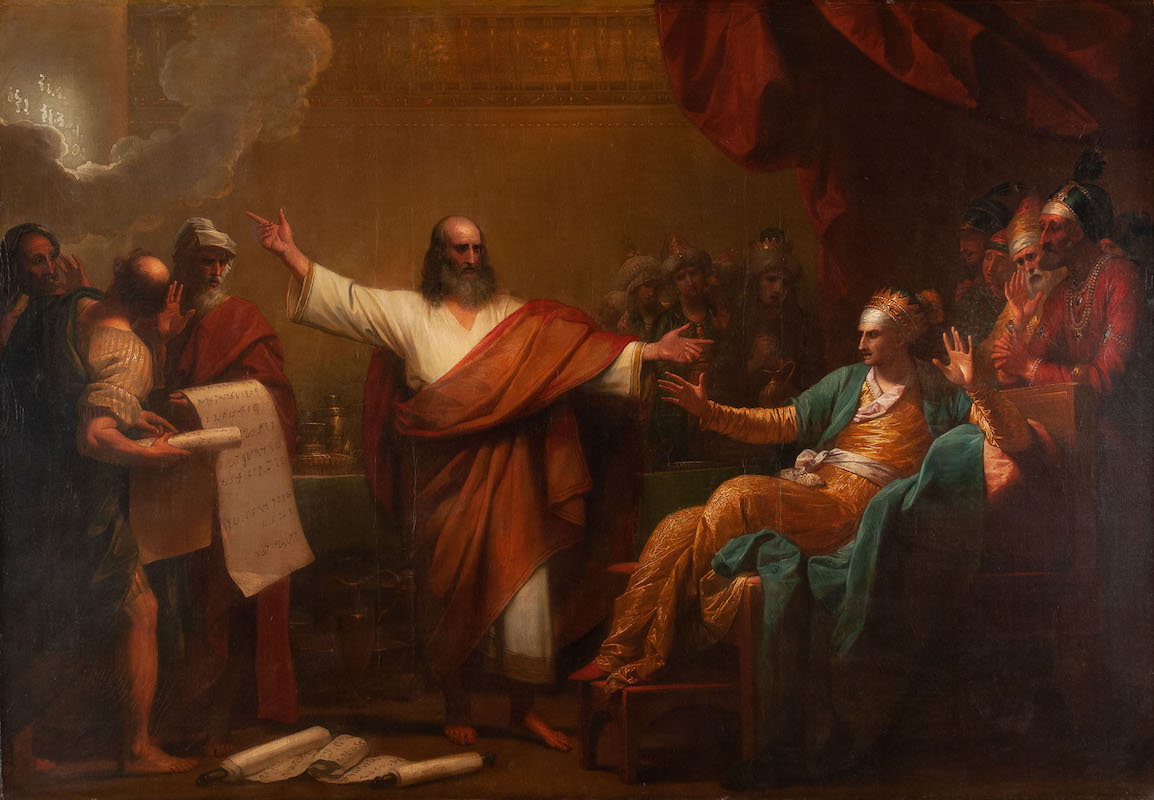
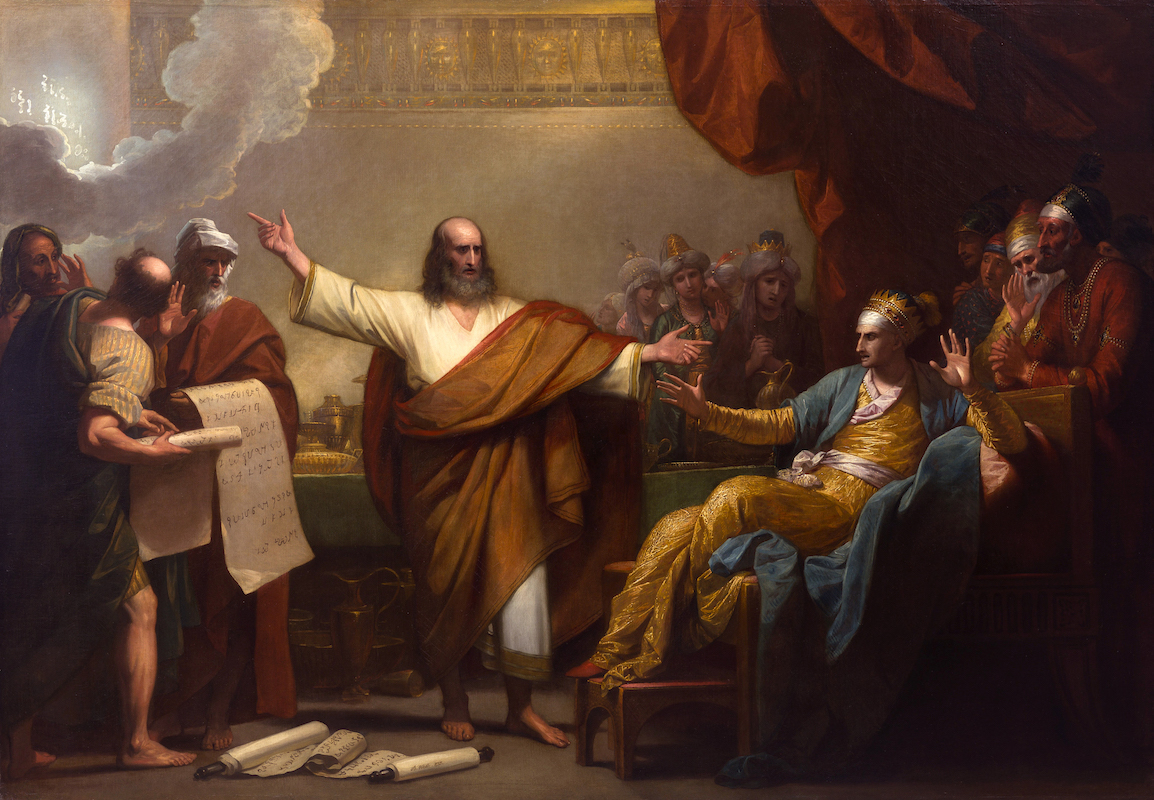
After a thorough scientific analysis and conservation treatment in the Museum’s labs in 2019-2022, conservators were able to decipher what additions belonged to previous restorations, and what materials were from the artist’s hand. For example, historic restorations covered this painting with three coatings, originally meant to protect the paint but by 2018, they buried the nearly 250-year old original pigments in thick veils of brownish yellow. These historic restoration coatings were safely removed with gelled cleaning agents, custom-designed to protect West’s more-sensitive materials and reveal the brilliant colors and textured brushstrokes lying beneath, such as that of the blue in Balthazar’s robes.
Photomicrograph of a paint cross-section taken from the blue robe Belshazzar of Daniel Interpreting to Belshazzar the Writing on the Wall; 20x magnification using Smith lighting and optical microscopy.
The top brown layers are aged varnish over the brilliant blue pigments (likely Prussian blue) over warm toning layers and a white preparatory ground layer.

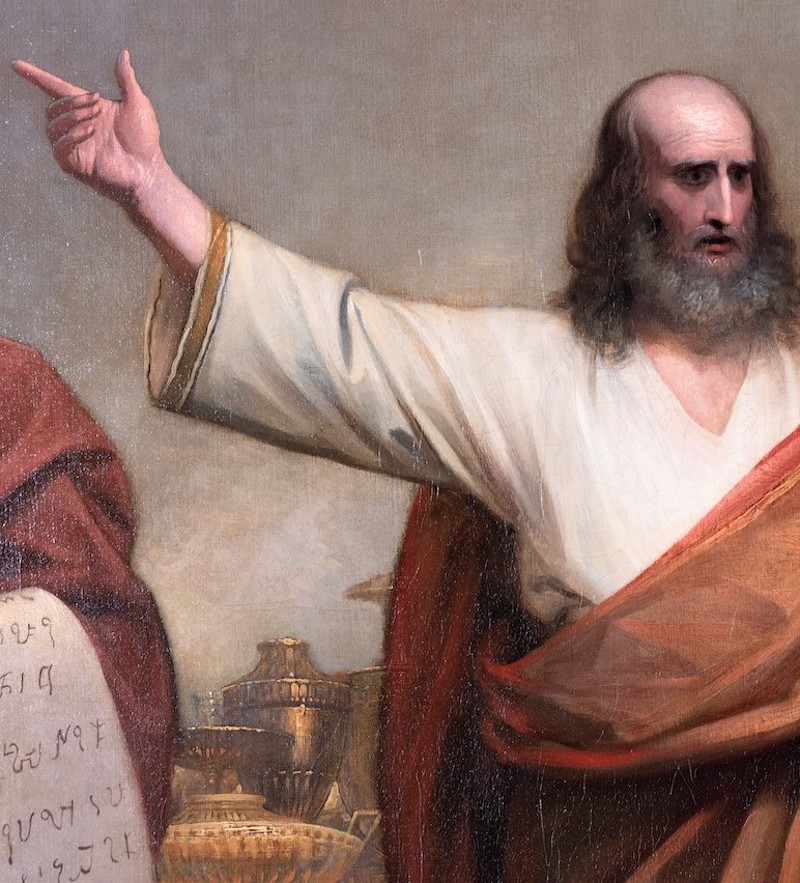
Critically, the treatment revealed that West emphasized key elements of the narrative, for example the golden sacred vessels, previously muddied but once more restored to shining glory to warn of follies and empire.