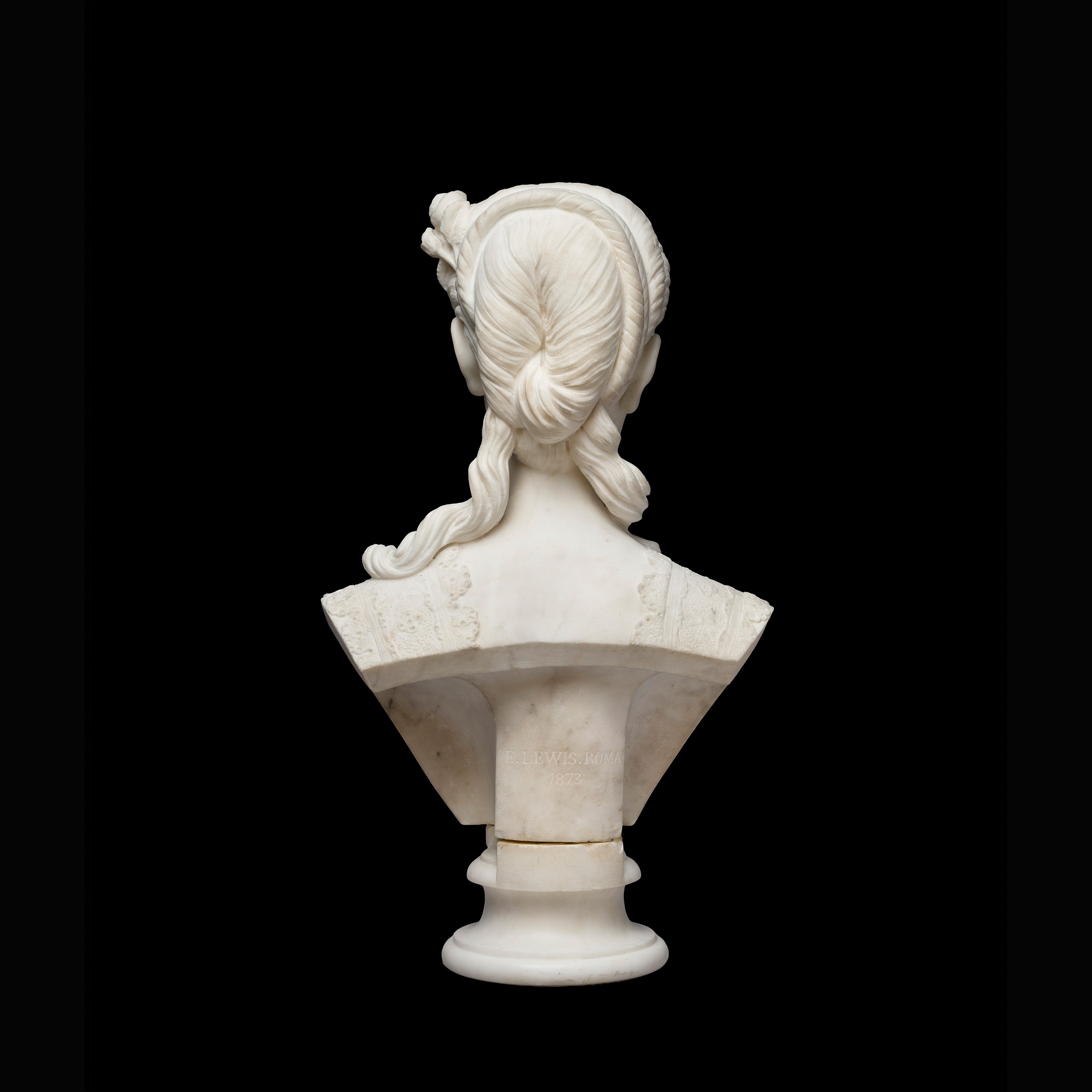
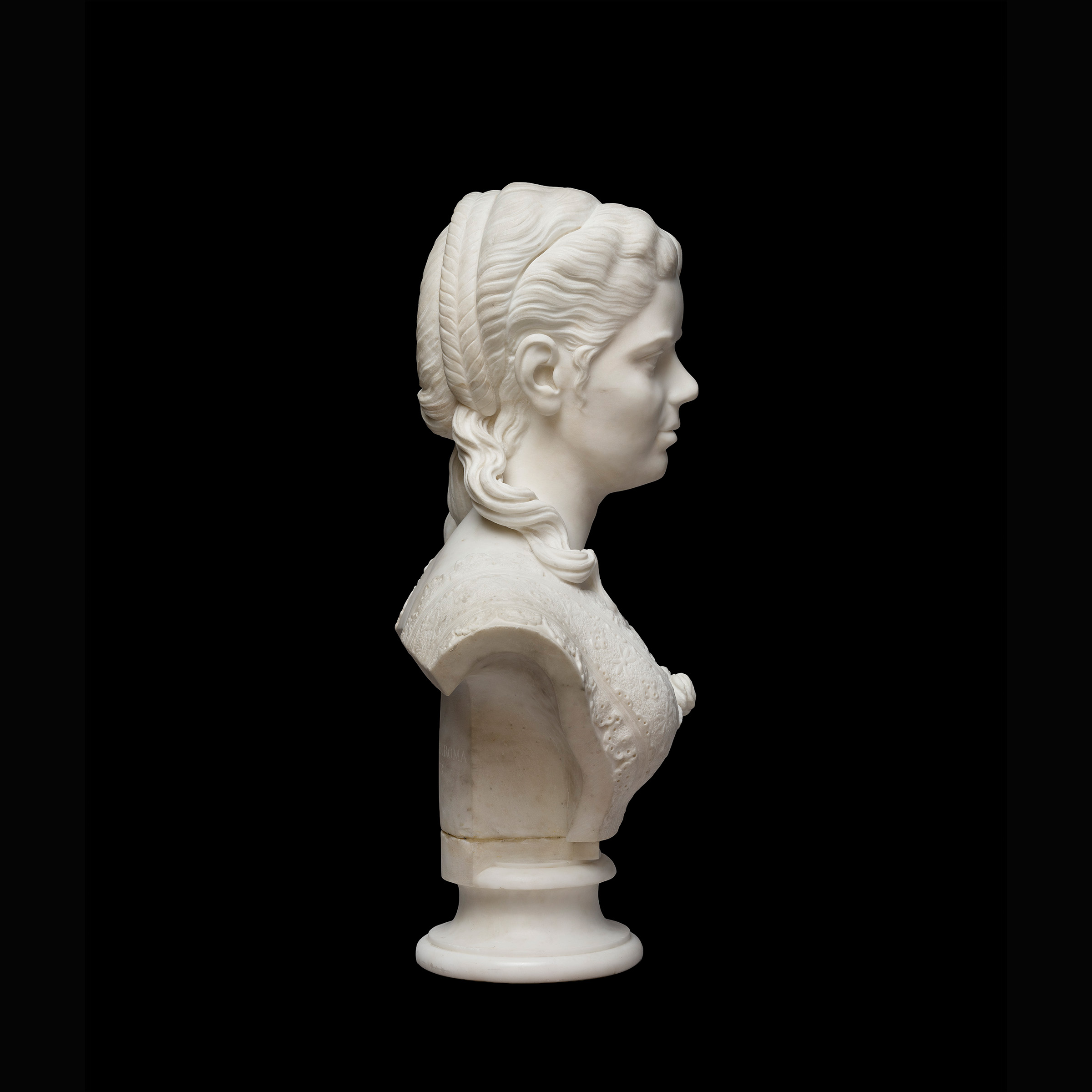
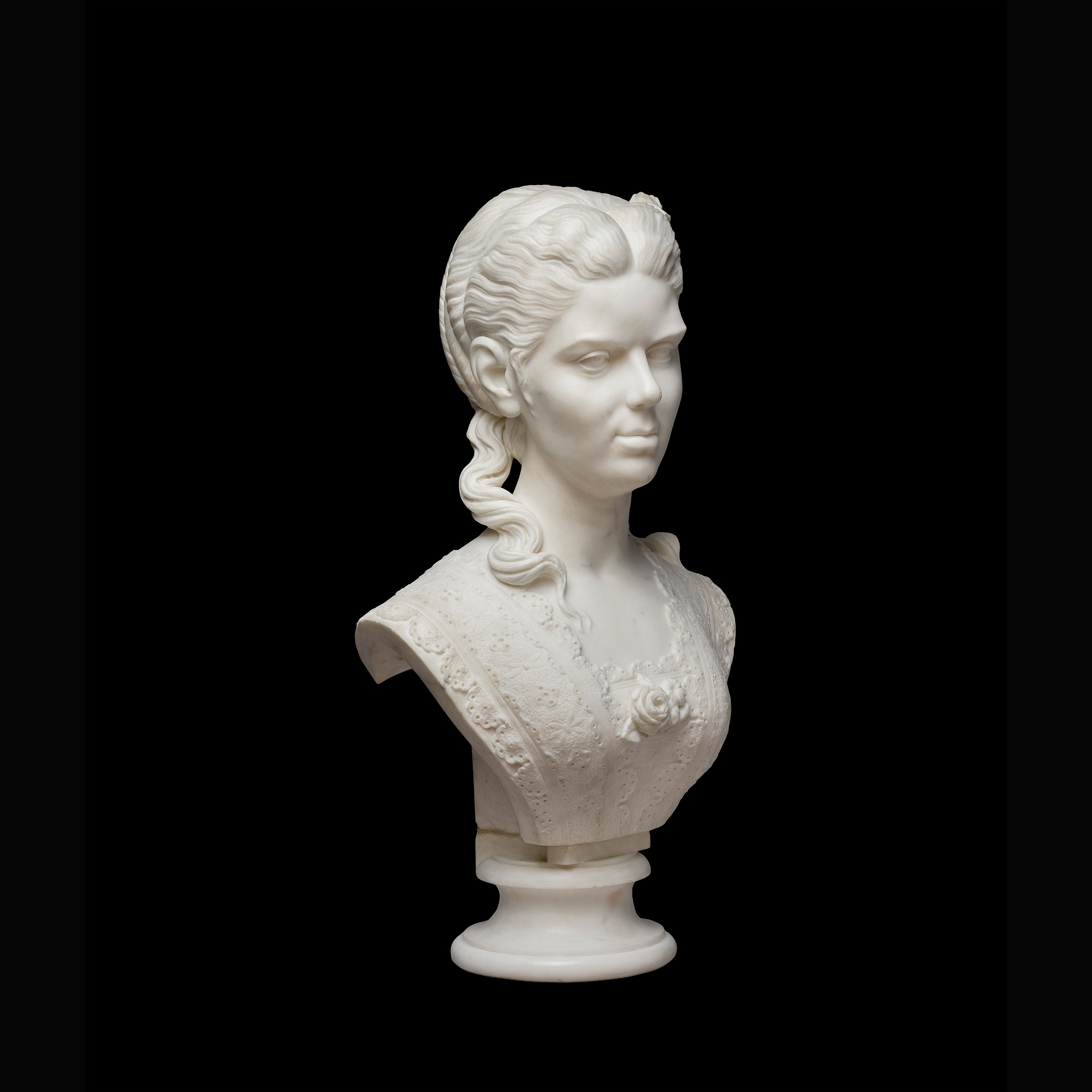
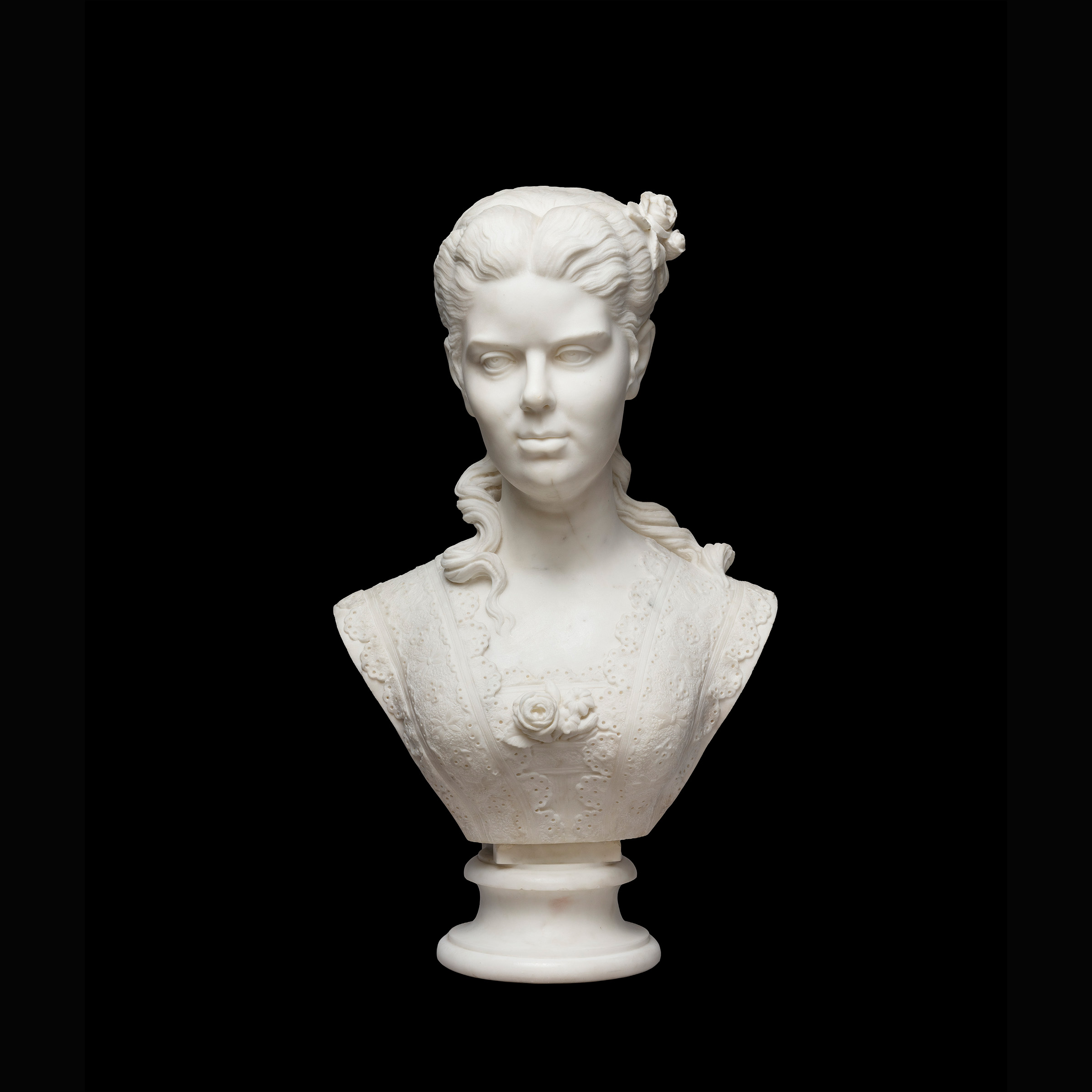
This self-guided digital experience invites you to explore the question: How would you depict a friend? The sculpture Portrait of a Woman (1873) is believed to represent Edmonia Lewis’s close friend Isobel Cholmeley during her time in Rome. As you scroll through this interactive experience, you will learn about Edmonia Lewis and her legacy as the first internationally acclaimed sculptor of mixed heritage. Discover her artistic career in Rome, new curatorial findings about the identity of the sitter, and the historical context surrounding the sculpture Portrait of a Woman.

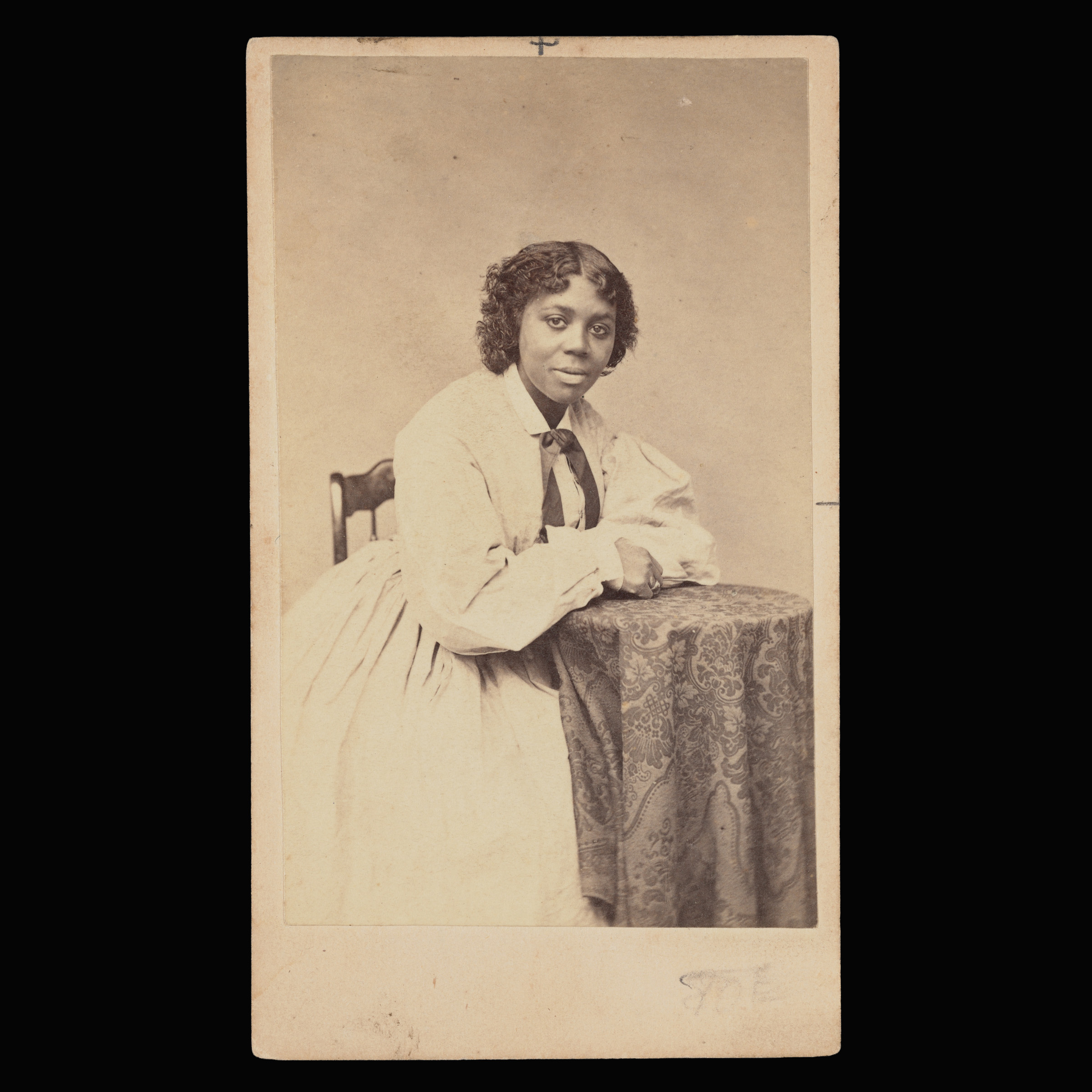
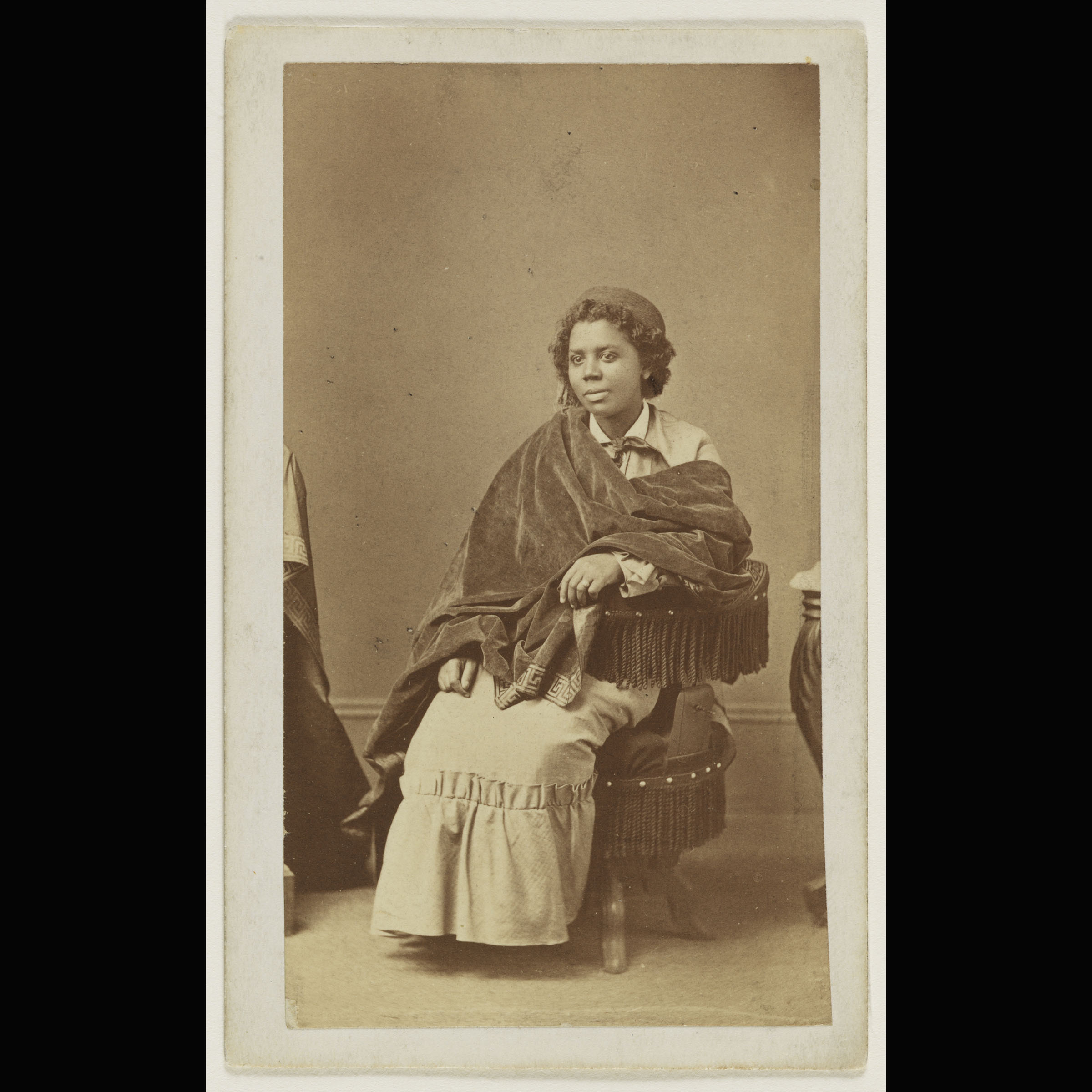
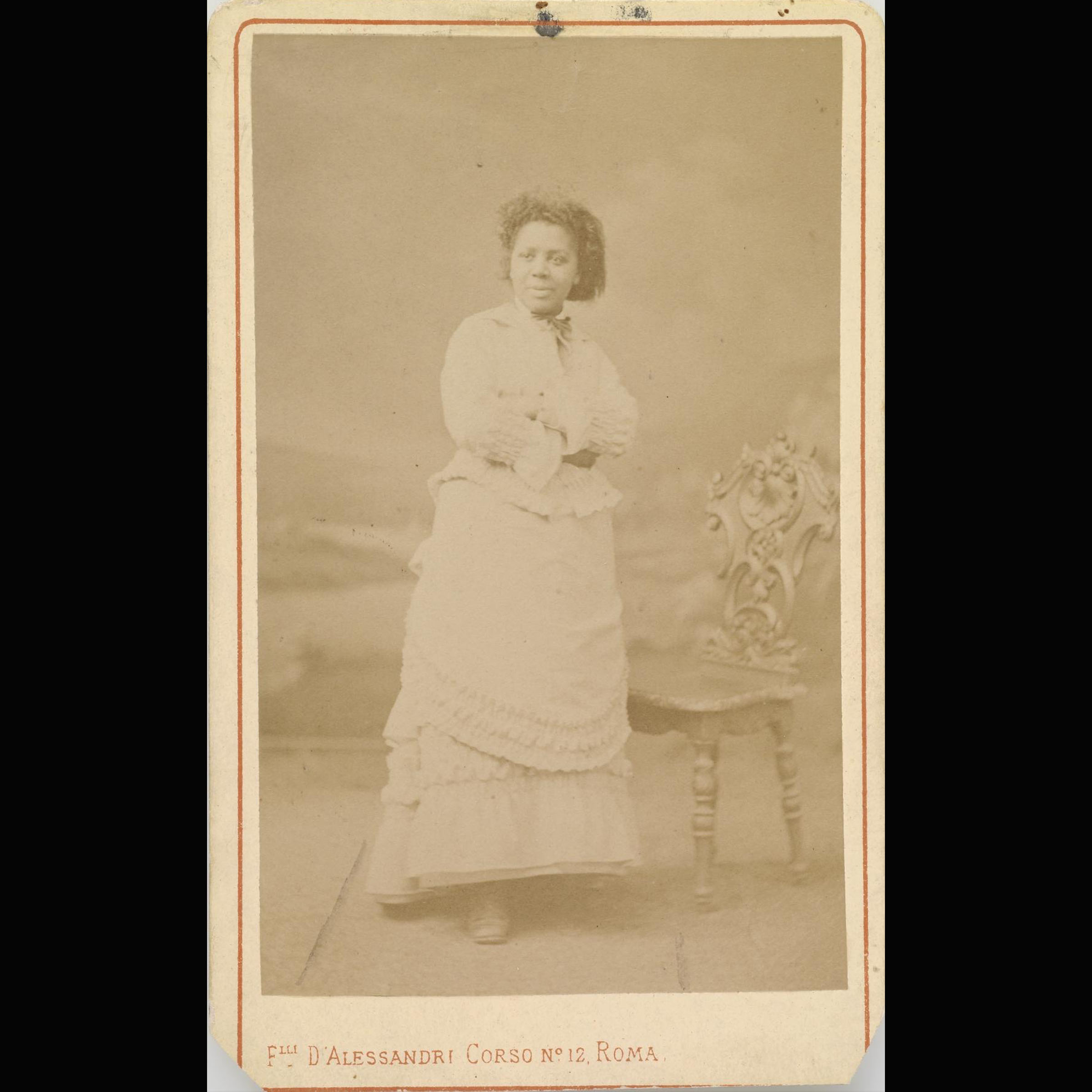
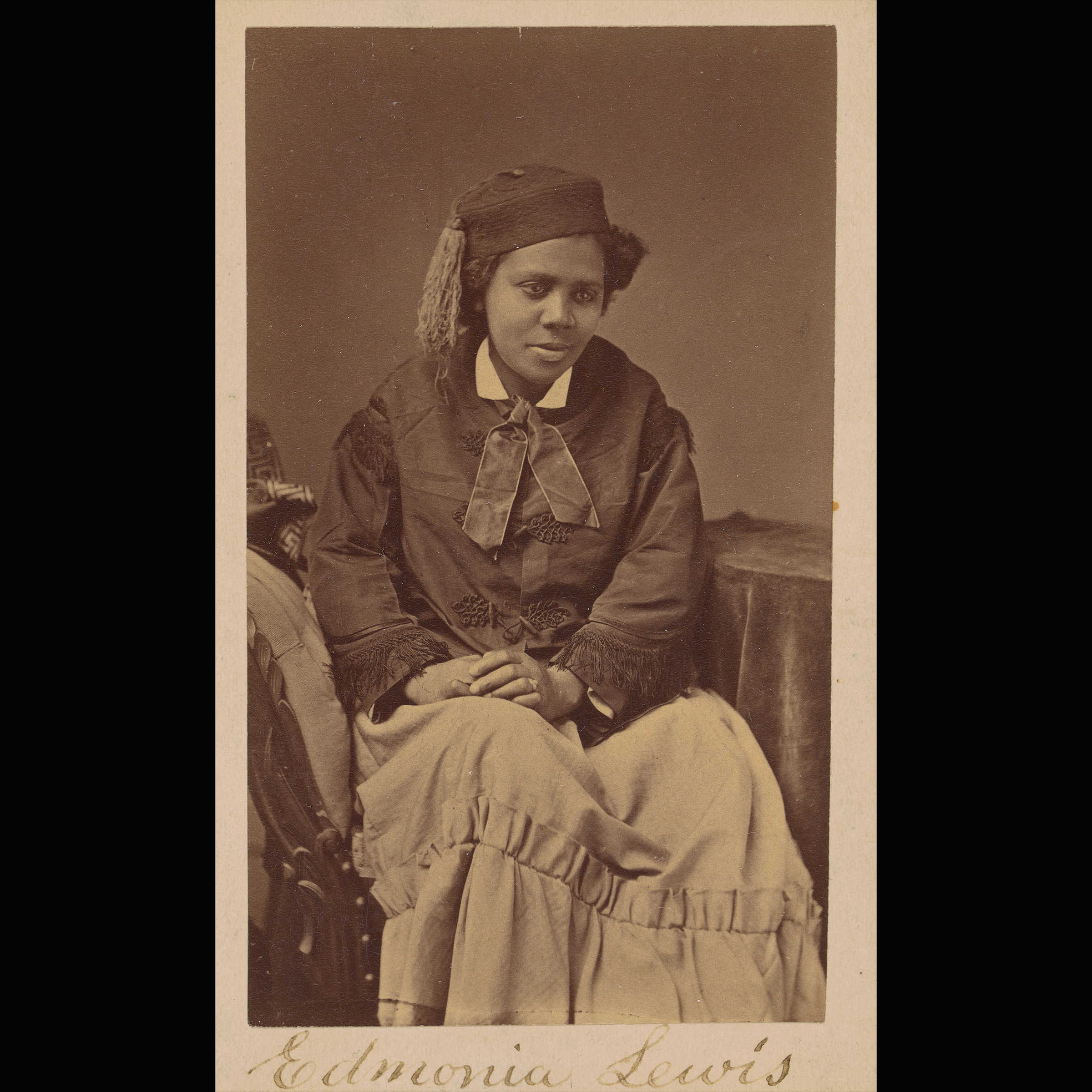
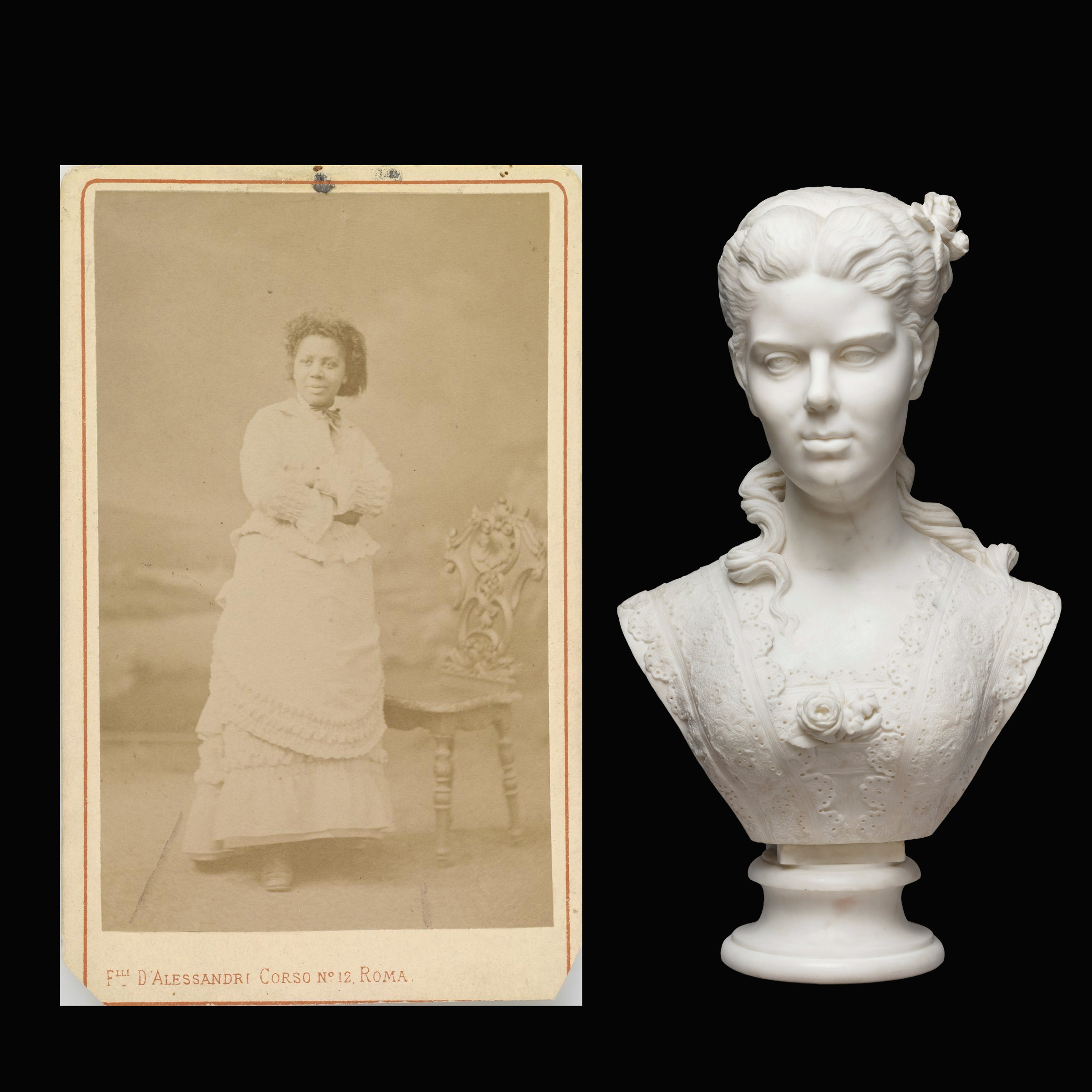
Edmonia Lewis, pictured right, was the first sculptor of Black and Indigenous heritage to achieve international acclaim.

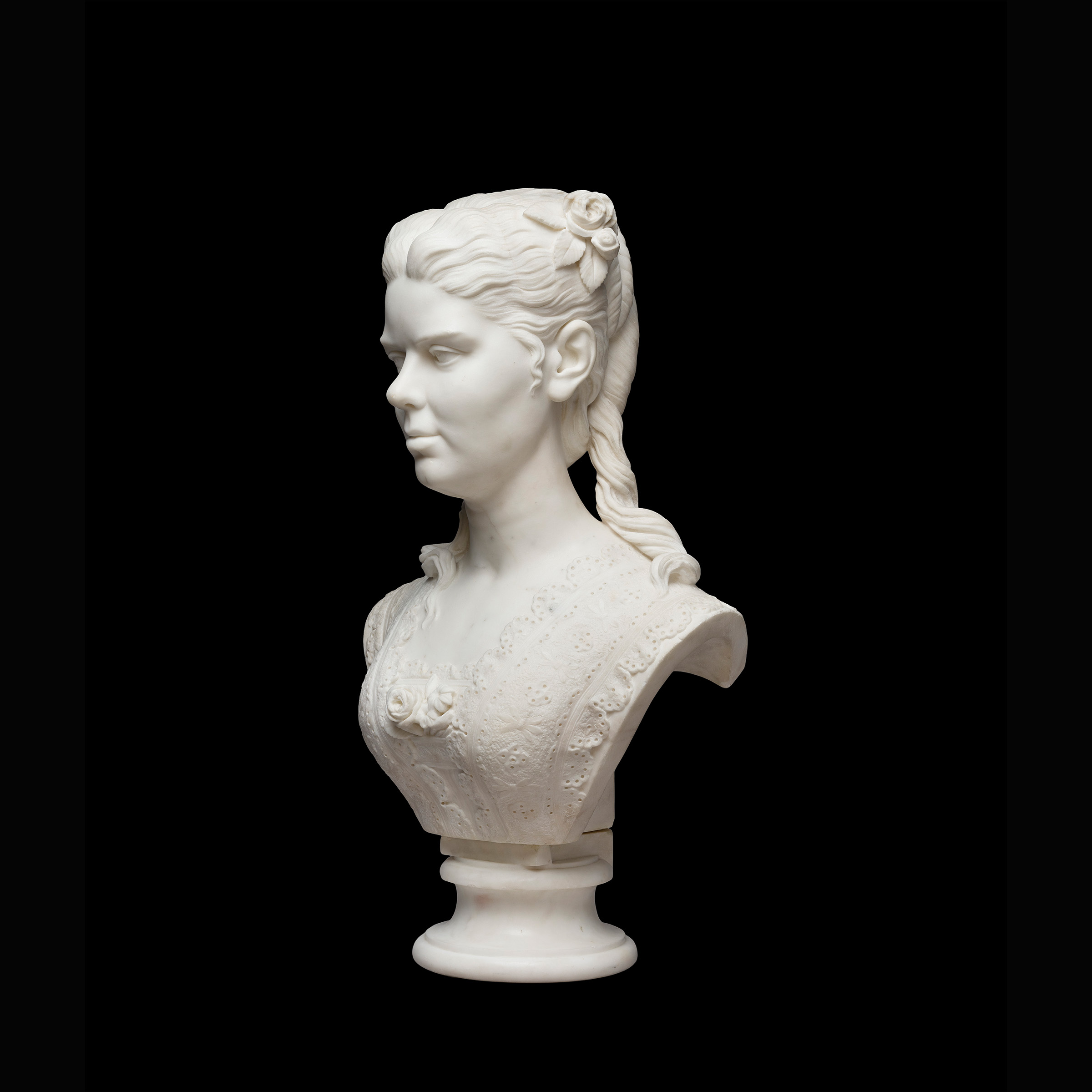
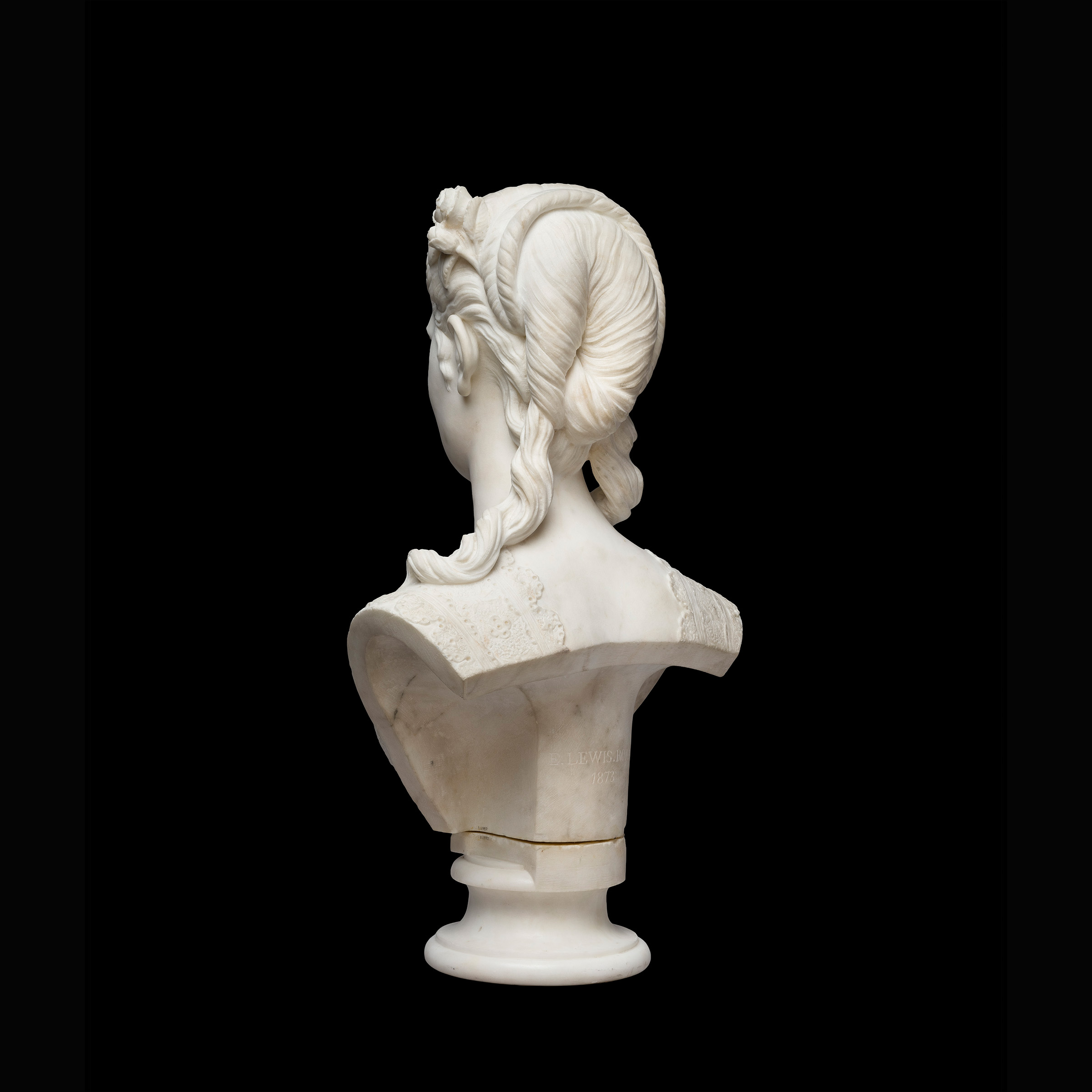
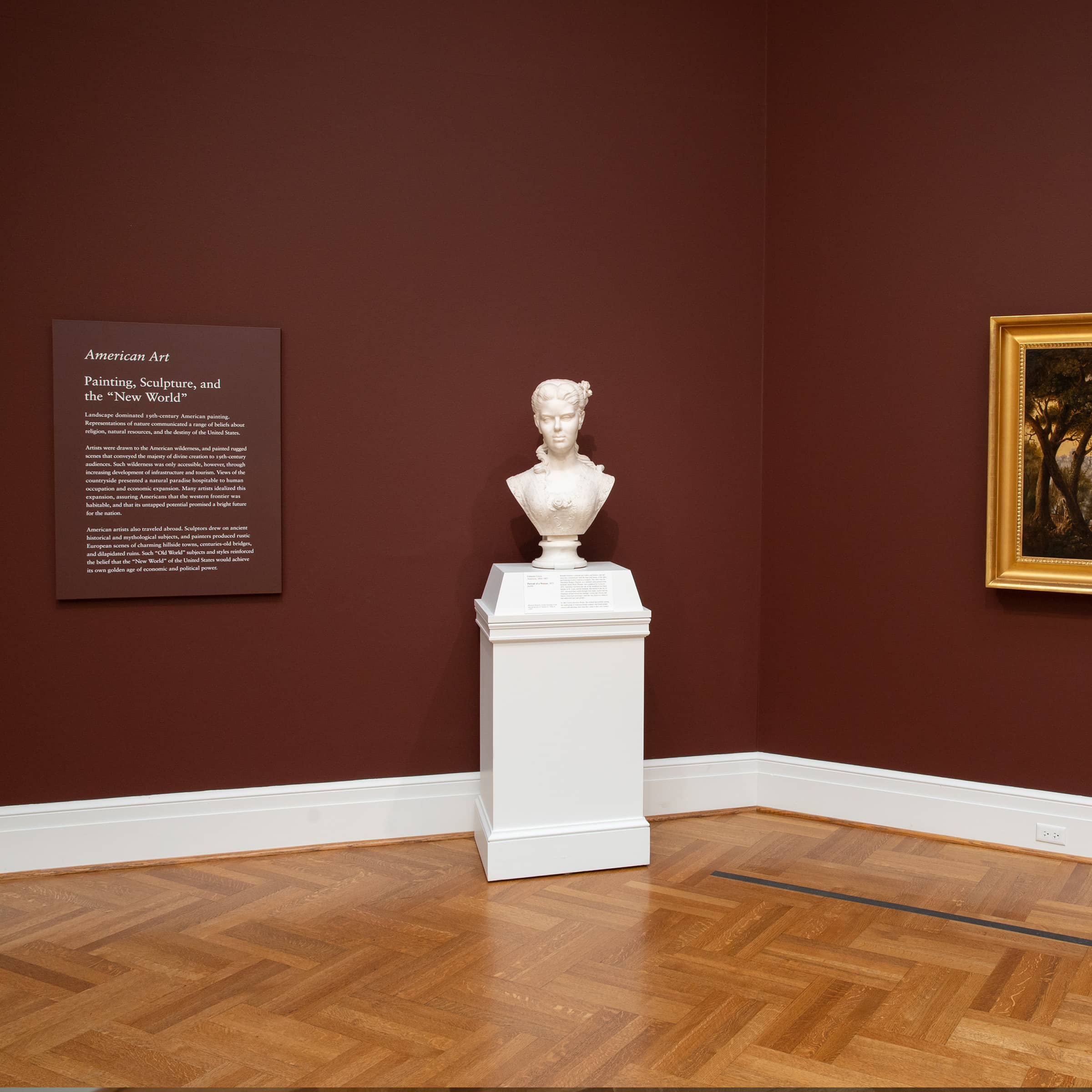
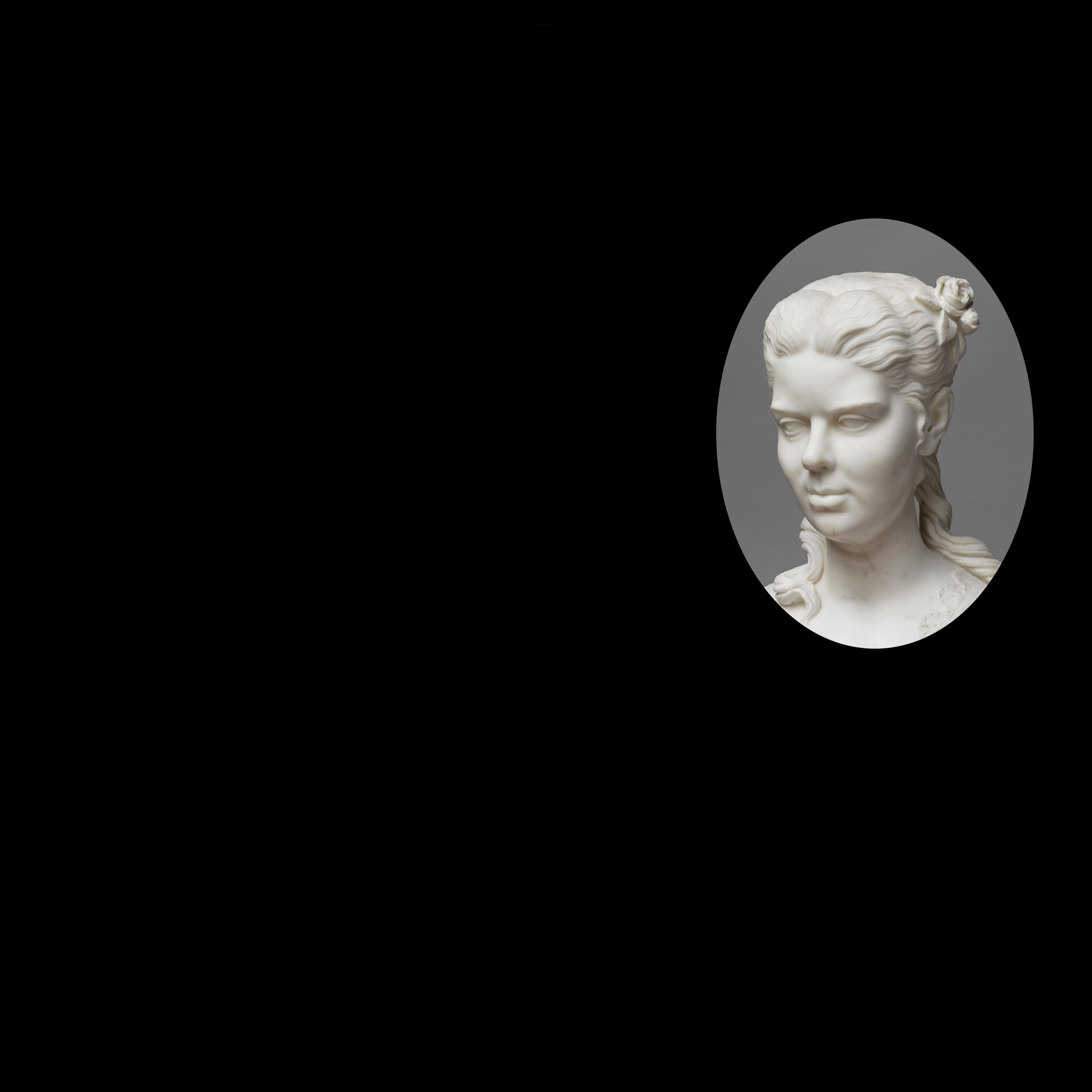
Portrait of a Woman is a marble sculpture created by Lewis in Rome in 1873.

The Saint Louis Art Museum acquired Portrait of a Woman in 1997, making it one of the first works to join the collection that year.

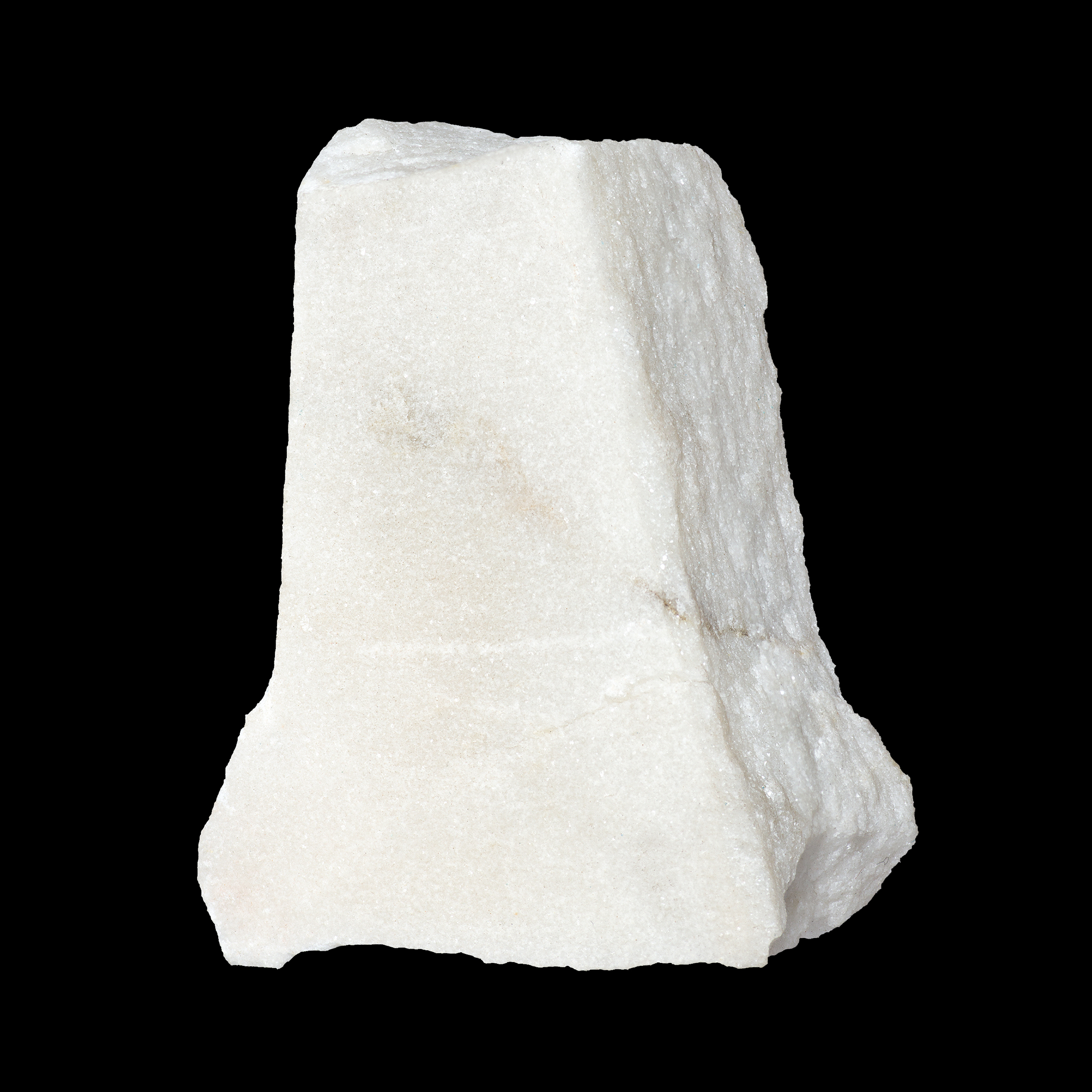
Marble is a favored medium among sculptors for its density and luminosity.

Portrait of a Woman began as a single block of stone, carved by Lewis into its finished form.

The sculpture stands 29 1/2 (29.5) inches high.

74.93 centimeters

0.7493 meters

2.4583 feet

Portrait of Woman by Edmonia Lewis weighs 145.6 pounds.

2,329.6 ounces

66.04 kilograms

66,043 grams

An archival photograph depicting a Black woman facing the camera and seated at a small table. A marble statue depicting a woman from the shoulders up, with a 19th-century hairstyle. Marble block in a rough rectangular shape, on a black background. Three-quarter view of a marble statue depicting a woman from the shoulders up, with a 19th century hairstyle. Back view of a marble statue depicting a woman from the shoulders up, with a 19th century hairstyle. Back view of a marble statue depicting a woman from the shoulders up, with a 19th century hairstyle. Side profile view of a marble statue depicting a woman from the shoulders up, with a 19th century hairstyle. Three-quarter view of a marble statue depicting a woman from the shoulders up, with a 19th century hairstyle. Front view of a marble statue depicting a woman from the shoulders up, with a 19th-century hairstyle.

To understand this work, we turn to the life and artistic journey of Edmonia Lewis.

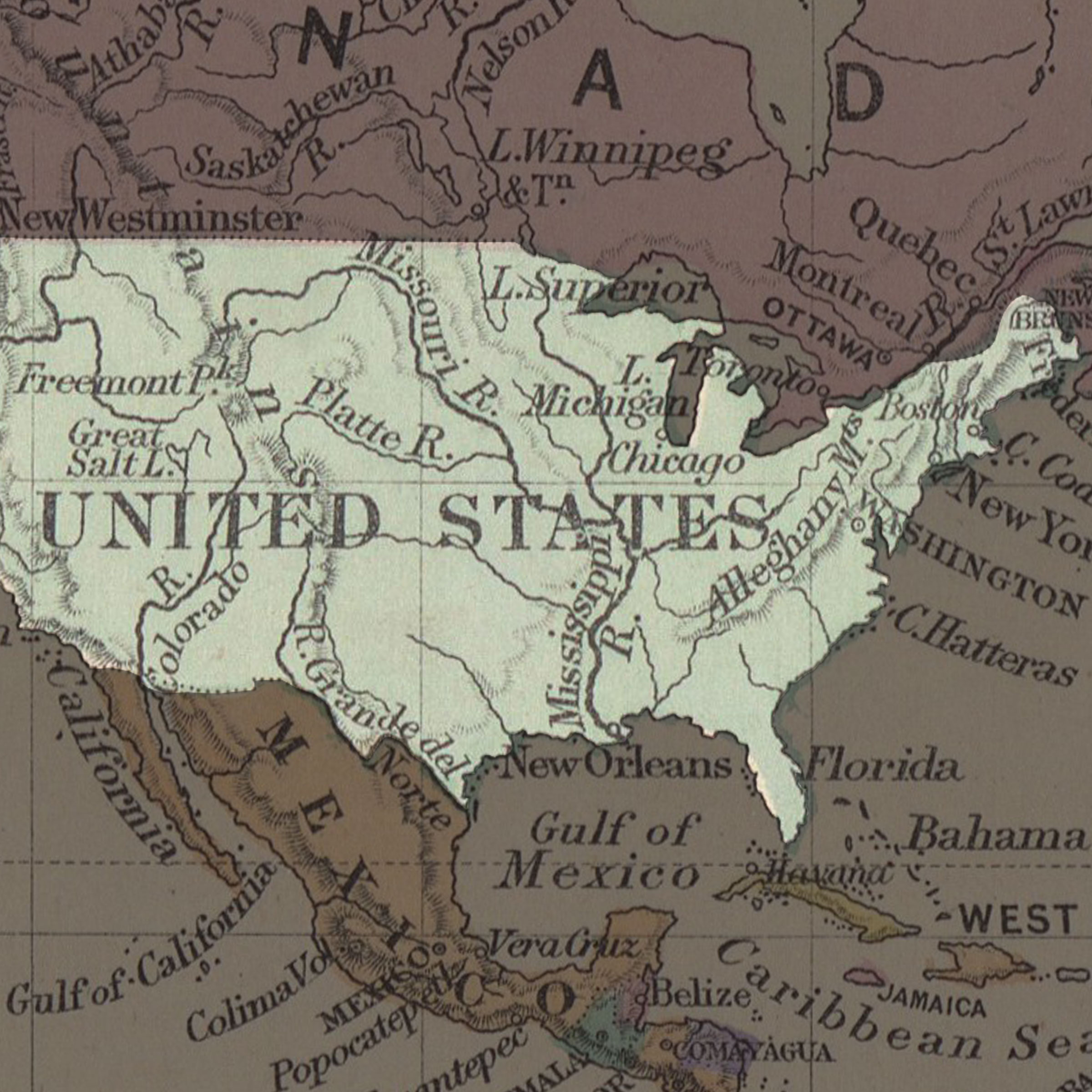
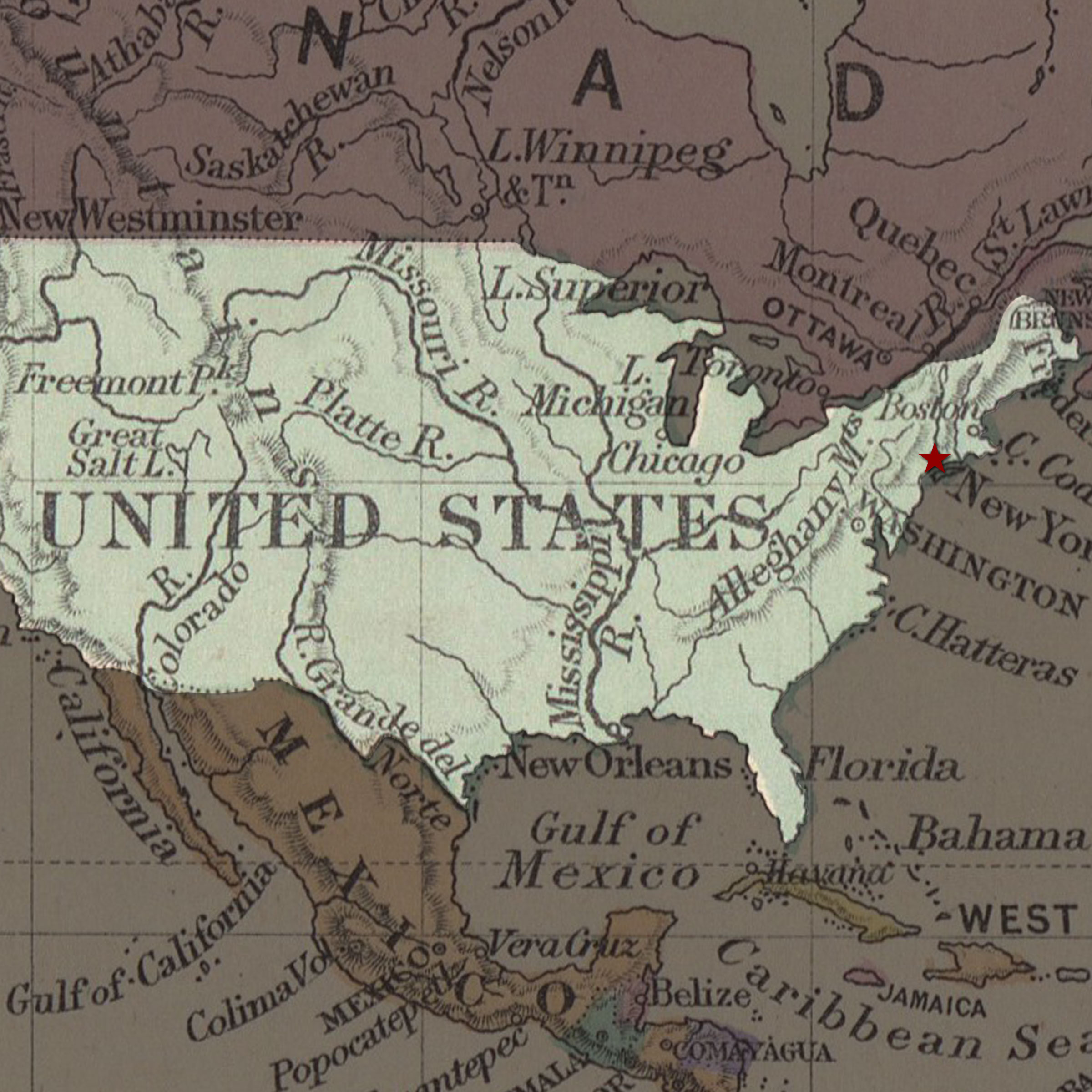
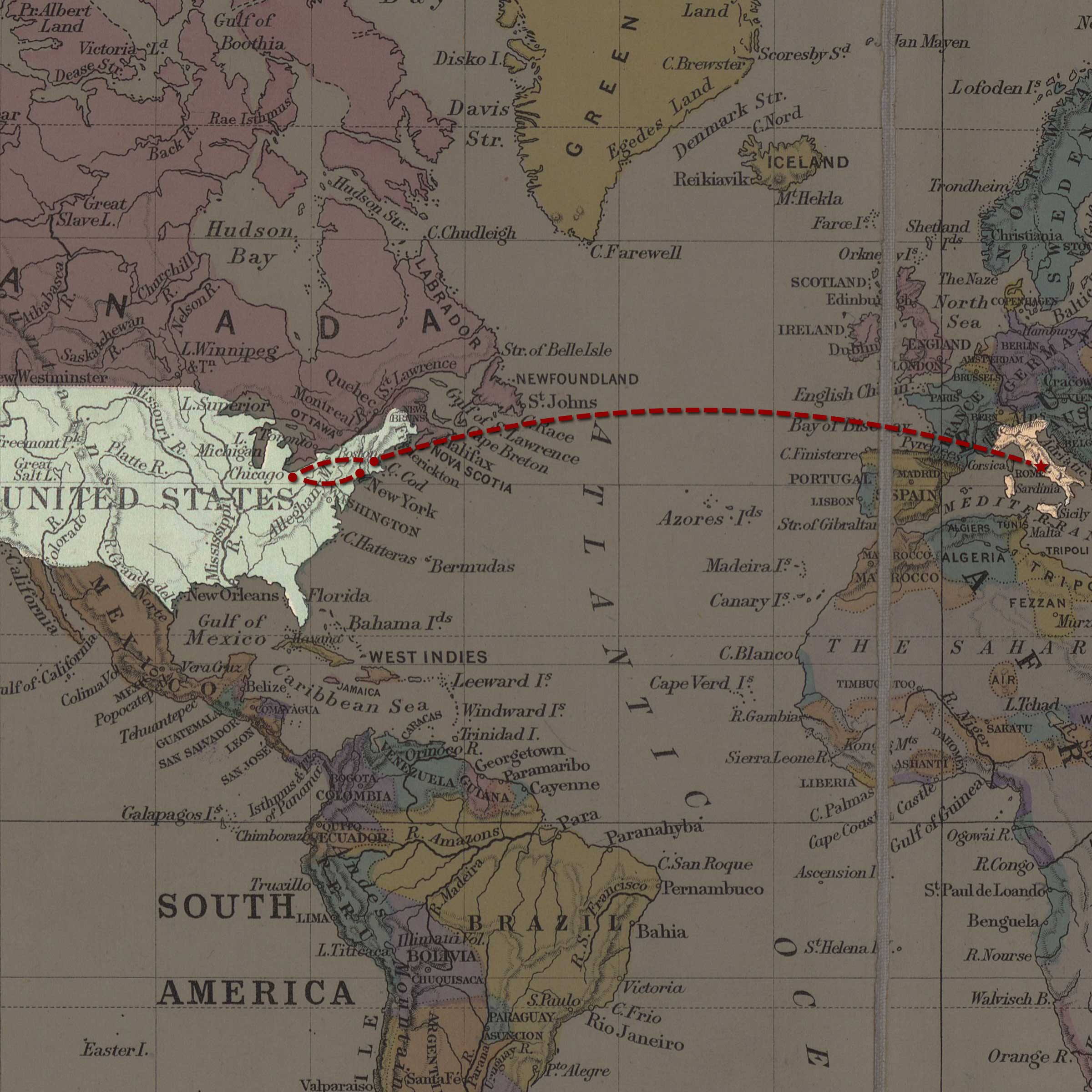
Mary Edmonia Lewis was born in upstate New York in 1844. Her family included her mother, father, and older brother, Samuel.

Lewis studied at Oberlin College in Oberlin, Ohio, from 1859 to 1863. Her time there was marked by perseverance and the beginnings of a network that would shape her path as an artist.

Lewis moved to Boston, Massachusetts in 1863. Her sculptures during this time were primarily depictions of Civil War heroes and abolitionists. These early pieces brought her wider recognition.

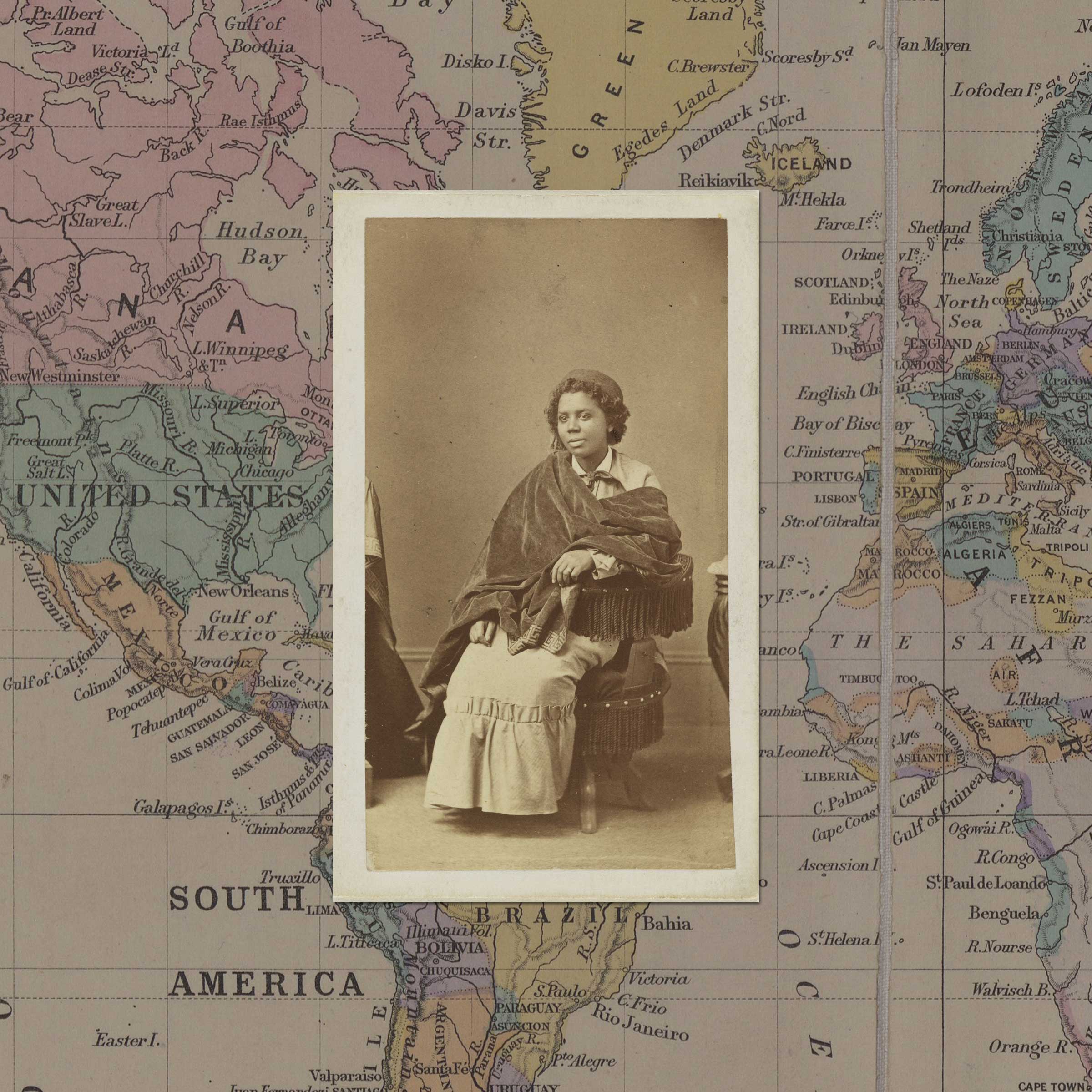
Edmonia Lewis eventually brought her artistic practice to Rome, Italy, where Portrait of a Woman was created.

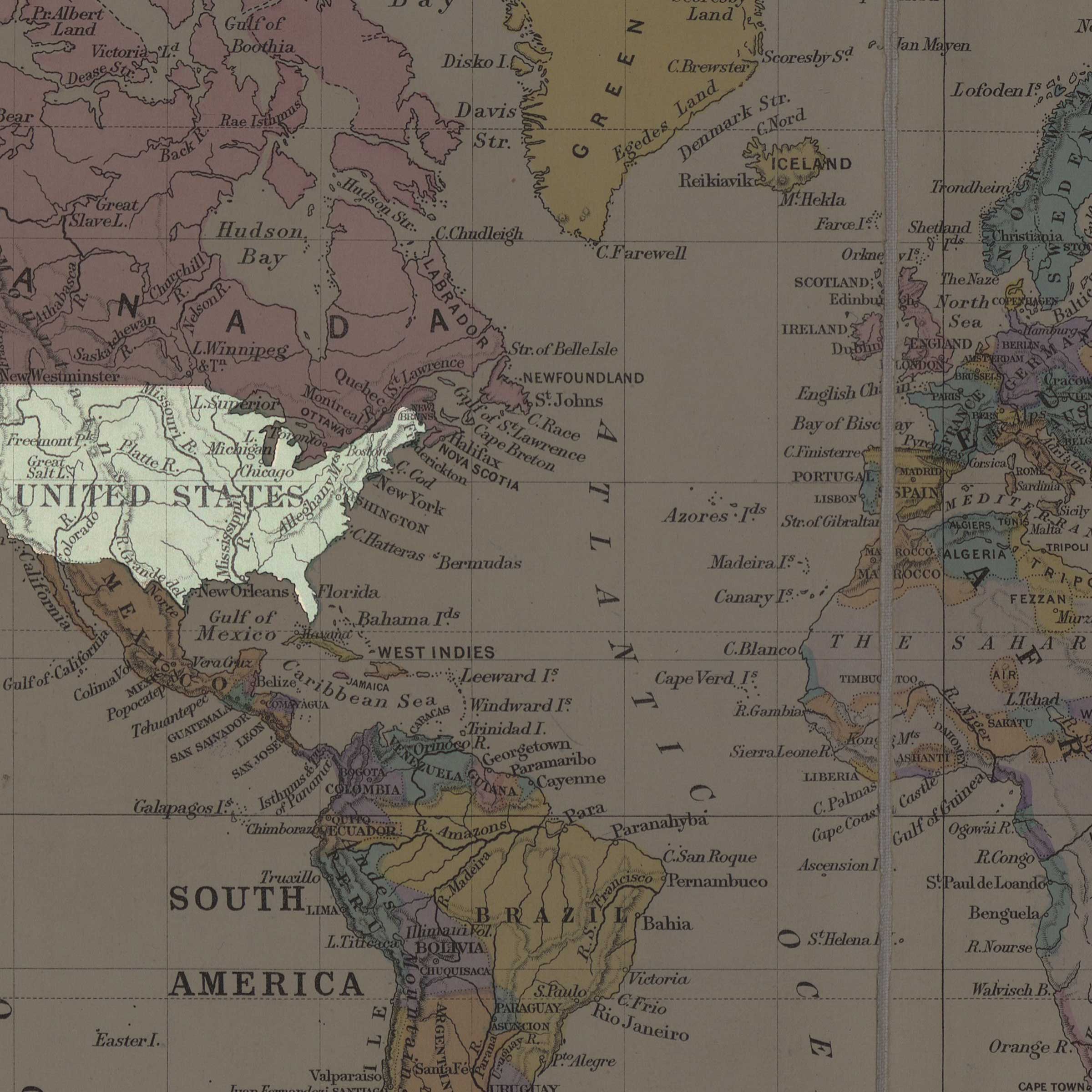
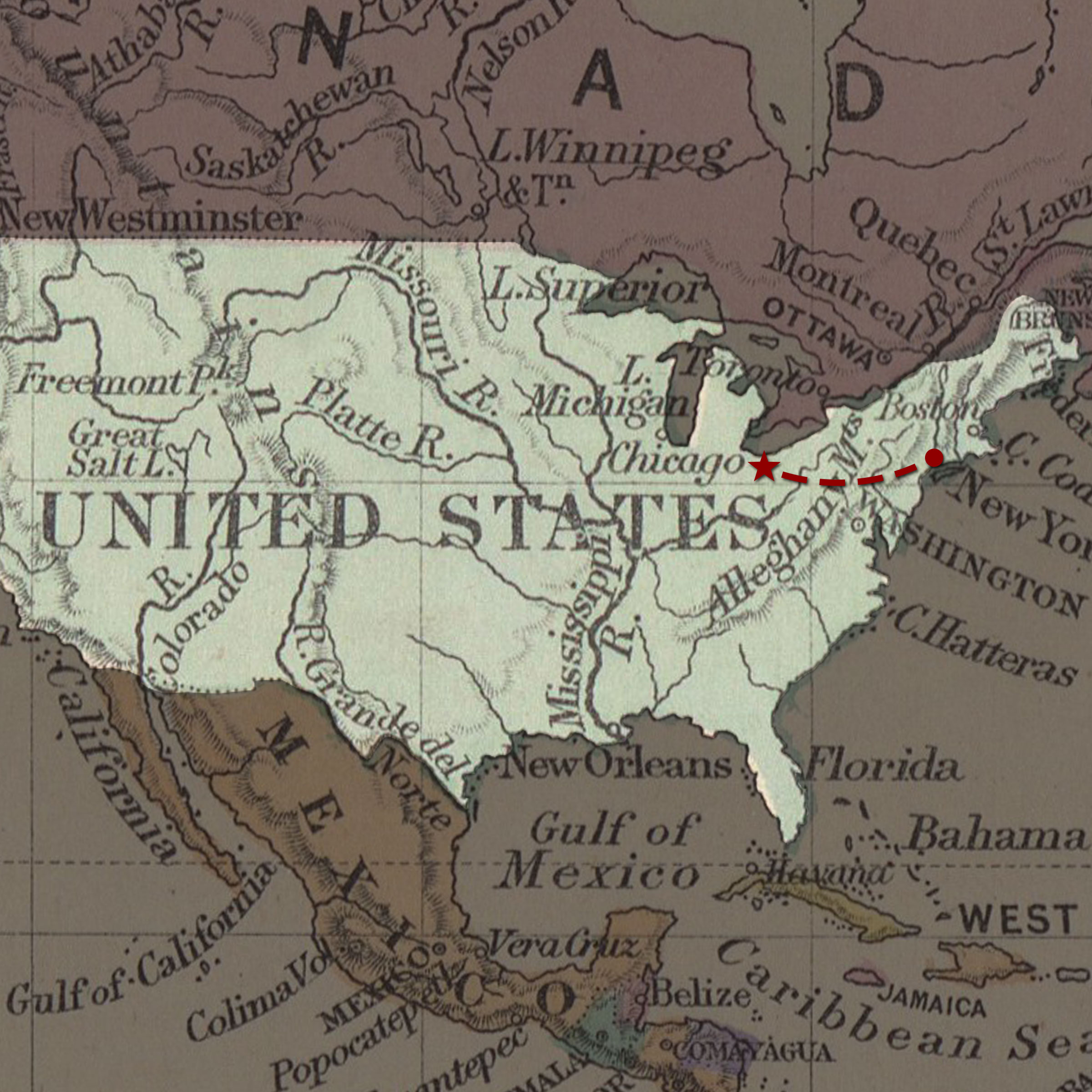
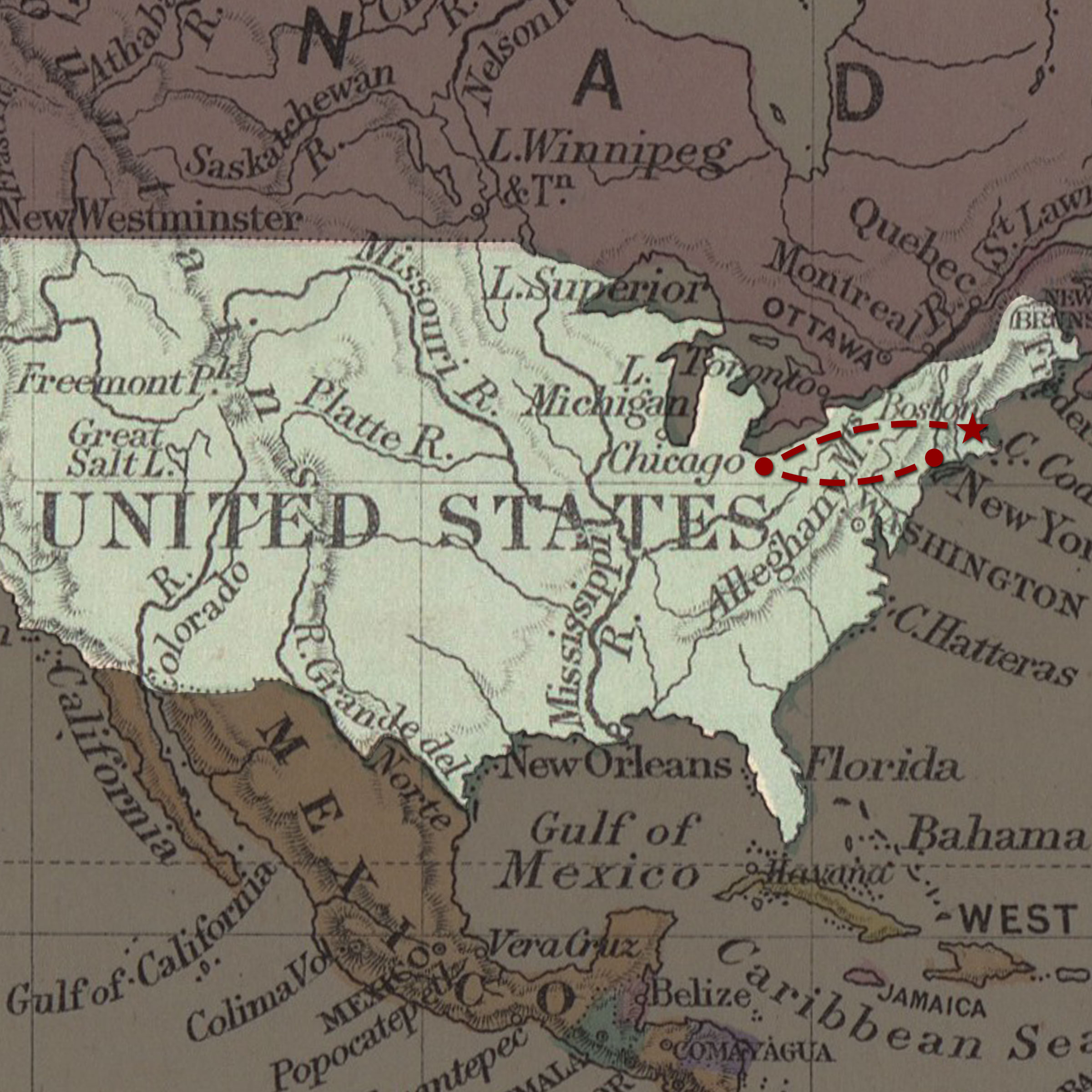
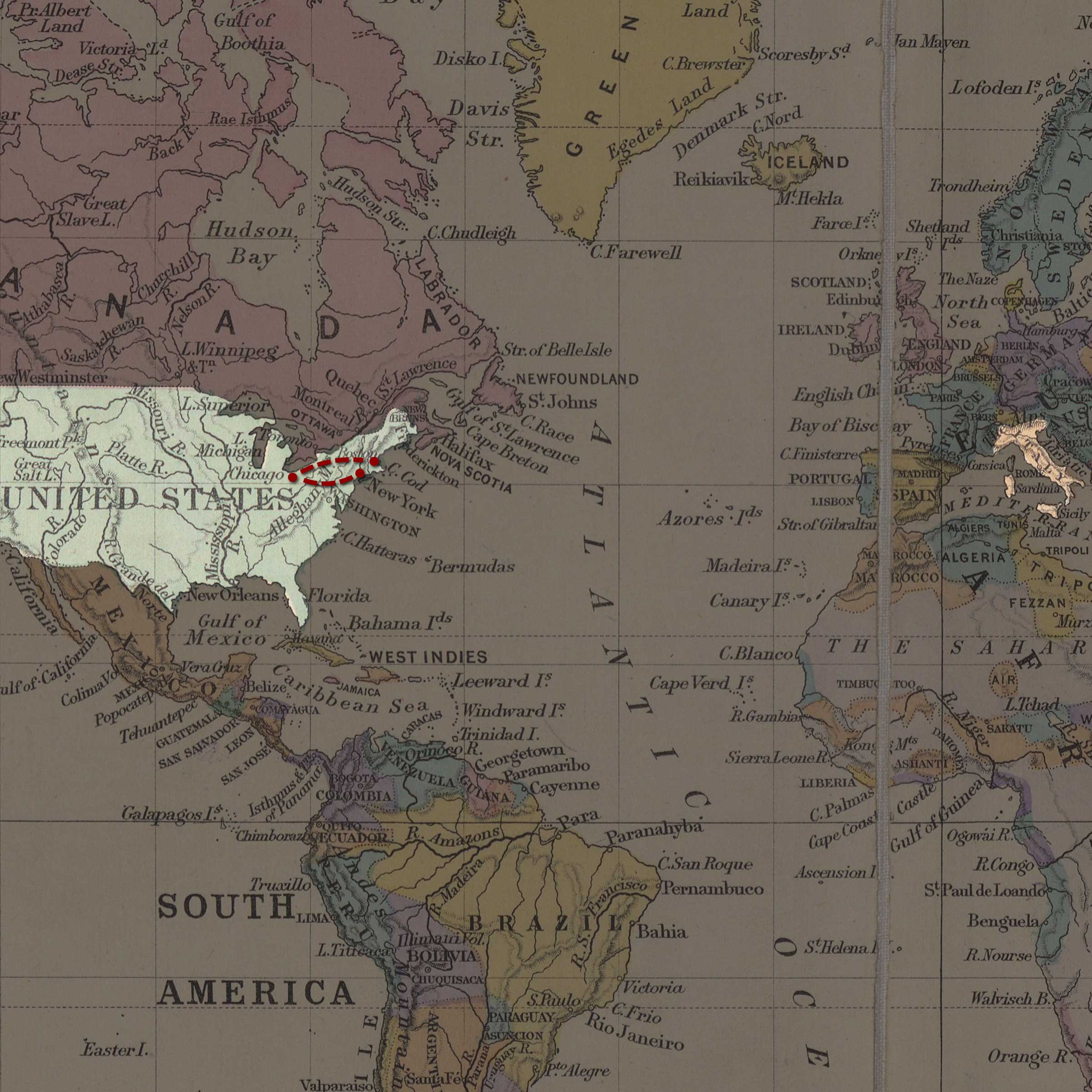
Archival photograph of seated Black woman, facing the camera, with a background made of a 19th-century map. A 19th-century map with the United States of America highlighted. A closer view of a 19th-century map with the United States of America highlighted. A 19th-century map with the United States of America highlighted, with New York marked. A 19th-century map with the United States of America highlighted, with a dashed line connecting New York to Oberlin. A 19th-century map with the United States of America highlighted, with a dashed line connecting Oberlin to Boston. A 19th-century map with the United States of America and Italy highlighted. A 19th-century map with the United States of America highlighted, with a dashed line connecting Boston to Rome.

We'll explore this chapter of her life in more detail shortly. But first, let's look at how Lewis was discussed in the media of her time.

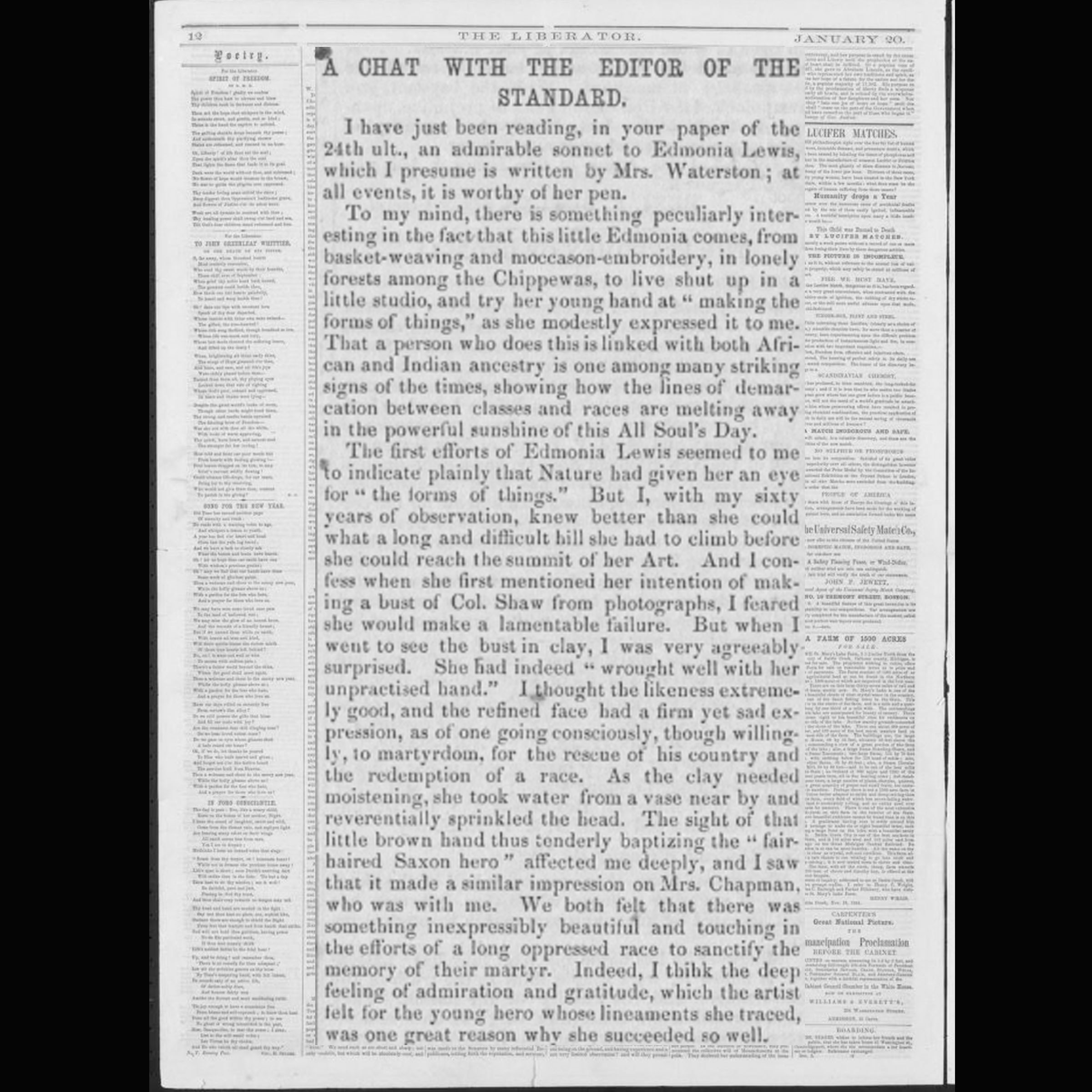
The periodical to the right is The Liberator, a Boston-based abolitionist periodical that ran from 1831 to 1865.

This sonnet was written to offer poetic perspective to Edmonia Lewis's bust of Colonel Shaw . . .

Edmonia Lewis’s skills in celebrating these heroes brought widespread attention to her ability.

A page from the 19th-century publication, The Liberator, with the corner highlighted in yellow. A zoomed in view of a page from the 19th-century publication, The Liberator, with the corner highlighted in yellow. A zoomed in view of a page from the 19th-century publication, The Liberator.

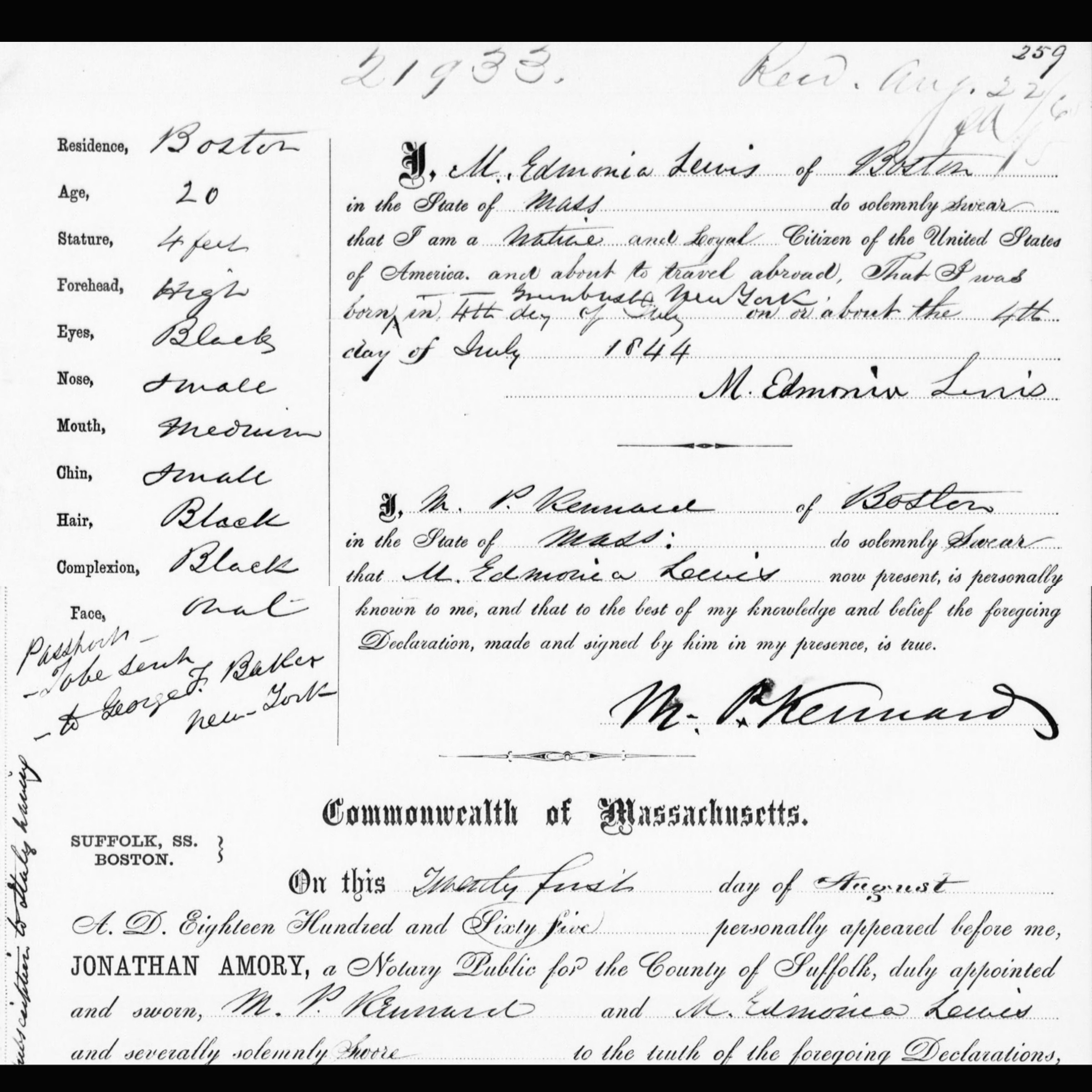
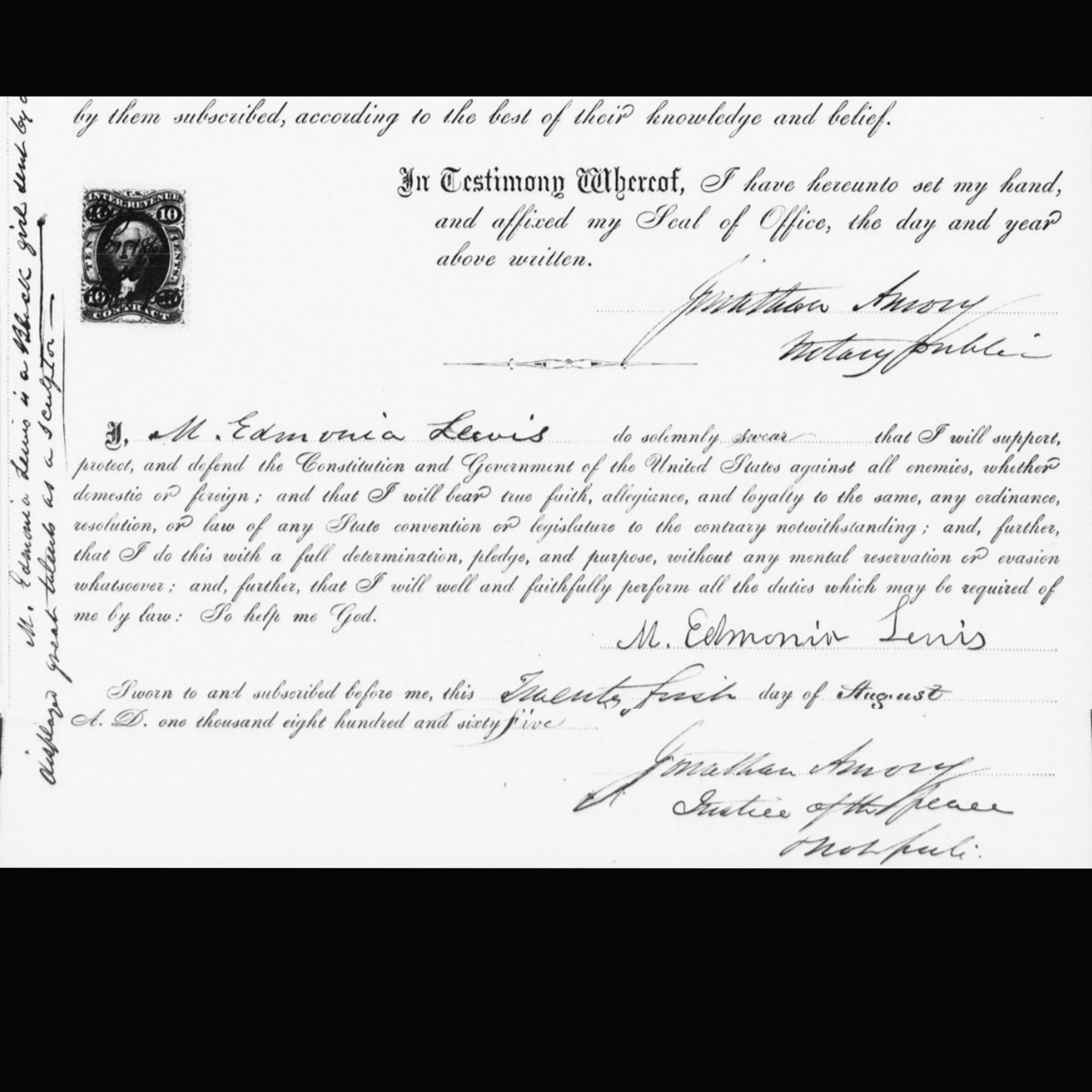
Pictured is Edmonia Lewis's passport application ahead of her travel to Rome

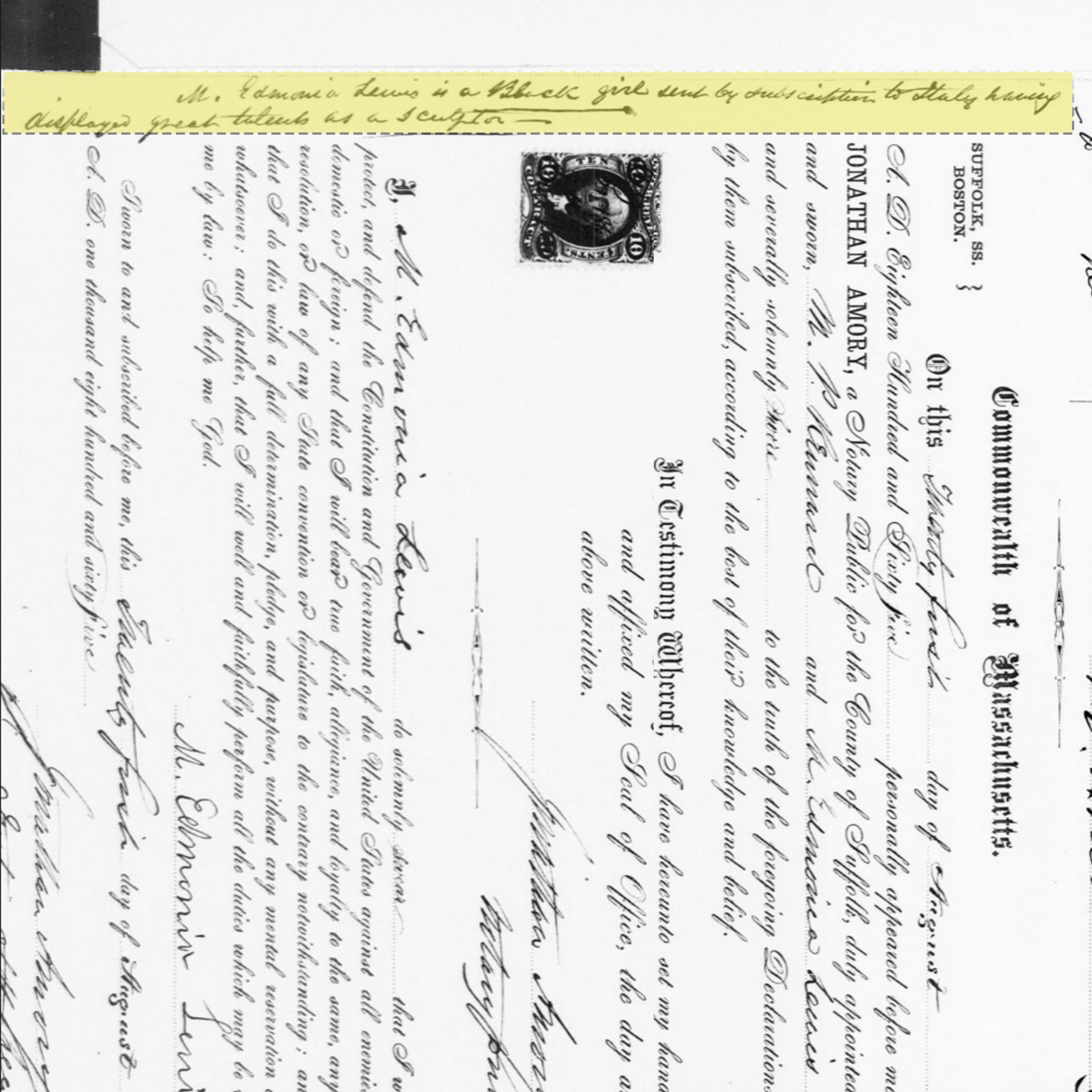
The vertical text on the left side of the application states,

“M. Edmonia Lewis is a Black girl sent by subscription to Italy having displayed great talents as a sculptor.”

Commonwealth of Massachusetts passport signed by Edmonia Lewis. Zoomed and cropped version of Commonwealth of Massachusetts passport signed by Edmonia Lewis. Rotated version of Commonwealth of Massachusetts passport signed by Edmonia Lewis.

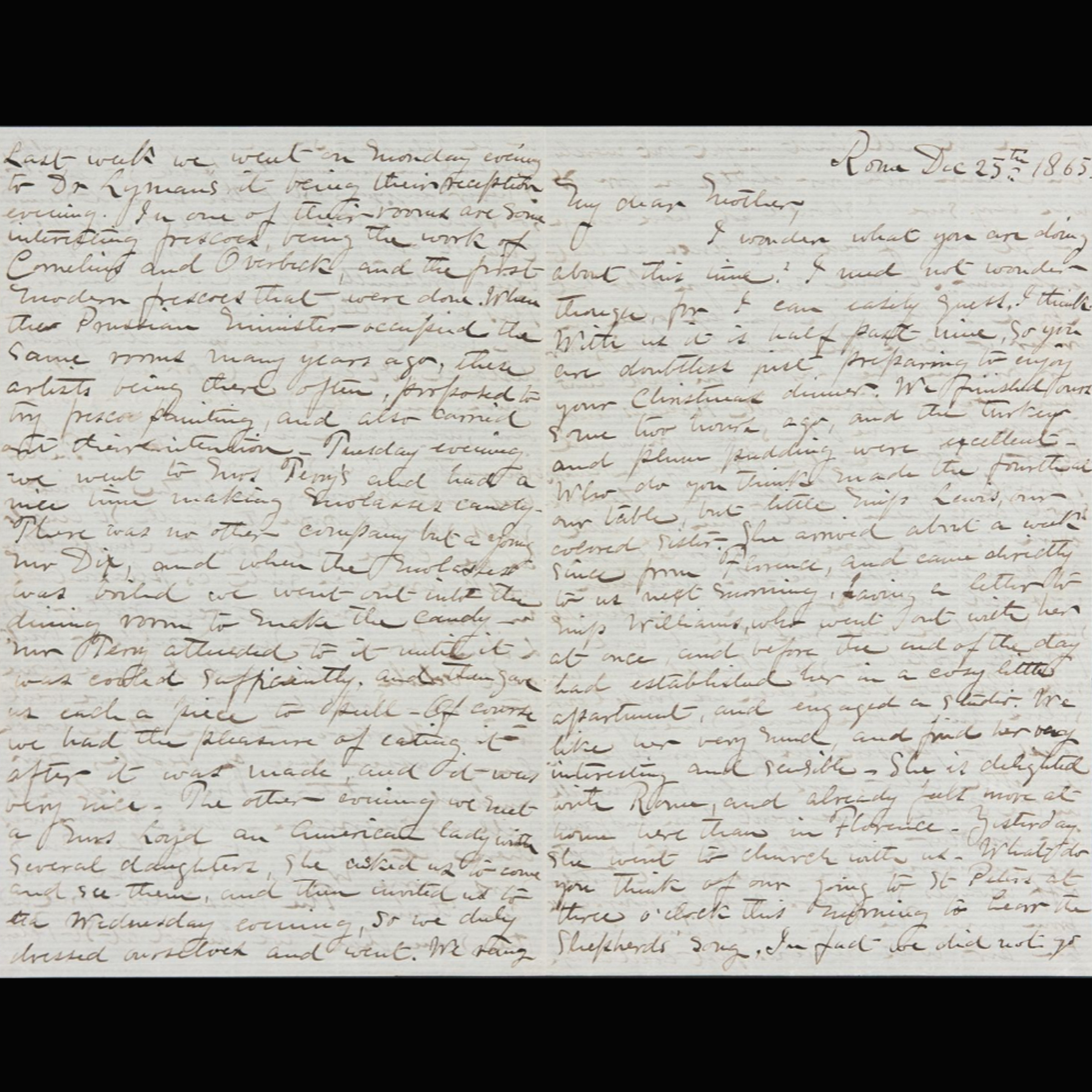
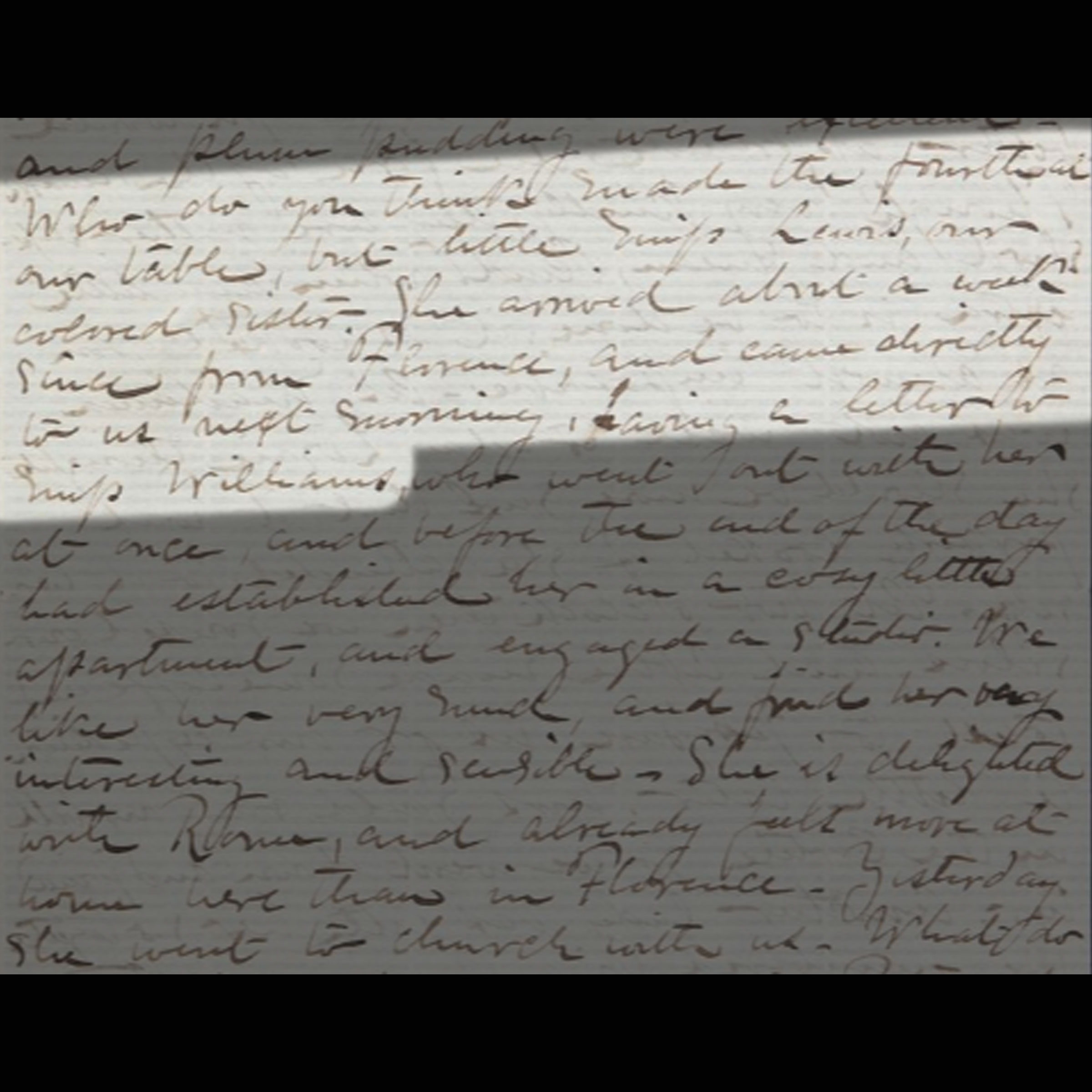
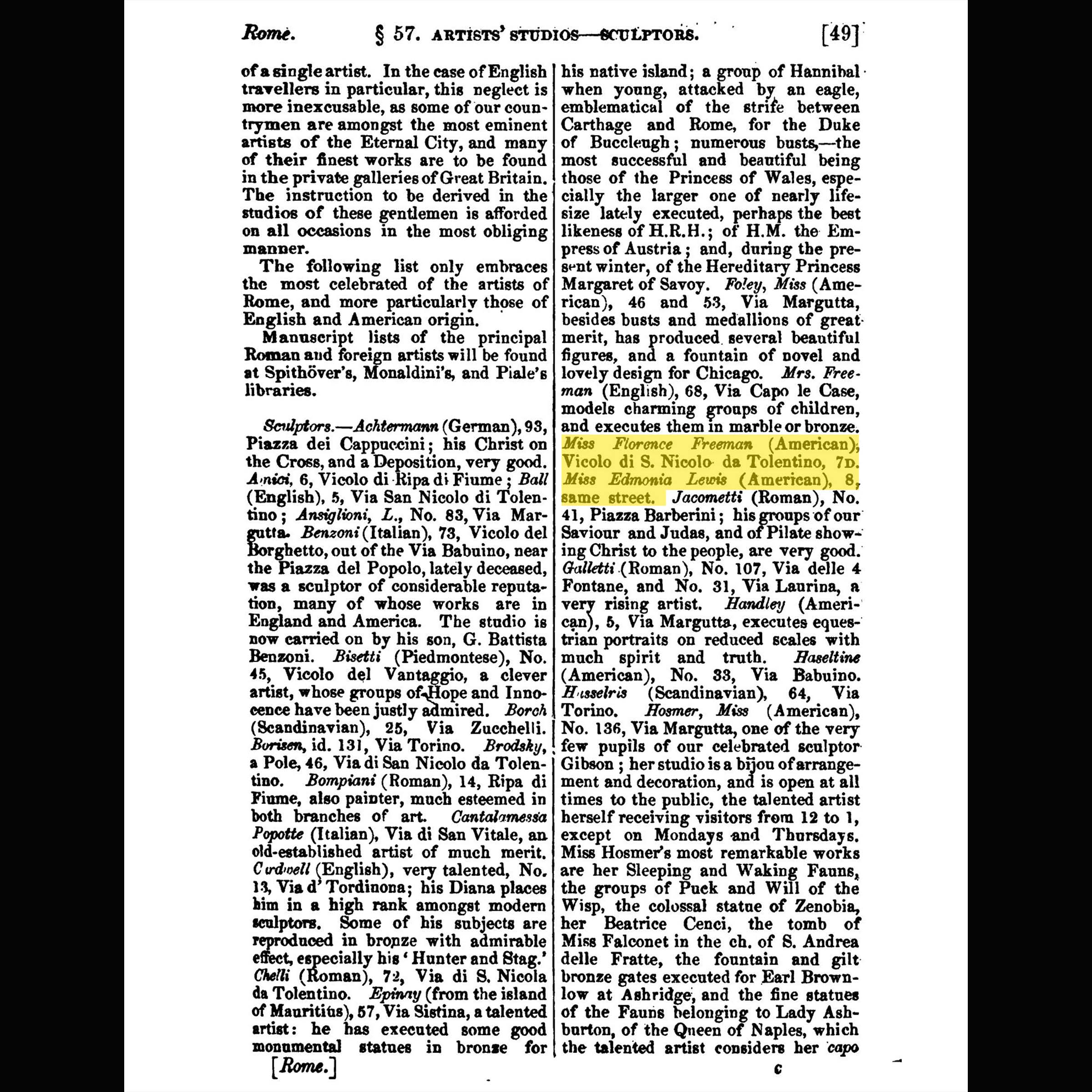
In this letter from Florence Freeman, a Boston-born sculptor, we get a third-person perspective into her arrival. Florence states,

“Who do you think made the fourth at our table, but little Miss Lewis, our colored sister. She arrived about a week since from Florence, and came directly to us next morning, having a letter to Miss Williams,”

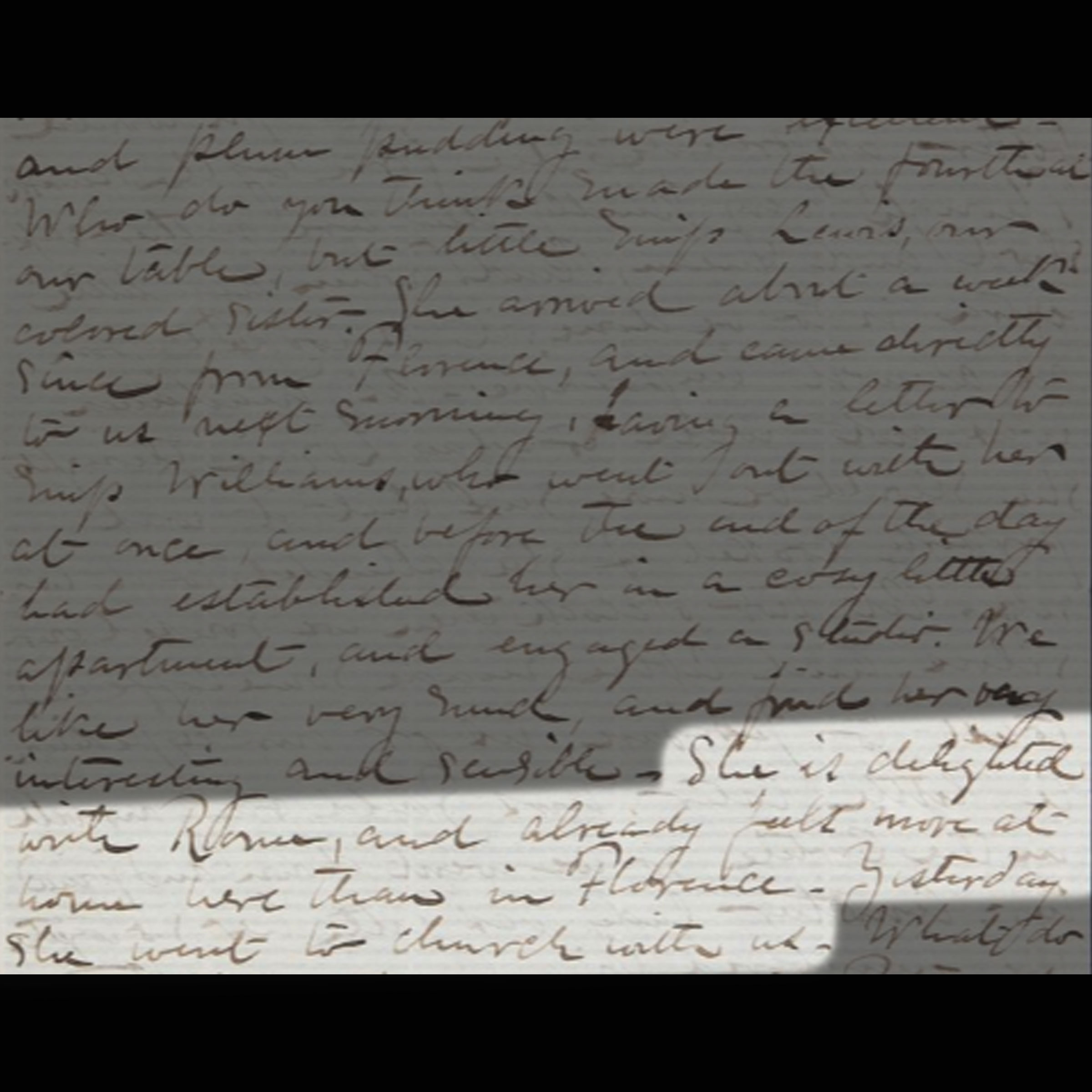
“. . . who went out with her at once and before the end of the day had established her in a cozy little apartment, and engaged a studio. We like her very much and find her very interesting and sensible . . .”

“. . . She is delighted with Rome, and already feels more at home than in Florence. Yesterday she went to church with us.”

Florence Freeman was one of many women expatriate artists working in Rome alongside Lewis.

This community has more recently been described as a “Sisterhood of Sculptors.”

These sculptors often worked in neighboring studios along the same street, supporting one another's practice and creative lives.

Portrait of a Woman, created during Lewis's time in Rome, is believed to depict one of her close friends within this circle.

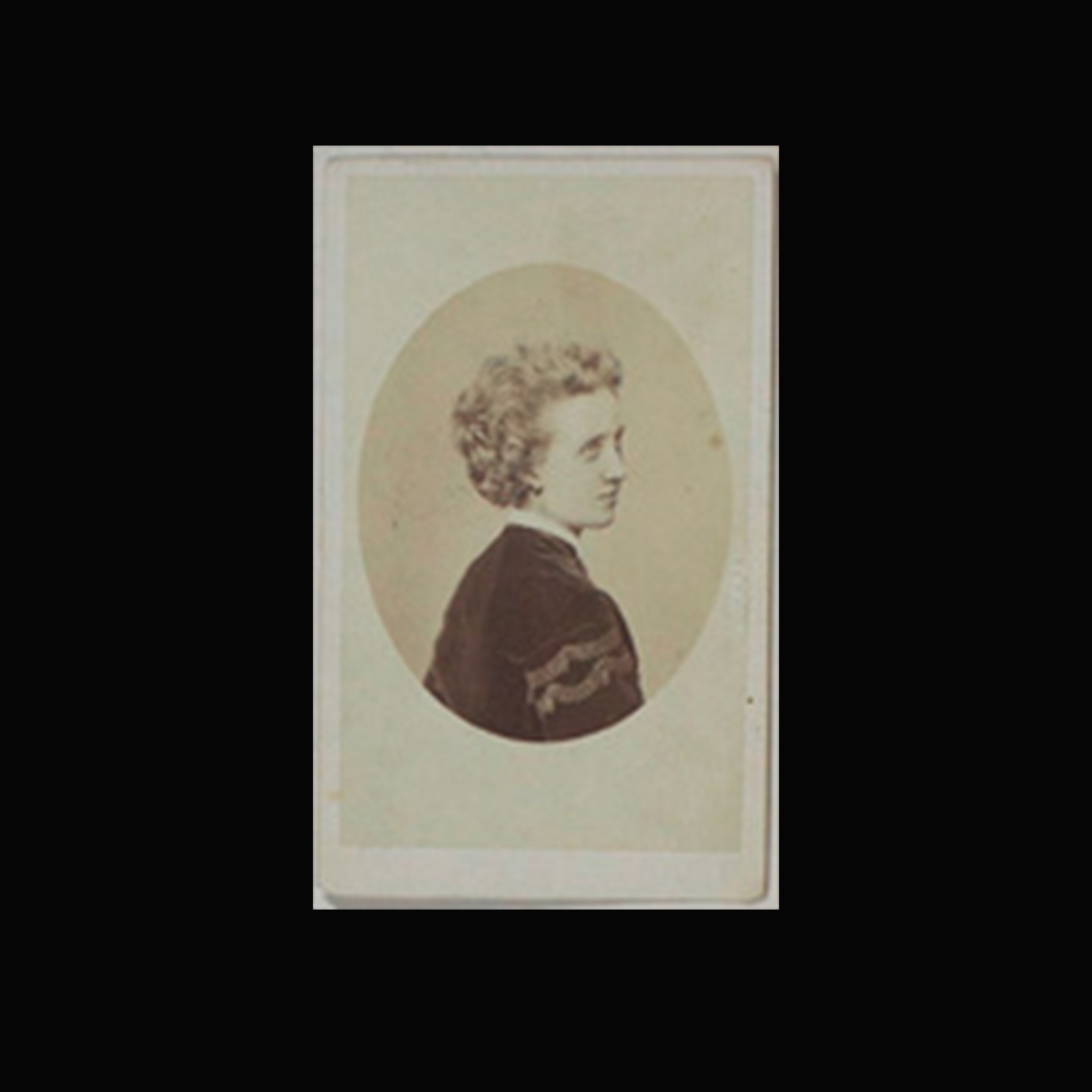
A handwritten letter from the 19th century, comprised of two columns of text. Zoomed and cropped version of a handwritten letter from the 19th century. Zoomed and cropped version of a handwritten letter from the 19th century. Zoomed and cropped version of a handwritten letter from the 19th century. A 19th-century photograph of a woman, showing her face in profile, with her back turned to towards the camera. A 19th-century publication about artist studios in Rome, Italy.

Curatorial research is central to how museums like SLAM deepen understanding of their collections and has led to new findings.

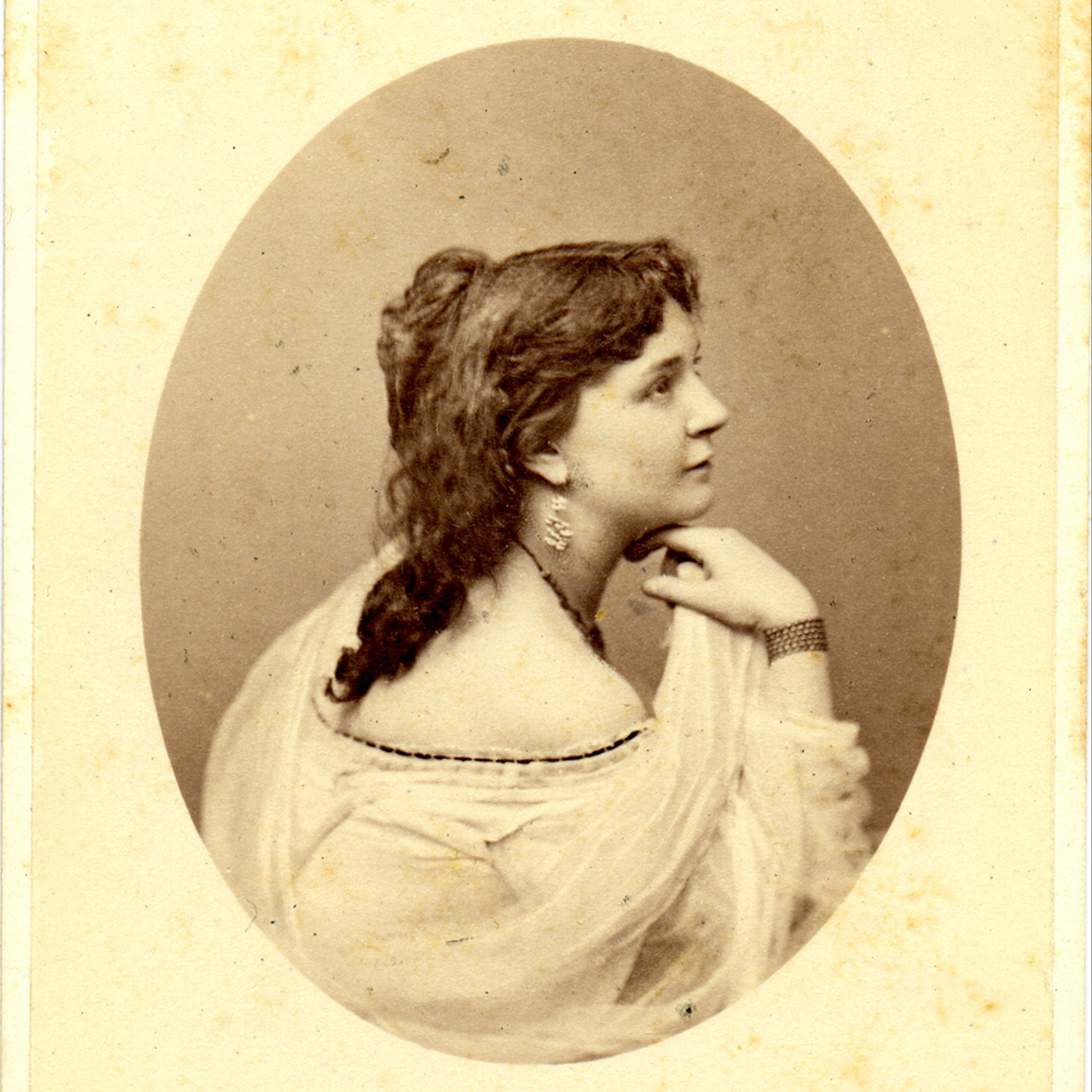
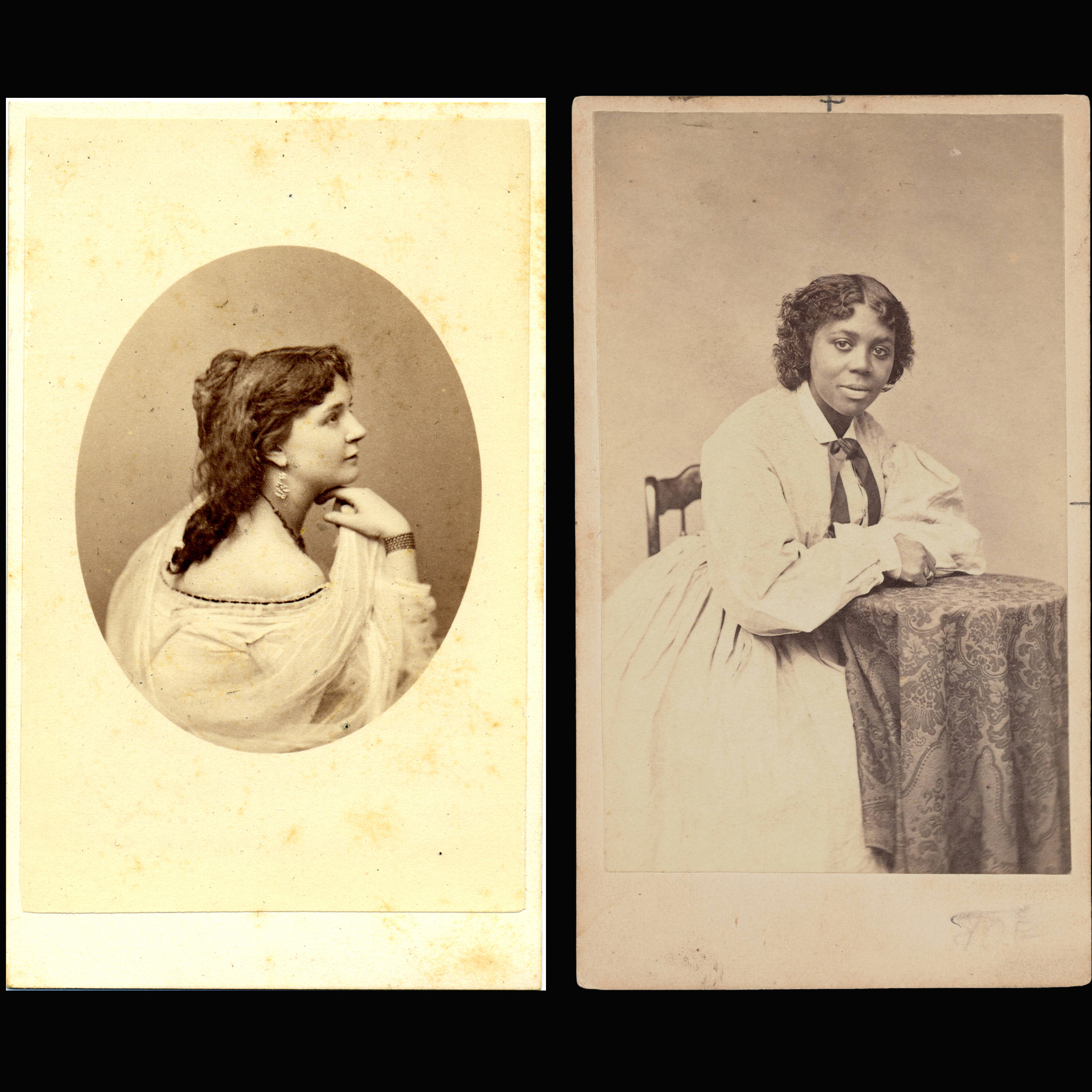
Curators now believe the sculpture may depict Isobel Cholmeley, a close friend of Lewis's.

Like many friendships, the bond between Lewis and Cholmeley was rooted in shared moments of leisure, joy, and visibility.

Let’s now look closer at the artwork and consider . . .

How would you honor a friend through sculpture?

What traits or qualities would you choose to capture?

A marble sculpture of a woman, placed on a column in a museum gallery. A 19th-century photograph of a woman with long hair, showing her face in profile and a hand on her chin, with her back turned to towards the camera. Two 19th-century photographs placed side by side, each of a woman, one white and one Black. A marble statue depicting a woman from the shoulders up, with a 19th-century hairstyle.

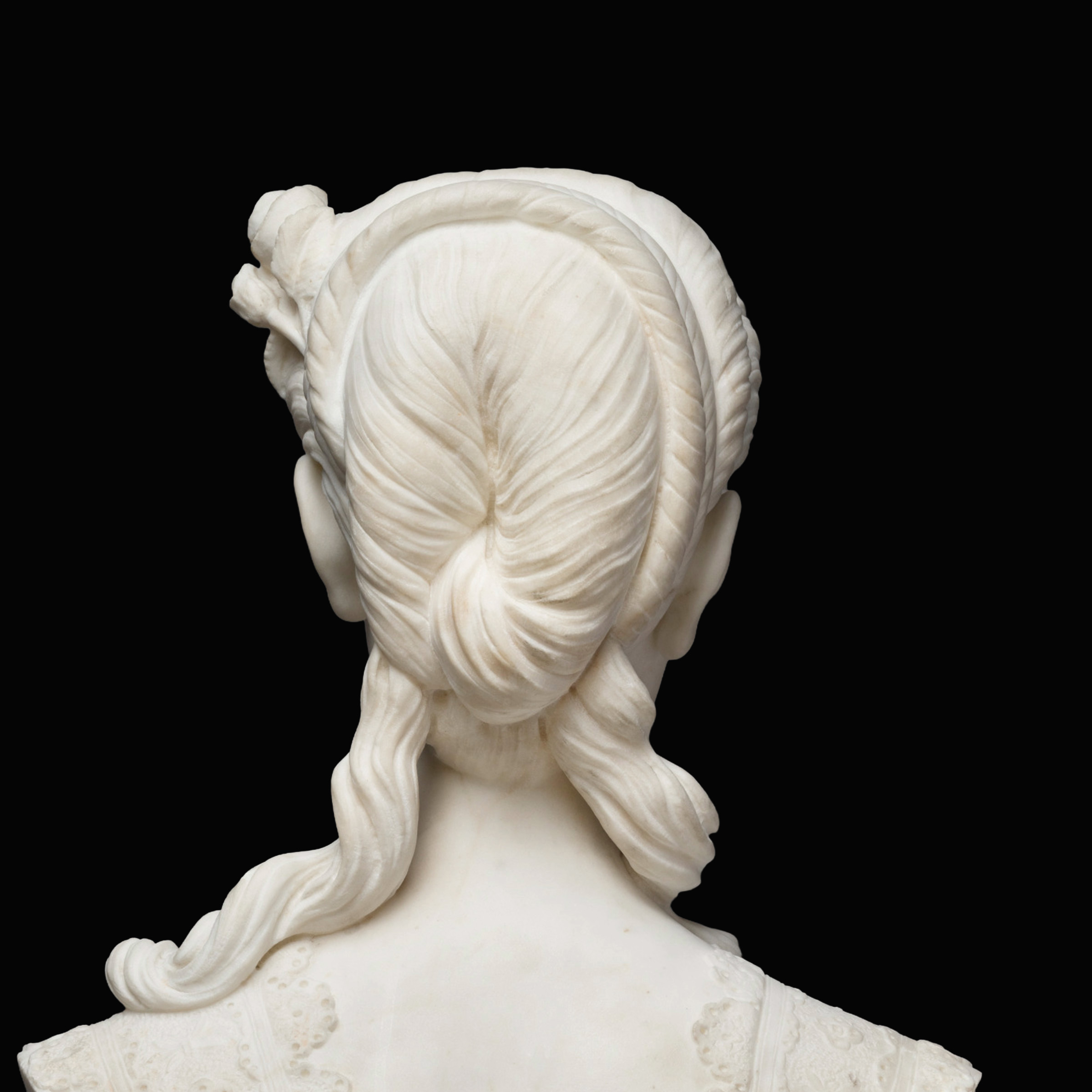
Lewis began with a single block of marble, carving it by hand into a likeness rich with personal detail.

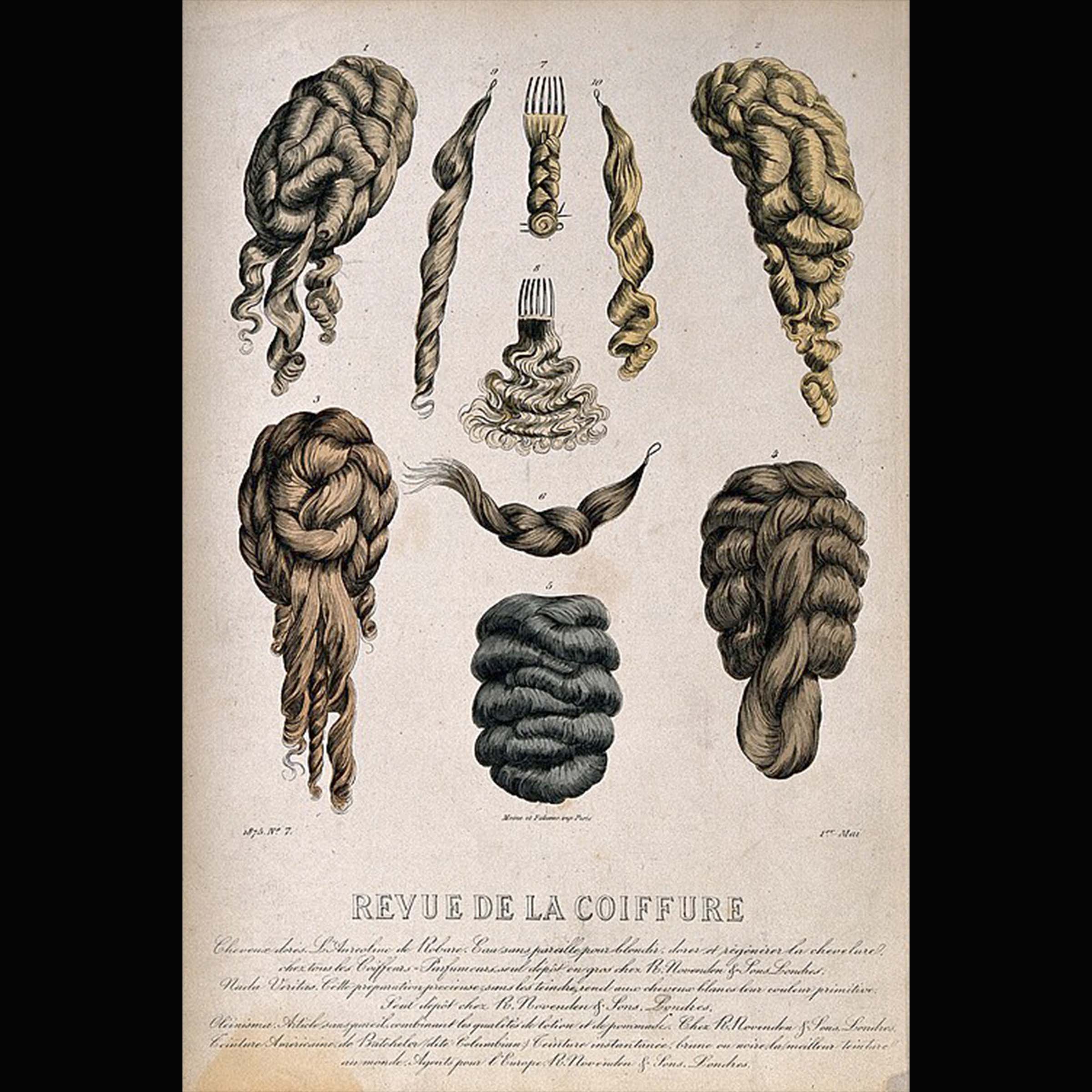
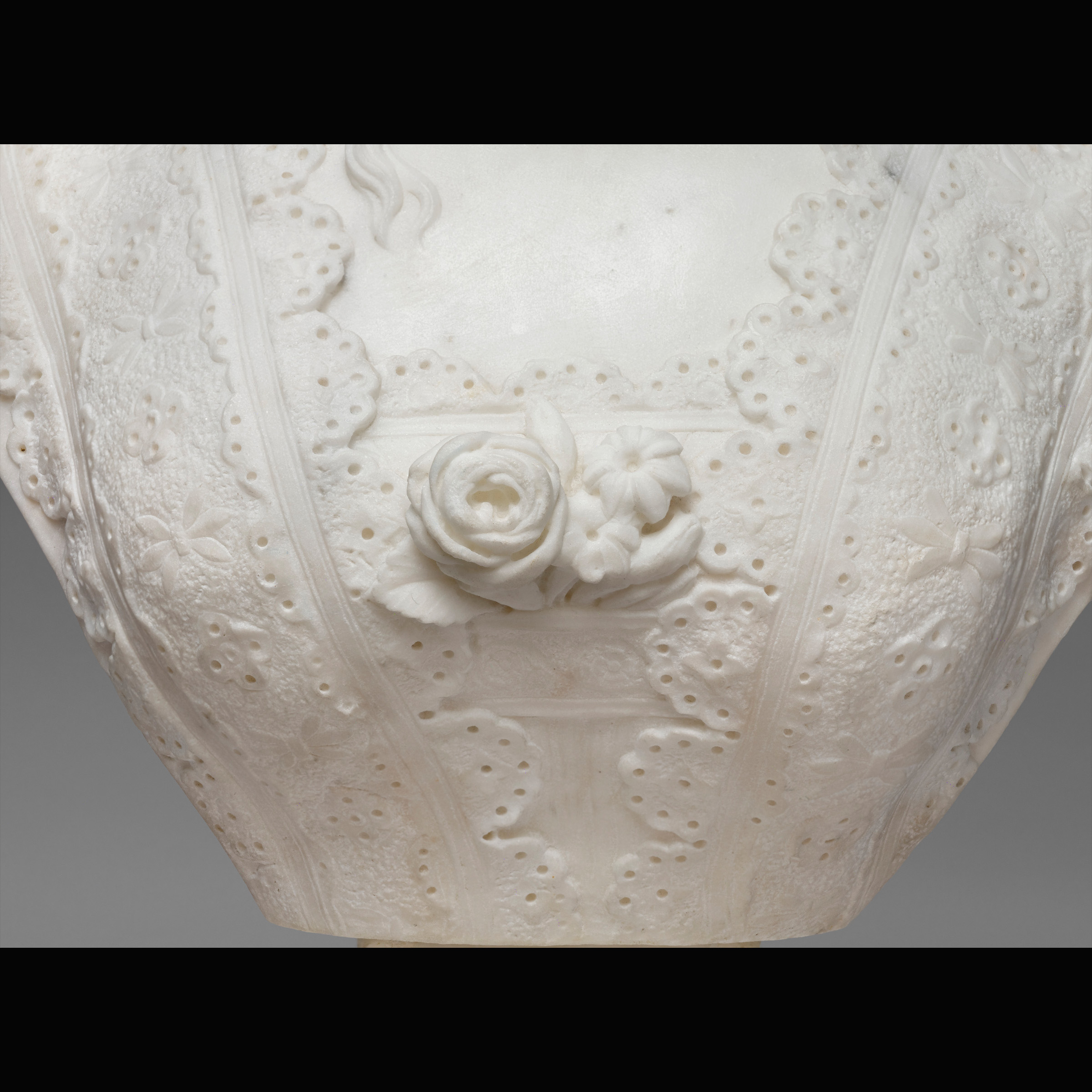
Lewis paid close attention to Cholmeley's hair, dress, and overall style.

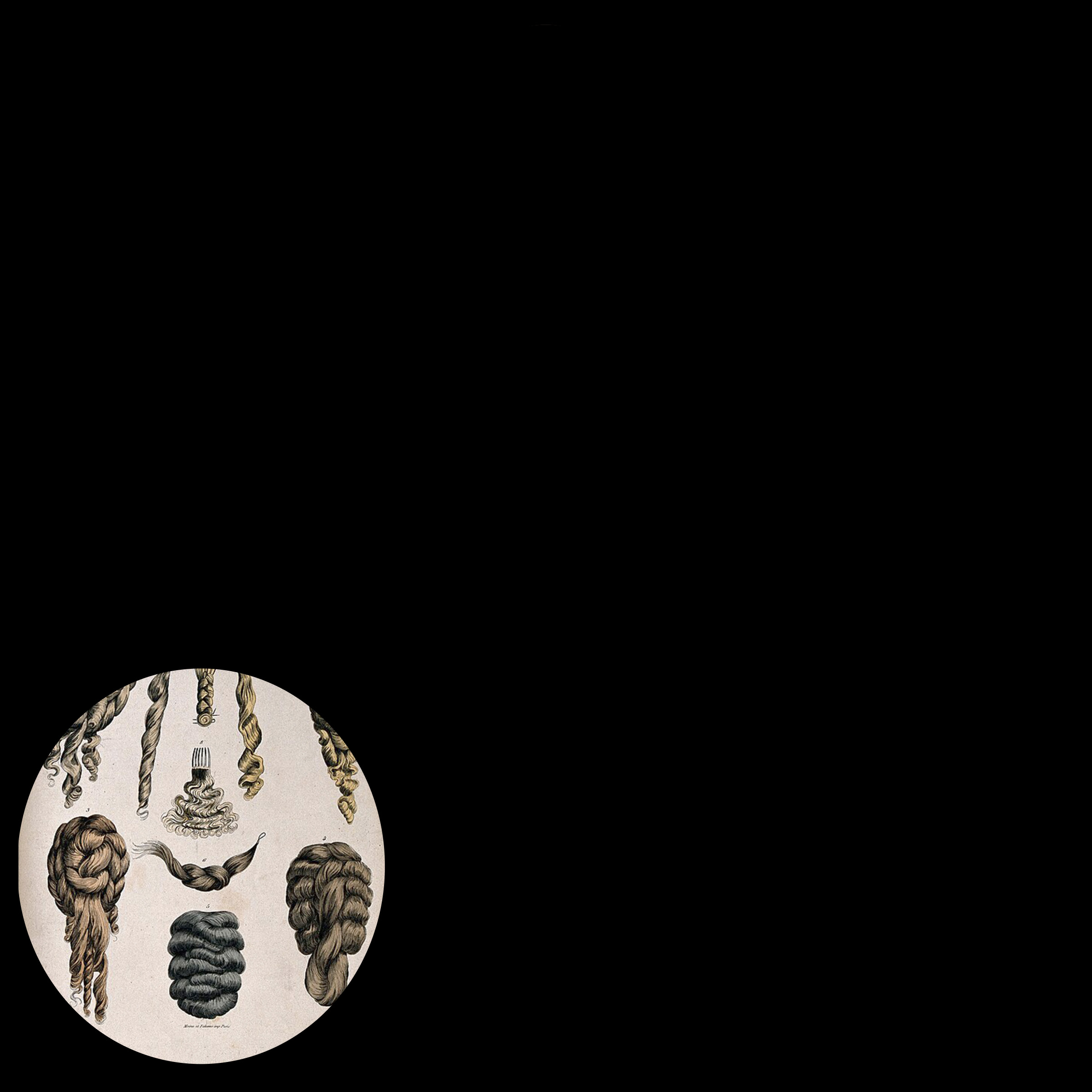
The hairstyle reflects fashion trends of the 1870s,

suggesting Lewis wanted to portray her friend as elegant and well-coiffed.

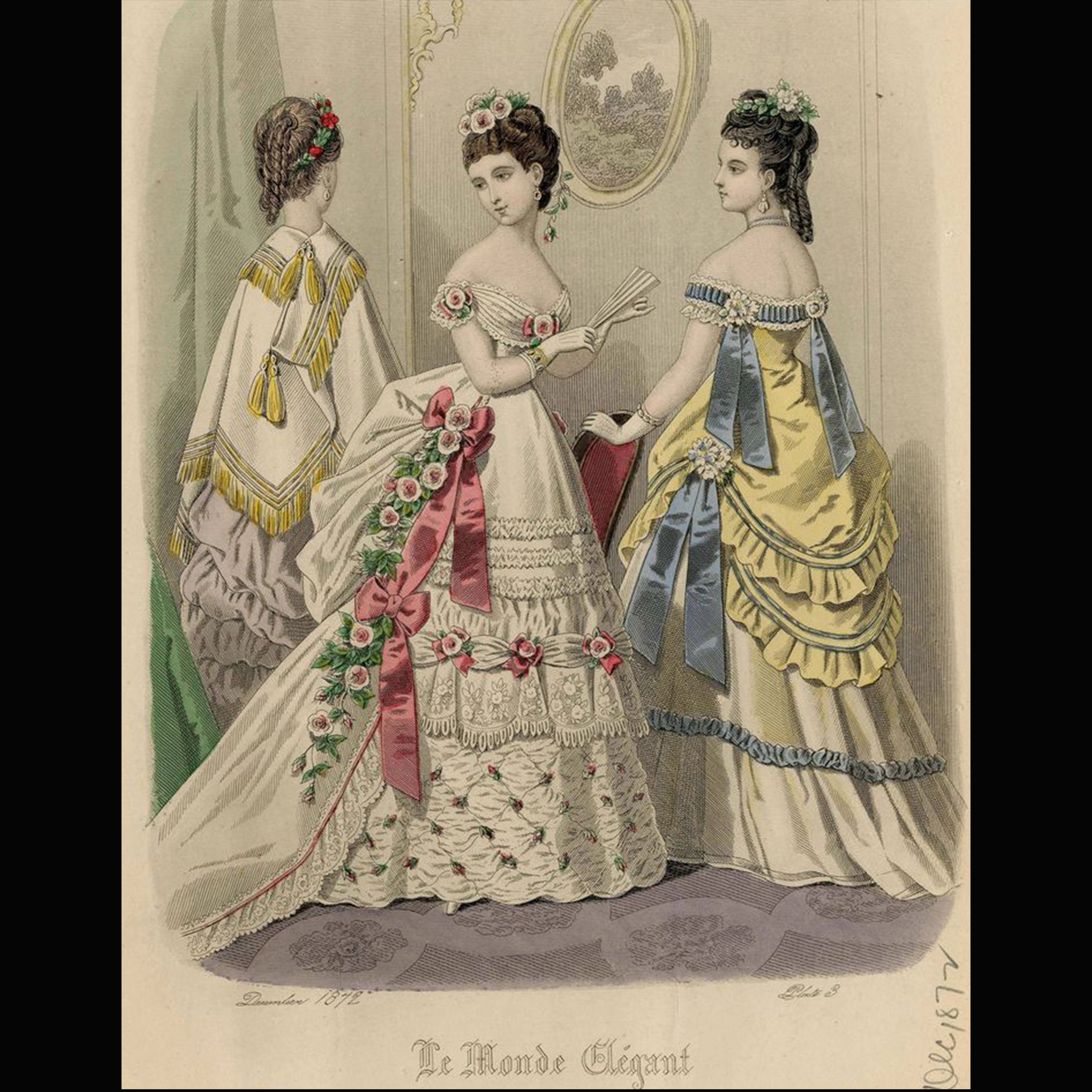
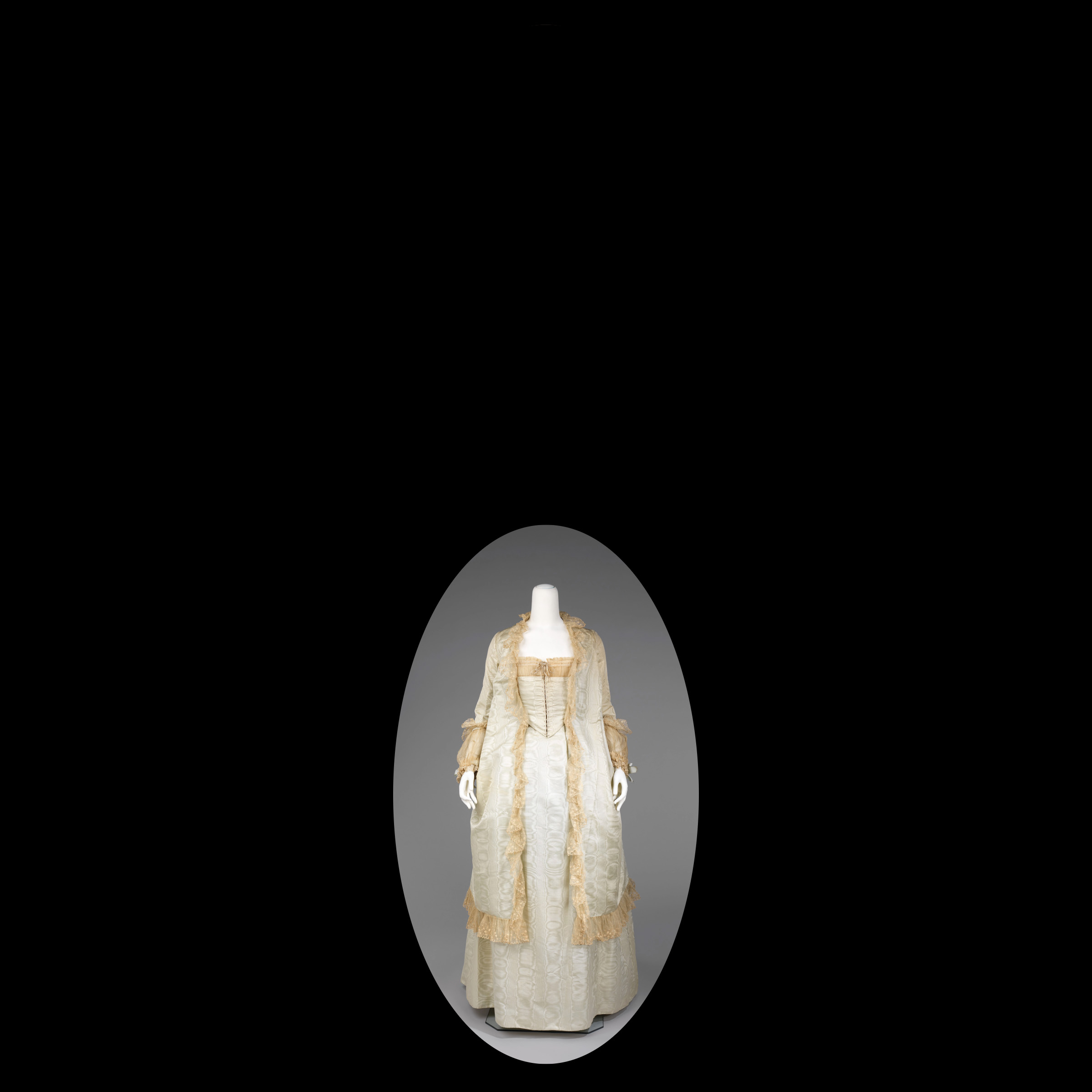
The lattice bodice detail, adorned with blooming roses, resembles a tea gown.

This was a popular style of the 1870s, akin to today's “elevated” loungewear, often worn by women hosting family and friends.

Roses were a common fashion accessory in the 19th century.

Was this Isobel Cholmeley's favorite dress?

Were roses her favorite flower?

Front view of a marble statue depicting a woman from the shoulders up, with a 19th-century hairstyle. A publication illustrating several 19th-century hairstyles. Back view of a marble statue depicting a woman from the shoulders up, with a 19th century hairstyle. Front view of a marble statue depicting a woman from the shoulders up, with a 19th-century hairstyle. A 19th-century tea gown, made of white and gold fabrics and materials. Zoomed in perspective of lace and flowers on the dress of a marble statue. An illustrated plate from a publication on 19th-century fashion for women. Front view of a marble statue depicting a woman from the shoulders up, with a 19th-century hairstyle.

Lewis's choices invite viewers to consider the closeness, honesty, and intimacy embedded in the portrait.

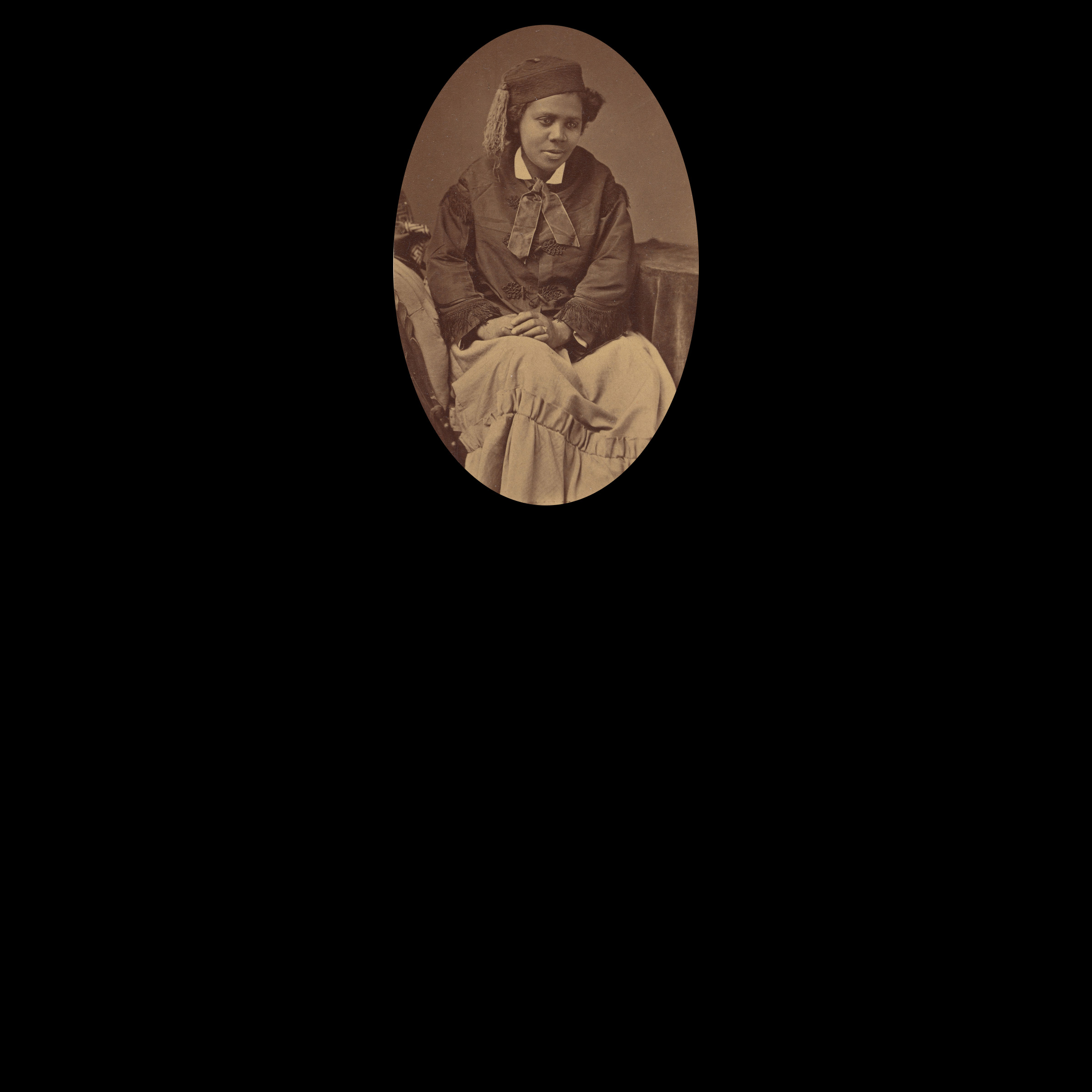
Archival photograph of Black woman seated, facing the camera. Black background. Oval crop of archival photograph of Black woman seated, facing the camera, with a black background. Oval crop of marble statue of a woman, showing just her head, with a black background. Oval crop of a photograph of a woman, showing her facial profile, with her back turned to towards the camera, with a black background. Oval crop of a 19th-century tea gown, made of white and gold fabrics and materials, with a black background. Oval crop of a handwritten letter from the 19th century, with a black background. Oval crop of a publication illustrating several 19th-century hairstyles, with a black background.

Despite her professional success, Lewis faced significant barriers as a Black and Indigenous woman in the 19th century, often having to continuously demonstrate her expertise.

Lewis continued creating art into the late 19th century, though her work gradually faded from public recognition.

Lewis passed away in 1904 at age 63 and was buried in London, England,

leaving behind a legacy of perseverance, innovation, and artistic impact.

Edmonia Lewis’s reemergence is not by accident.

Instead, her story and artistic hand carved the way for many women artists.

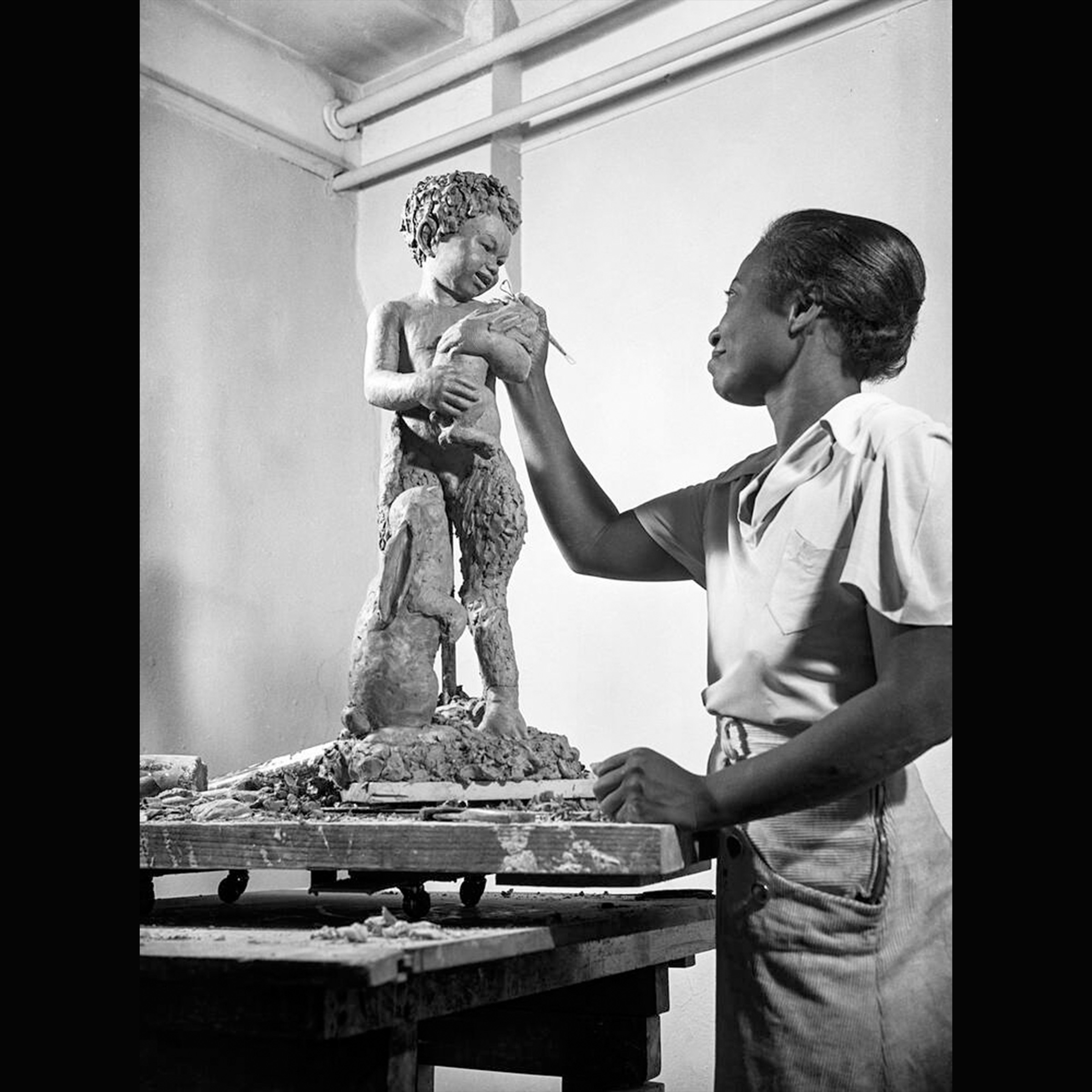
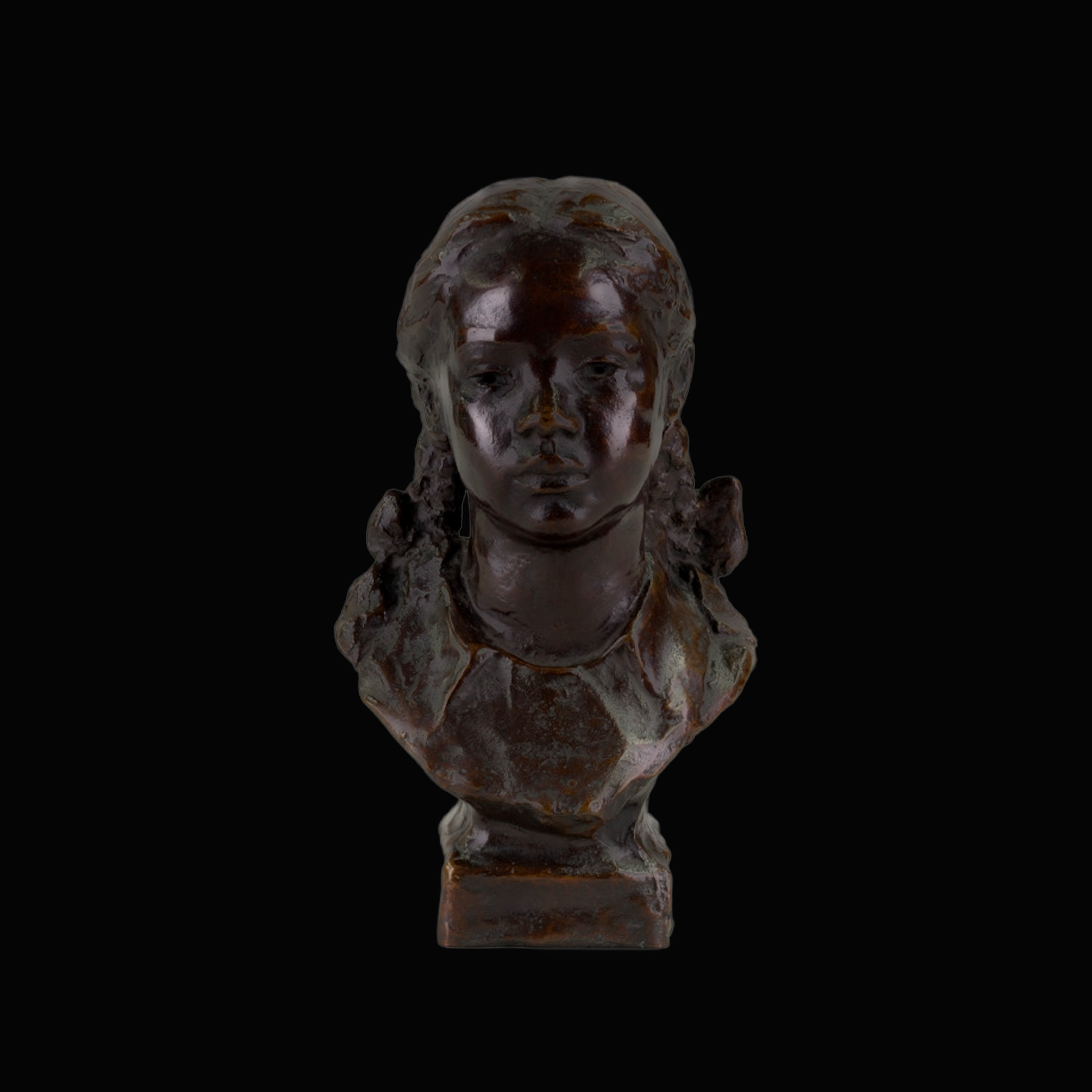
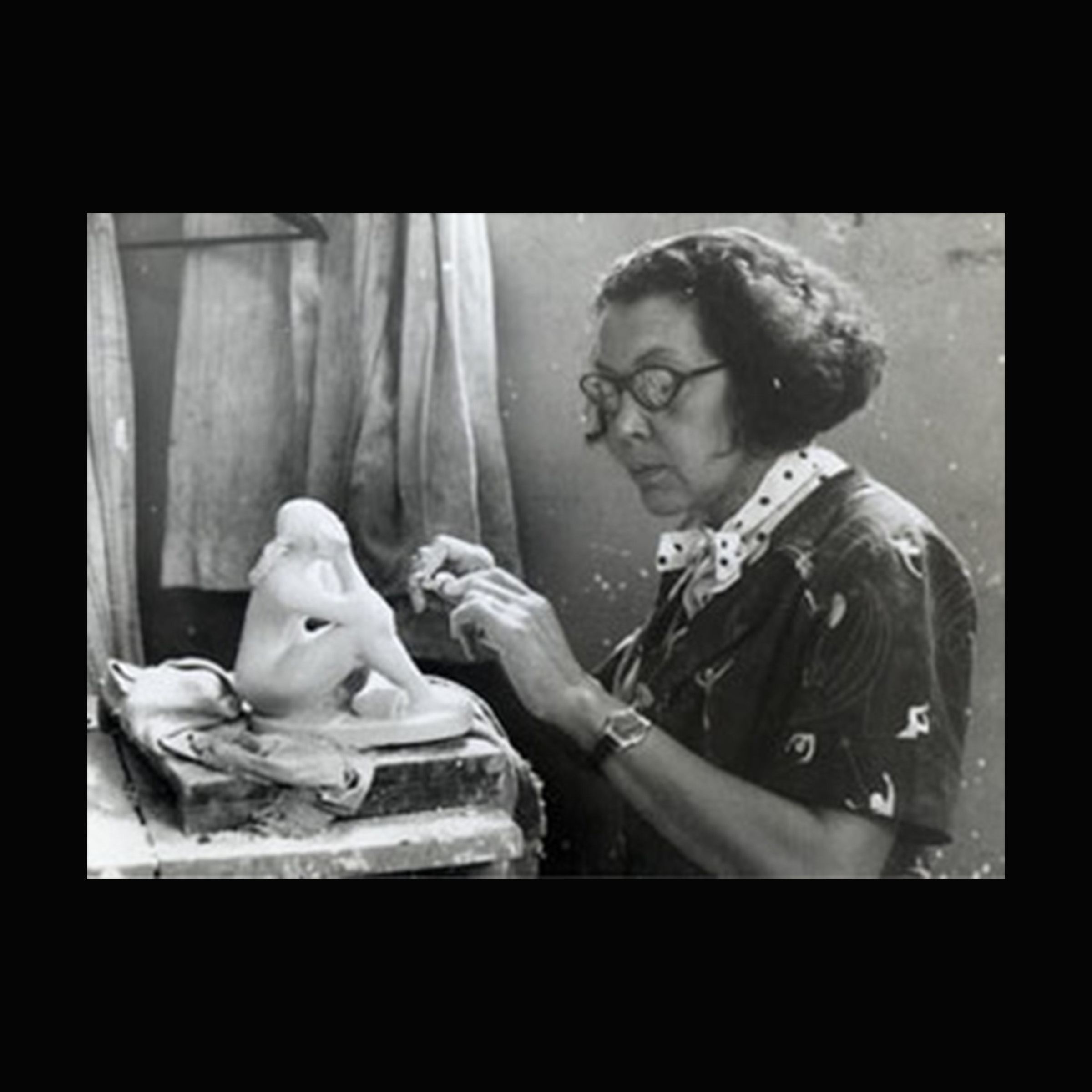
Her story and artistry helped pave the way for generations of women sculptors, including two whose work is in the collection and on view at the Saint Louis Art Museum.

Augusta Savage

Augusta Savage (1892–1962) was an American sculptor and teacher, and the first Black woman gallery owner, active during the Harlem Renaissance.

Pictured is Untitled (Girl with Pigtails) (c.1931–40) by Augusta Savage

Elizabeth Catlett

Elizabeth Catlett (1915–2012) was an American and Mexican sculptor best known for her depictions of the Black experience in the 20th century.

Pictured is Seated Woman (1962) by Catlett.

Discover more artworks in SLAM's collection by women artists inspired by Edmonia Lewis. Visit Online Collection.

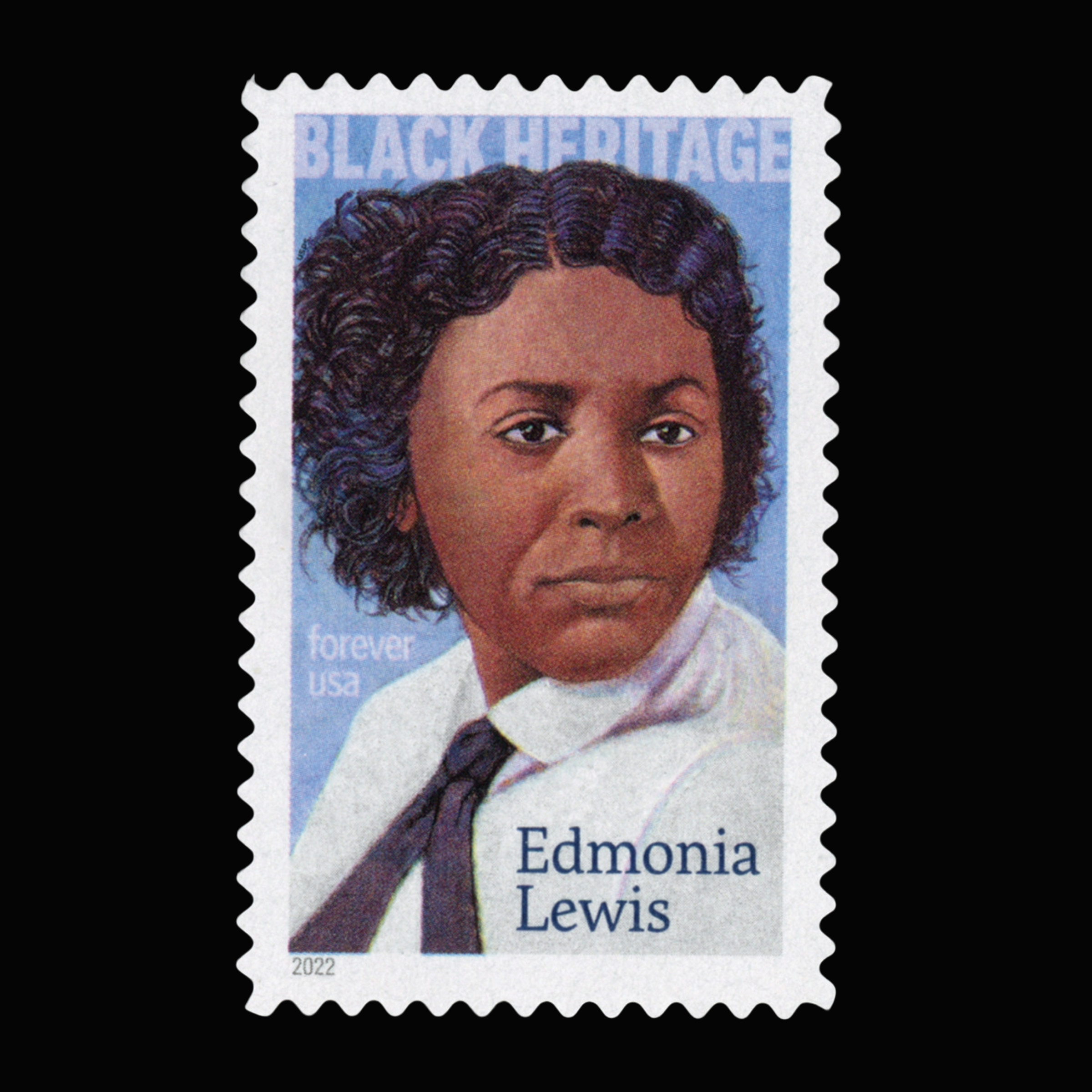
Archival photograph of Black woman standing, facing the camera, with her arms crossed and a chair behind her. A zoomed in view of a page from the 19th-century publication, Fair Play Periodical, with some words highlighted in red. Black background. Archival photograph of Black woman seated, facing the camera, wearing a hat, jacket, and dress. Postage stamp depicting a Black woman, with the words Black Heritage at the top and Edmonia Lewis at the bottom. Black woman artist places right hand on a sculpture in progress at an art studio. Sculpture of a girl with pigtails hairstyle. A seated Black woman artist with both hands raised toward a sculpture in progress. An abstract and polished wood sculpture of a nude, seated woman. Side by side images of an archival photograph of standing Black woman and a marble statue depicting a woman.

3D Scan of Portrait of a Woman

Zoom and drag the 3D model to view the sculpture from any angle.

  • In order as appeared:

    Augustus Marshall, American, 1835-1916; Carte-de-visite of Edmonia Lewis, c.1870; albumen on wove paper and cardboard; Collection of the Smithsonian National Museum of African American History and Culture nmaahc_2020.10.5

    Edmonia Lewis, American, 1844–1907; Portrait of a Woman, 1873; marble; 29 1/2 x 16 1/2 x 11 1/4 inches; Saint Louis Art Museum, Museum Minority Artists Purchase Fund and partial gift of Thurlow E. Tibbs Jr. 1:1997

    Mineral marble; Credit: A_Pobedimskiy / iStock by Getty Images

    The World, from The Instructive Atlas of Modern Geography [Edward Stanford:London], published c.1880; Image: David Rumsey Map Collection, David Rumsey Map Center, Stanford Libraries

    The Liberator (Boston, MA), December 16, 1864; Boston Public Library; Image: Library of Congress, Washington, D.C.

    The Liberator (Boston, MA), January 20, 1865; Boston Public Library; Image: Library of Congress, Washington, D.C.

    National Archives and Records Administration

    Florence Freeman, American, 1836-1883; Florence Freeman Letters (excerpt), 1865; Boston Athenaeum L840, [Folder #114], Gift of Freeman family

    Lorenzo Suscipj, Italian, born 1802; Florence Freeman, c.1860s; albumen on paper; Boston Athenaeum; Photo: Jacqueline Marie Musacchio

    Columbia University Libraries

    Installation view of American Art galleries; Courtesy of Saint Louis Art Museum

    National Park Service, Longfellow Family Photograph Collection (3007.001/001-009#015)

    Image: Wellcome Library, London

    Tea Gown, 1875–80; probably American; silk, cotton; Brooklyn Museum Costume Collection at The Metropolitan Museum of Art, Gift of the Brooklyn Museum, 2009; Gift of Mrs. Frederick H. Prince, Jr., 1967 2009.300.3856a–c

    Fashion Plate from Le Monde Elegant Courrier De La Mode, 1872

    Artist: Henry Rocher, 1826 – 1887 Sitter: Edmonia Lewis, 4 Jul 1844 – 17 Sep 1907 Date: c. 1870 Type: Photograph Medium: Albumen silver print Dimensions: Image/Sheet: 9.2 x 5.2 cm (3 5/8 x 2 1/16″) Mount: 10 x 6.2 cm (3 15/16 x 2 7/16″) Mat: 45.7 x 35.6 cm (18 x 14″) Credit Line: National Portrait Gallery, Smithsonian Institution Restrictions & Rights: CC0 Object number: NPG.94.95 Data Source: National Portrait Gallery

    Augustus Marshall, American, 1835-1916; Edmonia Lewis, c.1870; albumen on wove paper and cardboard; image: 3 5/8 x 2 1/4 inches, card: 4 5/16 x 2 1/2 inches; Collection of the Smithsonian National Museum of African American History and Culture 2020.10.5

    Fair Play (Sainte Genevieve, MO), September 25, 1873; State Historical Society of Missouri, Columbia; Image: Library of Congress, Washington, D.C.

    designed by Antonio Alcalá, American, born 1960s; painted by Alex Bostic, American; after Augustus Marshall, American, 1835-1916; Edmonia Lewis Forever Stamp, from the Black Heritage series, issued 2022; © 2026 United States Postal Service, Washington, D.C.

    Hansel Mieth, German, 1909-1998; Harlem Renaissance Artist Augusta Savage With Sculpture, September 1, 1938; Hansel Mieth/The LIFE Picture Collection/Shutterstock

    Artist Unknown, Elizabeth Catlett Sculpting

    Augusta Savage, American, 1892–1962; cast by Roman Bronze Works, New York, New York, active 1897–1980s; Untitled (Girl with Pigtails), c.1931–40; bronze; 8 1/4 x 5 x 3 1/2 inches; Saint Louis Art Museum, Museum Purchase, Bequest of Edgar William and Bernice Chrysler Garbisch, and Gift of Mrs. Ophelia Hollowell, all by exchange 44:2023

    Elizabeth Catlett, Mexican (born United States), 1915–2012; Seated Woman, 1962; mahogany; 22 1/2 x 13 1/2 x 7 inches; Saint Louis Art Museum, Friends Endowment Fund; Gift of Edward J. Costigan in memory of his wife, Sara Guth Costigan, by exchange; The James D. Burke Art Acquisition Fund, Eliza McMillan Trust, Funds given by the Alturas Foundation, and Museum Purchase 75:2019; © 2026 Mora-Catlett Family / Licensed by VAGA at Artists Rights Society (ARS), NY

    Artist: Fratelli d’Alessandri (Manufacturer) Sitter: Edmonia Lewis, American, 1844 – 1907 Title: Portrait of Edmonia Lewis (1844-1907) Date: ca.1874-1876 Medium: albumen print mounted as a carte de visite on card Measurements: H: 4 x W: 2 1/2 in. (10.16 x 6.35 cm) Credit line: gift of an anonymous donor, 2011 Accession number: 2011.3.1 Provenance: private collection, baltimore [date and mode of acquisition unknown]; walters art museum, 2011, by gift. https://art.thewalters.org/object/2011.3.1/