Normal light
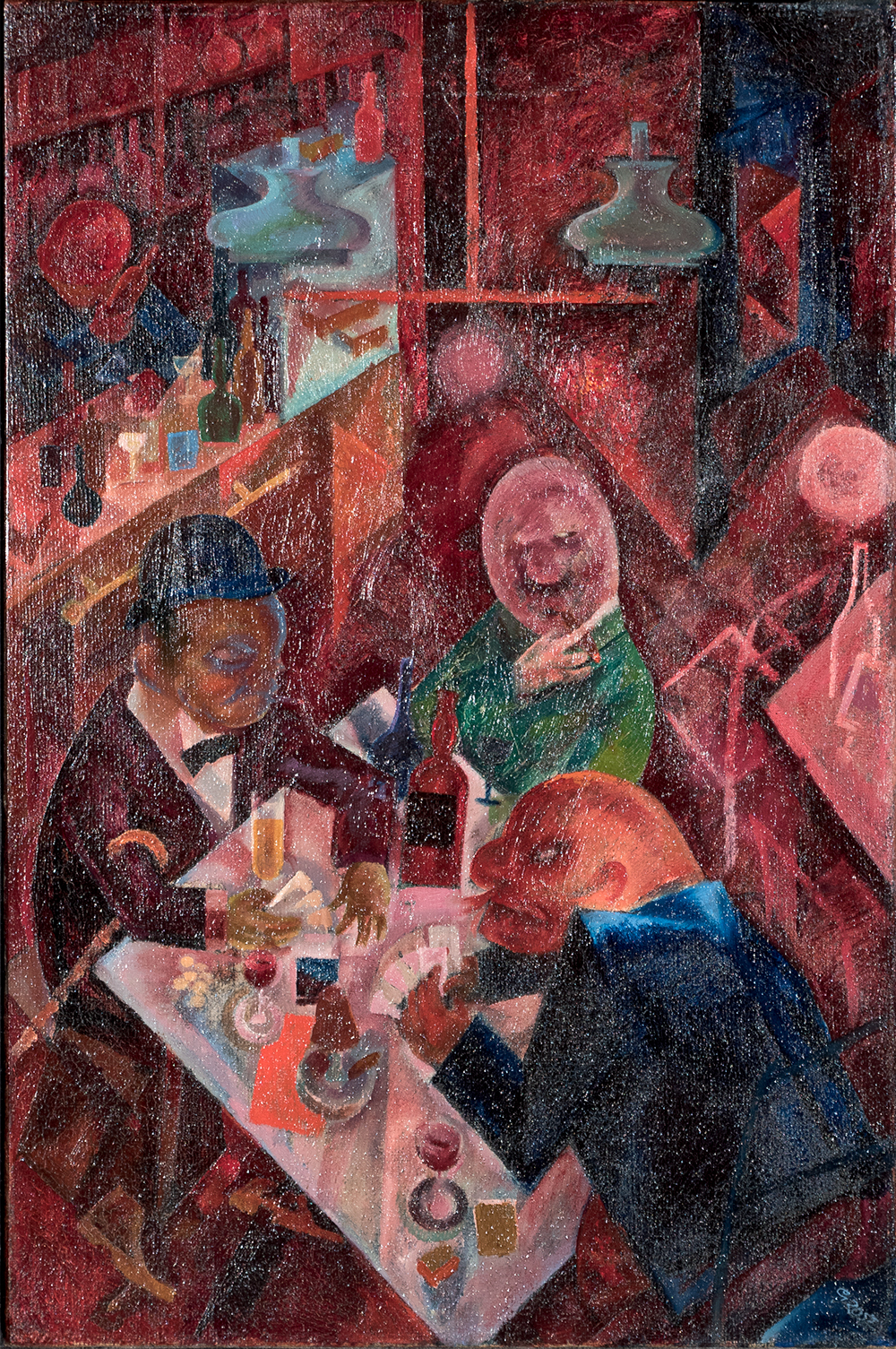
In special case studies, technical imaging is able to reveal underlying paint layers that are altogether separate from the final composition. Such is the case for Café by George Grosz.
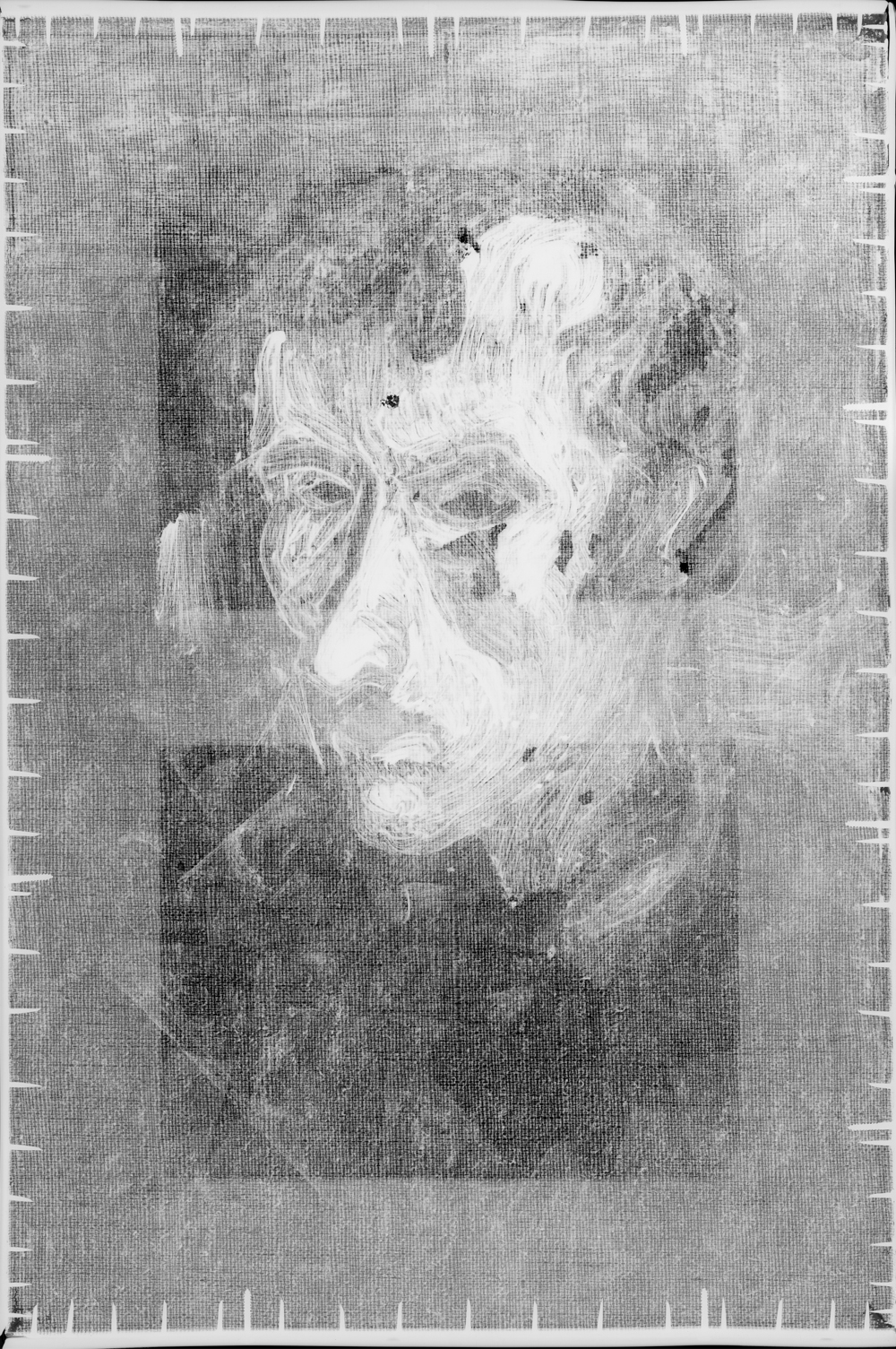
Divergent textures in the paint layers led to a long-held belief that another painting lurked beneath. X-radiography was able to uncover the buried painting Grosz replaced with the disquieting scene of café card players that is visible in the present day.
George Grosz, German, 1893–1959; Café, 1916; oil on canvas; 19 x 12 3/4 inches; Saint Louis Art Museum, Bequest of Morton D. May 889:1983
Raking light
Light cast from a sharp side angle onto the surface of the painting reveals paint textures that differ from the final image. This is a primary clue that the brushwork of another composition may be hidden underneath.

X-radiograph
The X-radiograph dramatically reveals that a portrait of a man is painted below the bar scene of card players. The portrait was painted with pigments that contain heavy metals that absorb X-rays and appear white in the image—capturing the underlying composition. Compared to the style of Grosz’s final painting, the brushstrokes of the portrait are loose and gestural. The identity of the man remains a mystery.
Ultraviolet-induced fluorescent (UVF)
Under ultraviolet light, a network of dark, short lines is visible in the lower left corner. These lines track where a conservator has covered distracting cracks in the top paint layer with reversible paint media. The cracks occurred while the paint dried—likely because Grosz improperly prepared the surface before painting Café.

Infrared
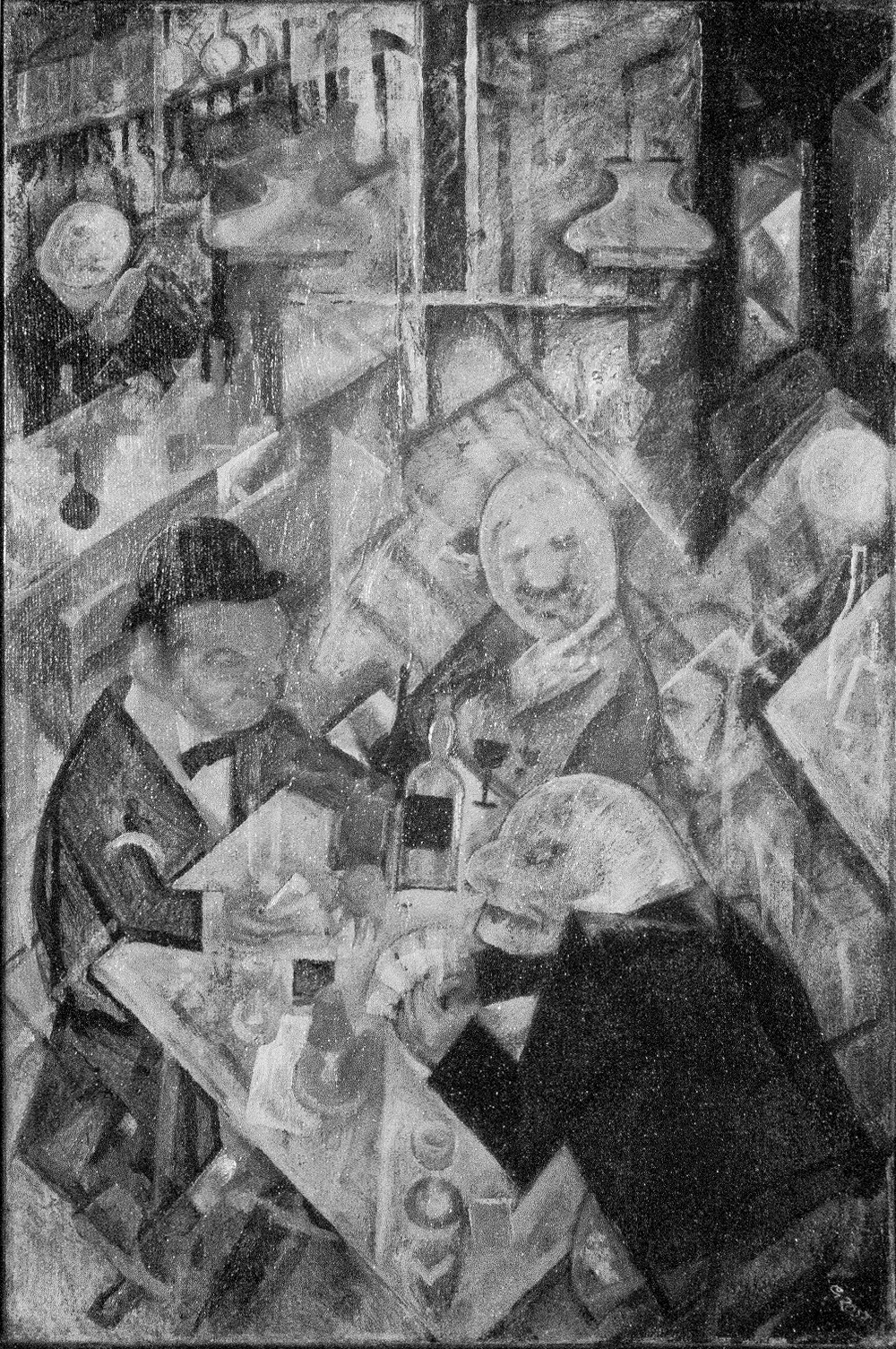
Grosz followed his design outline faithfully, as shown in infrared reflectography. There is little hint of the underlying painted portrait to be found in this imaging technique.
Specular light
Light cast directly on the surface of Café is scattered in irregular patterns to highlight uneven textures. This technique confirms that the surface is very glossy due to a topical synthetic varnish meant to protect the sensitive paint layers.

Normal light, back of painting
The original coarsely woven canvas Grosz used for Café was adhered to another linen canvas in a past conservation treatment. This secondary canvas, called a lining, is shown stretched over the wooden stretcher with corner keys—small wooden wedges that help adjust the tension of the canvases.

Additional Objects
View all objects in the technical imaging suite to reveal hidden details and examine underlying material layers.

-
Glossary
Back (Verso)
The back of a painting provides a wealth of information about its structure. Changes made to the canvas, such as visible repairs, reveal past damage or vulnerabilities. Markings, labels, and inscriptions often tell new stories of the painting’s past, including original titles, previous owners, and exhibition histories.
Raking Light
Raking light, directed from a side angle, casts surface textures into strong relief. This technique highlights details such as thick brushstrokes, canvas weave, or cracks in the paint layers.
Specular Light
Light cast directly onto the painting’s surface at a 90-degree angle highlights glossy or matte qualities. This technique helps determine if a varnish is present and quickly exposes variations of sheen in different paints.
Infrared Reflectography
Infrared reflectography (IRR) uses a specially adapted camera to detect infrared energy. When an image of a painting is captured using infrared light, some pigments appear transparent, which enables the viewer to see through overlying layers of paint. This technique often reveals hidden details, such as preparatory drawings by the artist or parts of the composition the artist painted over.
Ultraviolet Radiation
Ultraviolet (UV) light sources cause certain materials to absorb and re-emit colorful light, known as fluorescence. The fluorescence of some materials can identify certain pigments, such as zinc white, which produces a vibrant glow. Conservators can also detect previous treatments, which may appear dark purple.
X-radiography
X-radiography uses an X-ray source and sensitive film to produce an image of the painting’s composite layers. Materials transparent to X-rays appear dark in the images, while X-ray–absorbing materials like lead white and metal hardware appear white. Artist’s changes and, in some exciting instances, completely different, earlier compositions may be unveiled.