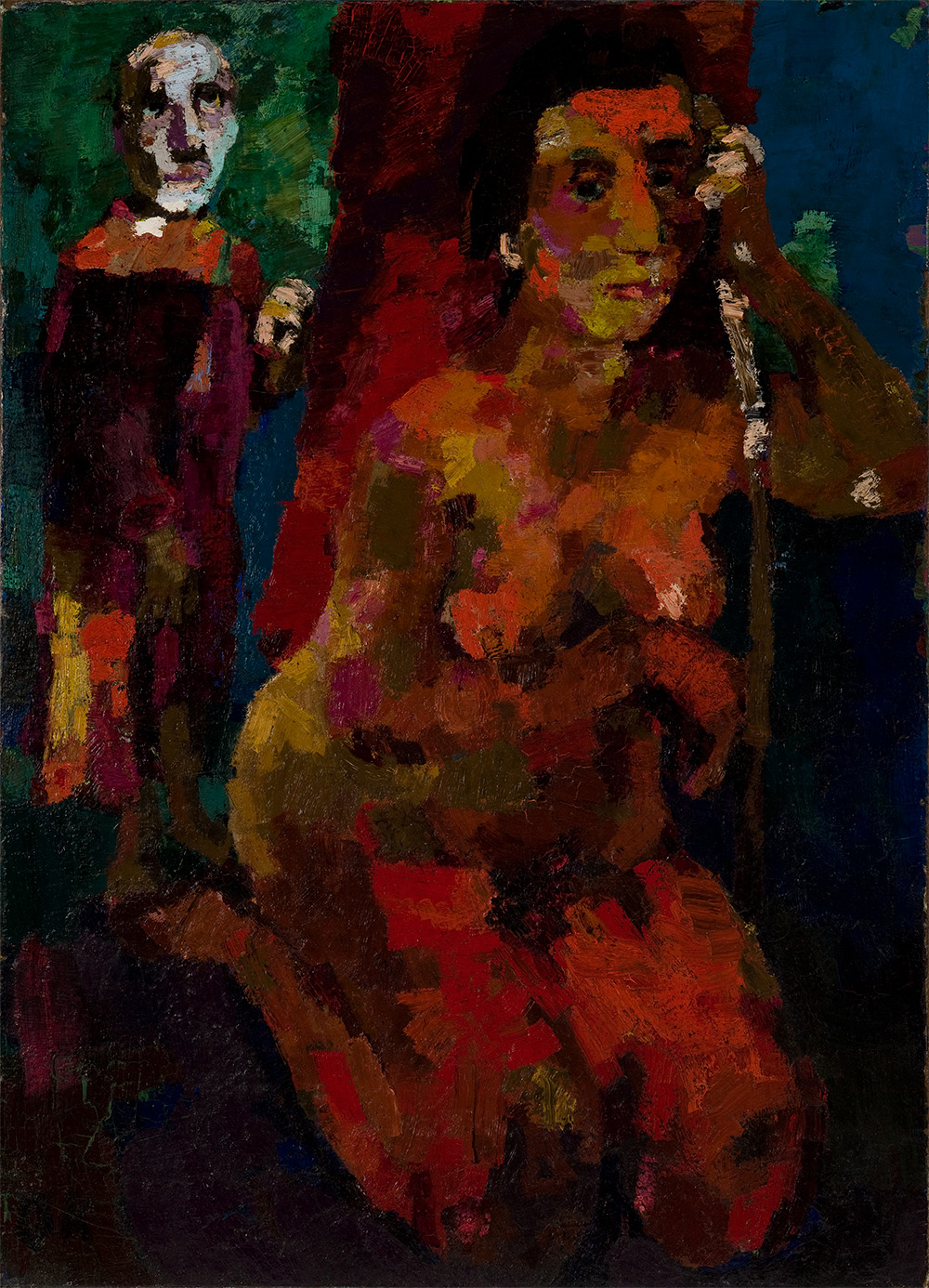
Normal light
Technical analysis of Oskar Kokoschka’s The Slave unfolds a case study of a painting plagued by severe condition issues and the conservation treatments that attempted to correct them. Cracking, separating paint layers and warped deterioration were caused by several key players. The physical stress of an aggressive exhibition and travel program in the 1950s drastically accelerated issues related to inherent vice—self-destructive qualities in the materials due to incompatibility, vulnerability to deterioration, and artist technique.
Damage to the canvas support and paint layers resulted in a series of conservation treatments in 1959–60 and 1966 that were considered last-resort options to salvage the painting. While present-day conservation tools offer less invasive solutions, these past treatments may have saved the painting from a more extreme outcome.
Oskar Kokoschka (active Germany and Switzerland), Austrian, 1886–1980; The Slave, 1921; oil on canvas; 43 3/8 x 31 1/2 inches; Saint Louis Art Museum, Bequest of Morton D. May 909:1983
Normal light, back of painting
As part of a past conservation treatment, the original canvas of The Slave was once adhered to another canvas, called a lining, with a thick glue paste. The application of water-based glue can cause the fibers of some canvases to shrink—accentuating rather than resolving stress in the stretched painting.
By 1959, the canvas was showing severe warped deterioration that caused issues in the paint layers. Treatment carried out that year reversed the lining and adhered the original canvas to a Masonite® hardboard support using wax. Aluminum bars were attached to the hardboard support to discourage distortion and provide safer handling of the artwork.

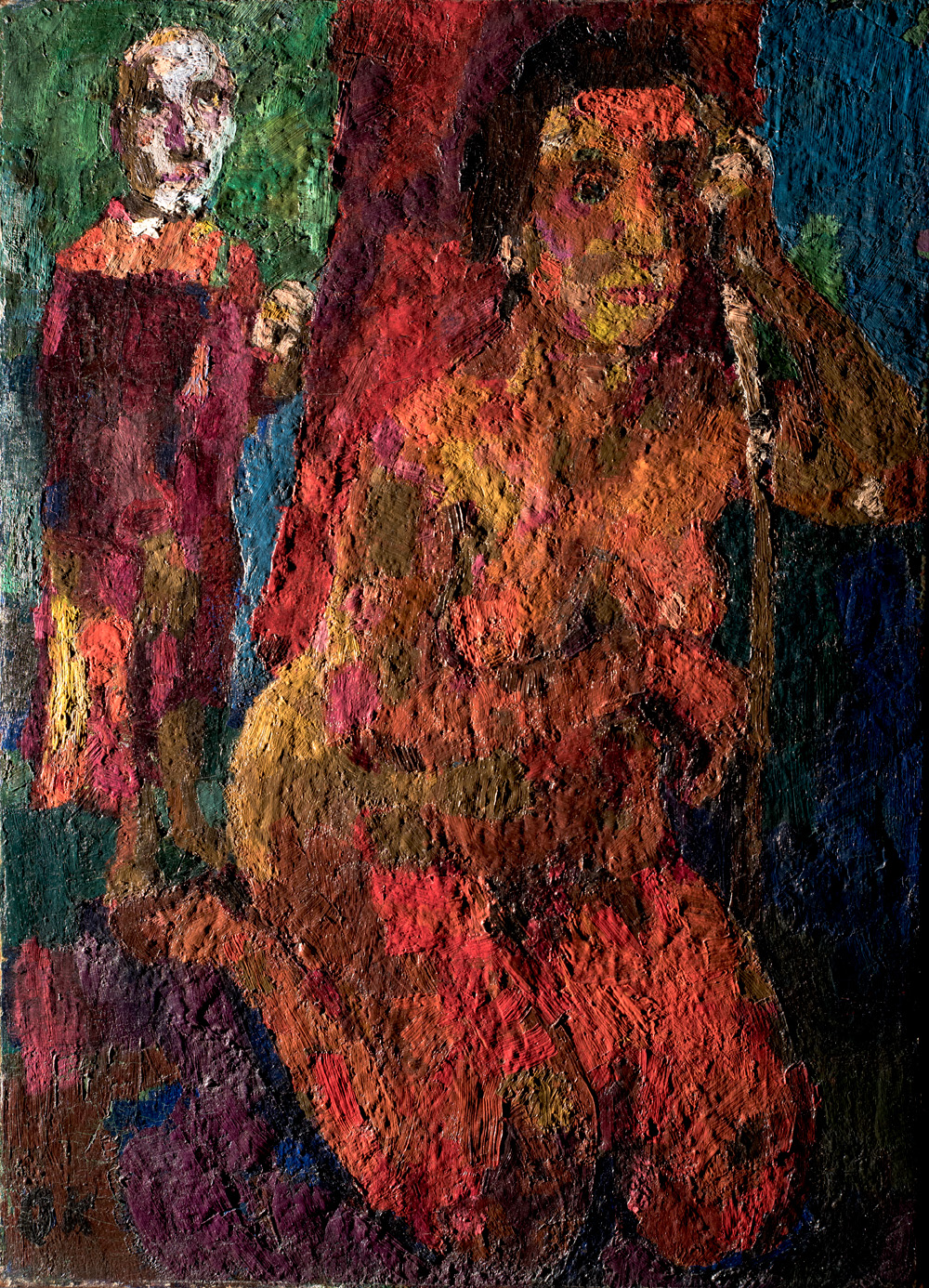
Raking light, cast from left
Light cast from a sharp side angle onto the painting reveals a surface highly textured by superimposed paint layers and conservation treatments. Kokoschka painted very thickly during this time in his practice. He continuously added layers over layers of paint, sometimes letting them dry or working paint wet-into-wet. As the motley paint layers dried and aged, they became more vulnerable to changes in ambient temperature and humidity.
Conservators in 1959 and 1966 attempted to resolve severe cracking and interlayer separation by infusing the paint layers with the synthetic polymer resin Lucite® 44 and wax. They also attempted to correct distortions caused by the failed canvas lining but, fearing further damage to the embrittled paint, allowed some deformations to remain. The present surface, uneven and dimpled, is a testament to these condition issues and treatment decisions.
Microscopic detail
High-resolution digital microscopy showcases a cross-section of the layered surface of The Slave. The microscopic detail captures an area of damaged paint located in the shoulder of the modeling figure. The synthetic polymer resin Lucite® 44 that was applied in 1959 to stabilize the unstable paint layers, fills the gaps of a cracked blister in the peachy paint and exposed, underlying red paint. The plastic resin, once clear, has deteriorated to an amber hue, darkening the paint colors and resulting in a glossy sheen. Unfortunately, Lucite® 44 is very challenging to remove without risking further damage to the paint layers.

Specular light image
Kokoschka did not varnish his paintings, preferring a matte surface finish. The high gloss of the surface, captured clearly in specular light, results from the synthetic polymer resin and wax permeating the paint layers. These consolidating adhesives were applied in the treatment stages of the 1960s in order to prevent the damaged paint layers from further deterioration.

Ultraviolet-induced fluorescent (UVF)
Under UV light, the bright glow of a zinc-white-containing ground layer forms a halo around the cut edges of the painting and likely contributes to the yellow highlights found in the figures’ skin tones and the unidentified object the woman holds. A deeper, magenta pink dotting the model’s lips fluoresces a bright orange and is characteristic of rose-madder pigments.
While zinc paints can be chemically stable, some commercial paints containing zinc driers can often contribute to delaminating paint layers. Looking closely in the lower left, above the artist’s initials, the glow of bright, underlying paints peeks through drying cracks in the rosy brown paint above. These types of cracks are associated more with a faulty layering technique by the artist, in which he painted lean paint, paint containing less binding oil, over an oil-rich paint layer.

Infrared
The thick application of Kokoschka’s paint layers in The Slave clouds the ability to pick out any concrete underlying composition or design changes using infrared radiation. However, the infrared image does help delineate certain underlying brushwork and shapes, such as the darker blue-black that wraps around the model’s kneeling legs and the linework defining her neck.

X-radiograph
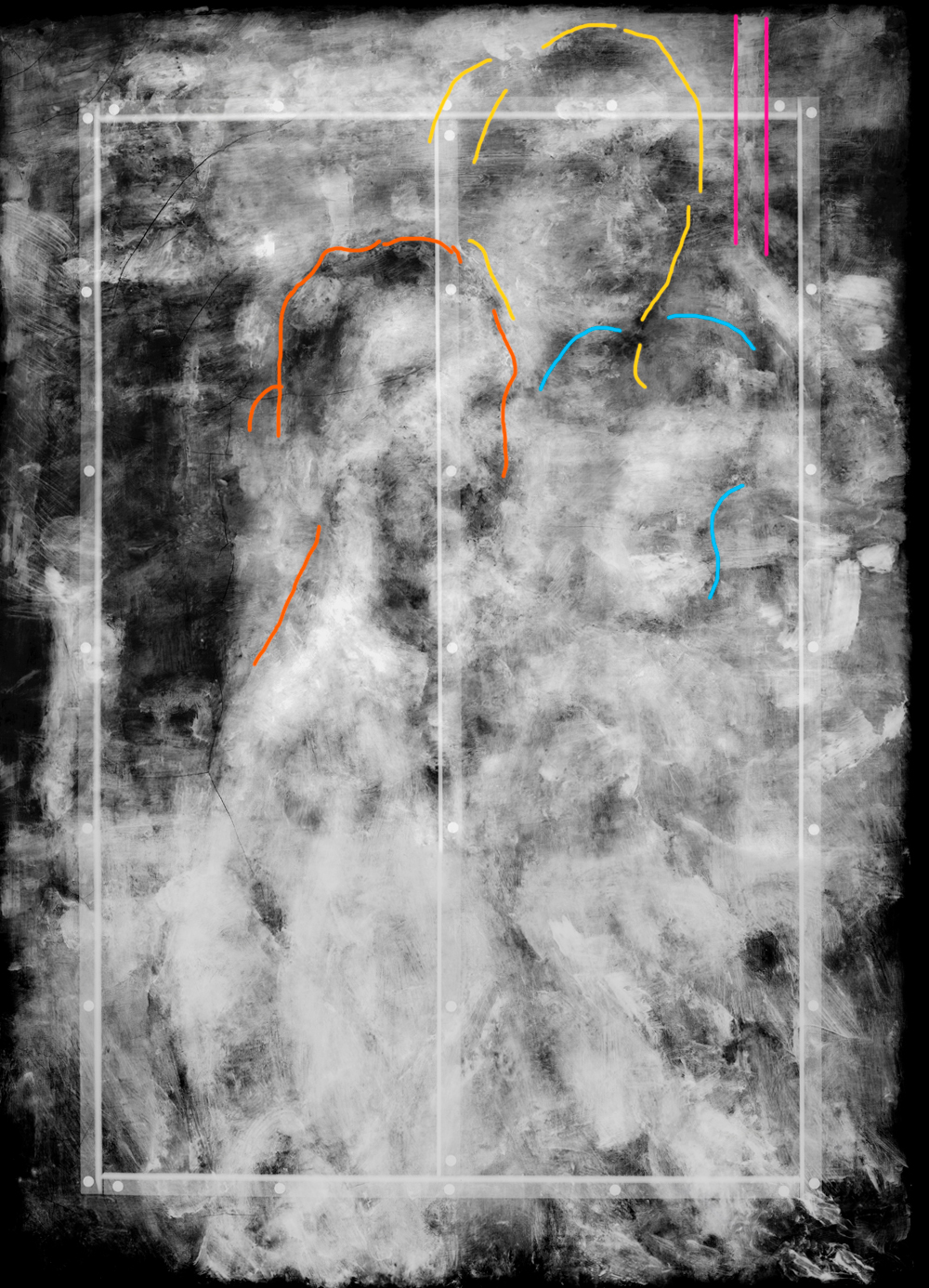
Kokoschka morphed his compositions gradually into their final states by adding more and more paint layers. His process produces a fascinating tumble of figures in the X-radiograph.
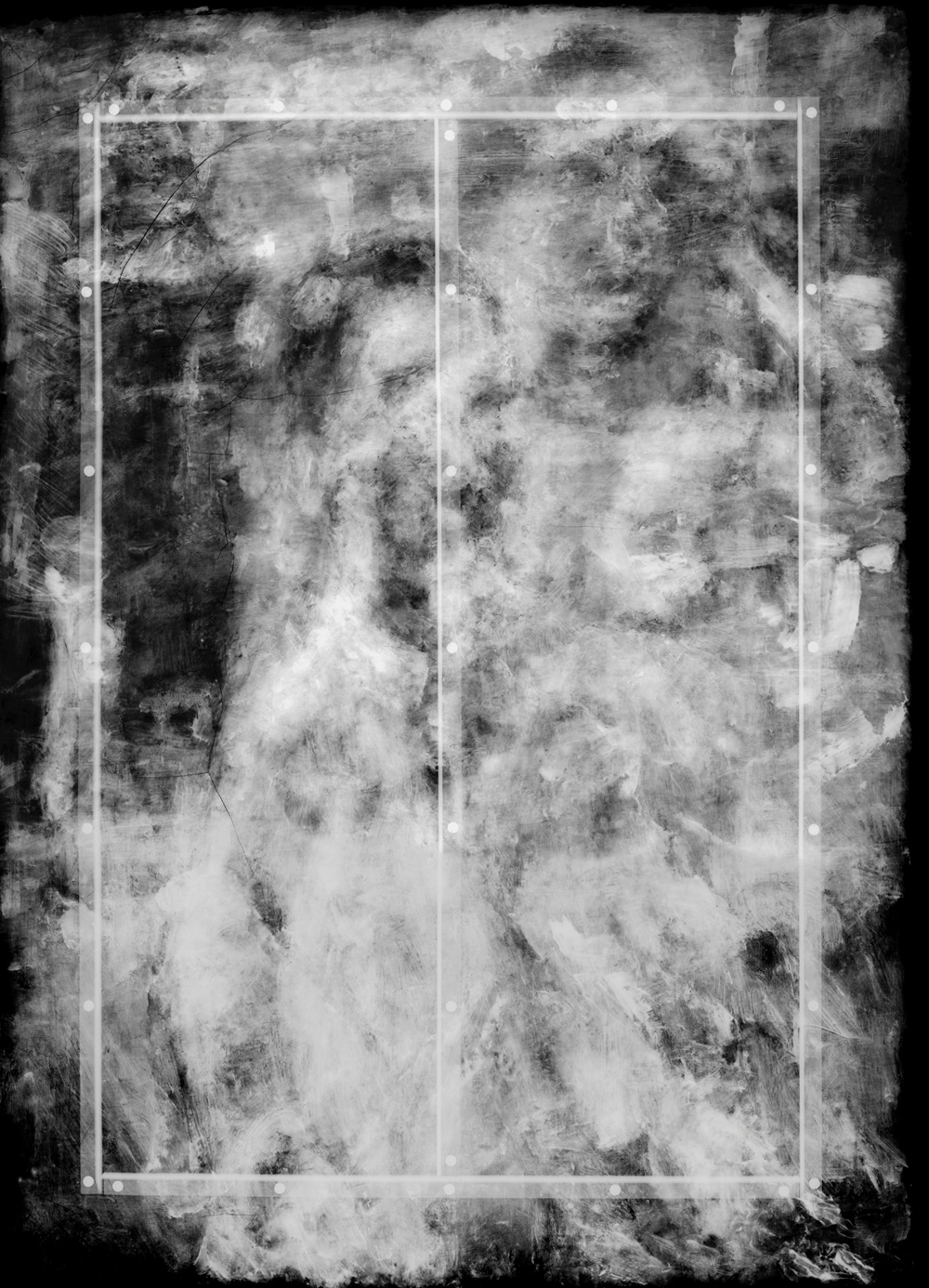
It is evident Kokoschka labored over the model’s position and expression. The clearest iteration lies directly underneath the final version, where the model’s mouth is open, and her face and gaze are turned upward. The unidentified object extends to the top edge. Over her draped right shoulder, a head emerges from a deeper layer. Another possible head is located near the final model’s left breast, although this one is the most unclear.
Additional Objects
View all objects in the technical imaging suite to reveal hidden details and examine underlying material layers.

-
Glossary
Back (Verso)
The back of a painting provides a wealth of information about its structure. Changes made to the canvas, such as visible repairs, reveal past damage or vulnerabilities. Markings, labels, and inscriptions often tell new stories of the painting’s past, including original titles, previous owners, and exhibition histories.
Raking Light
Raking light, directed from a side angle, casts surface textures into strong relief. This technique highlights details such as thick brushstrokes, canvas weave, or cracks in the paint layers.
Specular Light
Light cast directly onto the painting’s surface at a 90-degree angle highlights glossy or matte qualities. This technique helps determine if a varnish is present and quickly exposes variations of sheen in different paints.
Infrared Reflectography
Infrared reflectography (IRR) uses a specially adapted camera to detect infrared energy. When an image of a painting is captured using infrared light, some pigments appear transparent, which enables the viewer to see through overlying layers of paint. This technique often reveals hidden details, such as preparatory drawings by the artist or parts of the composition the artist painted over.
Ultraviolet Radiation
Ultraviolet (UV) light sources cause certain materials to absorb and re-emit colorful light, known as fluorescence. The fluorescence of some materials can identify certain pigments, such as zinc white, which produces a vibrant glow. Conservators can also detect previous treatments, which may appear dark purple.
X-radiography
X-radiography uses an X-ray source and sensitive film to produce an image of the painting’s composite layers. Materials transparent to X-rays appear dark in the images, while X-ray–absorbing materials like lead white and metal hardware appear white. Artist’s changes and, in some exciting instances, completely different, earlier compositions may be unveiled.