Normal light
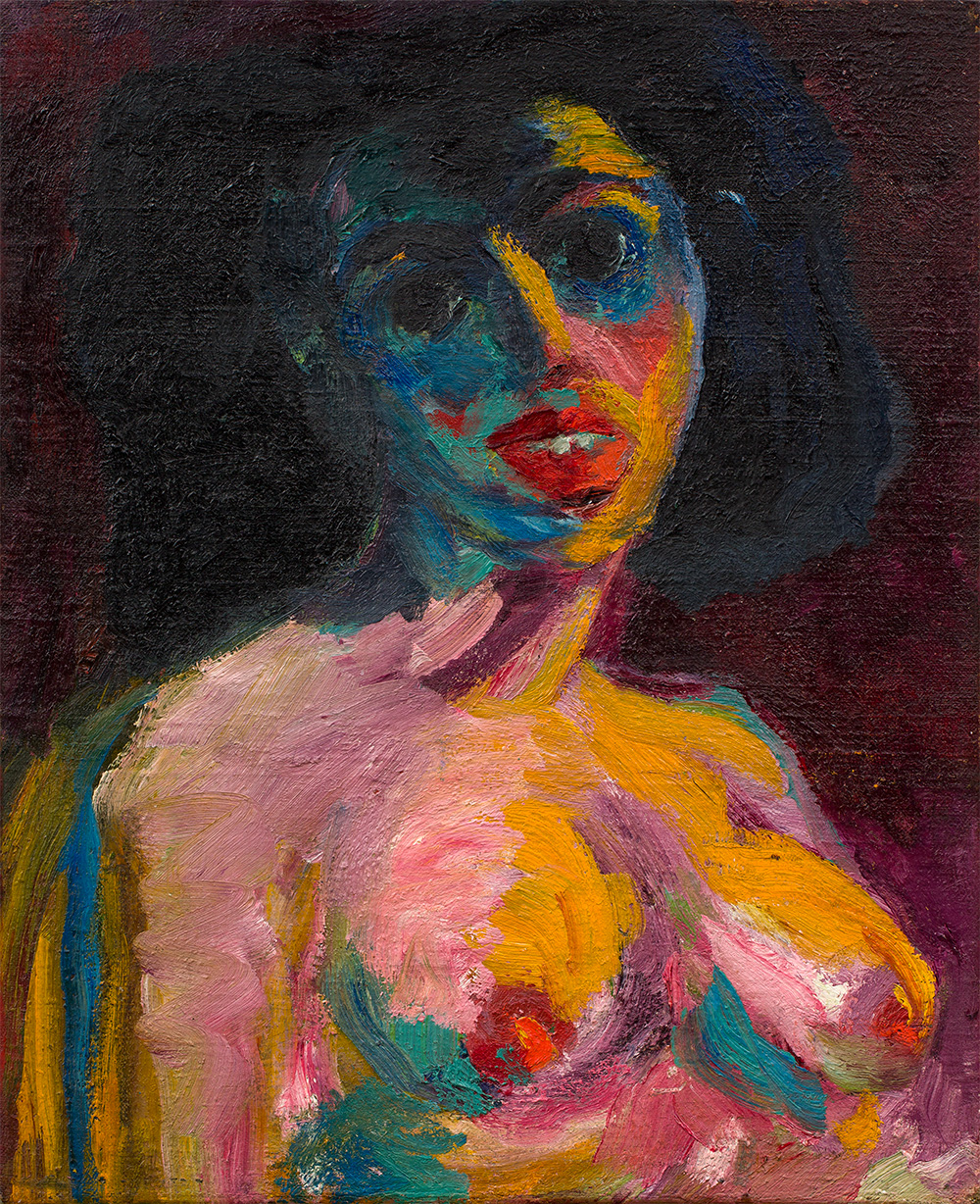
Emile Nolde was a premier colorist. His palette reflects a multitude of paint colors, which he would dispense from the tube and dab directly with his brush and work wet-into-wet onto the prepared canvas. Nolde delighted in unconventional color contrasts by layering flashy pinks, purples, and reds next to bold blacks and blues.
Emil Nolde, German, 1867–1956; Woman (in Strong Light), 1912; oil on canvas; 23 5/8 x 19 1/8 inches; Saint Louis Art Museum, Bequest of Morton D. May 923:1983
Ultraviolet-induced fluorescent (UVF)
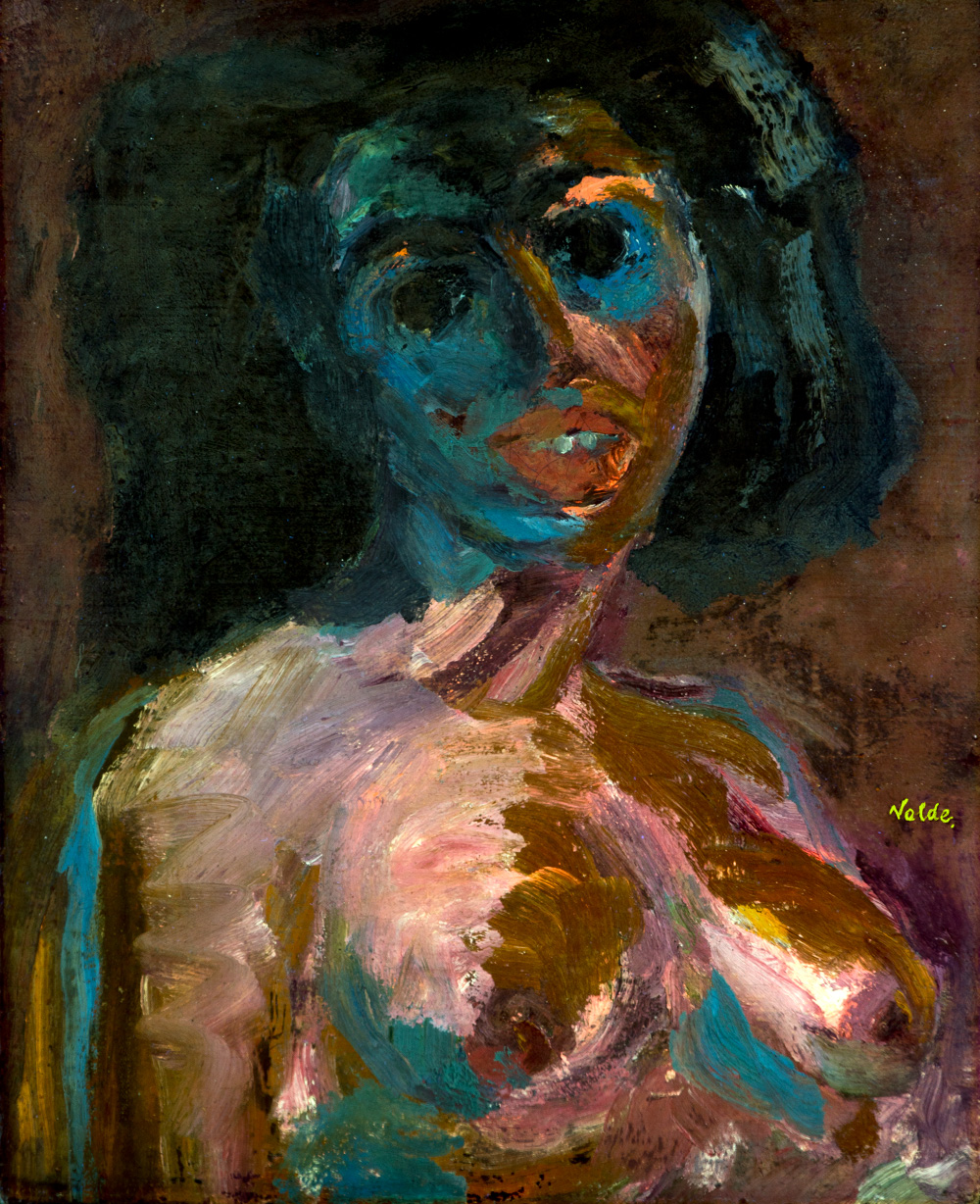
Woman (in Strong Light) fluoresces brilliantly under ultraviolet (UV) light. The bright glow of zinc white of the figure’s skin flashes through cadmium oranges and reds, which turn a muddy brown in the image. Cerulean blue, used to shadow her cheek, arm, and breasts, is marked by a boost of aqua. The color change from rosy pink in visible light to vivid orange in her eyebrow is the characteristic marker of pink madder.
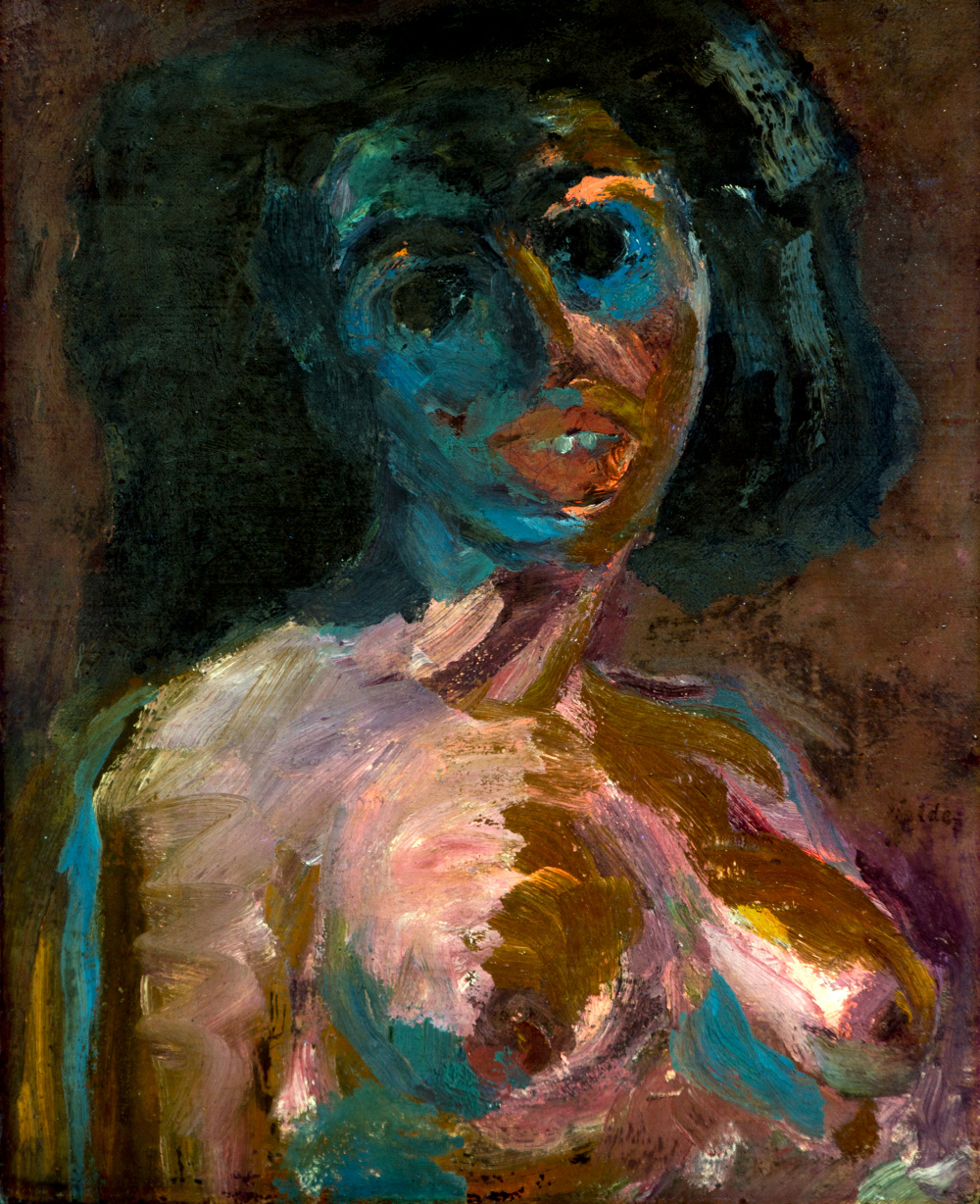
The sudden appearance of Nolde’s signature under UV in the lower right is even more striking. The reddish-purple of the background fluoresces a dull orange due to either excess oil or minerals found in colors like cardinal purple. While the reddish-purple of the signature visually appears very similar, the pigment absorbs UV to turn a dark purple, indicating a different paint was used—likely alizarin lake. The different chemical makeups of these two paints allow for the signature to become legible in ultraviolet light.
Infrared
UV and infrared reflectography are often complementary techniques for resolving mysteries. The difference of the signature disappearing and appearing in visible and UV light is a good example. It would be plausible that Nolde used a darker shade of the same red-purple pigment for his signature. In this case, the darker shade would contain more carbon black, which absorbs UV energy and, therefore, would also explain why the signature appears even darker under UV. However, carbon black also heavily absorbs energy in the infrared spectrum. The fact that the signature is invisible in the infrared reflectography eliminates this possibility.
No underlying sketch is visible in infrared reflectography of Woman (in Strong Light). Nolde composed his design using the bold, guiding brushstrokes of the thick paint layers.

X-radiograph
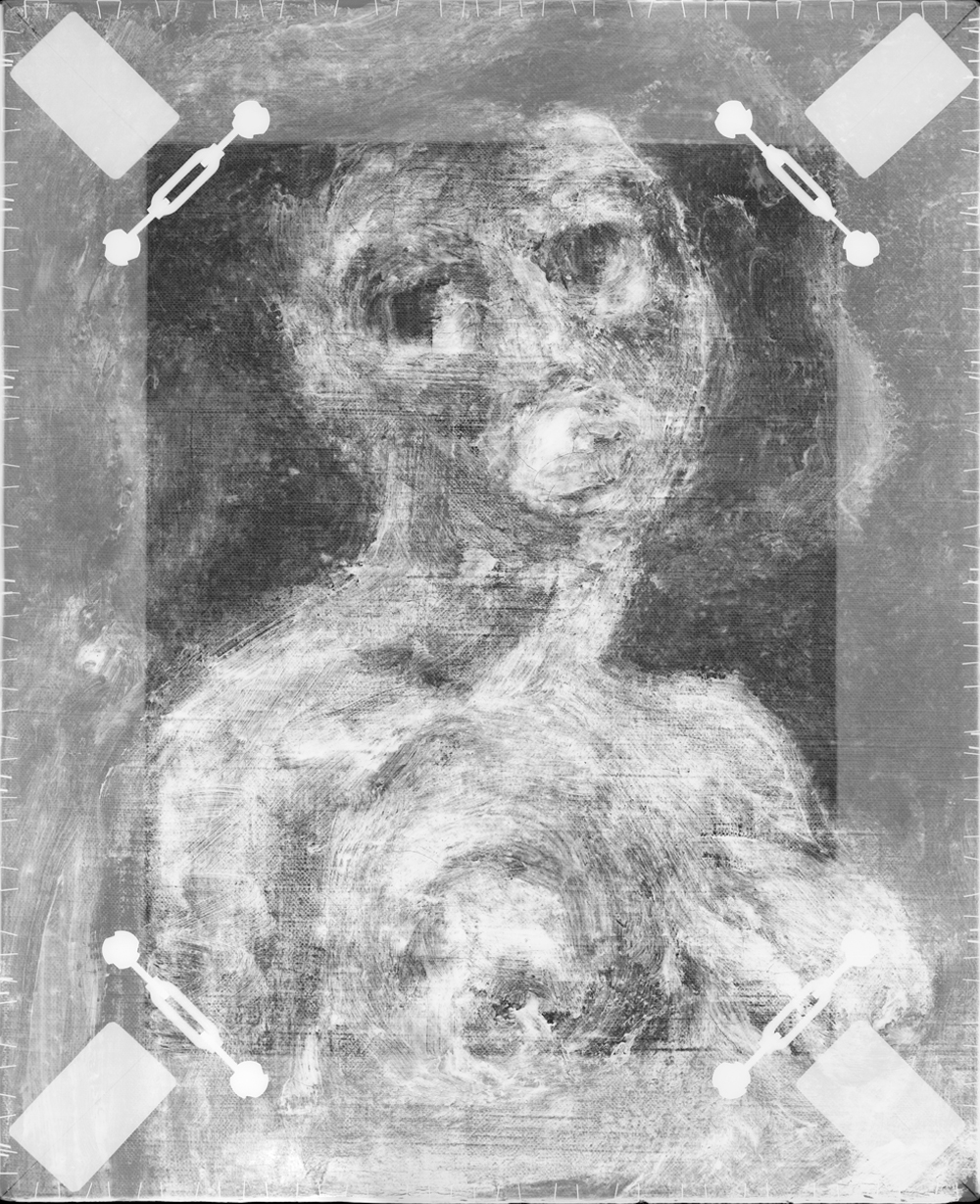
The wooden stretcher, aluminum corner plates, and turnbuckle hardware are all clearly visible in the X-radiograph. Studded along each edge are staples used to attach the canvas to the wooden stretcher.
Cadmium orange and yellow, zinc white, cerulean blue—many of Nolde’s pigments he selected for the woman’s skin tone strongly absorb X-ray energy. This explains why her figure and face appear so arrestingly strong in the X-radiograph.
Raking light
Raking light reveals Nolde’s liberal, paint-laden brushstrokes. While he applied the paint using bold sweeps, he also used dabs and scumbles to create short, textured peaks. Bits of dried paint caught from palette mixing heighten the texture further.

Specular light
A glossy, uneven surface reflects specular light. Nolde used Behrendt Farbe oil paints, a commercial line known for producing highly saturated colors due to their inclusion of resin in the paints. While Nolde was against varnishing his paintings, the natural sheen of his paint choices produces a similar surface of rich, glossy colors.

Normal light, back of painting
The canvas of Woman (in Strong Light) was adhered to another canvas in a 1984 conservation treatment. This secondary canvas, called a lining, was added to strengthen the deteriorating fibers of the original canvas and to improve planar tension. The lining is shown stretched over a replacement wooden stretcher equipped with adjustable hardware for tensioning the canvases.

Additional Objects
View all objects in the technical imaging suite to reveal hidden details and examine underlying material layers.

-
Glossary
Back (Verso)
The back of a painting provides a wealth of information about its structure. Changes made to the canvas, such as visible repairs, reveal past damage or vulnerabilities. Markings, labels, and inscriptions often tell new stories of the painting’s past, including original titles, previous owners, and exhibition histories.
Raking Light
Raking light, directed from a side angle, casts surface textures into strong relief. This technique highlights details such as thick brushstrokes, canvas weave, or cracks in the paint layers.
Specular Light
Light cast directly onto the painting’s surface at a 90-degree angle highlights glossy or matte qualities. This technique helps determine if a varnish is present and quickly exposes variations of sheen in different paints.
Infrared Reflectography
Infrared reflectography (IRR) uses a specially adapted camera to detect infrared energy. When an image of a painting is captured using infrared light, some pigments appear transparent, which enables the viewer to see through overlying layers of paint. This technique often reveals hidden details, such as preparatory drawings by the artist or parts of the composition the artist painted over.
Ultraviolet Radiation
Ultraviolet (UV) light sources cause certain materials to absorb and re-emit colorful light, known as fluorescence. The fluorescence of some materials can identify certain pigments, such as zinc white, which produces a vibrant glow. Conservators can also detect previous treatments, which may appear dark purple.
X-radiography
X-radiography uses an X-ray source and sensitive film to produce an image of the painting’s composite layers. Materials transparent to X-rays appear dark in the images, while X-ray–absorbing materials like lead white and metal hardware appear white. Artist’s changes and, in some exciting instances, completely different, earlier compositions may be unveiled.