ST. LOUIS, July 30, 2025—What makes a work of art modern? More than a historical label, “modern” captures a spirit of bold experimentation, fresh ideas and deep engagement with the world. A free exhibition at the Saint Louis Art Museum explores this sensibility through 30 works of German art and design, all drawn from SLAM’s renowned collection.
“Always Modern: German Art and Design from the Collection” opens Nov. 7 with a public celebration from 4 to 8 pm in Sculpture Hall. The exhibition will be on view through March 15 in Gallery 235 and Sidney S. and Sadie M. Cohen Gallery 234.
Spanning from 1880 through the postwar period, the exhibition presents a wide range of media—oil paintings, drawings, prints, sculpture, furniture and design—created by 16 influential artists, offering a dynamic view of this transformative period in German art and design.

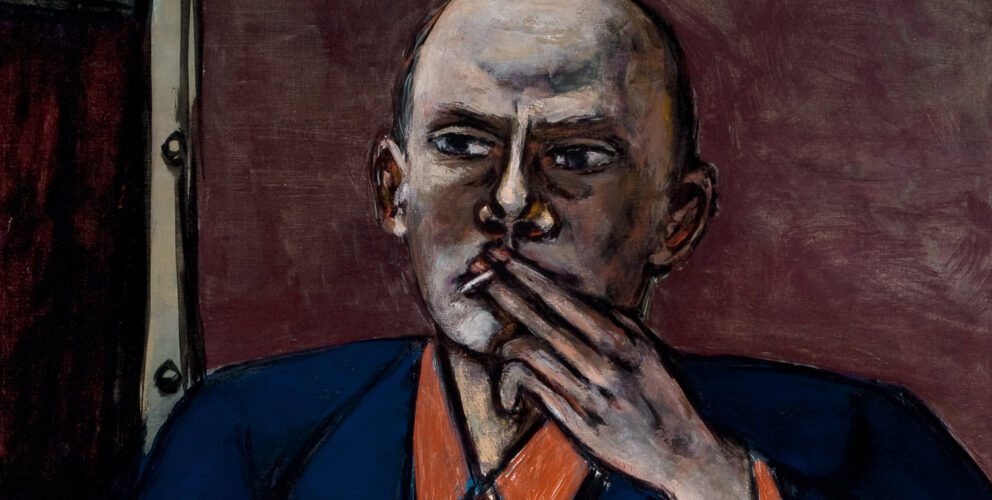
Max Beckmann, German, 1884-1950; “Self-Portrait 1950,” 1950; oil on canvas; 55 1/8 x 36 inches, framed: 66 15/16 x 48 x 3 3/16 inches; Saint Louis Art Museum, Bequest of Morton D. May 866:1983

Wilhelm Wagenfeld, German, 1900-1990; Table Lamp, 1923-24; glass and nickel-plated brass; overall: 15 x 7 inches, base only: 10 3/4 x 7 inches, shade only: 5 x 7 inches; Saint Louis Art Museum, Richard Brumbaugh Trust in memory of Richard Irving Brumbaugh and in honor of Grace Lischer Brumbaugh 165:1993a,b
“Though many of the works are more than a century old, they still feel strikingly contemporary, a testament to the enduring vitality of modernism,” said exhibition curator Melissa Venator, SLAM’s Andrew W. Mellon Foundation Assistant Curator of Modern Art. “These works challenged conventions in their own time and still challenge us today. Whether through content, form or function, they invite us to see the modern not as something of the past, but as an ongoing dialogue about how art reflects and shapes the world around us.”
Organized into six sections, “Always Modern” traces key figures and moments in the development of German modernism. The exhibition opens with Max Klinger’s symbolist print cycle “Eve and the Future,” followed by Max Beckmann’s penetrating self-portraits and the force of German Expressionist painting. Other sections explore the elegance of Jugendstil and the technological innovations of the Bauhaus, where students and teachers reimagined the role of art in daily life. A selection of postwar works serves as a bridge to the creative resurgence of the 1980s and suggests a continuity with the innovation of the interwar period.
SLAM has one of the largest and most diverse collections of 20th-century German art in the United States, including the world’s largest collection of paintings by Beckmann. This collection strength, highlighted in “Always Modern,” complements a monumental exhibition on view this fall at SLAM: “Anselm Kiefer: Becoming the Sea,” which is the first survey of German artist Anselm Kiefer’s work in the U.S. in more than 20 years. The museum acquired its first Kiefer work, “Brennstäbe” (Fuel Rods), in 1987 as part of efforts to prioritize acquisitions and presentations of important works by contemporary German artists and to present greater continuity in the history of German art. Today, SLAM’s holdings include more than 2,500 objects by artists from Germany, Austria and Switzerland, with strengths in German Expressionism.
CONTACT: Molly Morris, 314.655.5250, molly.morris@slam.org
-
Also on view in St. Louis in fall 2025
Contemporary Art Museum St. Louis
Haegue Yang: Quasi-Heartland, September 5-February 8, 2026
Teresa Baker: Somewhere Between Earth and Sky, September 5-February 8, 2026
Hai-Wen Lin: Orientation, September 5-February 8, 2026Laumeier Sculpture Park
Renata Cassiano Alvarez: Passage, August 23-December 15Mildred Lane Kemper Art Museum
Making Their Mark: Works from the Shah Garg Collection, September 12-January 5, 2026Pulitzer Arts Foundation
Jennie C. Jones: A Line When Broken Begins Again, September 5, 2025-February 1, 2026
Other Octaves: Curated by Jennie C. Jones, September 5, 2025-February 1, 2026