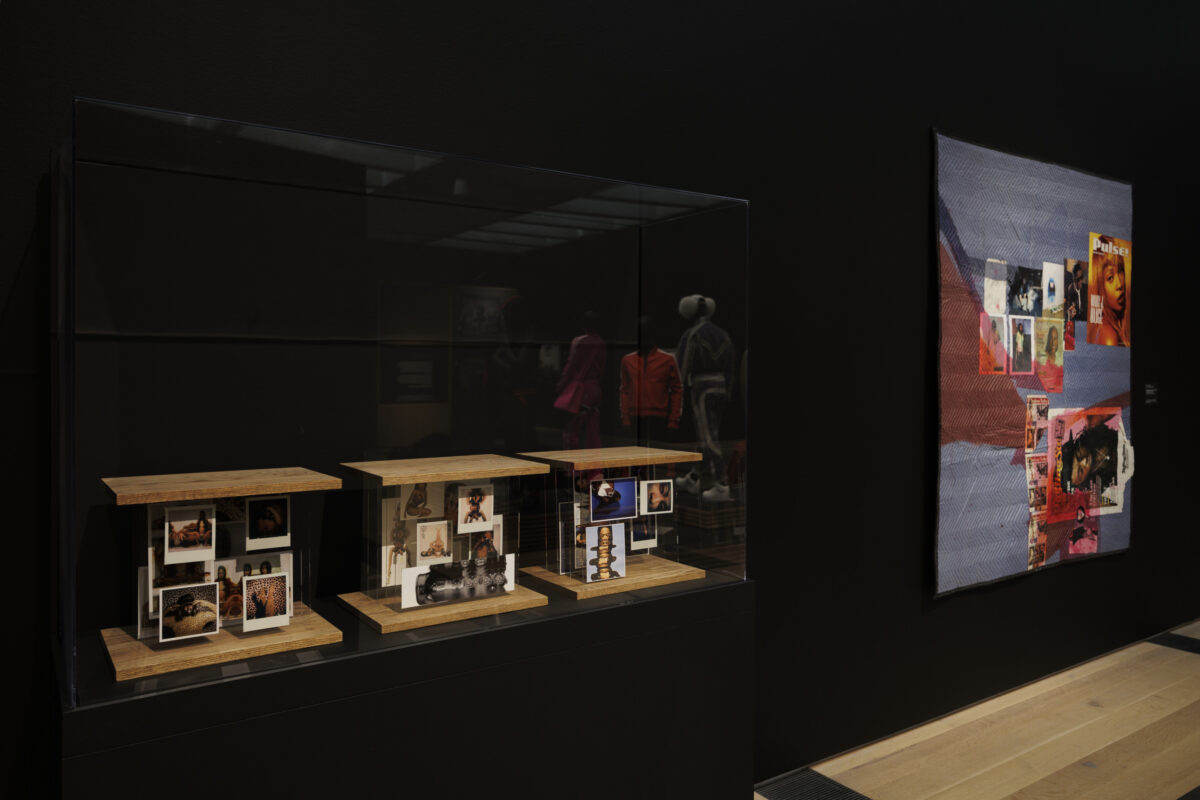
ST. LOUIS, Aug. 17, 2023—The Saint Louis Art Museum will celebrate the 50th anniversary of hip hop and its resounding impact on contemporary art and culture with a new exhibition opening this month.
“The Culture: Hip Hop and Contemporary Art in the 21st Century” opens Saturday, Aug. 19 with a free block party from noon to 5 pm outside the museum. The event celebrates the legacy of a back-to-school block party in the Bronx hosted 50 years ago by DJ Kool Herc and his sister Cindy Campbell—a party historians now consider the moment hip hop was born. Admission to “The Culture” is free during SLAM’s community festival. The exhibition continues through Jan. 1.
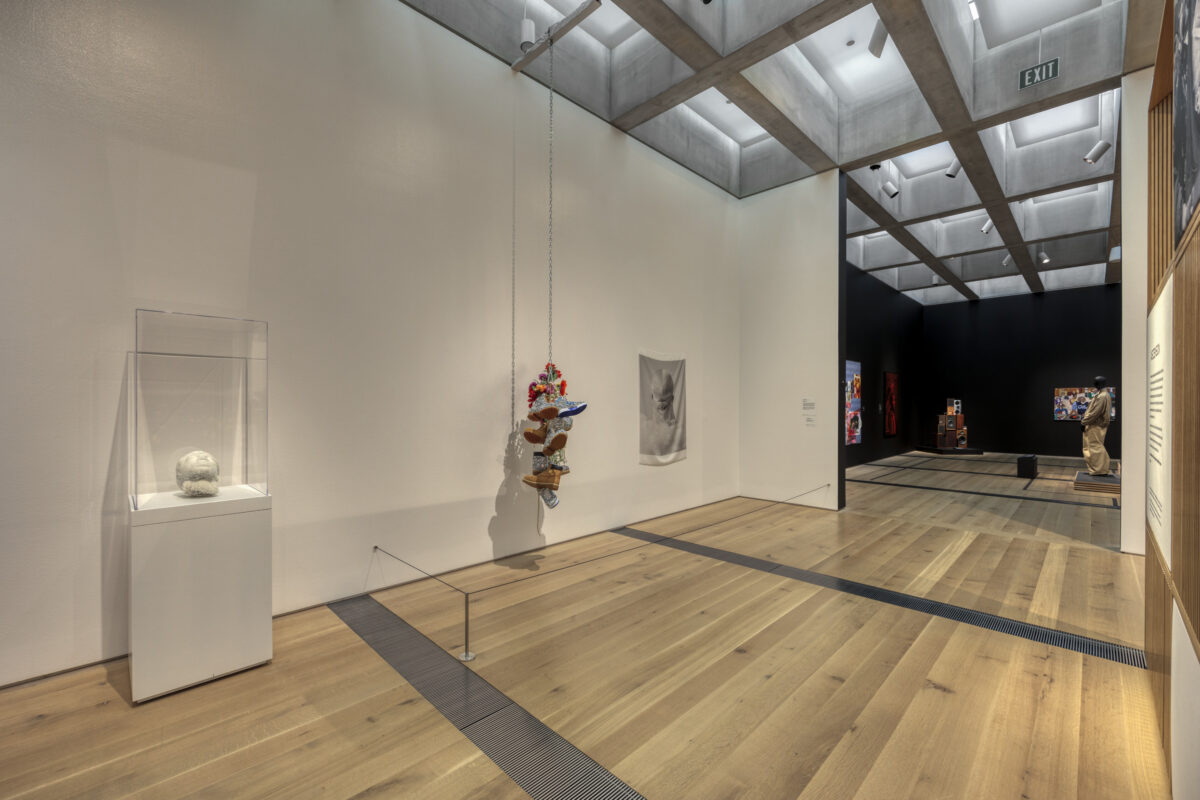
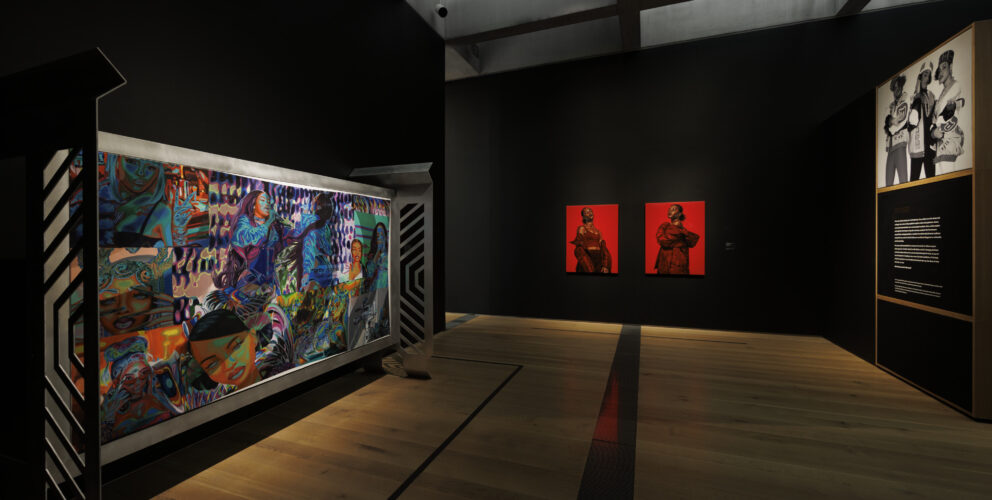
“The Culture” examines how the collision of hip hop, technology and the marketplace over recent decades transformed contemporary art and material culture. Featuring approximately 130 objects by both established and emerging artists, “The Culture” is a multidisciplinary and multimedia exhibition that presents a sweeping art history of hip hop and its myriad expressions across the globe.
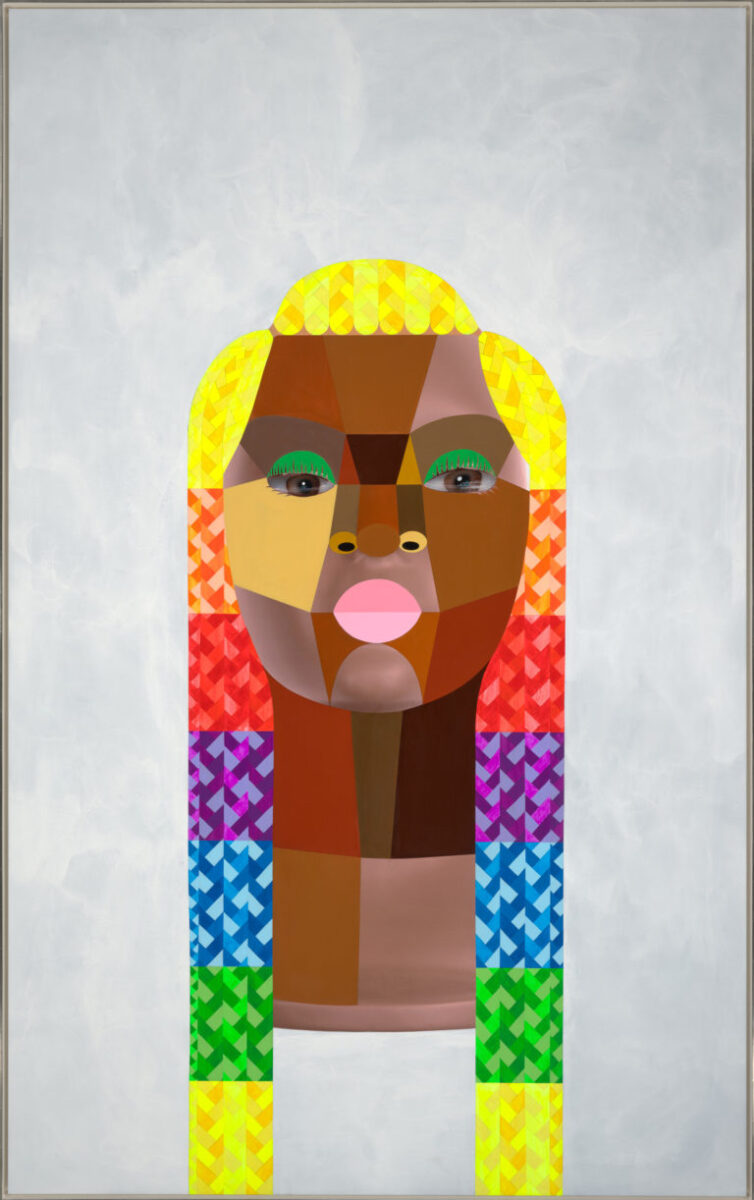
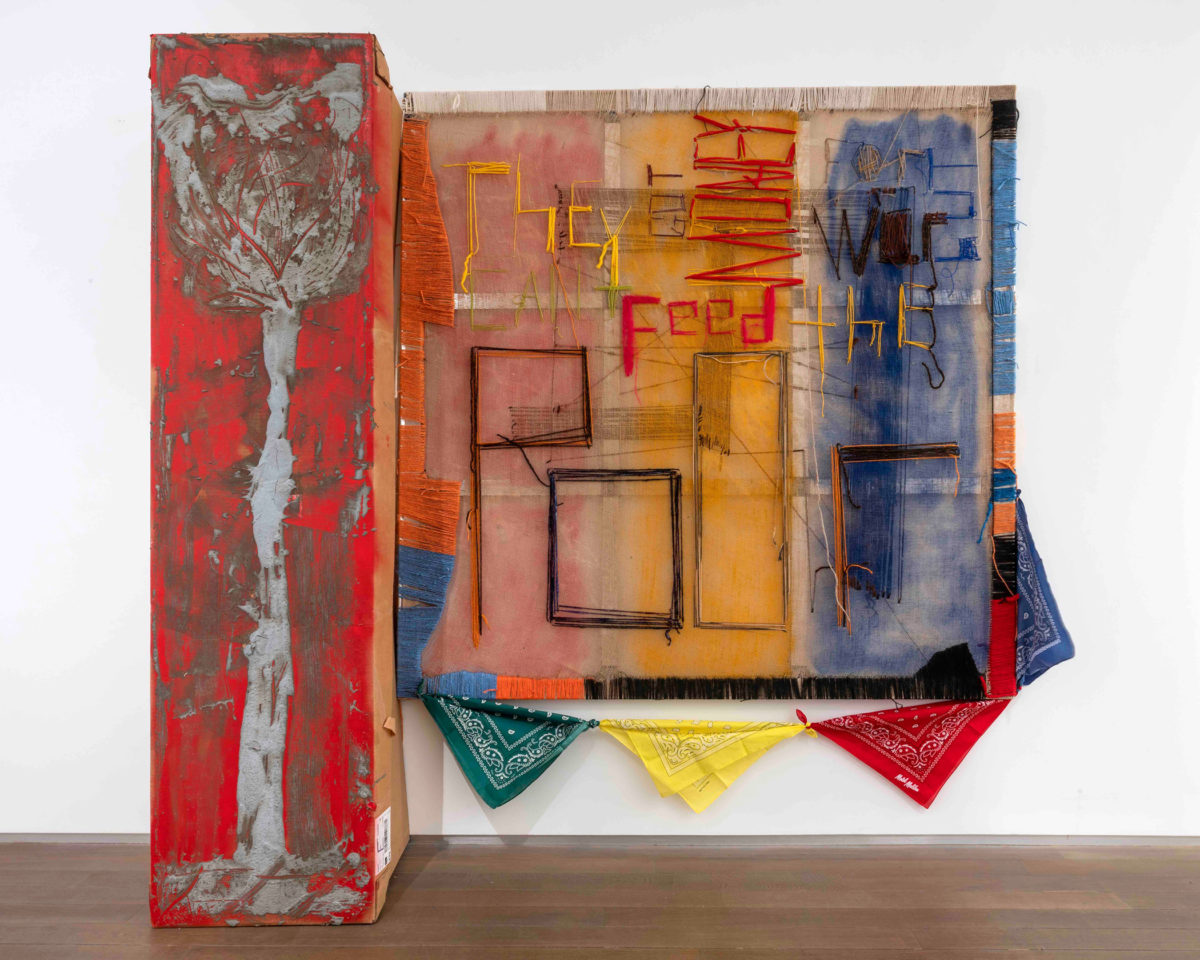
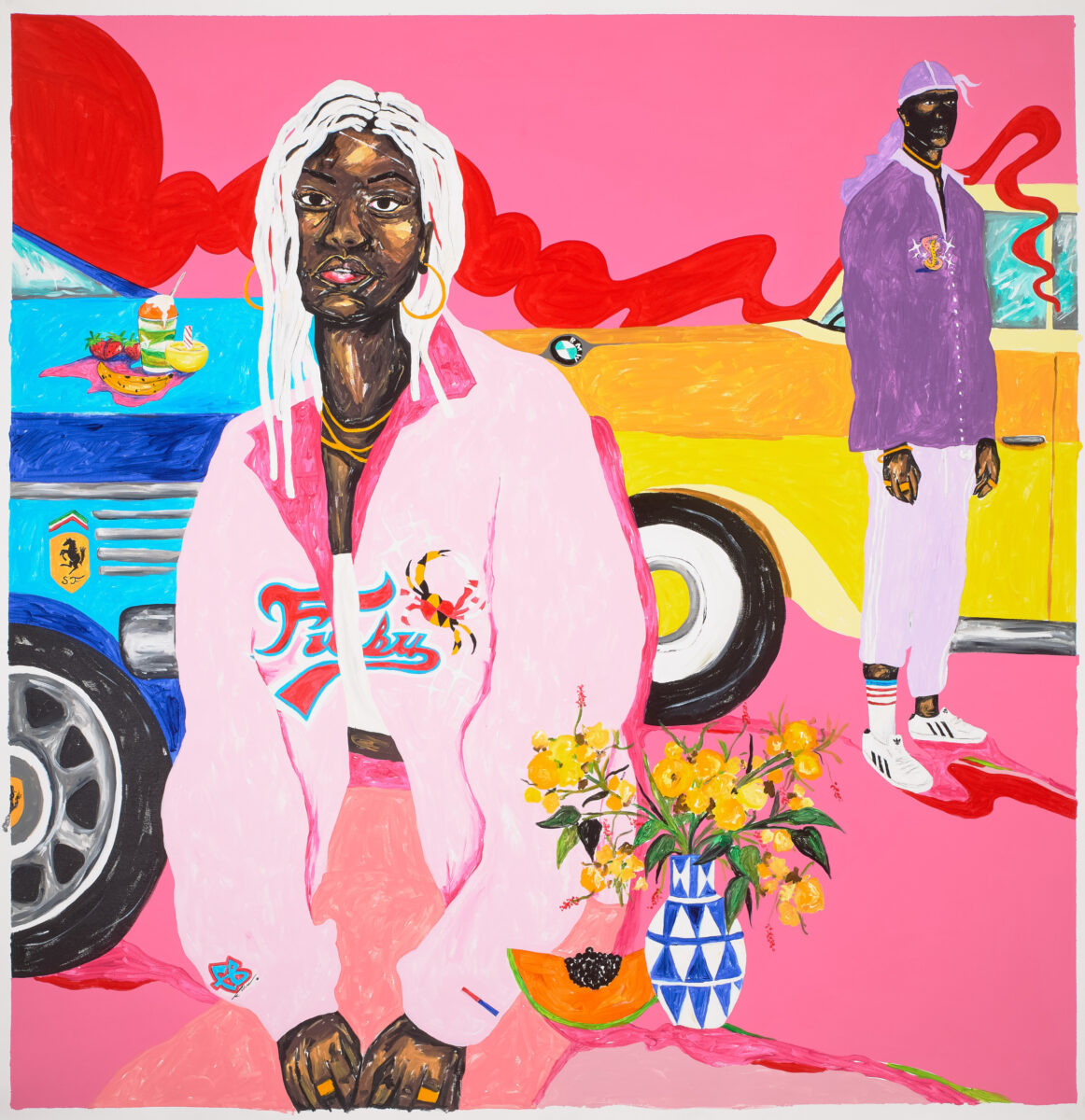
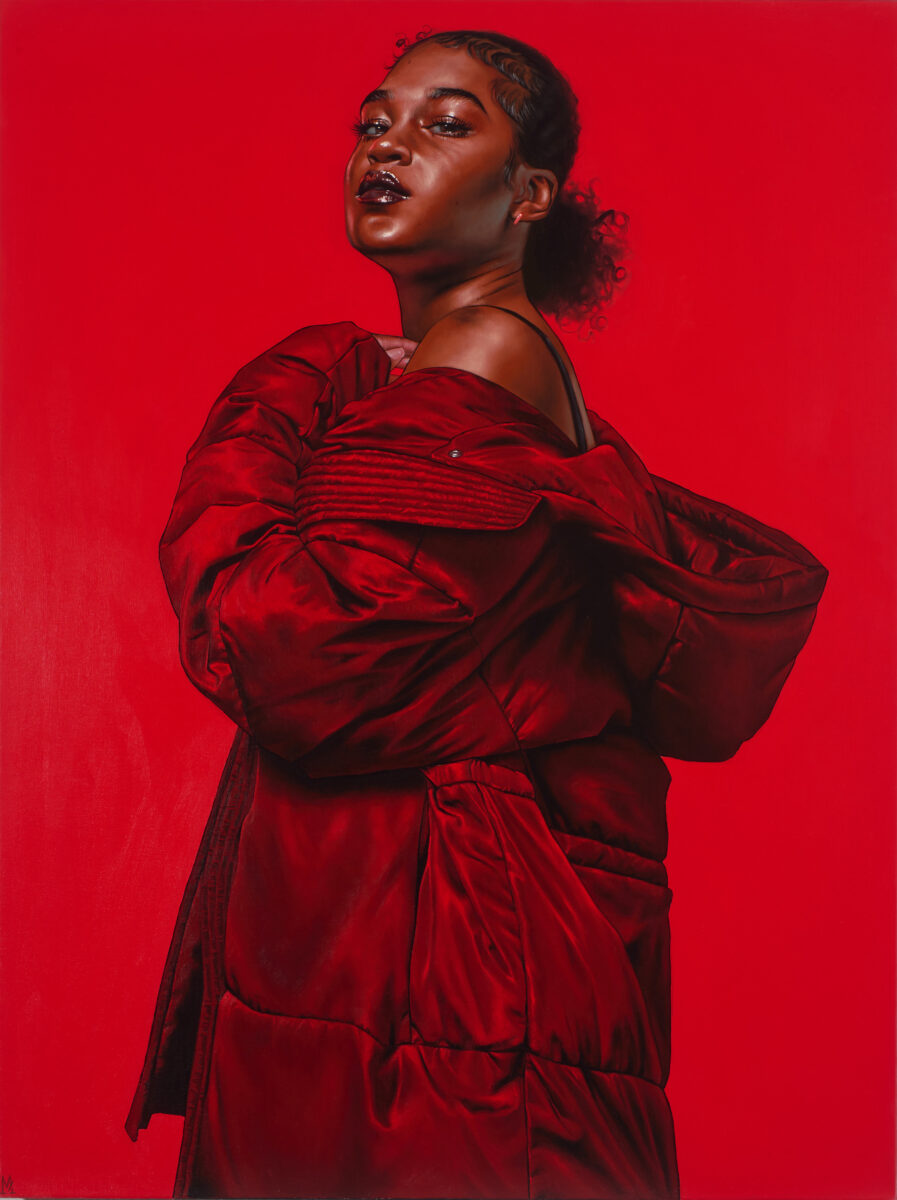
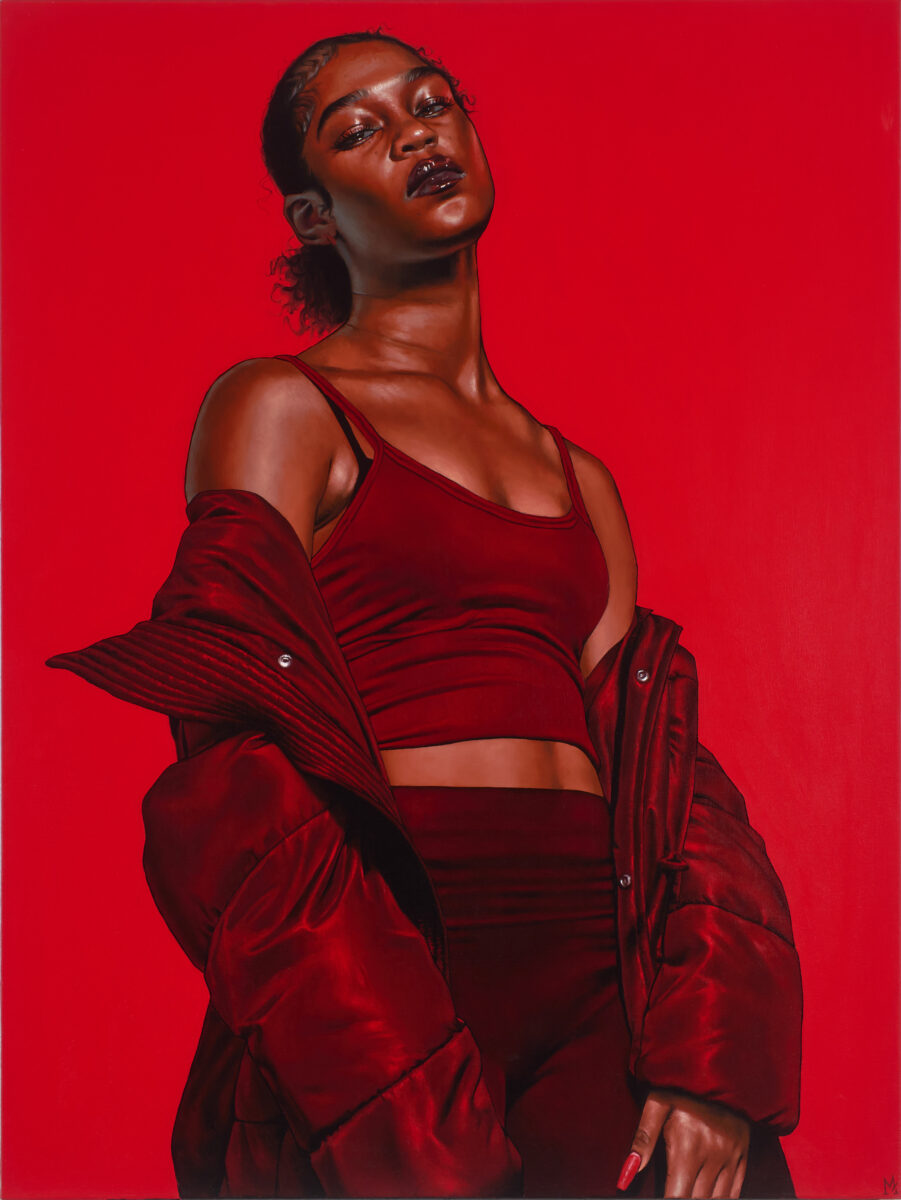
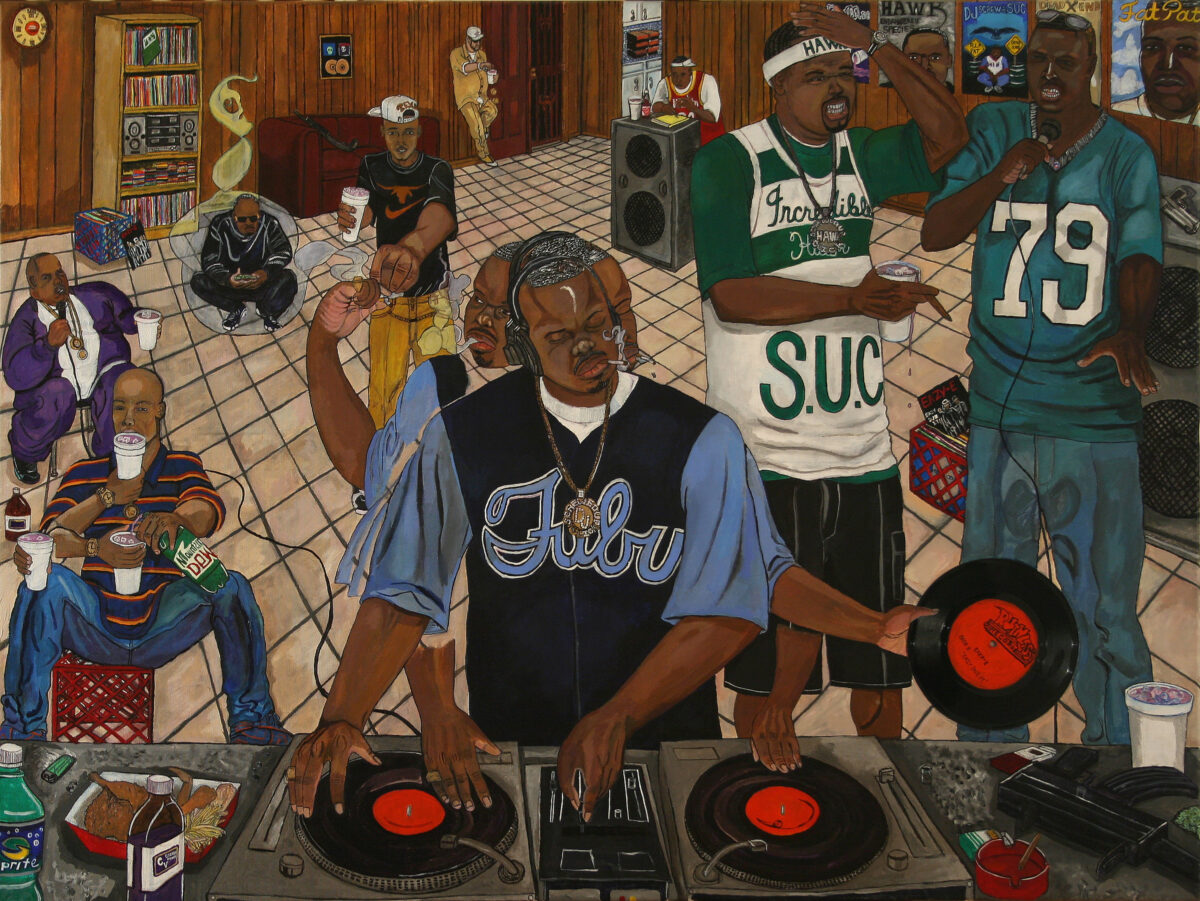
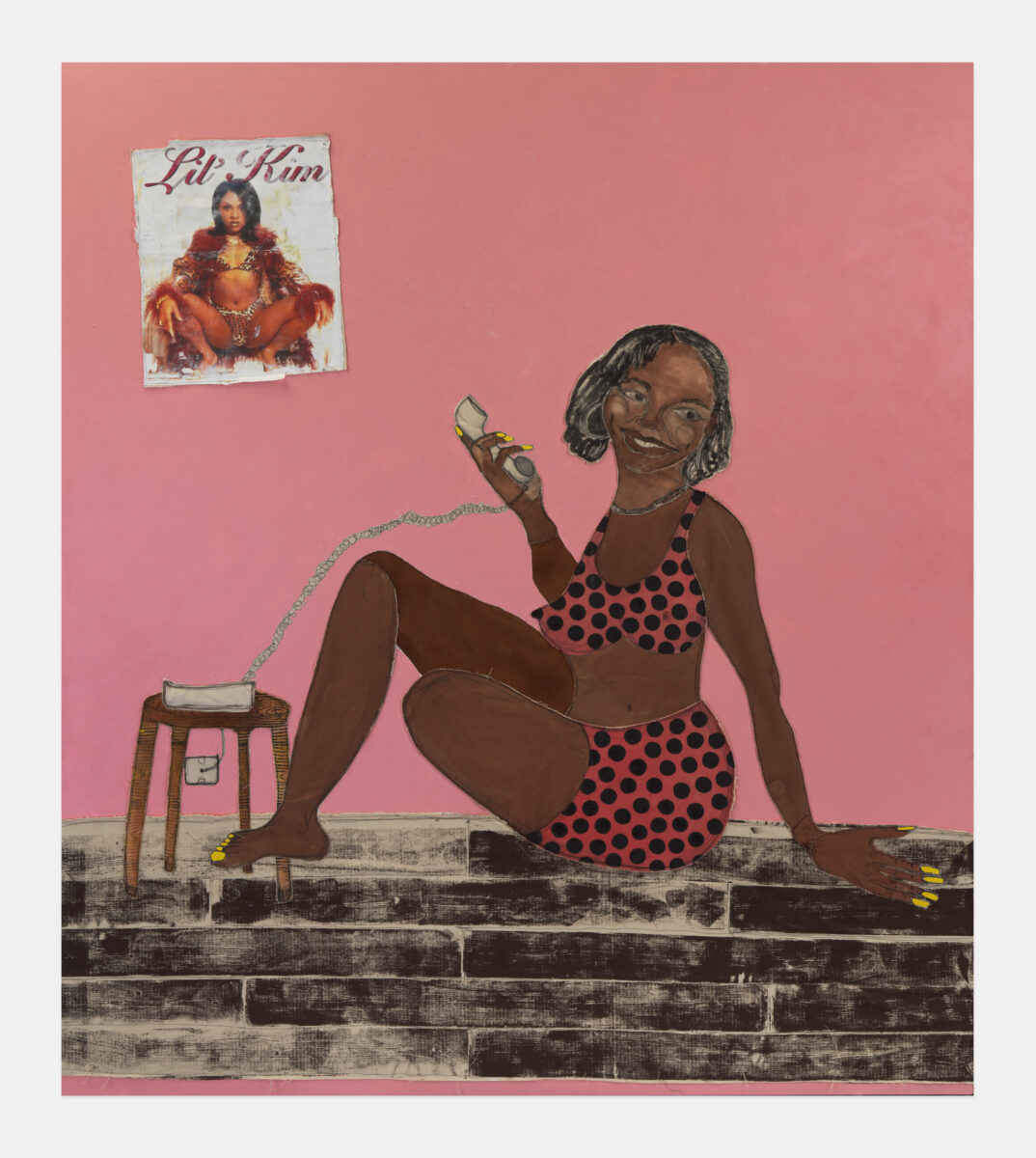
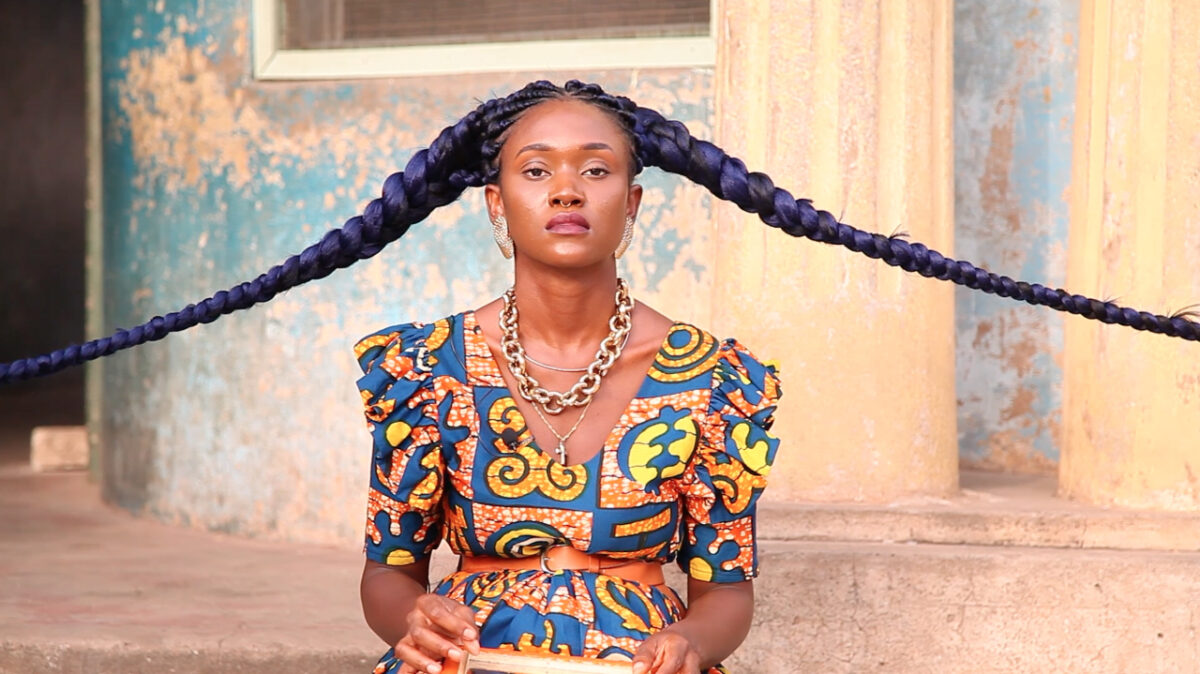
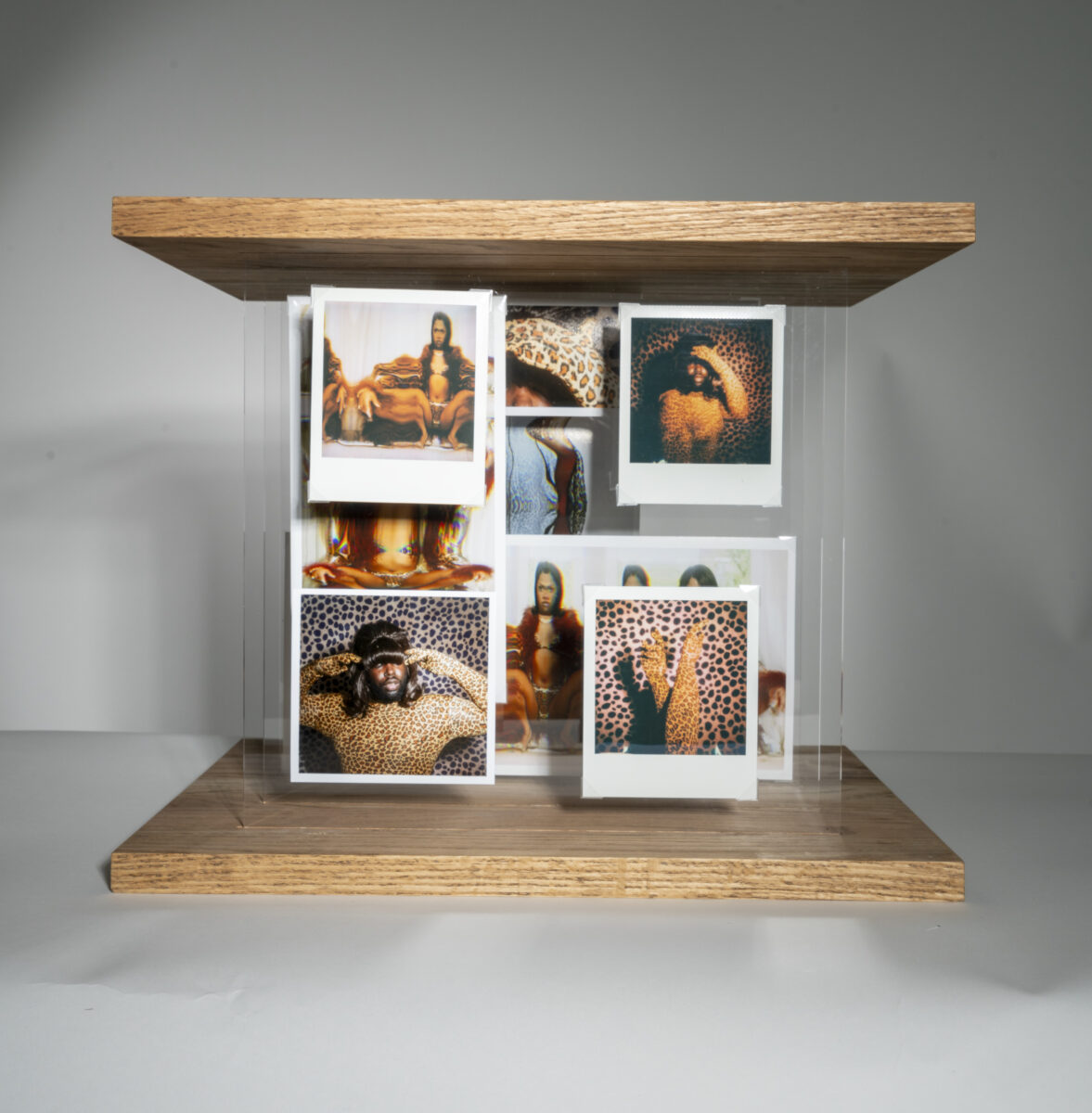
“The Culture” will prominently showcase iconic paintings not previously exhibited in St. Louis by some of the art world’s most famous practitioners, including Jean-Michel Basquiat and Mark Bradford, as well as works by artists represented in the SLAM collection, such as Julie Mehretu and Carrie Mae Weems. Other featured artists include Nina Chanel Abney, Derrick Adams, Jordan Casteel, Kudzanai Chiurai, William Cordova, Hassan Hajjaj, Lauren Halsey, Arthur Jafa, Deana Lawson, Hank Willis Thomas and others. The exhibition will also include significant examples of fashion, including looks from Virgil Abloh’s collections for Louis Vuitton, legendary streetwear brand Cross Colours, as well as a range of music ephemera.
Origin story of “The Culture”
“The Culture” is co-organized by SLAM and the Baltimore Museum of Art. Conceived and developed as a collaborative effort that engages with both museums’ curatorial, education and audience development staff, “The Culture” emphasizes community access and engagement as core to the exhibition experience.
“A collaborative project based on rigorous scholarship and objects of exceptional quality, ‘The Culture’ will center marginalized voices and community engagement, examine hip hop’s origin and relevance through diverse narratives, and provide a visually stunning treat for museum visitors in Baltimore and St. Louis,” said Min Jung Kim, the Barbara B. Taylor Director of the Saint Louis Art Museum.
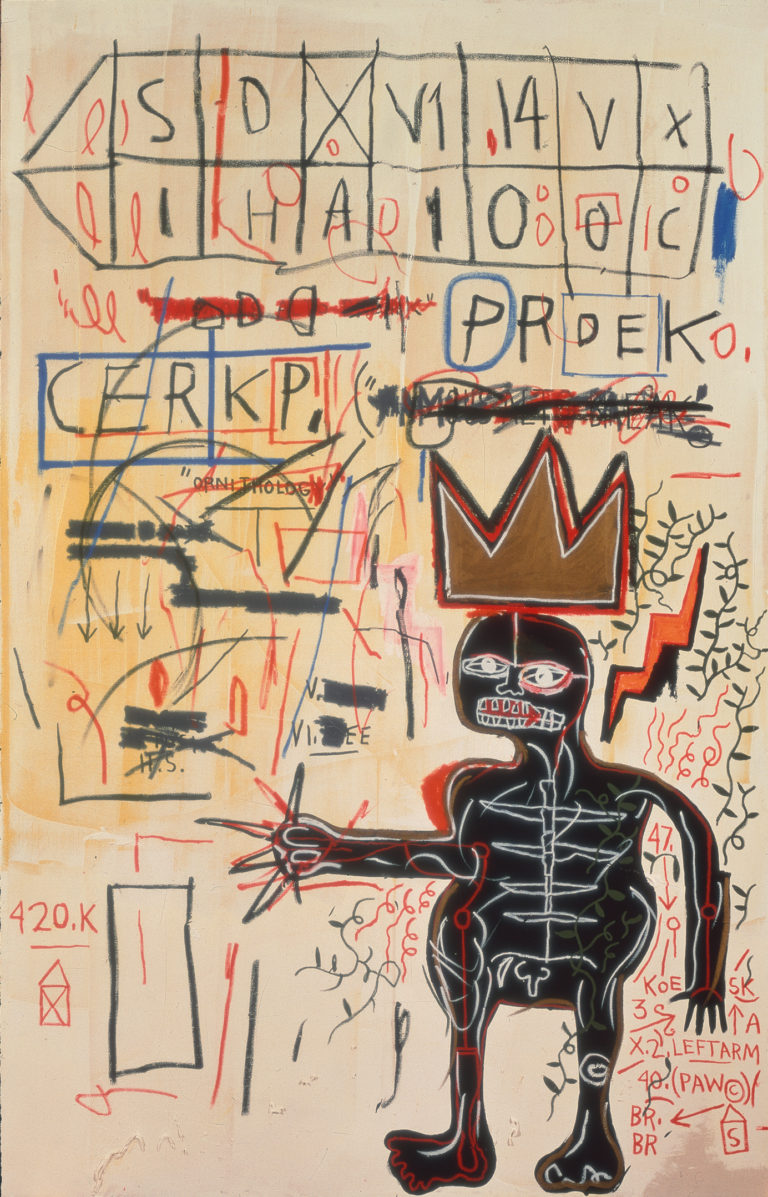
Jean-Michel Basquiat, American, 1960–1988; With Strings Two, 1983; acrylic and oil stick on canvas; 96 x 60 inches; The Broad Art Foundation, Los Angeles; © The Estate of Jean-Michel Basquiat, Licensed by Artestar, New York
Throughout the planning for this exhibition, both museums engaged a global advisory committee of experts comprising hip hop’s leading thinkers: academics, musicians, fashion designers, visual artists and curators who helped to refine the exhibition themes, adhere to the ethos of hip hop, and make the exhibition accessible to the local community and beyond.
To further illuminate hip hop’s influence, one-third of the artists featured in the exhibition have close ties to St. Louis or Baltimore. Artists who have been active in St. Louis include Anthony Olubunmi Akinbola, Damon Davis, Jen Everett, Aaron Fowler, Kahlil Robert Irving, Shabez Jamal, Yvonne Osei and Adrian Octavius Walker.
“Emerging in 1973 as an unabashed declaration of Black, Latinx and Afro-Latinx difference, hip hop has always been a culture that reflects community,” said Andréa Purnell, SLAM’s audience development manager and co-curator of the exhibition. “Now, with the 50th anniversary in 2023, hip hop is a dominant form of expression and subject of artistic production, embraced by communities from all walks of life.”
As part of the St. Louis community engagement effort surrounding the exhibition, SLAM collaborated with five area organizations with each responding to one of the five pillars of hip hop—emceeing (or rapping), DJ-ing, breakdancing, graffiti, and knowledge. DJ Afrika Bambaataa, one of the three “godfathers” of hip hop, is credited with creating the classification system meant to capture the original essence of hip hop.
The local collaborations aim to engage the community through multidisciplinary presentations, including dance, spoken word, visual art, music, and panel discussions. Programs and events led by collaborators and teaching artists will take place at the museum and other locations throughout St. Louis surrounding when “The Culture” is on view.
The partner organizations include St. Louis ArtWorks (graffiti pillar), Harris-Stowe State University (knowledge pillar), Kode REDD Dance (breakdancing pillar), St. Louis County Library (DJ pillar), and UrbArts Gallery (emcee pillar).
In addition to these community-centered programs, SLAM is also partnering with Harris-Stowe to employ students as engagement guides for “The Culture.” The students will be trained on exhibition content and visitor engagement and mentored by museum docents.
Exhibition details
The exhibition is divided into six section that explore a variety of hip hop’s themes:
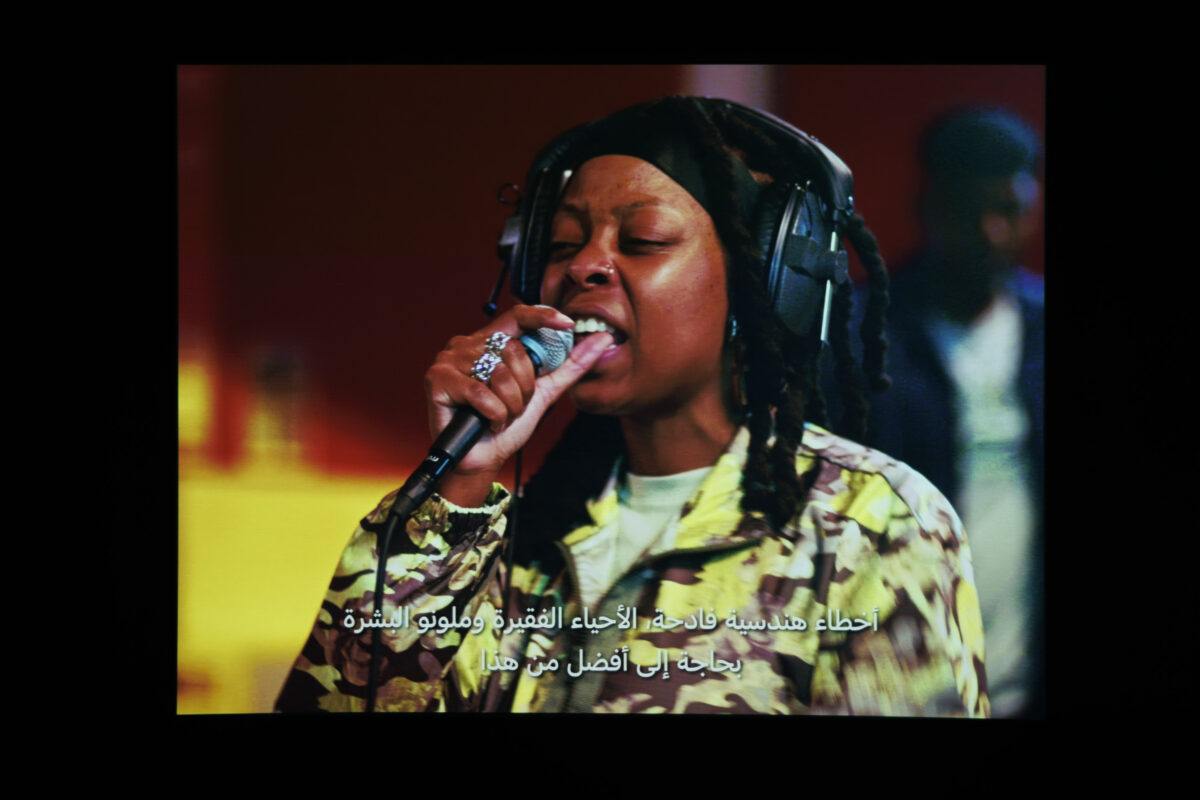
• Language: From the visual language of graffiti to musical language that includes scratching, sampling, and written and spoken word, hip hop is intrinsically linked to language. These connections are explored through the opening galleries.
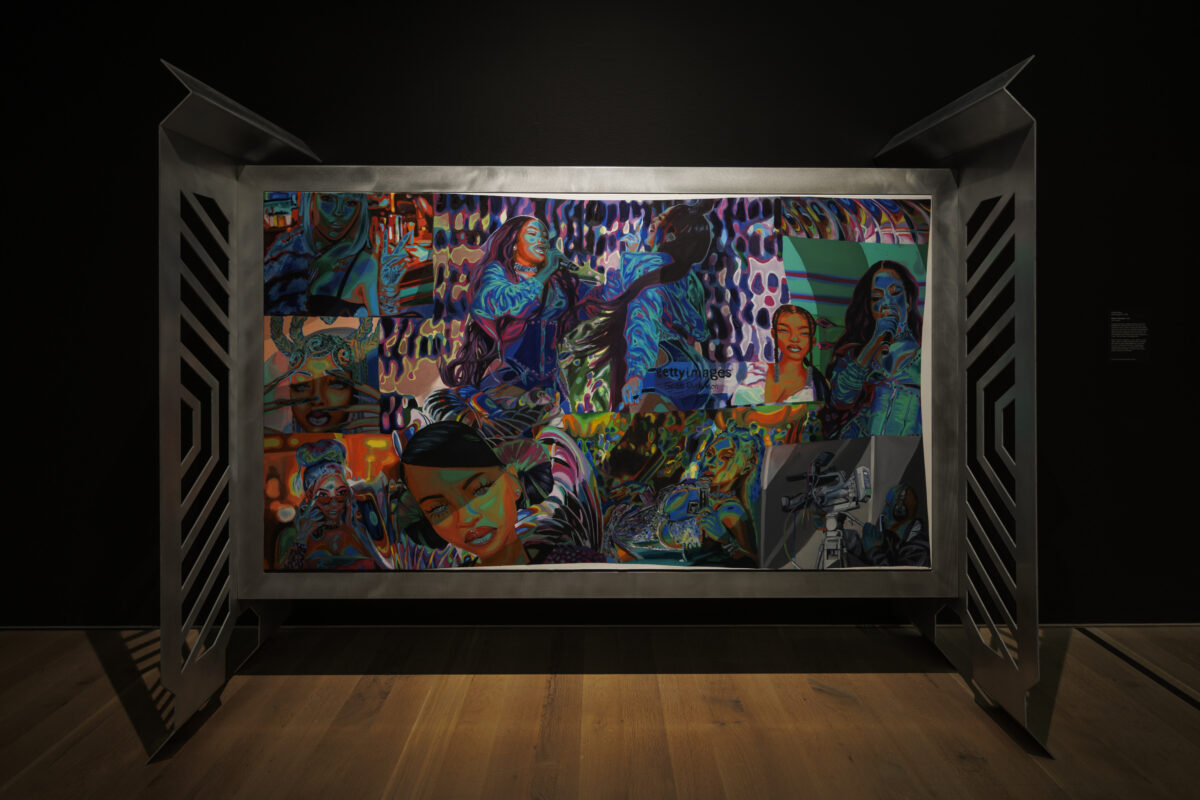
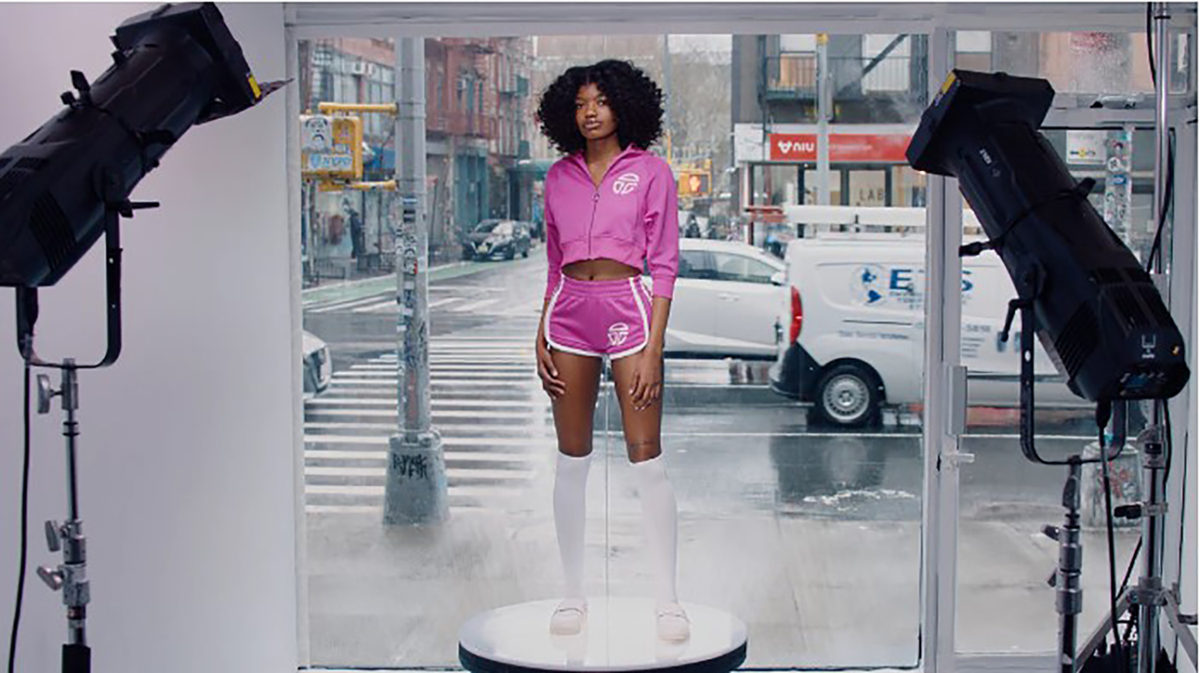
• Brand: Hip-hop artists have always served as unofficial promoters of major brands aligned with their style and public persona but now also partner with companies to create their own independent brands, building personal business empires. This section poses the question, is the artist a producer or a product?
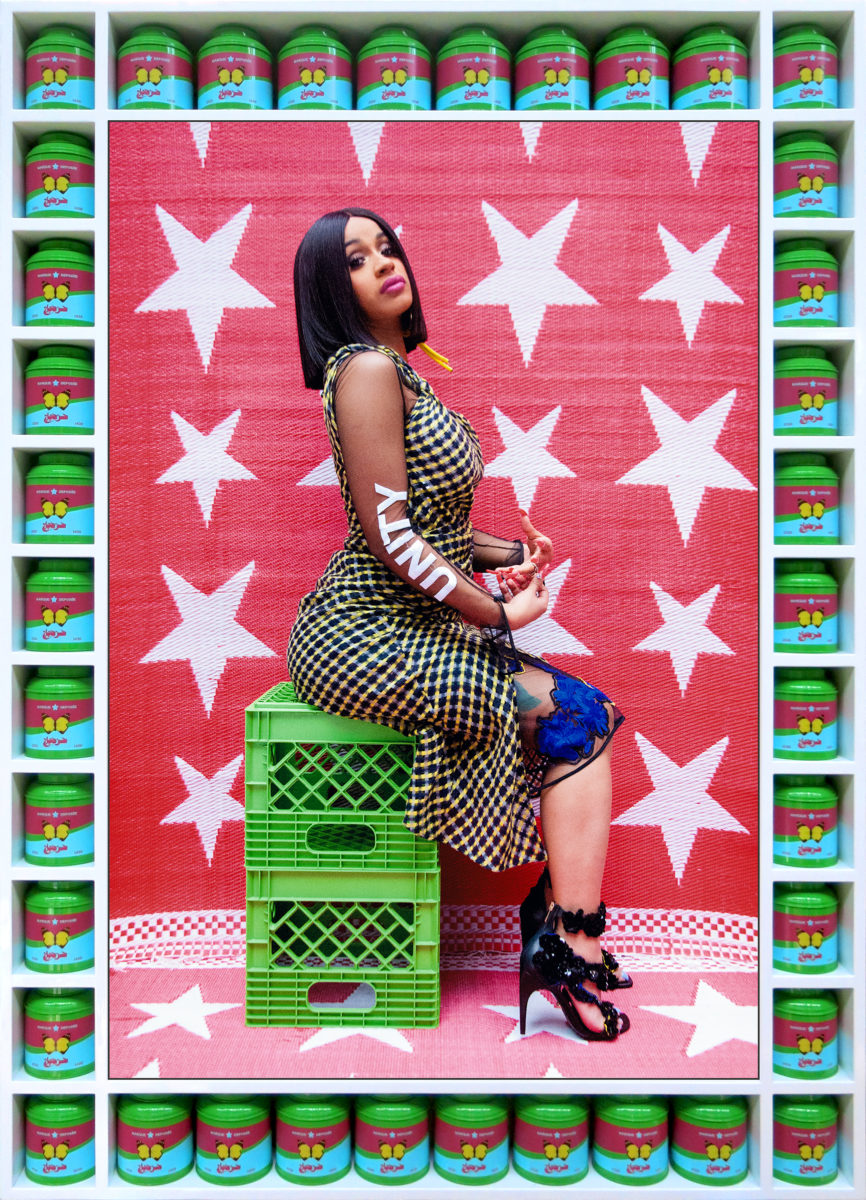
Hassan Hajjaj, Moroccan (active England), born 1961; “Cardi B Unity”, 2017; Courtesy the artist and Yossi Milo Gallery, New York; © Hassan Hajjaj
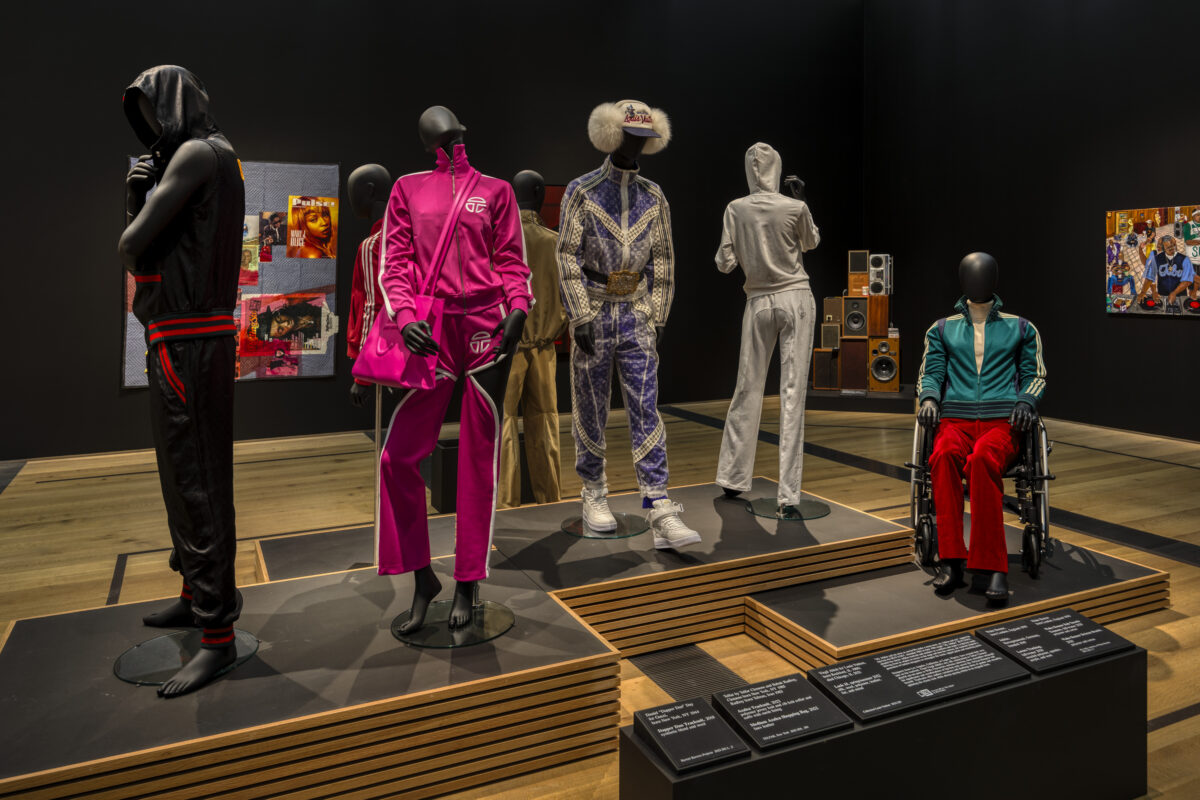
• Adornment: From Air Force Ones to wigs and grills, this section focuses on the unique styles that have origins in hip hop culture.
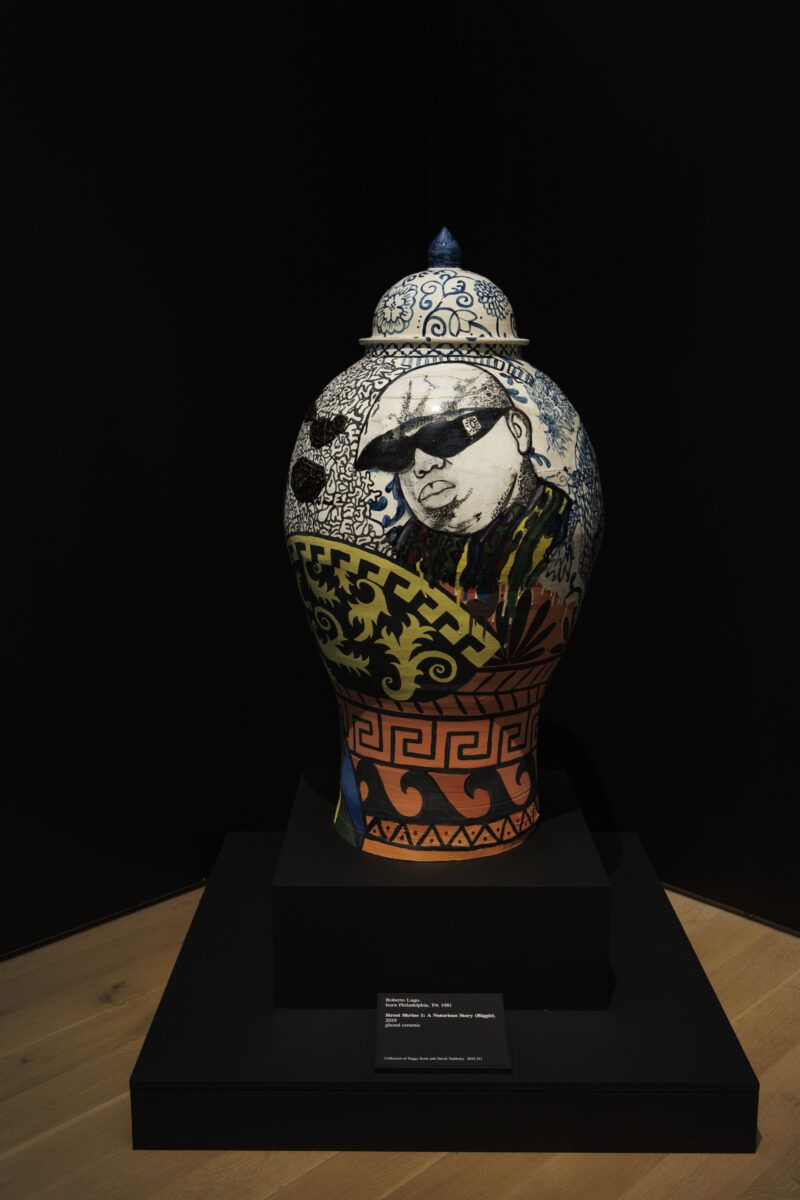
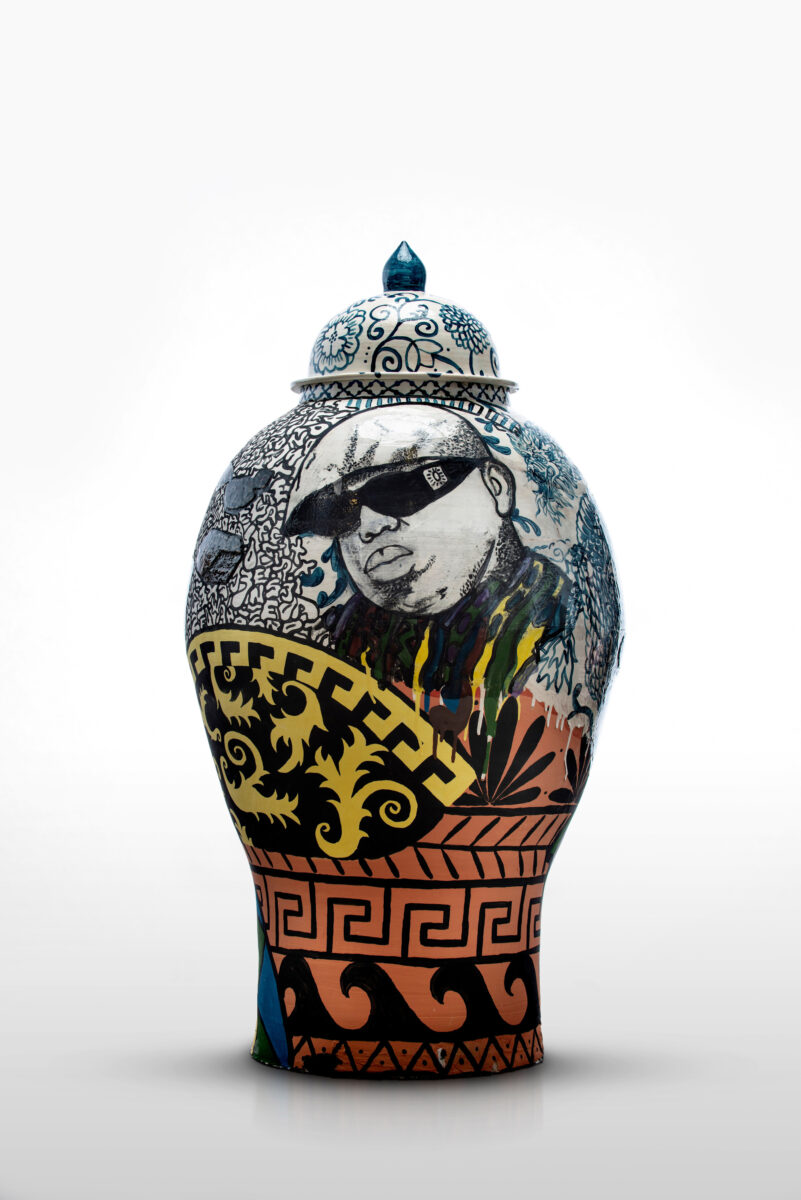
• Tribute: Whether name-dropping in a song or wearing a portrait of a deceased rapper on a T-shirt, tributes proclaim influence and honor legacies. These references are seen throughout this section and are fundamental to hip-hop culture.
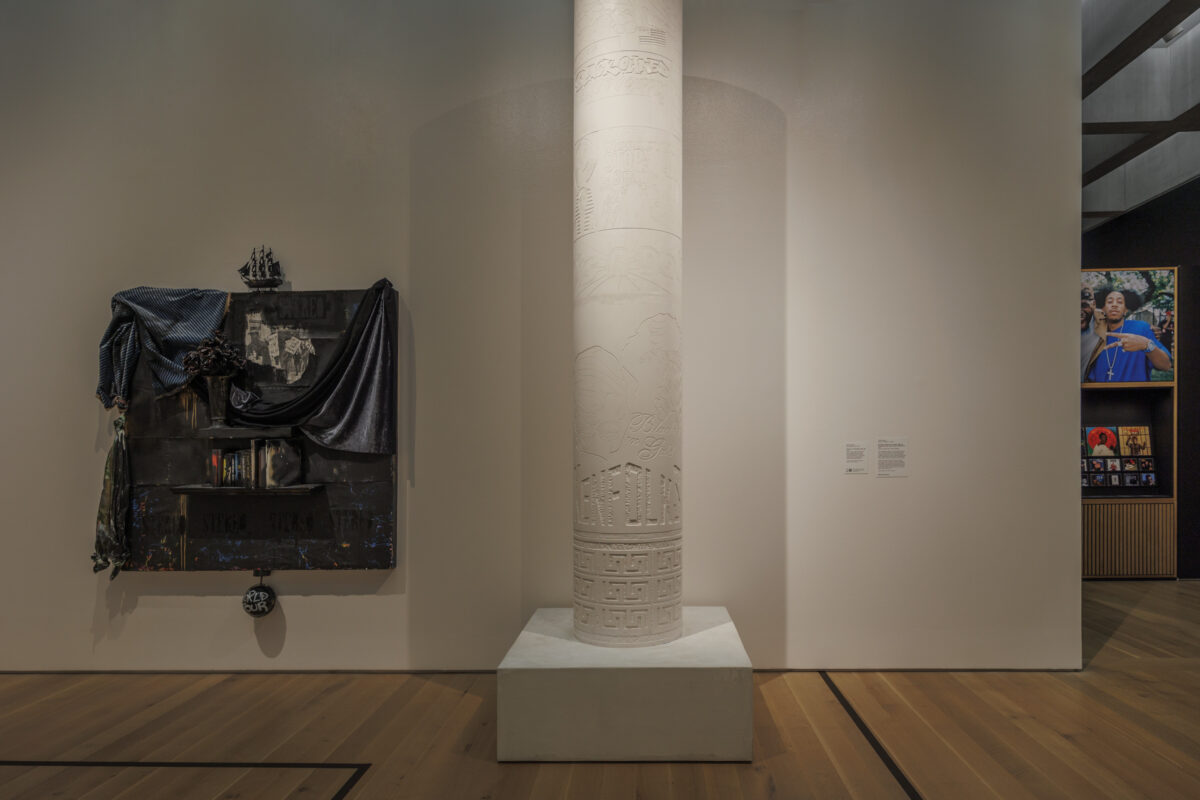
• Ascension: This section of the exhibition offers a moment for reflection. Ordinary objects are transformed into altars and monuments, reminding visitors that artists use hip hop to process, grieve and remember those lost.
• Pose: The final section explores self-presentation. In creating a new canon, hip hop’s aesthetics of the body refuse to conform to one standard and instead open up new ideas of what the body can say.
The exhibition features a custom-made soundscape that plays throughout the galleries. Musicians-producers Abdu Ali and Wendel Patrick mixed and reinterpreted hip hop’s greatest artists, influences and allusions with ambient sounds from camera shutters clicking to vinyl scratching, producing an aural vibe for the exhibition.
Beyond the ticketed footprint of the exhibition, “The Culture” bleeds throughout other areas of the Saint Louis Art Museum.
Gary Simmons’ “Garage Lab” is on display in Sculpture Hall. Recalling the structure of a typical garage with amps and equipment for band practice, the garage walls are lined with digitally altered concert posters from around the world and with locally sourced hip-hop event posters. The garage will also serve as a performance space during the run of the exhibition with spoken word, dancing, DJs and musicians booked. When not activated, video recordings of past performances will be played on loop in the space.
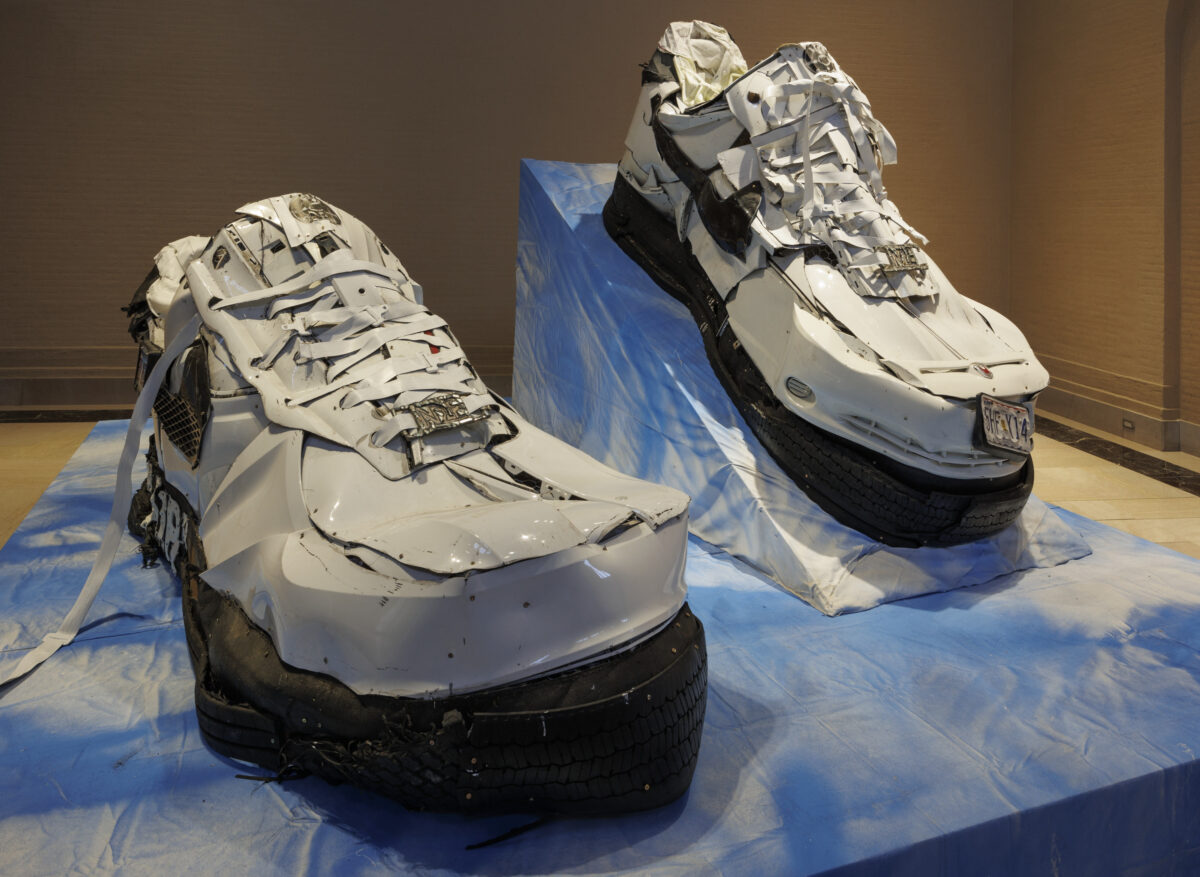
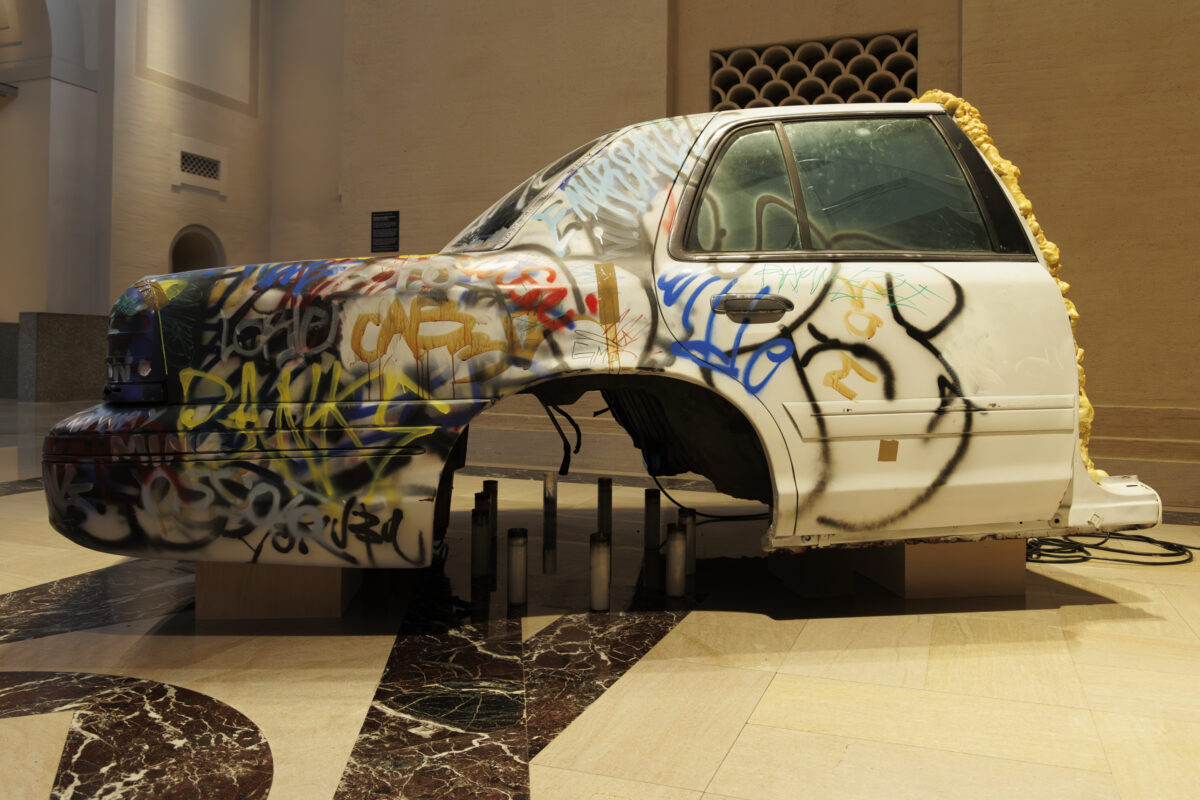
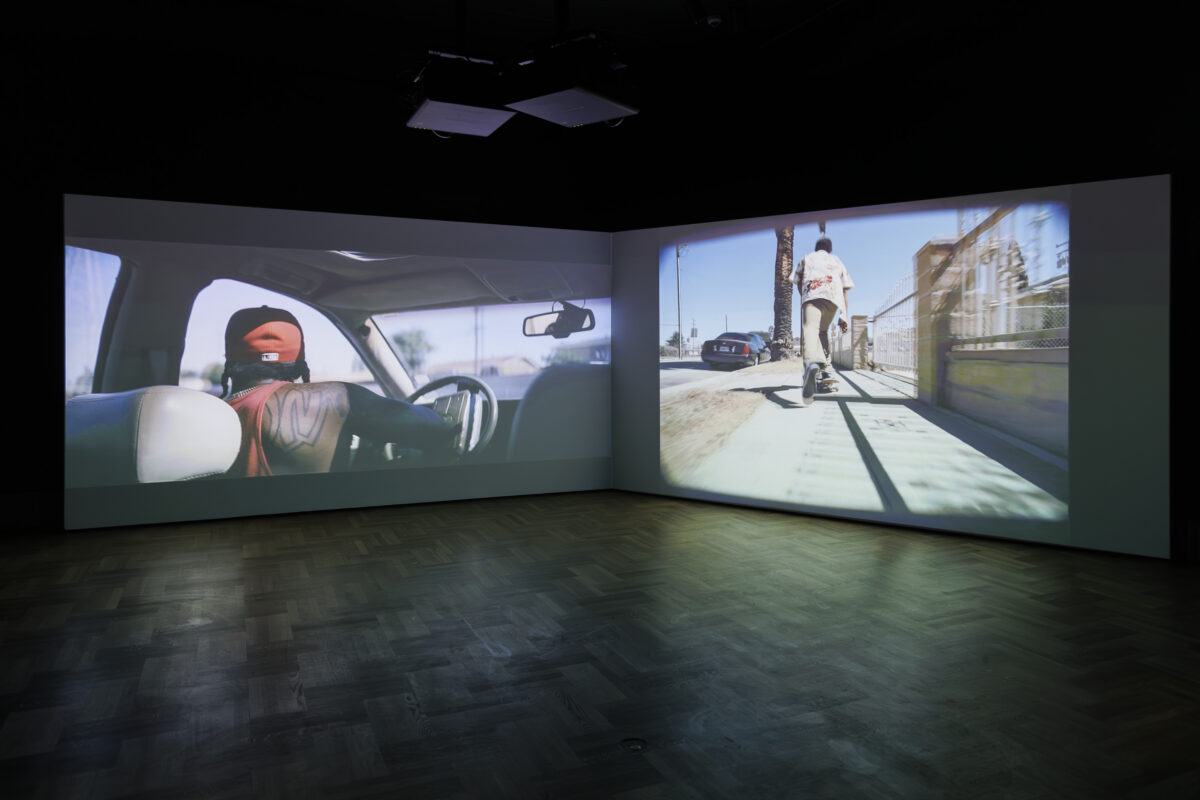
Also in Sculpture Hall are large-scale pieces, including: a pair of Air Force Ones made out of car parts by St. Louis artist Aaron Fowler and a sculptural installation made from mixed media and reclaimed police car by William Cordova. Video installations can also be found in different areas of the museum.
Recognizing hip hop’s deep roots in the local community and its global reach, an interactive recording booth at the museum will allow exhibition visitors to share their memories and personal stories of hip hop. The “For the Record” digital archive will travel to the exhibition’s future venues in the United States and internationally before finding a permanent home at the Atlanta University Center’s Robert W. Woodruff Library.
“The Culture” is curated by Hannah Klemm, SLAM’s former associate curator of modern and contemporary art; and Andréa Purnell, SLAM’s audience development manager; Asma Naeem, the Dorothy Wagner Wallis Director of the Baltimore Museum of Art; and Gamynne Guillotte, the BMA’s former chief education officer with Rikki Byrd, the BMA’s former curatorial research fellow and Carlyn Thomas, the BMA’s curatorial assistant.
This exhibition is generously supported by the Ford Foundation, the Henry Luce Foundation and The Andy Warhol Foundation for the Visual Arts. In St. Louis, “The Culture” is made possible by the William T. Kemper Foundation.
CONTACT: Molly Morris, [email protected], 3.14.655.5250
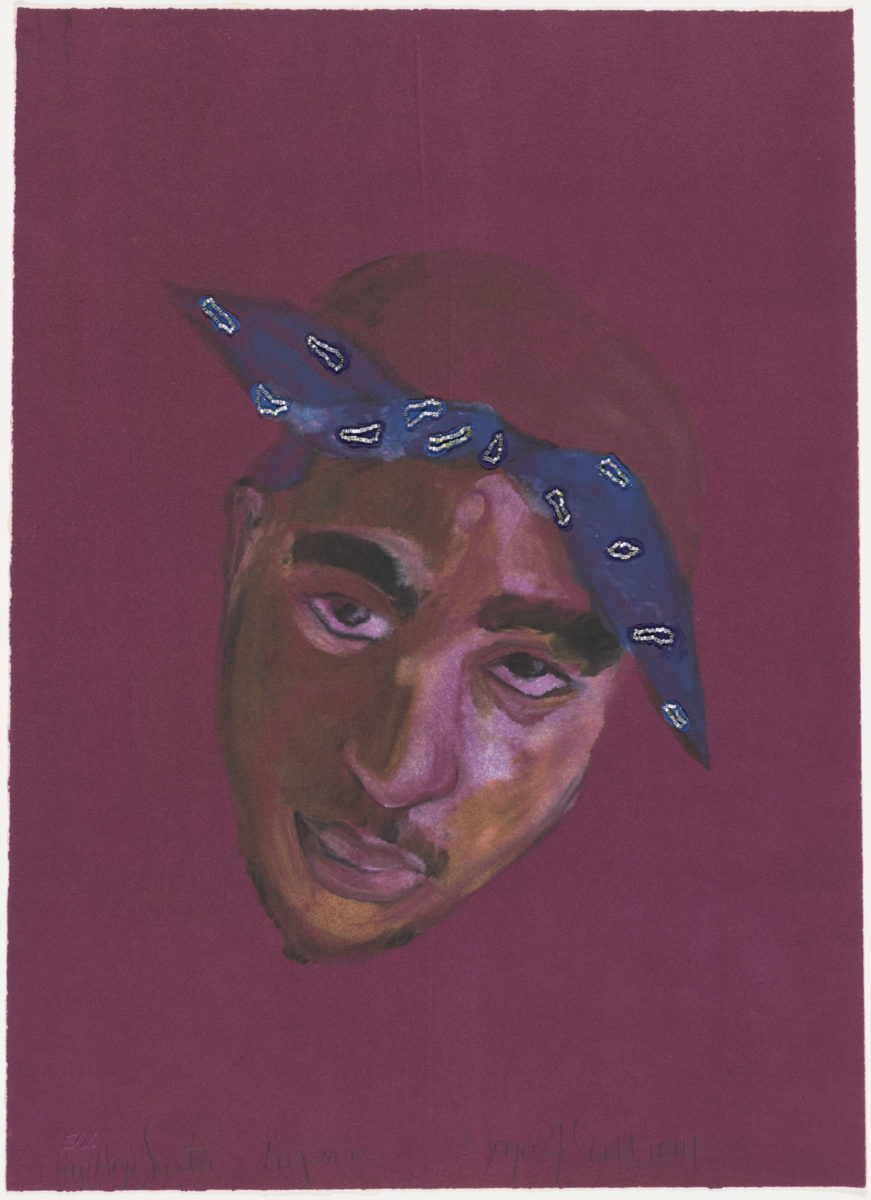
Joyce J. Scott, American, born 1948; “Hip Hop Saint, Tupac”, 2014; The Baltimore Museum of Art: Women's Committee Acquisitions Endowment for Contemporary Prints and Photographs, BMA 2020.61; © Joyce J. Scott and Goya Contemporary Gallery
-
-
-
-
-
-
-
-
View 22 more
-
-
-
-
-
-
-
-
-
-
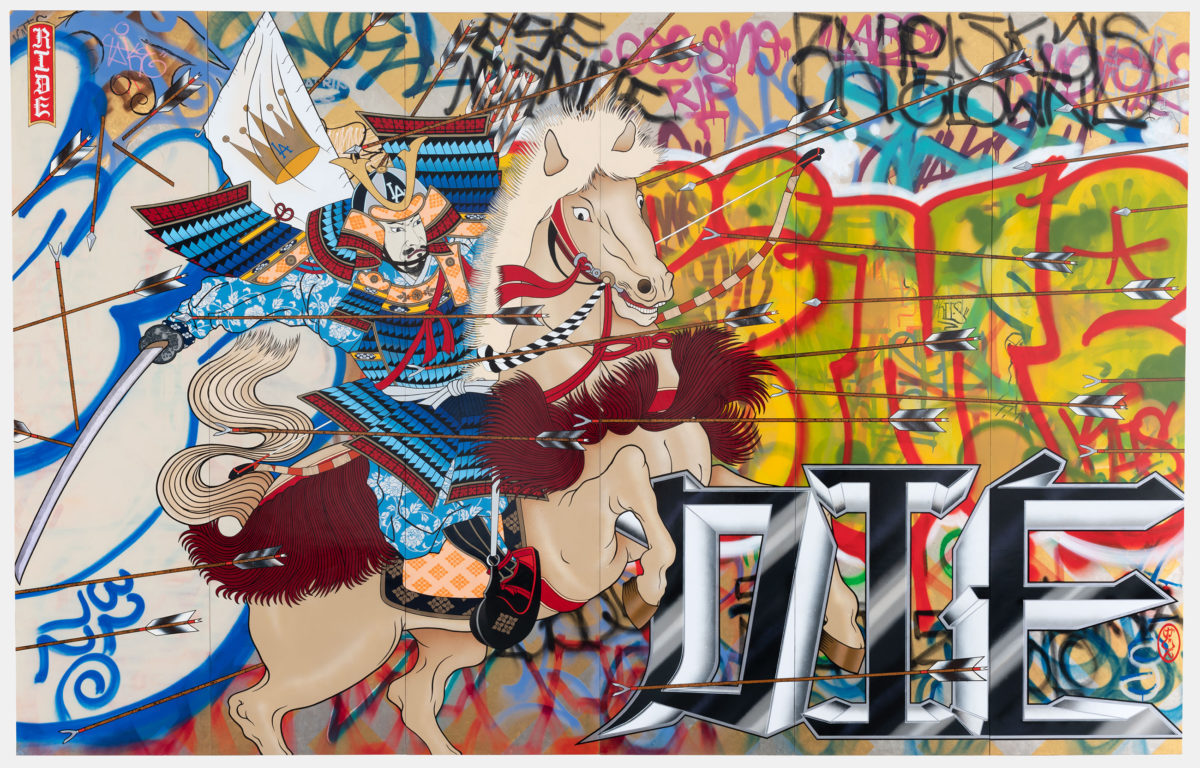
Gajin Fujita, American, born 1972; “Ride or Die”, 2005; Collection of the Kemper Museum of Contemporary Art, Kansas City, Missouri, Bebe and Crosby Kemper Collection, Museum purchase, Enid and Crosby Kemper and William T. Kemper Acquisition Fund 2005.39.01; © Gajin Fujita, Courtesy of the artist and L.A. Louver Gallery, Photo: E. G. Schempf, 2021
-
-
-
-
-
-
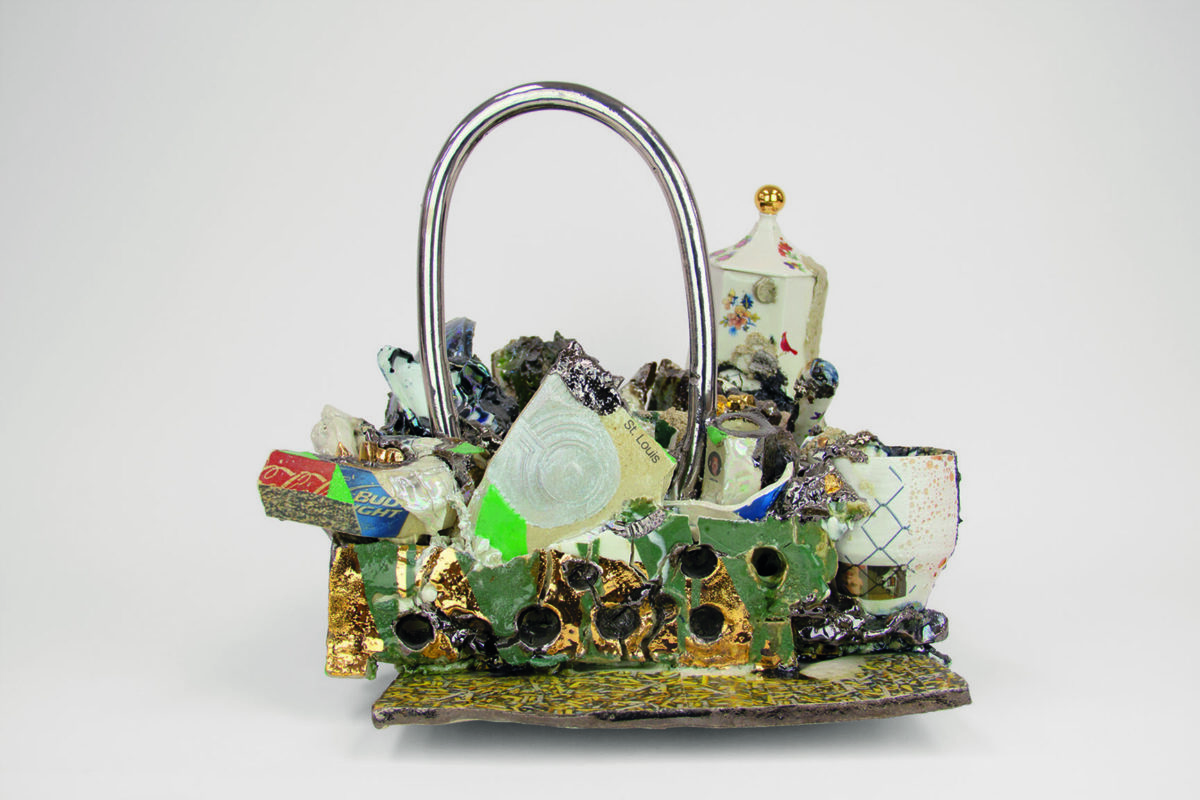
Kahlil Robert Irving, American, born 1992; “Arches & standards (Stockley ain't the only one)” Meisson Matter: STL matter with pedestal wallpaper, 2018/2020; glazed and unglazed ceramic, luster, found and personally constructed; 16 x 16 1/2 inches; Courtesy of the artist; © Kahlil Robert Irving, Image courtesy of Baltimore Museum of Art, Photo: Mitro Hood
-
-
-
-
-
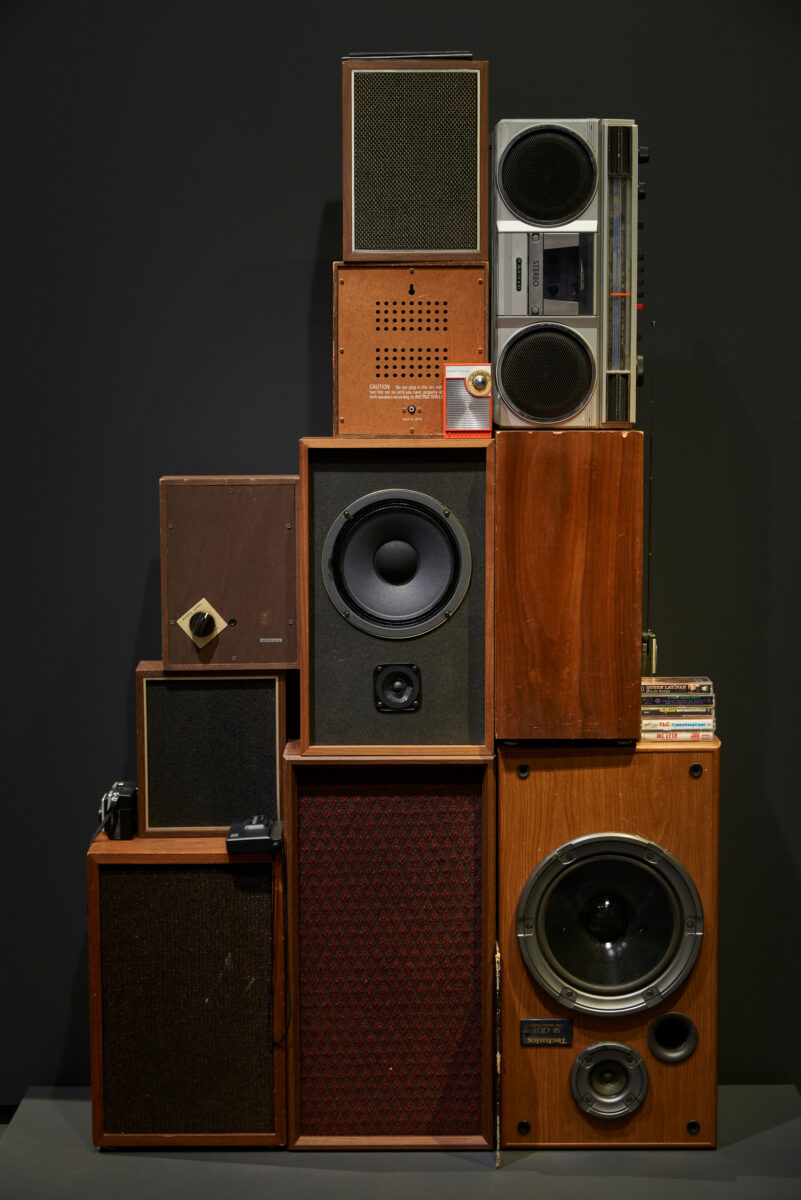
Jen Everett, American, born 1981; from the series “Unheard Sounds, Come Through” (detail), 2022; wooden speakers, cassette tapes, vinyl recording sleeves, cassette player, vinyl print, and transistor radios; 60 x 36 x 13 inches; Courtesy of the artist; © Jen Everett, Image courtesy of Baltimore Museum of Art, Photo: Mitro Hood