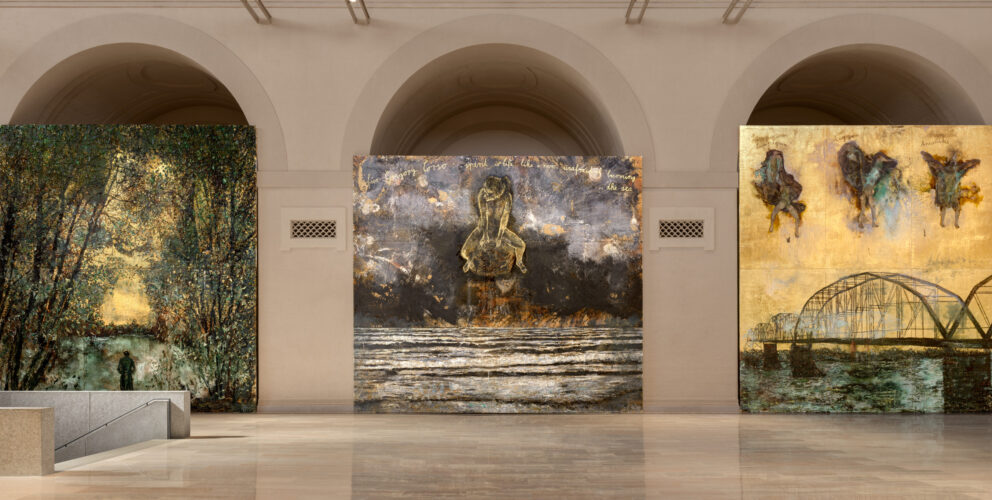
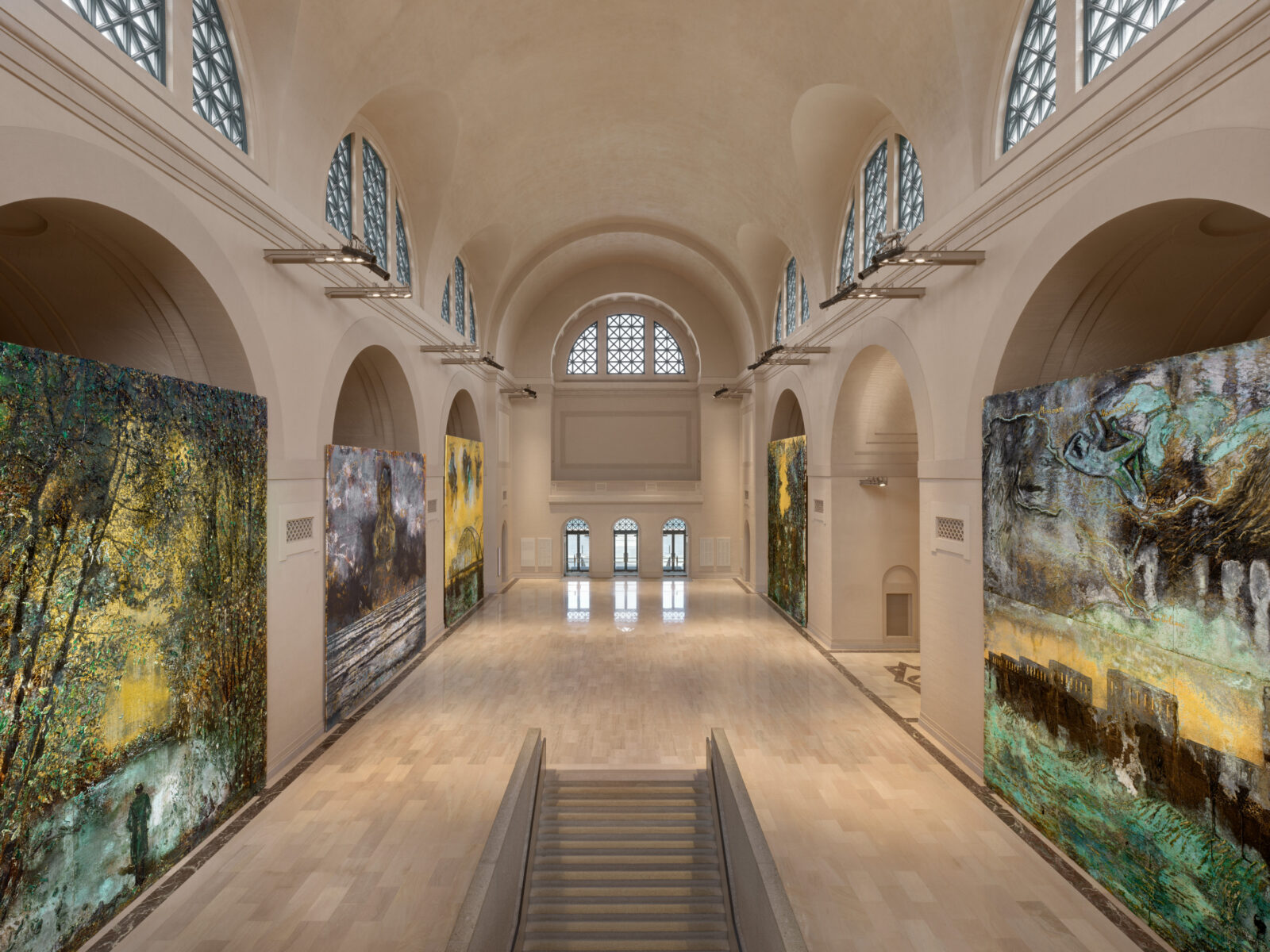
Sculpture Hall installation view of Anselm Kiefer: Becoming the Sea
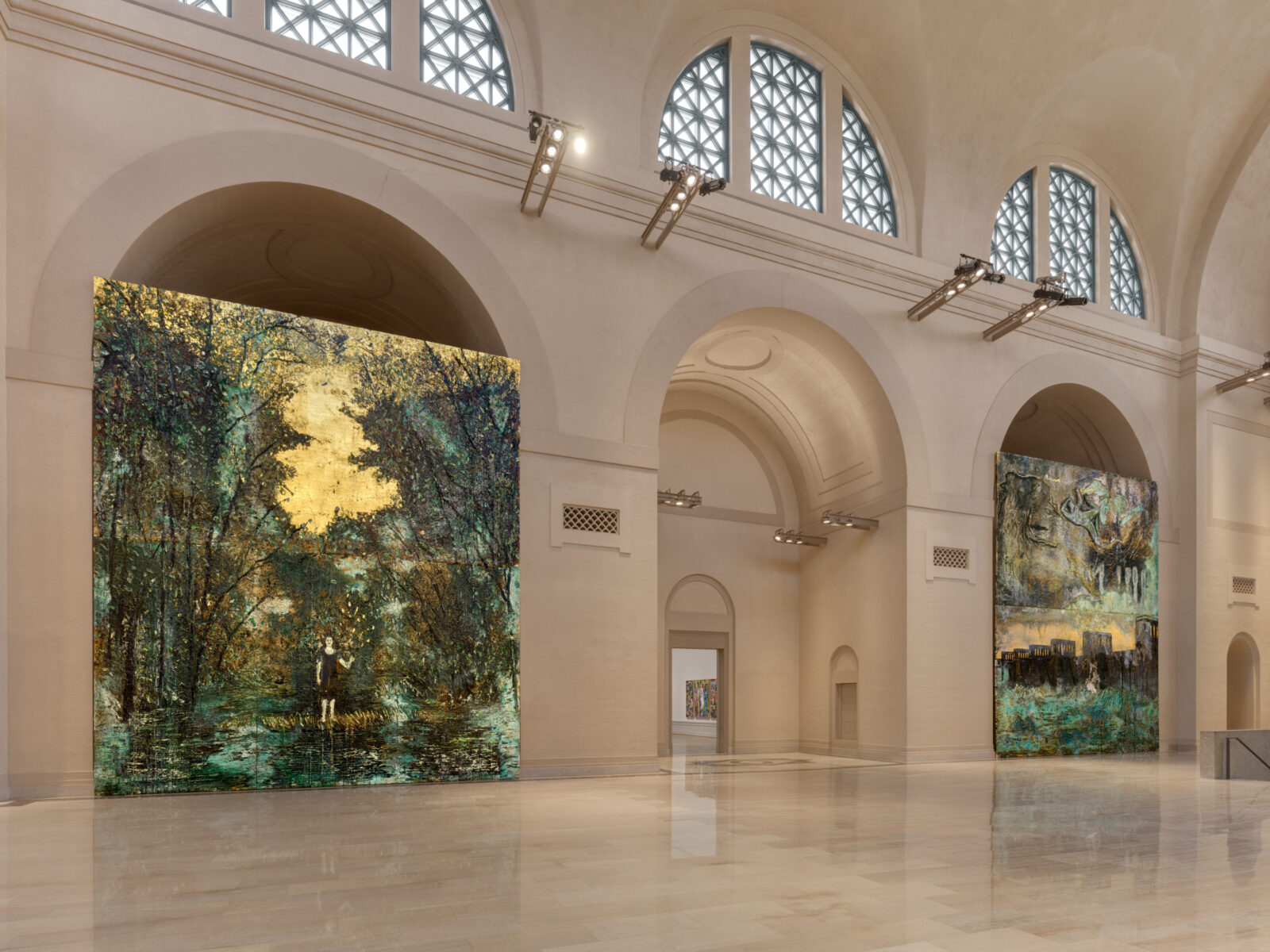
ST. LOUIS, Jan. 26, 2026—Five 3-story-tall paintings installed in Sculpture Hall as part of the Saint Louis Art Museum’s landmark exhibition “Anselm Kiefer: Becoming the Sea” will remain on view through Spring 2027.
The exhibition, which included several East Building galleries in addition to the Sculpture Hall installation, opened in October 2025 and welcomed about 150,000 visitors during its 14-week run. The East Building portion of the exhibition closed over the weekend, but in response to such high attendance and strong local and national media attention, including a segment on CBS Sunday Morning, SLAM and the artist decided to extend the Sculpture Hall presentation.
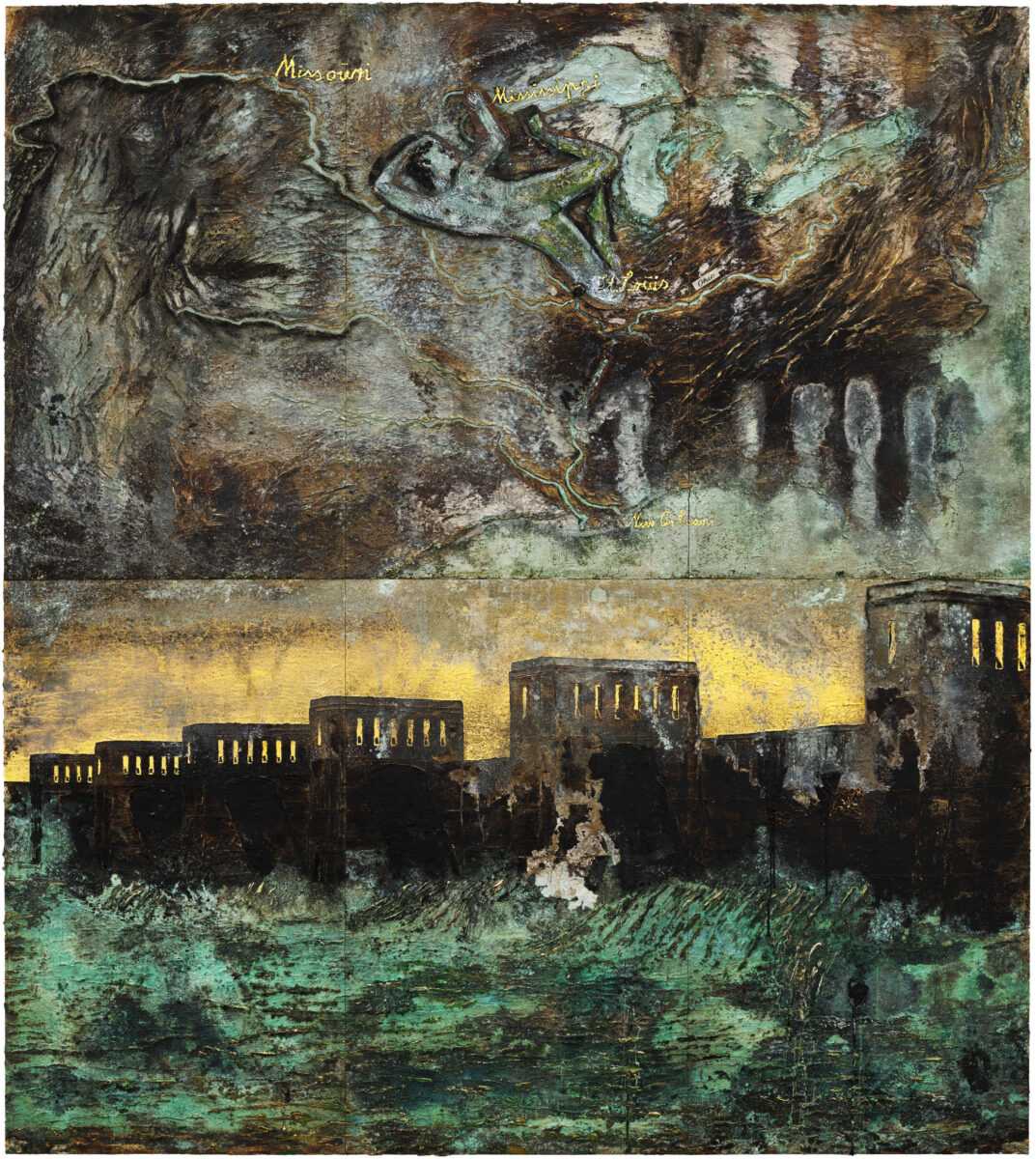
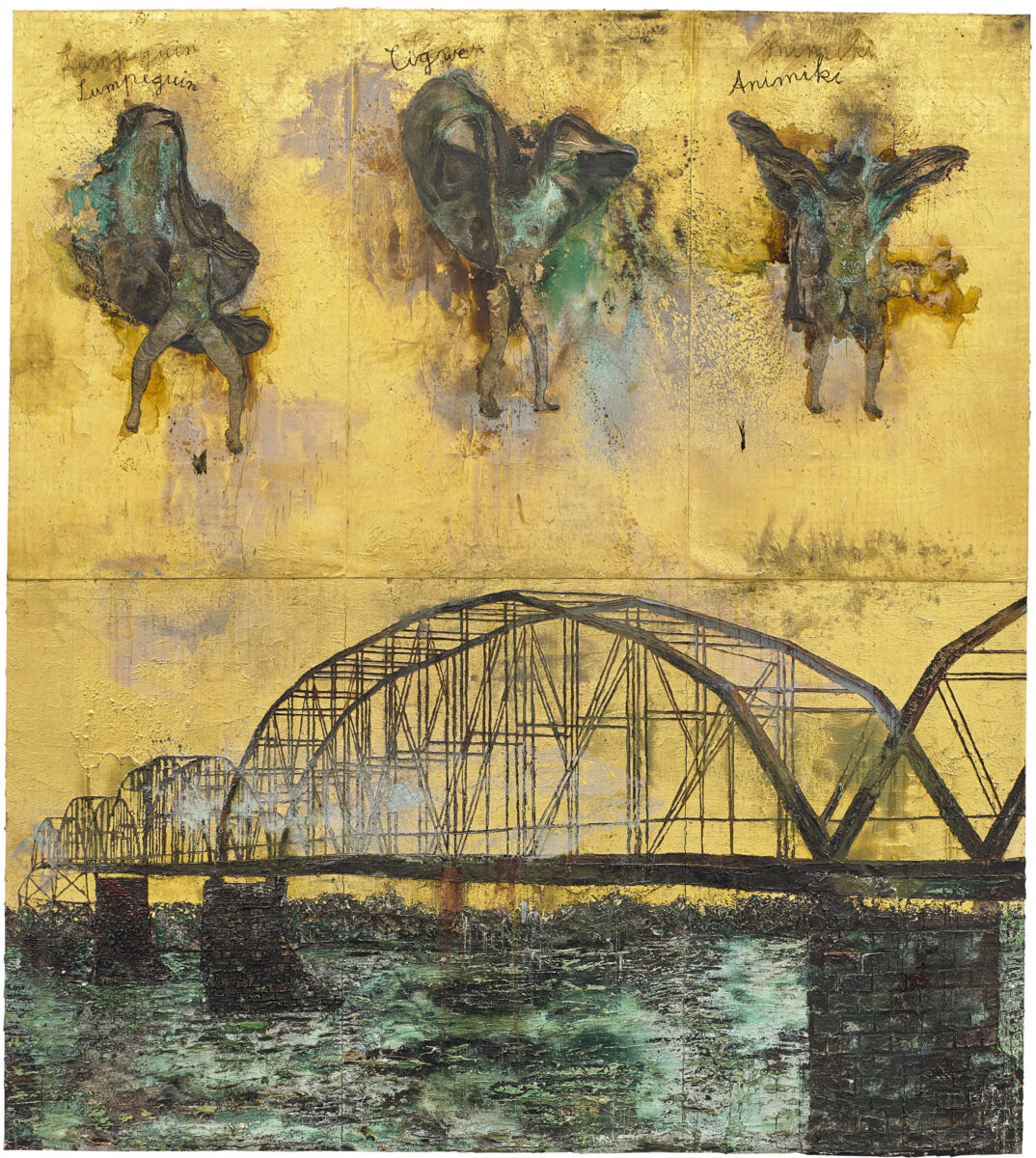
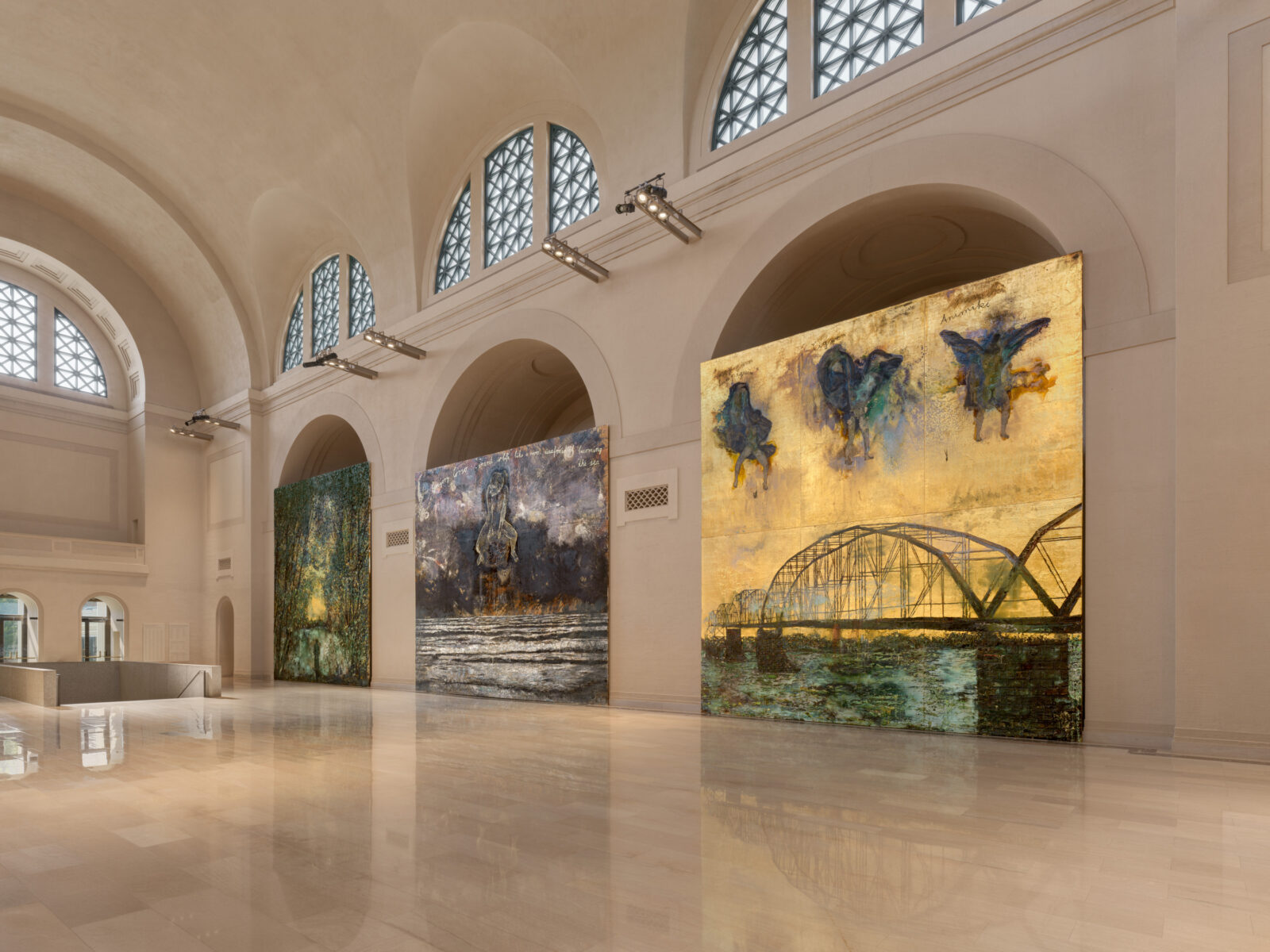
In 1991, Kiefer was in St. Louis to oversee the installation of “Breaking of the Vessels” at the museum. During the visit, he traveled up the Mississippi River in a small boat to a newly constructed lock-and-dam complex just north of the city. The violent waves and hulking dam in the Sculpture Hall work “Missouri, Mississippi” recall that event. Above the dam, a woman with outstretched arms and legs floats over a tributary map of the Mississippi River system, personifying the river and its many branches. In “Lumpeguin, Cigwe, Animiki,” three female figures representing spirit beings from Anishinaabe and Wabanaki Native peoples protect the river below.
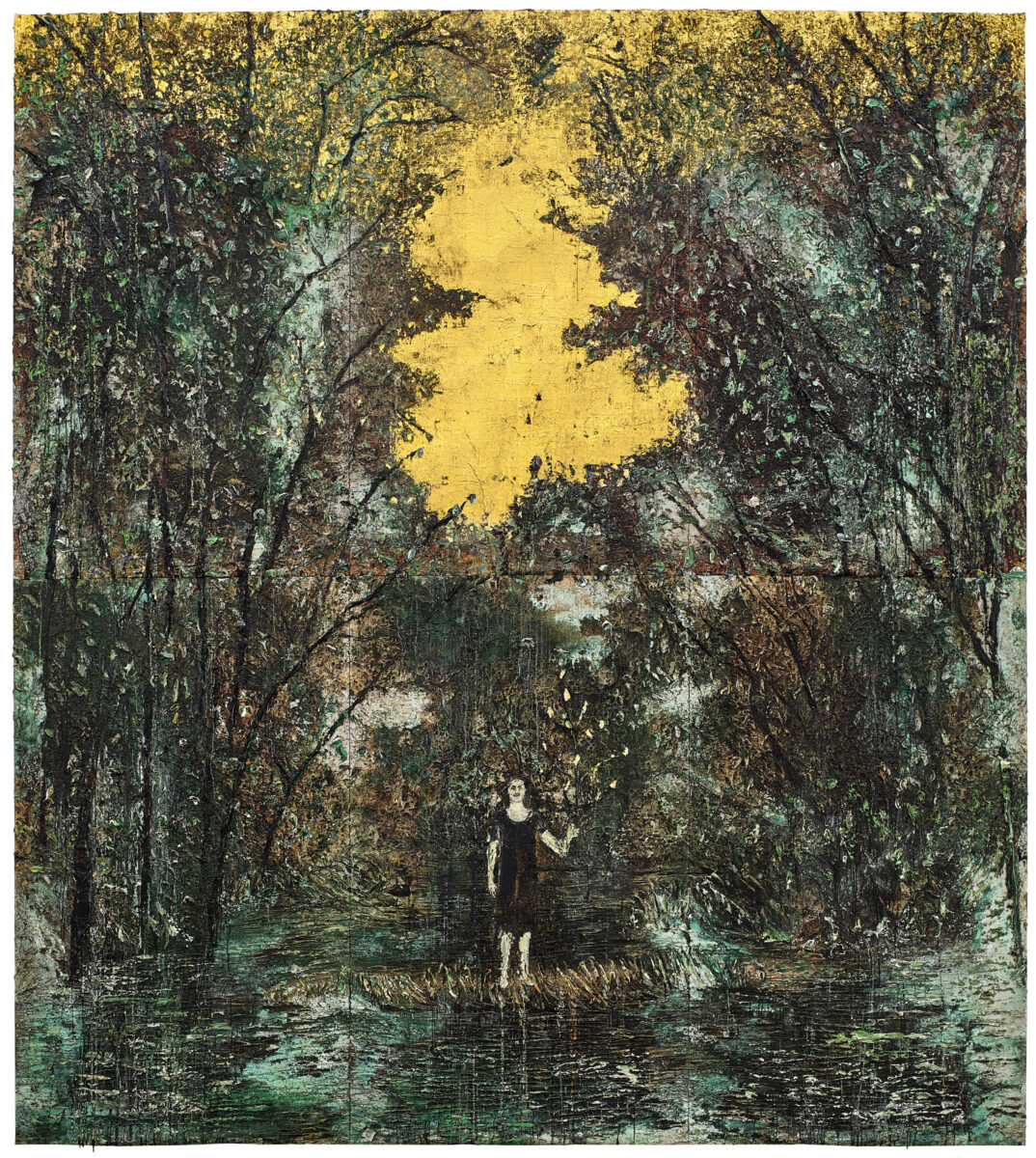
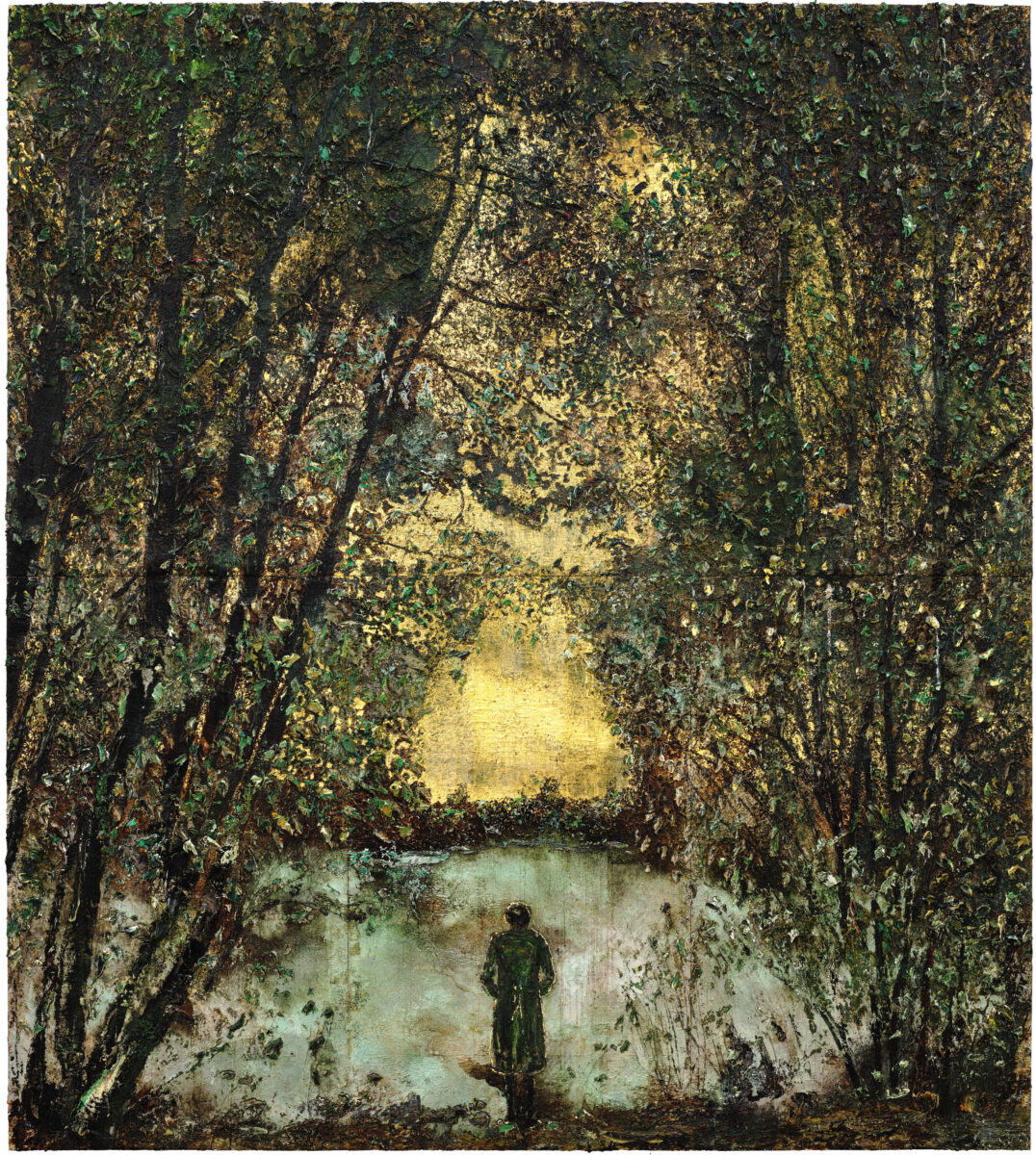
Two other Sculpture Hall works—“Am Rhein” (On the Rhine) and “Anselm fuit hic” (Anselm Was Here)—return to the Rhine River with a tree-lined, blue-green ribbon flowing through the countryside beneath a golden sky. These four canvases stand nearly 31 feet tall and are installed in each corner alcove of Sculpture Hall. They are made with sediment of electrolysis, a material Kiefer creates when he submerges metal—in this case, copper—in a bath and exposes it to an electrical current that corrodes the surface of the metal, creating debris that he uses to paint his canvases.
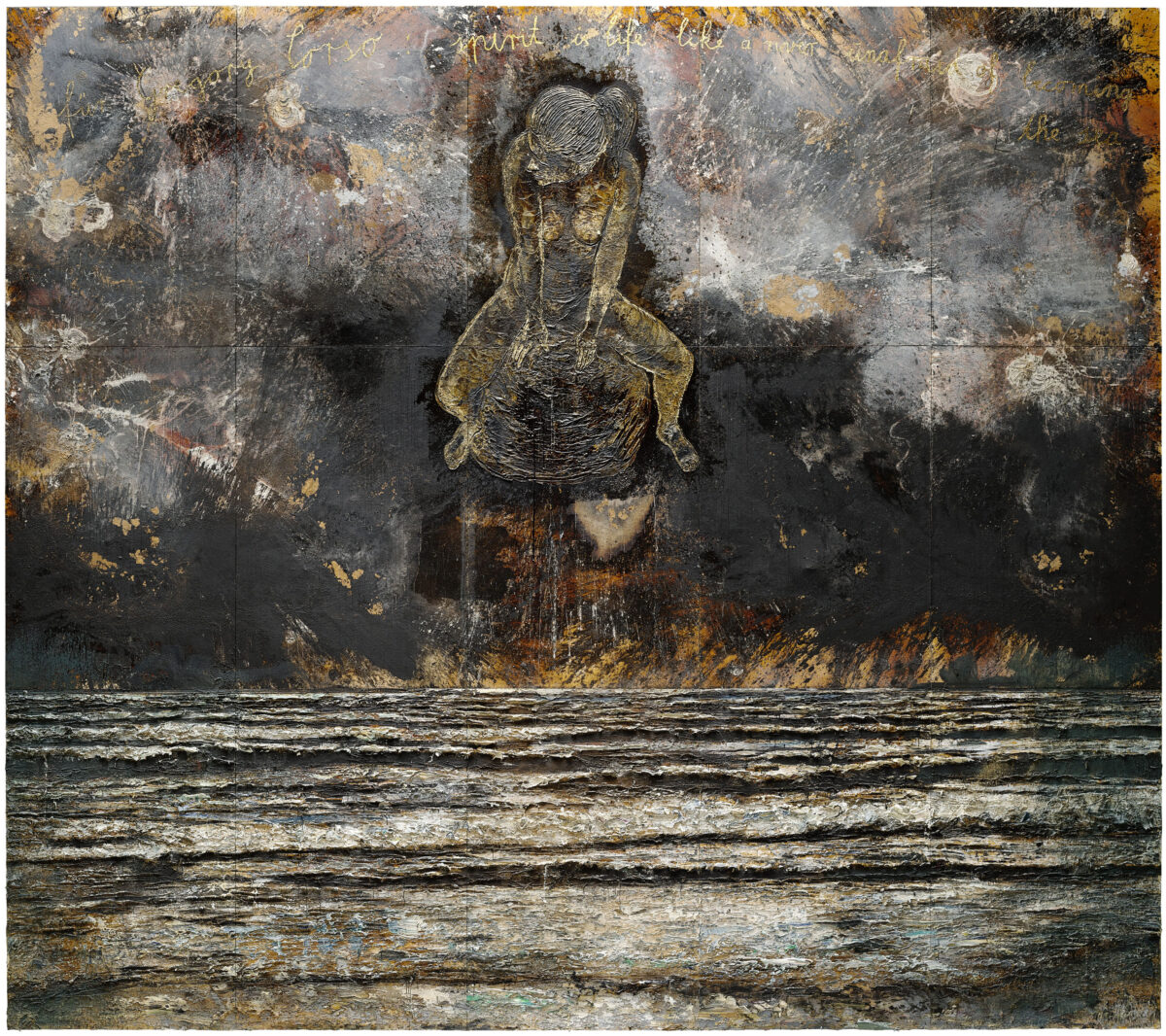
The fifth Sculpture Hall work, “Für Gregory Corso” (For Gregory Corso), which is 27 feet tall, is dedicated to the Beat poet Gregory Corso, from whose poem Kiefer took the title of the exhibition. In the 1981 poem, Corso contemplates the idea of an eternal spirit that survives death, comparing it to a river “unafraid / of becoming / the sea.”
SLAM and Anselm Kiefer
Most recently, SLAM’s 2025 exhibition “Anselm Kiefer: Becoming the Sea” was the artist’s first American retrospective in 20 years and included breathtaking new landscapes joining iconic works to celebrate his nearly 60-year career. The exhibition featured 40 works, including significant loans from American museums and private collections in addition to the site-specific Sculpture Hall installation—all of which used the river as a metaphor for the flux of life and the passage of time.
SLAM’s relationship with Kiefer began in 1983, when the museum organized “Expressions: New Art from Germany,” a traveling show that introduced American audiences to Neo-Expressionism, and which included works by Kiefer. The exhibition toured extensively, traveling to six venues, including what would become MoMA PS1. In 1987, the museum acquired its first Kiefer work, “Brennstäbe” (Fuel Rods, 1984-87). Its second, “Bruch der Gefäße” (Breaking of the Vessels, 1990) in 1991, was accompanied by a visit from Kiefer to oversee the work’s installation. SLAM subsequently acquired “Heliogabal/Sonnenuntergang” (Heliogabal/Sunset, 1974), a gift from Mr. and Mrs. John Wooten Moore in 2001; “Des Malers Atelier” (The Painter’s Studio, 1983), a partial gift from Betsy Millard in 2003; and “Brünhildes Tod” (Brünhilde’s Death, 1978) a partial and promised gift of Anabeth and John Weil in 2003.
The ongoing acquisition of these works by Kiefer are part of the museum’s long-term collecting strategy: SLAM has one of the largest and most diverse collections of 20th-century German art in the U.S. Totaling more than 2,500 objects by artists from Germany, Austria and Switzerland, the museum’s holdings include strengths in German Expressionism—which, in addition to Beckmann, includes paintings by Ernst Ludwig Kirchner, Paul Klee, Käthe Kollwitz, Paula Modersohn-Becker and Max Pechstein—and postwar German art, including important works by Joseph Beuys, Georg Baselitz, A.R. Penck and Gerhard Richter.
CONTACT: Molly Morris, molly.morris@slam.org, 314.655.5250
Press images
Click any photo to download
-
-
Anselm Kiefer, German, born 1945; Anselm fuit hic (Anselm Was Here), 2024; emulsion, oil, acrylic, shellac, gold leaf and sediment of electrolysis on canvas; 30 feet 10 1/16 inches x 27 feet 6 11/16 inches; Collection of the artist and courtesy Gagosian 2025.309; © Anselm Kiefer, Photo: Nina Slavcheva
-
-
Anselm Kiefer, German, born 1945; Missouri, Mississippi, 2024; emulsion, oil, acrylic, shellac, gold leaf, sediment of electrolysis and collage of canvas on canvas; 30 feet 10 1/16 inches x 27 feet 6 11/16 inches x 3 15/16 inches; Collection of the artist and courtesy Gagosian 2025.310; © Anselm Kiefer, Photo: Nina Slavcheva
-