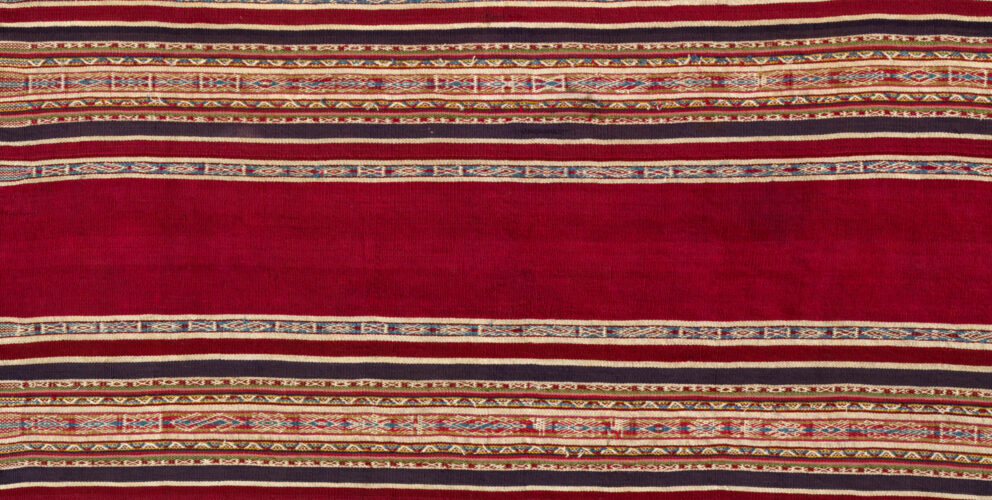
Aymara artist; “Woman’s Mantle (ahuayo)” (detail), 18th-19th century; camelid fiber and dye; 33 x 34 inches; Saint Louis Art Museum, Gift of Elissa and Paul Cahn 443:2018
ST. LOUIS, Nov. 25, 2025—A free textile exhibition opening early next year at the Saint Louis Art Museum showcases 18th- and 19th-century weavings from the Central Andes.
“Aymara Weavings: The Indigenous Andes” features skirts, mantles, ponchos and related materials that demonstrate how artists in Bolivia maintained and reinvented ancient artistic practices to express Indigenous identities during the colonial era. The exhibition opens on Jan. 30, 2026.
While pattern and form vary across type, each warp-faced weaving in the exhibition is made from hand-spun and -dyed fibers harvested from camelids such as alpaca and vicuña.
“Indigenous weavers in the Andes are renowned for creating some of the finest textiles in the world,” said Alexander Brier Marr, exhibition curator and associate curator of Native American art. “With an expert command of the process, these artists often ply or weave yarns of multiple colors to achieve luminescent, painterly surfaces.”
Exhibition works showcase not only the technical skill of Aymara artists but also the history of Indigenous self-representation. As Spanish colonists introduced modes of mass-production and banned certain garments, Indigenous artists responded by maintaining and adapting ancestral forms of outerwear, the most visible and formal layer of dress.
“Aymara Weavings” showcases select works from a gift of art by Elissa and Paul Cahn. The exhibition will be on view in Carolyn C. and William A. McDonnell Gallery 100 through Sept. 13, 2026.
CONTACT: Molly Morris, [email protected], 314.655.5250
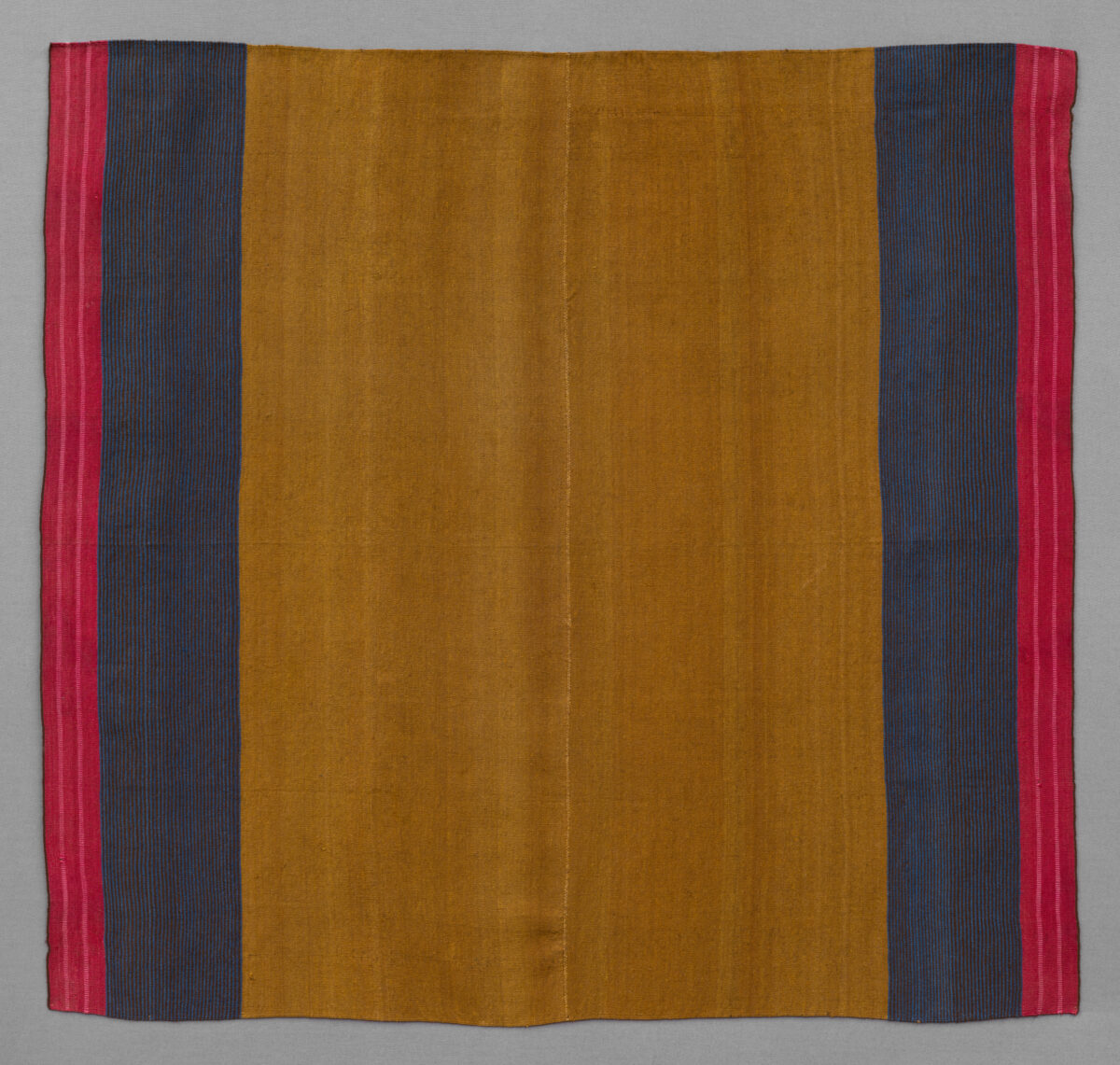
Aymara artist; Man's mantle (llacota), 18th–19th century; camelid fiber and dye; 46 x 49 inches; Saint Louis Art Museum, Gift of Elissa and Paul Cahn 446:2018
-
Also on view in St. Louis in early 2026
Contemporary Art Museum St. Louis
Andrea Carlson: Endless Sunshine, March 6–Aug. 9, 2026
And I Saw New Heavens and a New Earth: The Partnership, Art, and Activism of Claude Cahun and Marcel Moore, March 6–Aug. 9, 2026
Janie Stamm: Mermaid’s Purse, March 6–Aug. 9, 2026Mildred Lane Kemper Art Museum
Looking Back Toward the Future: Contemporary Photography from China, Feb. 27–July 27, 2026
Emeka Ogboh: The Song of the Germans, Feb. 27–July 27, 2026Pulitzer Arts Foundation
Dialogues & Conversations: 25 Years of the Pulitzer Arts Foundation, March 6–Aug. 9, 2026