Exhibition catalogue, forthcoming (October 2026)
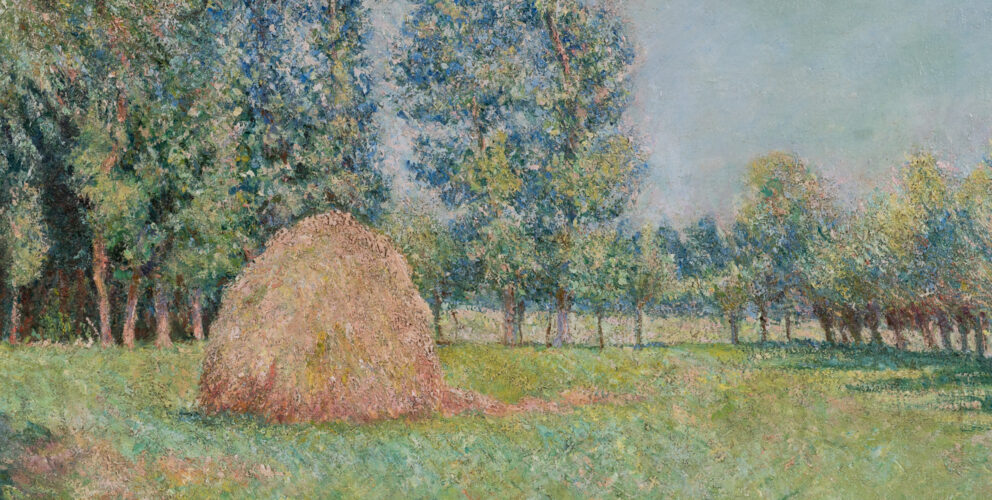
Women Impressionists and the Land is the first book to focus on landscape and nature imagery in the work of the women Impressionists. Rather than concentrating on the domestic subject matter of these artists, which has been widely discussed, this book, which accompanies a Saint Louis Art Museum exhibition, explores the less documented outdoor spaces that were painted by the key women in the group, particularly Berthe Morisot, Mary Cassatt, Marie Bracquemond, and Blanche Hoschedé-Monet.
The book explores the way in which landscape imagery contributed to the rise in status of women artists in France during the years 1860–1910. It examines a range of works, focusing especially on the work of Morisot, who trained as a landscape painter and saw landscape imagery as a central part of her practice. The book examines favored iconographical themes, such as the painting of marine and agricultural scenes, and parks and gardens. Central is imagery of a domesticated nature, such as Morisot’s paintings of the Bois de Boulogne, Bracquemond’s pictures at Sèvres, and Cassatt’s views at the Château de Beaufresne after 1894.
Women Impressionists and the Land will have a range of essays by leading scholars of French Impressionism. An introductory essay by Simon Kelly will examine the importance of place in the output of these artists and the ways in which their travels around the land of France, from Normandy in the North to the Riviera in the South, became a key part of their identity. Also explored is the valuable context of work by Salon artists, such as Rosa Bonheur and Elodie La Villette. There will then be a variety of shorter discussions. Two essays by Mary Morton and Nicole Georgopulos examine Morisot’s landscape practice in the 1860s, and her artistic dialogue with her painter sister, Edma. Elizabeth Childs will then explore the output of Marie Bracquemond. Sylvie Patry examines Morisot’s later landscape practice, as she moved between between “pure landscape” and landscape paintings with figures in the early 1880s. Another essay, by Galina Olmsted, will examine the output of Blanche Hoschedé-Monet, Monet’s stepdaughter, who produced an important body of landscapes around Giverny. Nicole Myers will explore the dialogue between Morisot and Mary Cassatt in the 1880s and 1890s, focusing on their mutual interest in the painting of water. Finally, Abigail Yoder examines the late landscapes of Morisot and Cassatt and their relationship with the contemporary Symbolist art movement.
Authors: Elizabeth Childs, Nicole Georgopulos, Simon Kelly (ed.), Mary Morton, Nicole R. Myers, Galina Olmsted, Sylvie Patry, and Abigail Yoder
Details: 152 pages, approx. 130 illustrations; 10 1/4 × 9 7/8 inches, hardcover. Published by Saint Louis Art Museum. Production and design by Paul Holberton Publishing

Detail of Berthe Morisot, Young Woman Hanging a Bird Cage in a Tree, 1890; oil on canvas; 19 ¼ × 25 5⁄8 inches; Santa Barbara Museum of Art