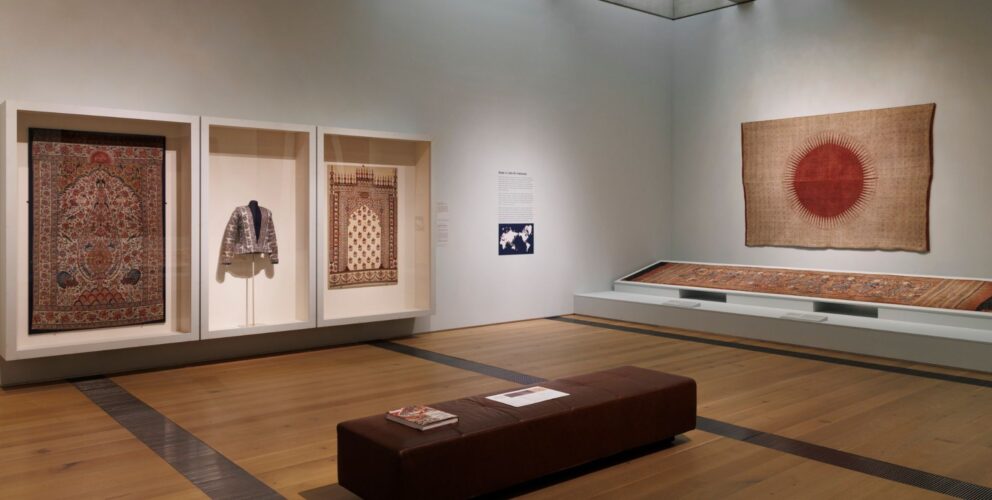
Learn the terms and techniques used for creating the Indian chintz textiles on view in the exhibition, Global Threads: The Art and Fashion of Indian Chintz.
-
ajrakh
A unique form of block-printing using only colors derived from nature, such as indigo, henna, turmeric, pomegranate, iron, and mud. This technique is found mostly in the village of Bhuj in the city of Ajrakhpur, Kachchh district, Gujarāt state, India, and in Sindh, Pakistan.
-
bandhani
A type of tie-dye textile decorated by plucking the cloth with the fingernails into many tiny bindings that form a figurative design; often associated with the state of Gujarāt, specifically the northwestern district of Kachchh.
-
batik
Cotton cloth that has been resisted with beeswax and dyed using natural or synthetic colors; particularly associated with Java, Indonesia.
-
beetling
A process of pounding cotton or linen fabric with wooden beetle mallets to produce a hard, flat surface with high luster and greater absorbency.
-
būta
An almond- or pine cone-shaped motif with a sharp-curved upper end. Though of Iranian origin—where it is known as boteh—it is very common in India, Azerbaijan, and Turkey. The būta spread to Europe via Kashmir shawls, where such patterns are known as “paisleys” (named after Paisley, Renfrewshire in Scotland, a major center of textile production featuring this motif).
-
chintz
A 17th-century term, used for centuries in Europe and the United States, to refer to Indian hand-drawn or printed cotton cloth. It is a corruption of the Hindu word chitte (singular) or chintes (plural), of the same meaning. Today, the term generally refers to printed or dyed cotton fabric that is glazed.
-
colorfast
The ability of a fabric to keep the same color without fading or running even if washed, placed in harsh light, exposed to perspiration, or treated with certain chemicals.
-
copperplate printing
Introduced by Irish printer Francis Nixon in 1752, a technique of printing onto cotton or linen with large engraved metal plates, measuring up to 36 inches or one square yard. Copperplate-printed textiles are distinguished by designs with fine lines, rendered in monochrome shades of red, purple, blue, or brown.
-
dodot
A large ceremonial hip wrapper, commonly worn over trousers in central Javanese courts. Indian versions often feature large diamond or lozenge shapes at their center.
-
dye
A natural, synthetic, or semi-synthetic substance used to color cloth.
-
glazed
The process of applying starches, glues, shellacs, resins, or other stiffeners to cloth and smoothing it through hot metal rollers to create a highly polished surface.
-
ground
The background of a printed design; it may be uncolored, a solid color, or patterned.
-
ikat
An Indonesian dyeing technique in which sections of yarn have been tie-dyed before weaving into cloth.
-
khadi
Handwoven fabric made from handspun thread.
-
maa’
Ceremonial cloths preserved as sacred heirlooms, often in the form of Indian trade cloths made for the Indonesian market, especially for the Toraja people on the island of Sulawesi.
-
mordant dyeing
Applying mordants by steeping, printing, drawing, or painting prior to dyeing to produce durable color on cotton.
-
roller printing
The process of feeding fabric through a series of engraved metal rollers to form continuous printed designs. Invented by Scottish printer Thomas Bell in 1783, the technique was first used for furnishing fabrics around 1810.
Organizer
Royal Ontario Museum
Global Threads: The Art and Fashion of Indian Chintz is produced and circulated by ROM (Royal Ontario Museum), Toronto, Canada.