A car is installed in a gallery for the Roaring: Art, Fashion, and the Automobile in France, 1918–1939 exhibition.
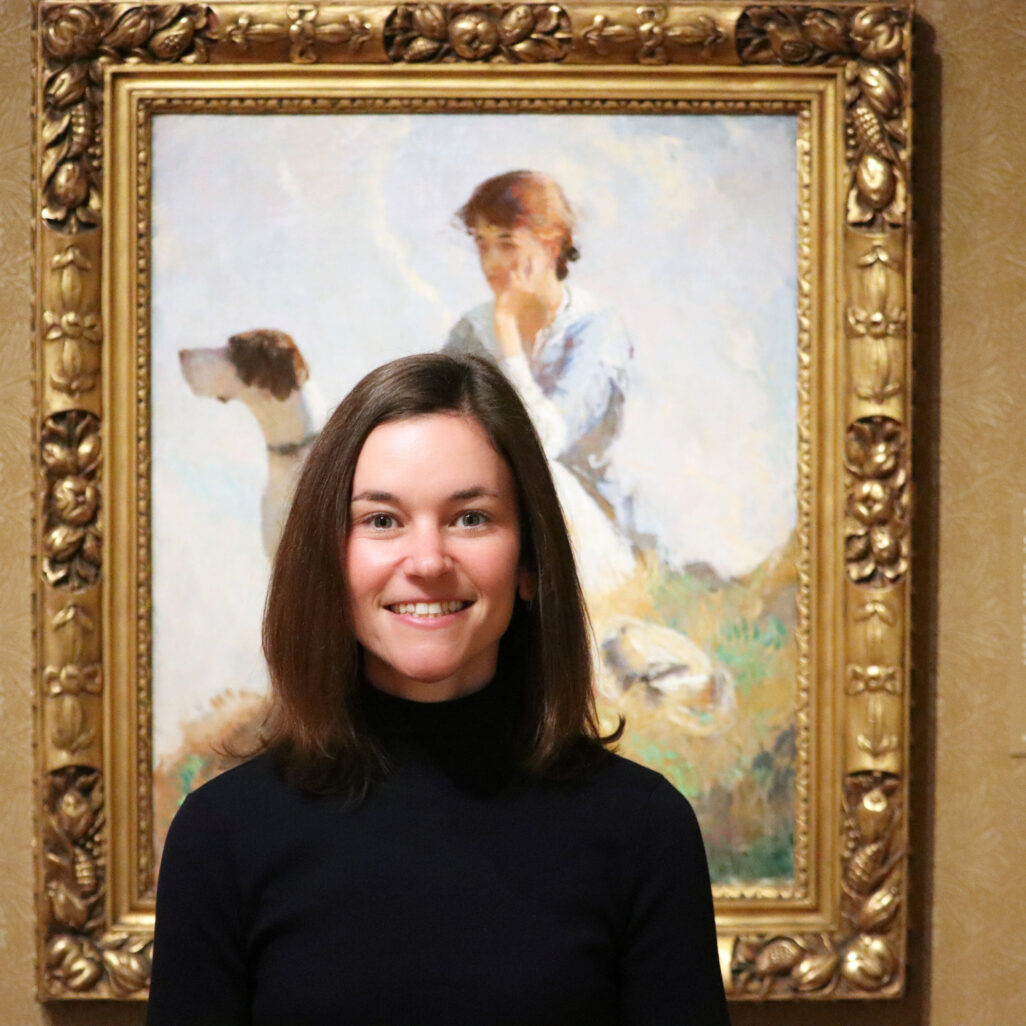
“Design, in its essence, is attempting to solve problems. With exhibition design, the problem is how to tell a memorable story that allows visitors to connect intellectually and emotionally with the art,” said David Burnett, head of exhibition and installation design at SLAM. Burnett and the design team work together to produce memorable, large exhibitions such as Roaring: Art, Fashion, and the Automobile in France, 1918–1939; Anselm Kiefer: Becoming the Sea; and the ongoing Currents exhibitions featuring contemporary artists. Burnett works with curators, exhibitions coordinators, and other staff members to produce shows that continue to attract the public.
In an interview, Burnett discussed his path to a career in museum exhibitions and installation. He also explained his method of designing exhibitions and challenges with specific shows. “The whole process is like building a puzzle when you don’t have the final image,” Burnett said. “Eventually, it all comes together.”

David Burnett, head of exhibition and installation design
What was your path toward having a career in exhibitions and installation at SLAM? What experiences made you decide to pursue this career?
I’ve always been interested in design. When I was a kid, I would spend hours drawing complex clubhouse floor plans and skateboard park layouts and move bedroom furniture nonstop. As I got older, I became interested in art, furniture design, and home and building renovation. Eventually, I went to school for interior design. While studying interior design, I became disheartened by career paths focusing heavily on sales and consumerism. I ended up gravitating to museum exhibition design.
I began working at different art institutions and design firms in St. Louis, including working as a handler at the Contemporary Art Museum St. Louis (CAM), which gave me an inside look into how different arrangements of galleries and art can impact visitors. After working at CAM a few years, a colleague mentioned that SLAM needed temporary help with the redesign of its American art galleries. I met with Melissa Wolfe, curator of American art, and Jon Cournoyer, head of the SLAM design department at the time. I shared my ideas and offered insight into how we could maximize the galleries’ layout. I then worked on completing the floor plan and other layout drawings for the project. Time went by, and I received a job offer as a design contractor in 2016. Shortly after, I became a full-time staff member.

David Burnett works on a 3D model of the galleries in the SLAM design office.
What is your process for designing exhibitions at SLAM? Walk me through your process for a specific exhibition.
People love stories, and I work with curators of an exhibition to help visually tease out different aspects of a story that might not immediately be visible. With Ancient Splendor: Roman Art in the Time of Trajan, I worked with Hannah Segrave, associate curator of European art to 1800, to come up with a concept that would visually tell a different story about emperor Trajan’s reign.
Typically, a Roman art exhibition concentrates heavily on themes of power and greatness of the Empire. We wanted to do something different by inverting the usual exhibition format and making it softer. Based on those ideas, we created a color scheme with lighter pastels and inverted the Roman arch that was a prominent architectural signifier of the strength of ancient Rome.
With a strong visual concept, checklist, and thematic groupings, I came up with a rough floor plan for the exhibition. The first draft was presented to different colleagues so they could share criticism and concerns. This becomes an iterative process until a final exhibition layout is completed. This series of documents includes drawings for the construction of walls, casework, and platforms; locations of the art; paint and finish selections and diagrams; and ensuring the design can be completed given time and budget constraints.
It can be challenging to figure out how people will move through a space that doesn’t exist yet. We ask ourselves questions such as, “What is the flow of each gallery going to be like?” “Will there be sight lines to adjacent galleries?” “What will it feel like?” “How do we ‘make it make sense’?” We work incredibly hard to answer these questions.

Installation view of Ancient Splendor: Roman Art in the Time of Trajan
What are some of the challenges you’ve encountered with specific exhibitions or installations?
SLAM’s architecture can cause some installation challenges. For example, the cars for Roaring: Art, Fashion, and the Automobile in France, 1918–1939 needed to move safely inside and outside the building to their appropriate exhibition spaces. In order to determine if the vehicles would actually fit through the different routes in the building to get from the loading area to their final space in the exhibition, I had to create different models and virtually “drive” my little rectangles through the floor plans of the galleries. The weight of multiple vehicles in the exhibition space was another challenge. We had to enlist engineers to determine if the floors could safely hold their weight.
Sometimes, we experience last-minute challenges. This happened during a recent exhibition, where opening day was quickly approaching, and we didn’t know the weight of some of the objects. They ended up being much heavier than we had expected. The artist wanted us to refrain from using platforms that would spread weight. So, after some head scratching, we worked with the mount-making team to design a steel plate that would hide underneath the sculpture to better distribute the weight.
Even though everything can be planned out while anticipating potential problems, a wrench can be thrown into the plans at any time! It can be challenging, but I enjoy that improvisational aspect of design. There’s never a dull moment.

David Burnett oversees automobiles moving into the exhibition space for Roaring: Art, Fashion, and the Automobile in France, 1918–1939, in 2025.
What is a memorable moment you’ve had working on an exhibition or installation?
It’s always memorable working with living artists. The Currents exhibition series at SLAM features different contemporary artists with innovative works. The 2024 Currents 123 exhibition featured the work of Tamara Johnson, a Dallas-based artist known for her hypernaturalistic sculptures depicting household objects. One of Johnson’s works was a tiny replica of a cracker with cheese. We asked ourselves: “How do we safely display this cracker on the wall without people touching it?” It’s always fun to address these unusual challenges. Working with different artists and learning about their practices and how to display their work is a constant learning experience!

Tamara Johnson, American, born 1984; Cracker with Cheese, 2023; pewter, pigmented resin, oil-based paint, and matte varnish; 1/2 × 2 × 2 inches; Saint Louis Art Museum, The Henry L. and Natalie Edison Freund Charitable Trust 125:2024; © Tamara Johnson
What do you want the public to know about SLAM’s exhibitions that they might not already know?
Visitors might not realize the preparation that’s involved in an exhibition. There’s so much thought that goes into it. While each gallery has visual expectations, we also need to consider how people will move and feel as they transition through each space. There’s a psychological aspect of designing these spaces. We’re not only asking ourselves how things should look, but also considering how visitors will feel, what their eyes will be drawn to first, and how each of these aspects relate to the overall story.
What advice would you have for someone who is interested in pursuing a career in museum exhibitions and installation design?
Be patient, adaptable, and open to other perspectives. Design school and learning drafting programs are important to be able to look at floor plans and visualize the space in 3D, but for individuals seriously considering this career path, I think developing communication skills is equally important. It takes a large team to do this work, and everyone needs to feel heard. Disagreements can occur, but at the core of it all, everyone has the same goal of sharing these great works of art with visitors while helping them feel moved and inspired.