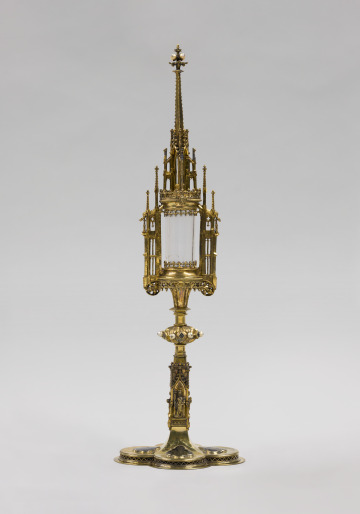
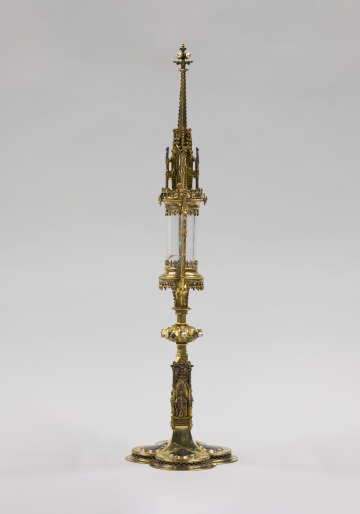
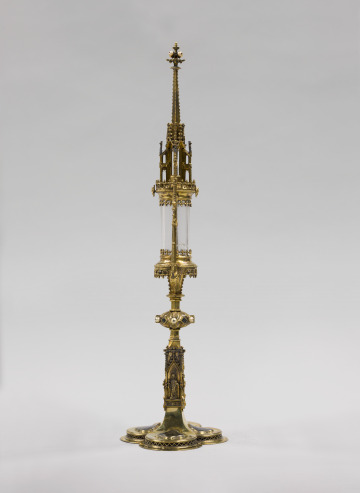
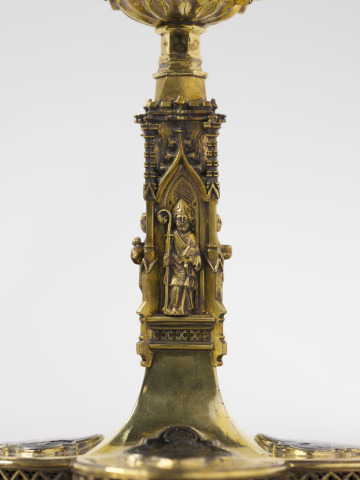
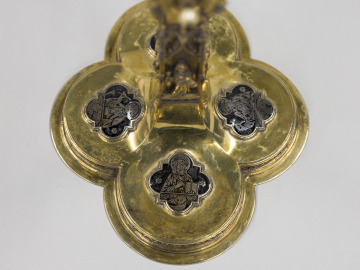
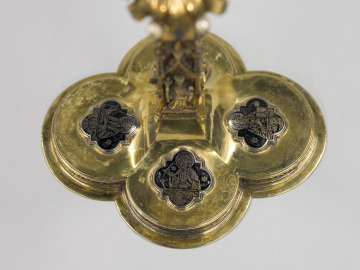
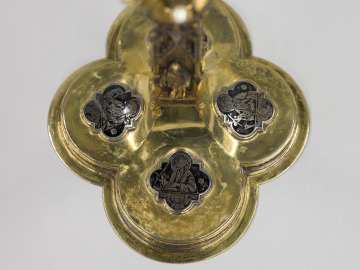
by 1891 -
Frédéric Spitzer (1815-1890), Paris, France [1]
- 1910
Maurice Kann (d.1906), Paris, France
1910/12/05 -
In the sale of the Kann Collection, Galerie Georges Petit, Paris, December 5-8, 1910, lot no. 274 [2]
- 1926
Arthur U. Newton Galleries (Arthur U. Newton, 1892-1978), New York, NY, USA, purchased from Galerie Georges Petit [3]
1926 -
Saint Louis Art Museum, purchased from Arthur U. Newton Galleries [4]
Notes:
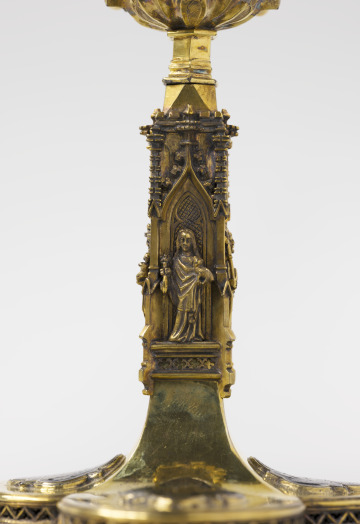
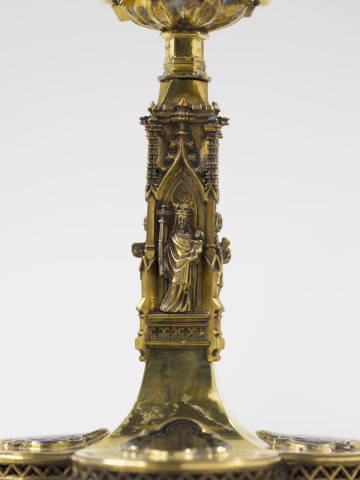
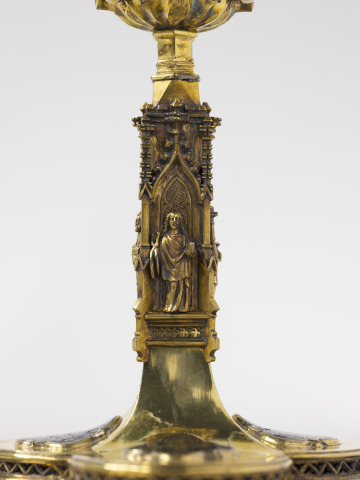
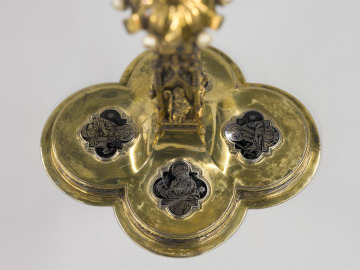
[1] Listed in the 1891 catalogue of Spitzer's collection ["Le Collection Spitzer." Vol. I. Paris, 1890, cat. no. 111]. Spitzer was born in Austria, and lived in Vienna until 1852 when he relocated to Paris, and began to actively collect numerous art objects from renowned collections. At the time of his death in 1890, his residence at 33 rue Villejust was known as the Musée Spitzer, which housed over 4,000 objects. Spitzer's collection of antiquities, metalwork, sculpture, etc., was dispersed at a Paris auction hailed as the 'Sale of the Century' with over 3000 lots. The auction, which included the monstrance, was held from April 17 - June 16, 1893, at Spitzer's Paris home with Paul Chevailler and Charles Mannheim presiding over the extensive auction ["Catalogue des Objets d'Art et de Haute Curiosité: Antiques, du Moyen Age, and de la Renaissance." Vol. 1., April 17 - June 16, 1893, lot nos. 456 and 457, p. 81; Truman, Charles. "Frédéric Spitzer," Oxford University Press, accessed May 17, 2004, ].
[2] According to the 1910 sales catalogue, the object belonged to the Kann collection ["Objets d'art et de haute curiosité du Moyen Age, de la Renaissance, et autres" Galerie George Petit, Paris, France, December 5-8, 1910, cat. no. 274, p. 44]. The auction catalogue does not indicate that Maurice Kann purchased the monstrance at the 1893 Spitzer sale. However, many other objects including a majolica piece, "Shallow Bowl with Hercules overcoming Antaeus," (1942.9.330), National Gallery, Washington, D.C., was also acquired by Kann at the 1893 auction.
[3] An invoice from Arthur U. Newton Galleries dated November 5, 1926 states that Newton purchased the object from Galerie George Petit. Although it is highly probable that Arthur U. Newton Galleries purchased the object at the 1910 auction, the invoice does not specifically mention if it bought in 1910 or a later date [SLAM document files].
[4] See note [3]. Minutes of the Administrative Board of Control of the City Art Museum, December 29, 1926.